China in Transit: A 6-Day Shanghai & Beijing Stopover Itinerary
What started as a flight workaround to Japan ended up being one of the highlights of the trip.
This trip wasn’t originally about China. While searching on Skyscanner for flights to Japan, we noticed that flying with Air China — via Shanghai and Beijing — was not only significantly cheaper, but also faster. This is largely due to restrictions on Western airlines flying over Russia.
Instead of seeing that as a compromise, we reframed it as an opportunity:
It ended up being one of the best travel decisions we’ve made.
If you’re heading to Japan (or anywhere in East Asia), I would strongly recommend considering the same approach. Even in a short time, China adds a completely different dimension to the trip. Shanghai and Beijing, in particular, offer such contrast that you leave with a surprisingly rounded first impression — and, in our case, a strong desire to come back and explore more.
This post contains some affiliate links. This means I may earn a small commission if you book or purchase through these links, at no extra cost to you. I only recommend products, services and experiences I’ve personally used or genuinely believe add value.
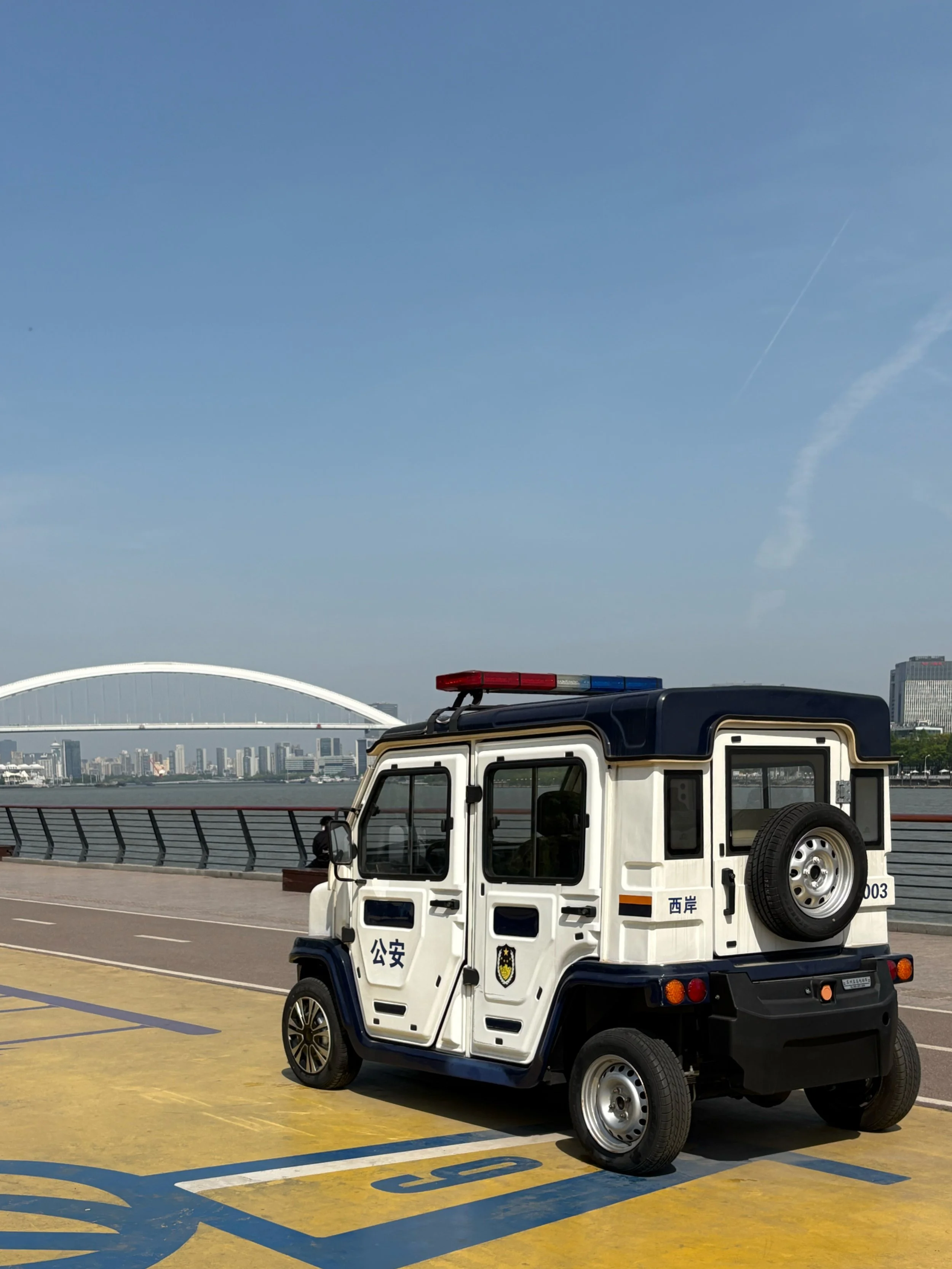
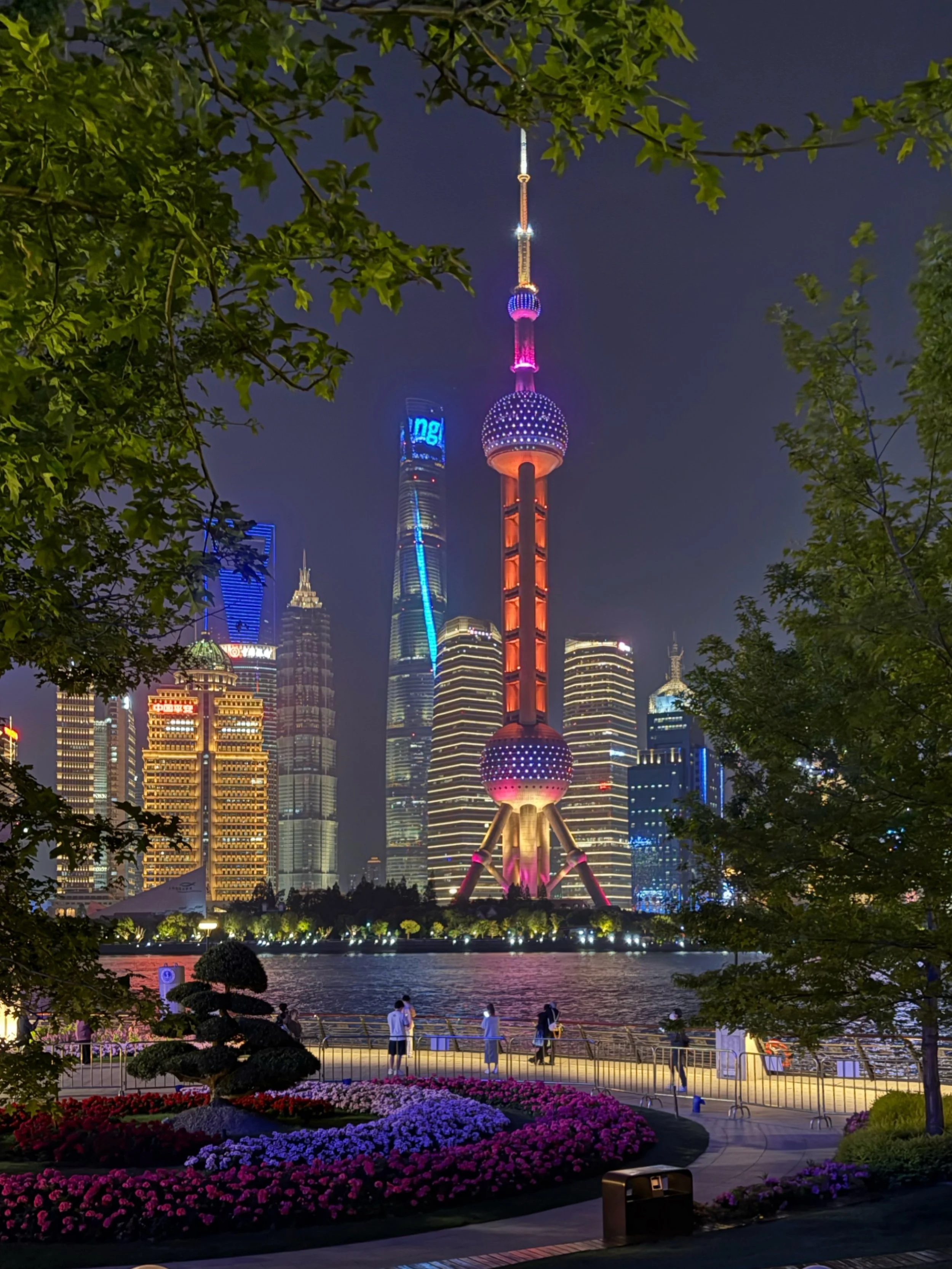
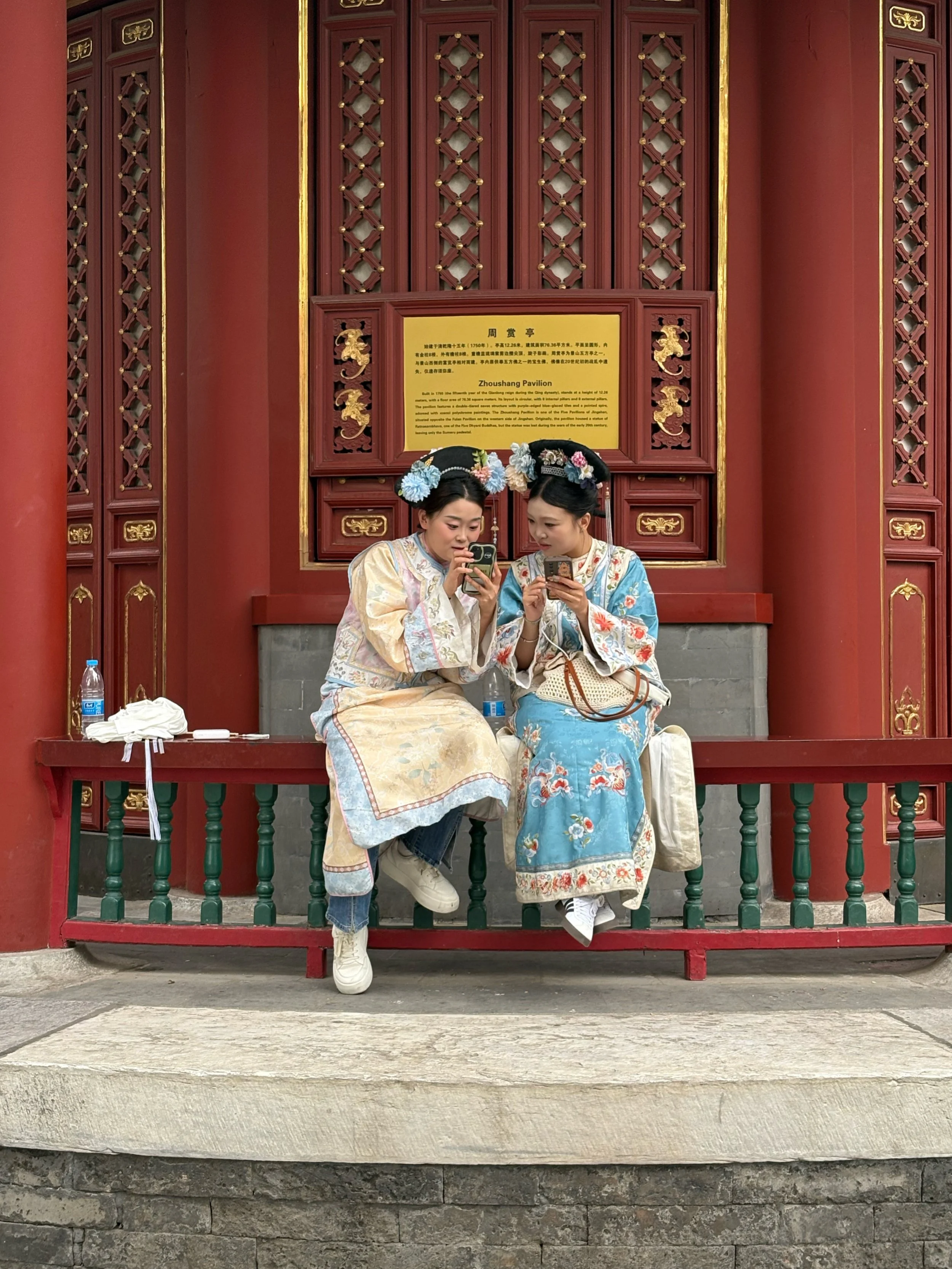
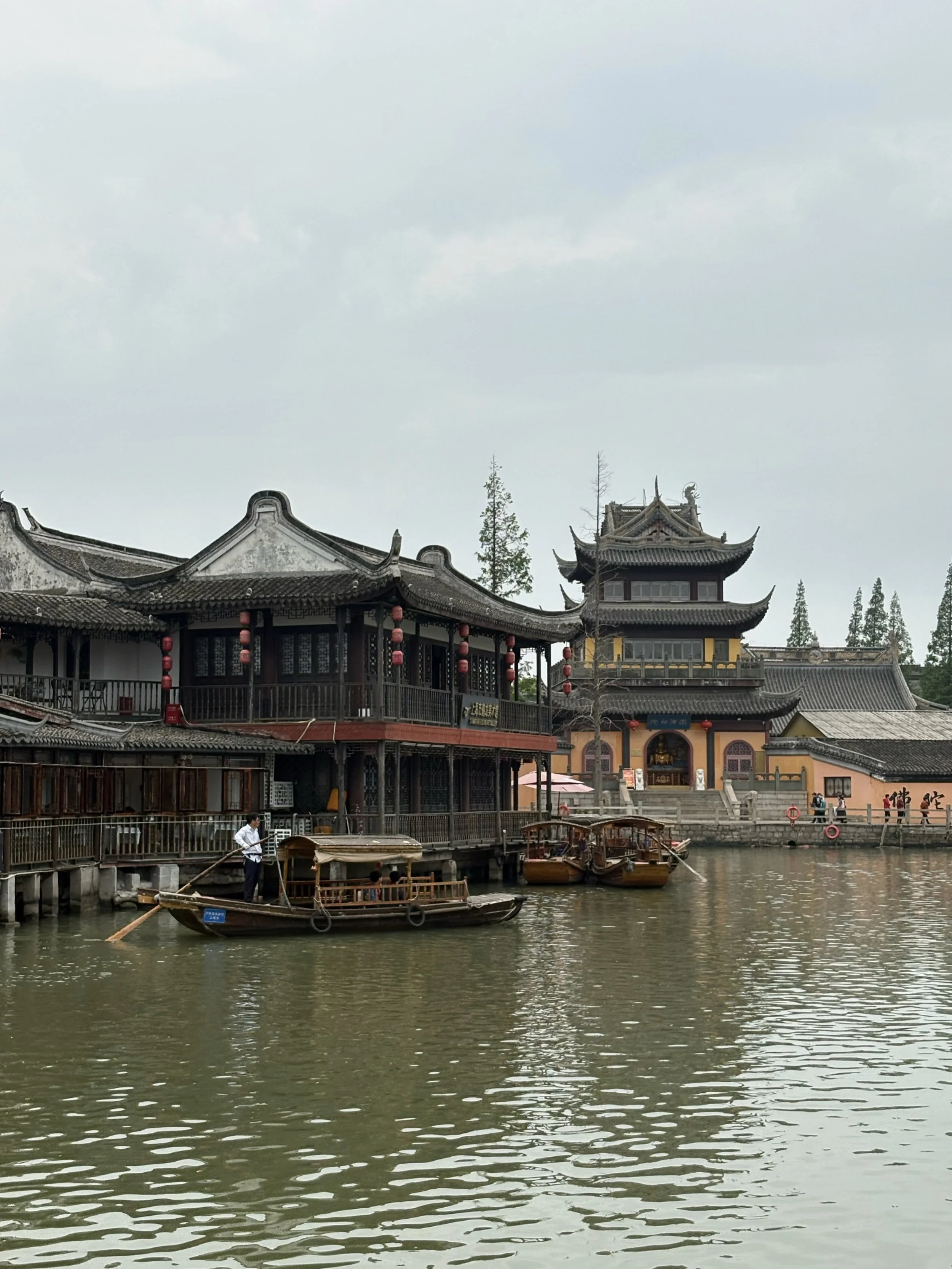
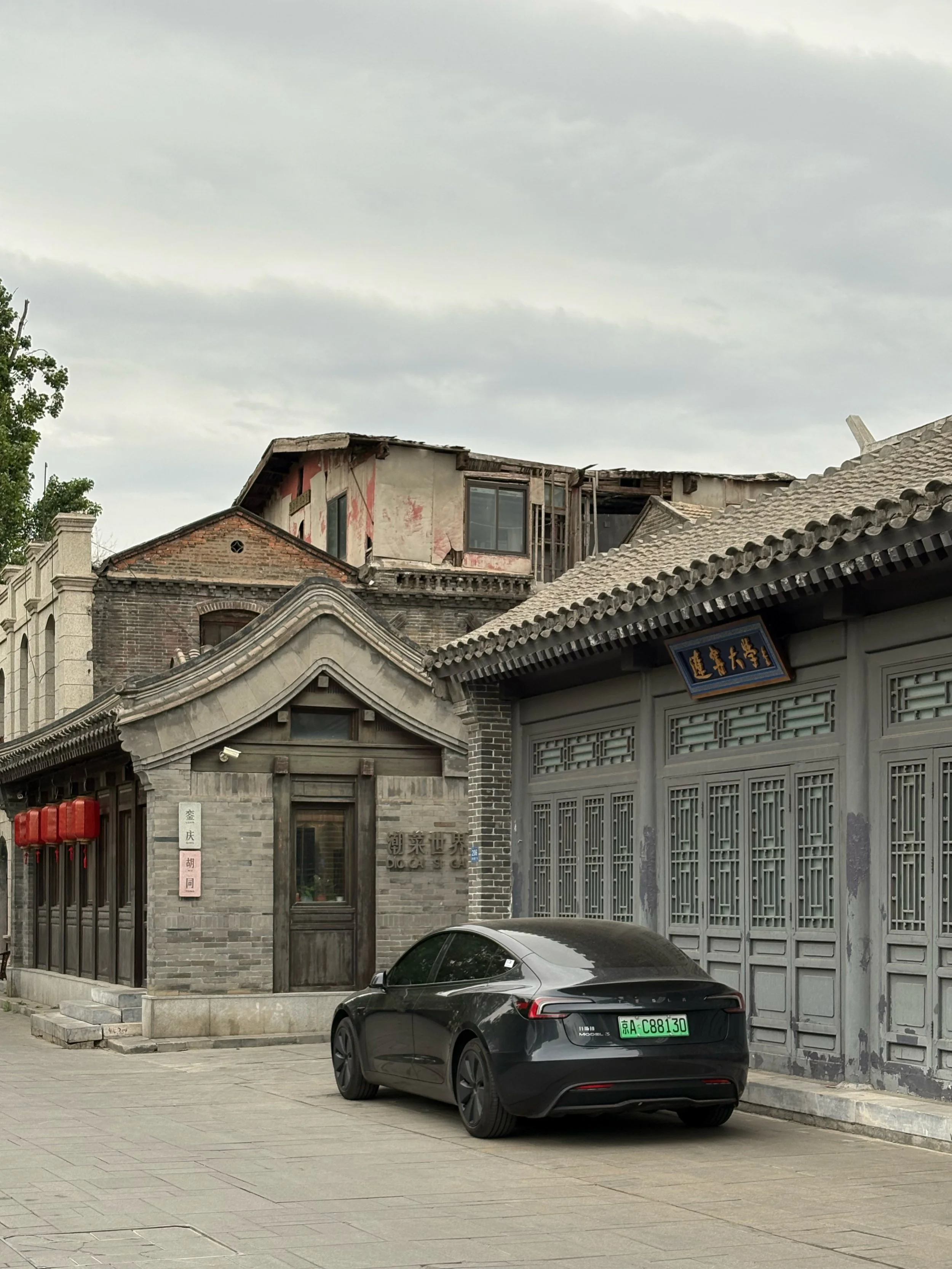
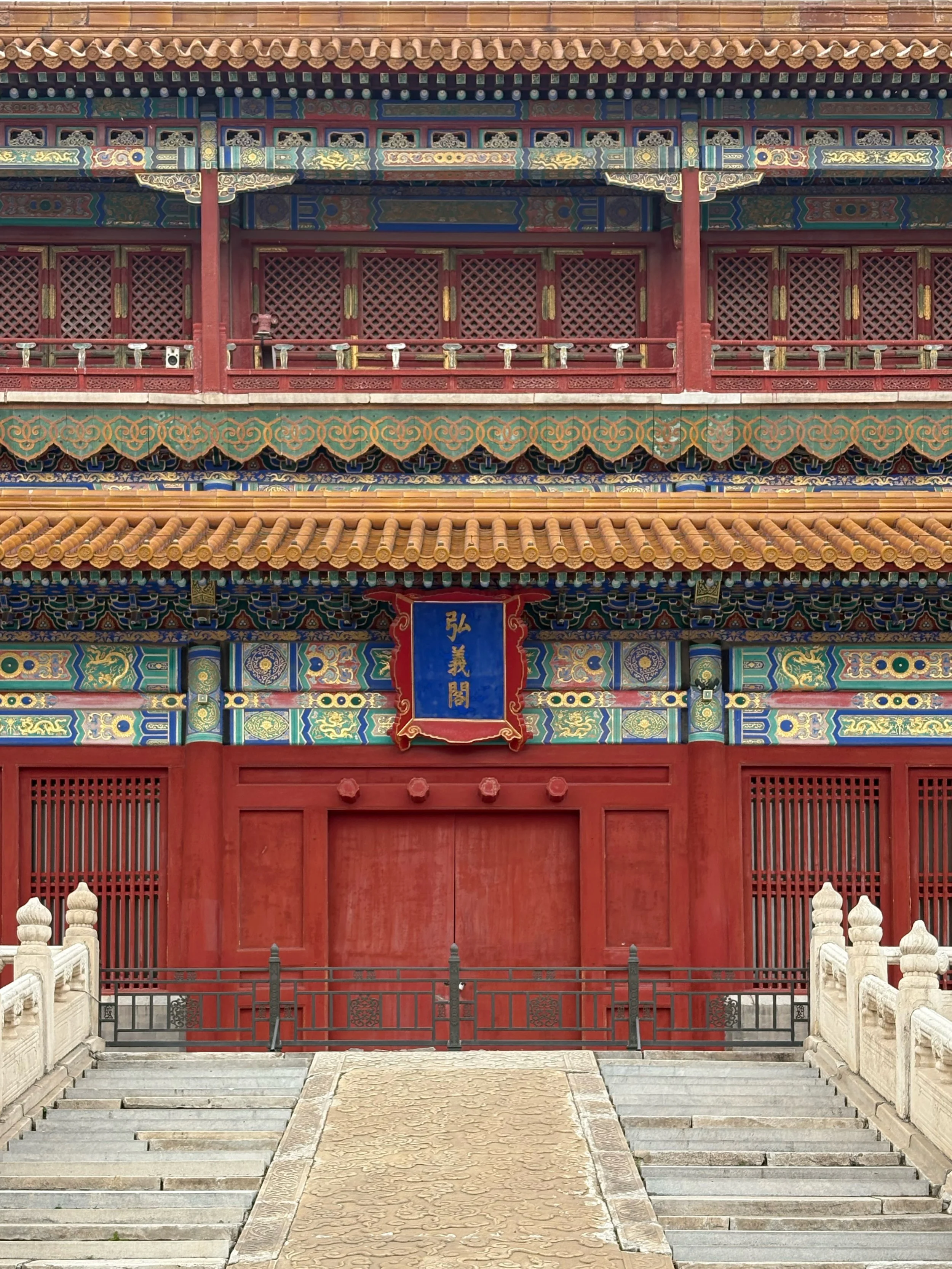
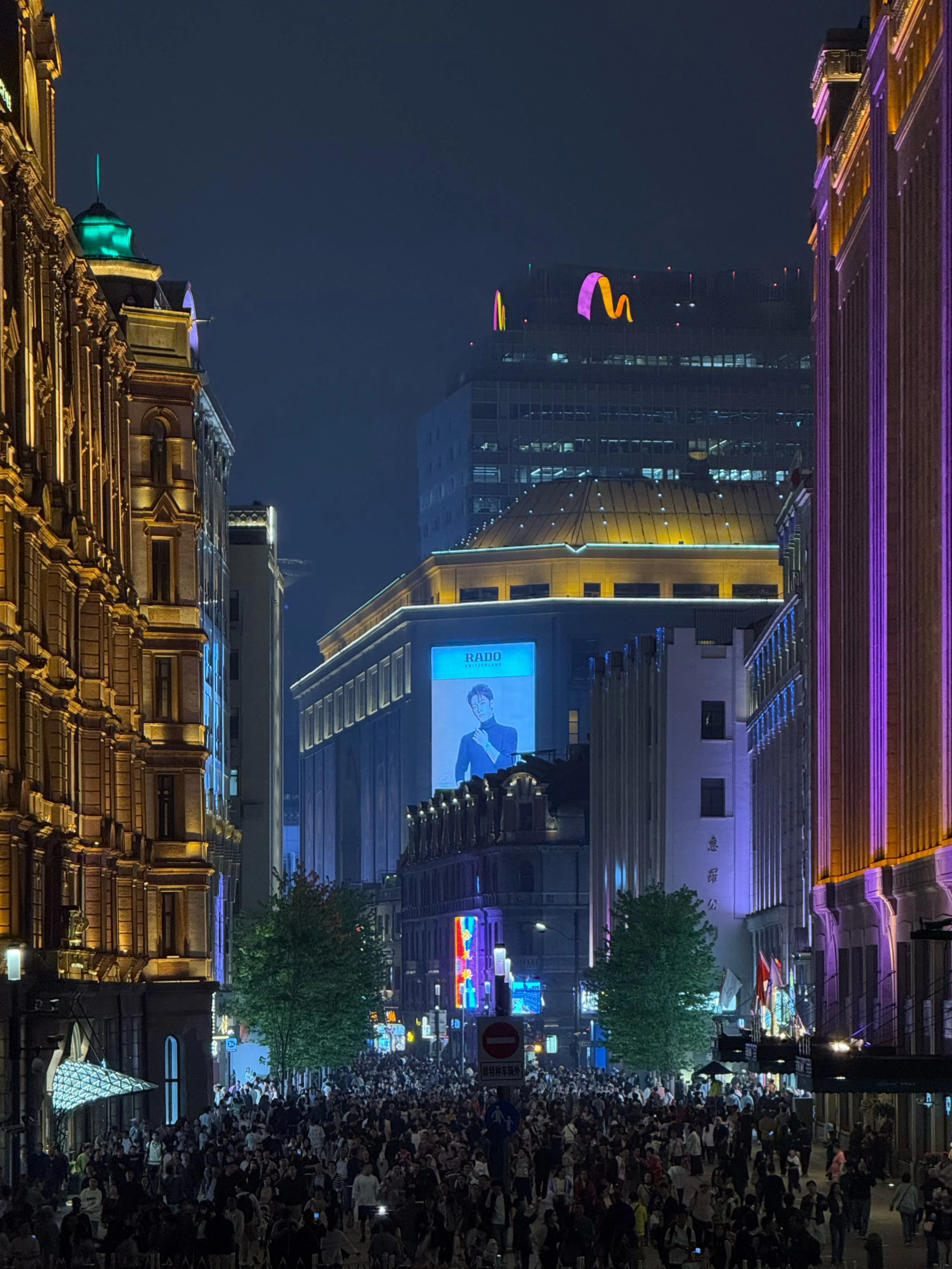
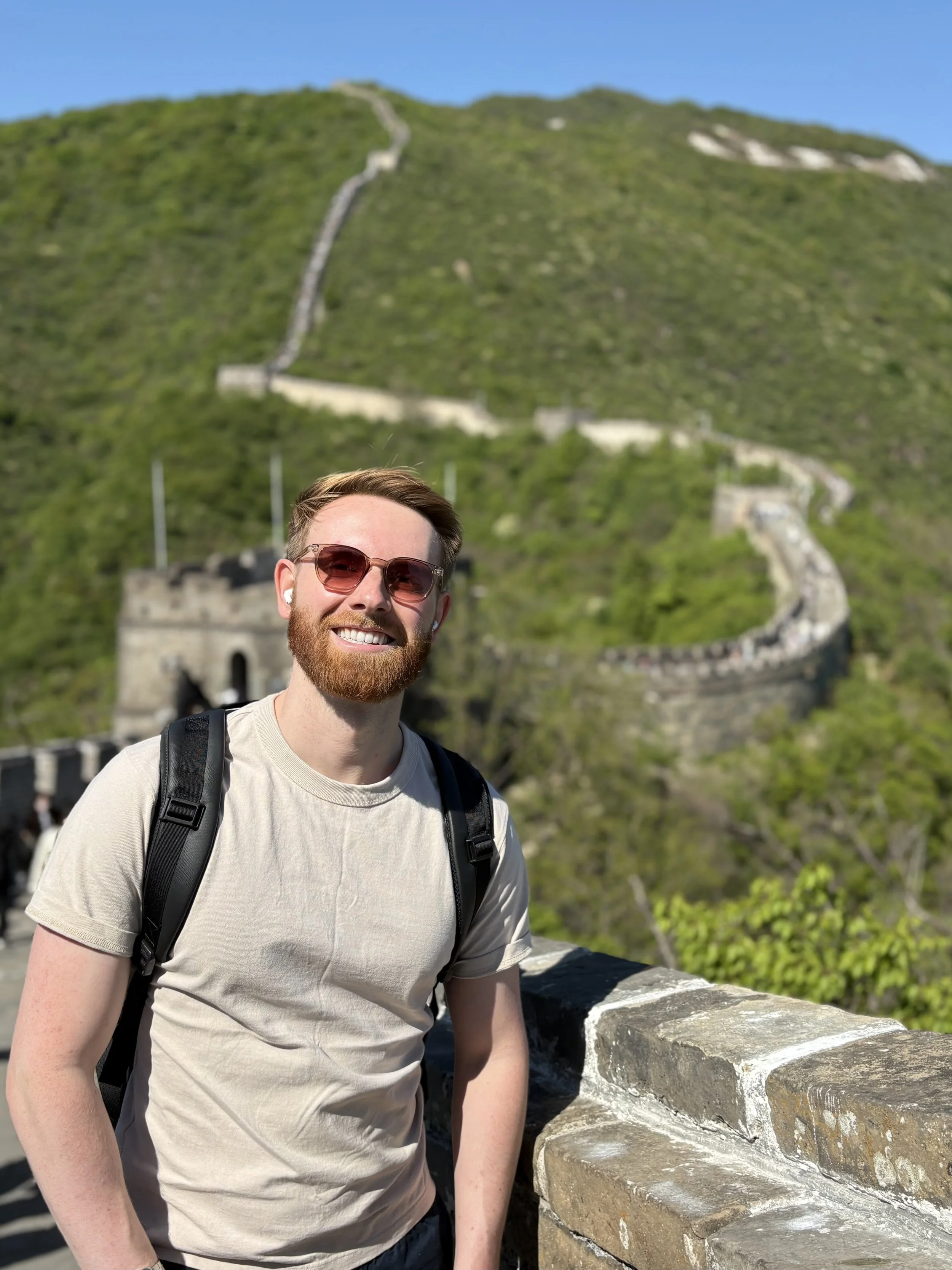
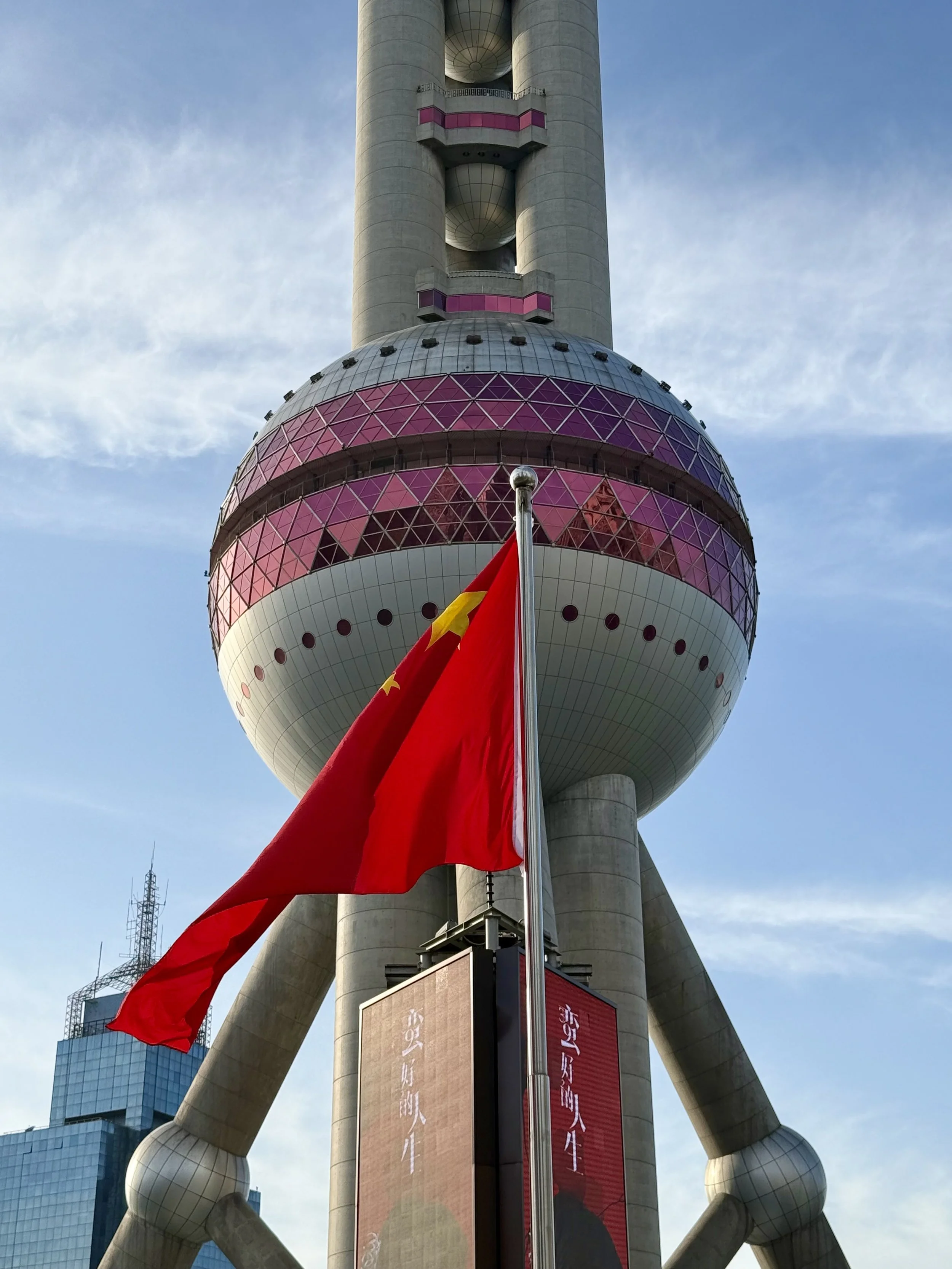
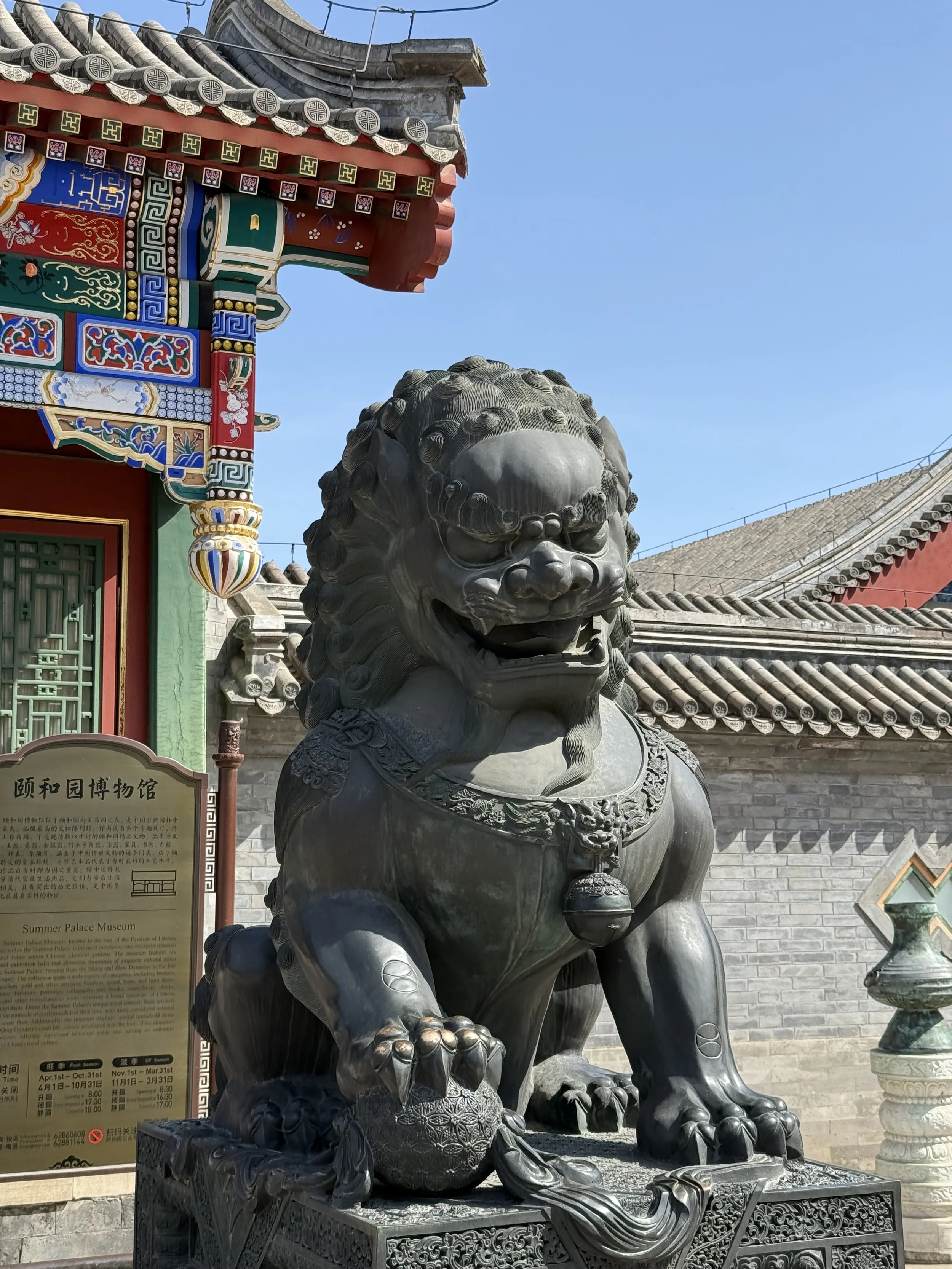
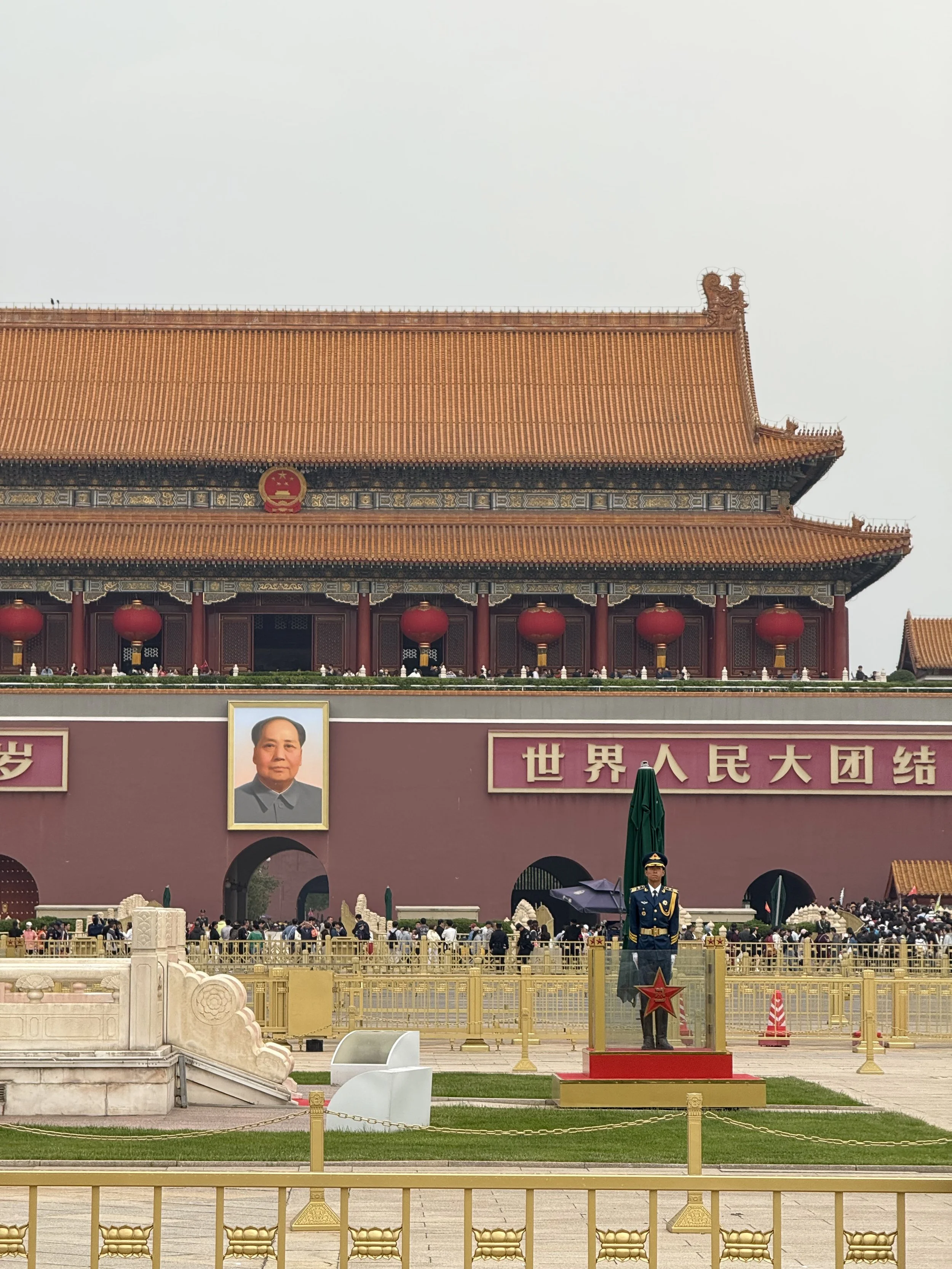
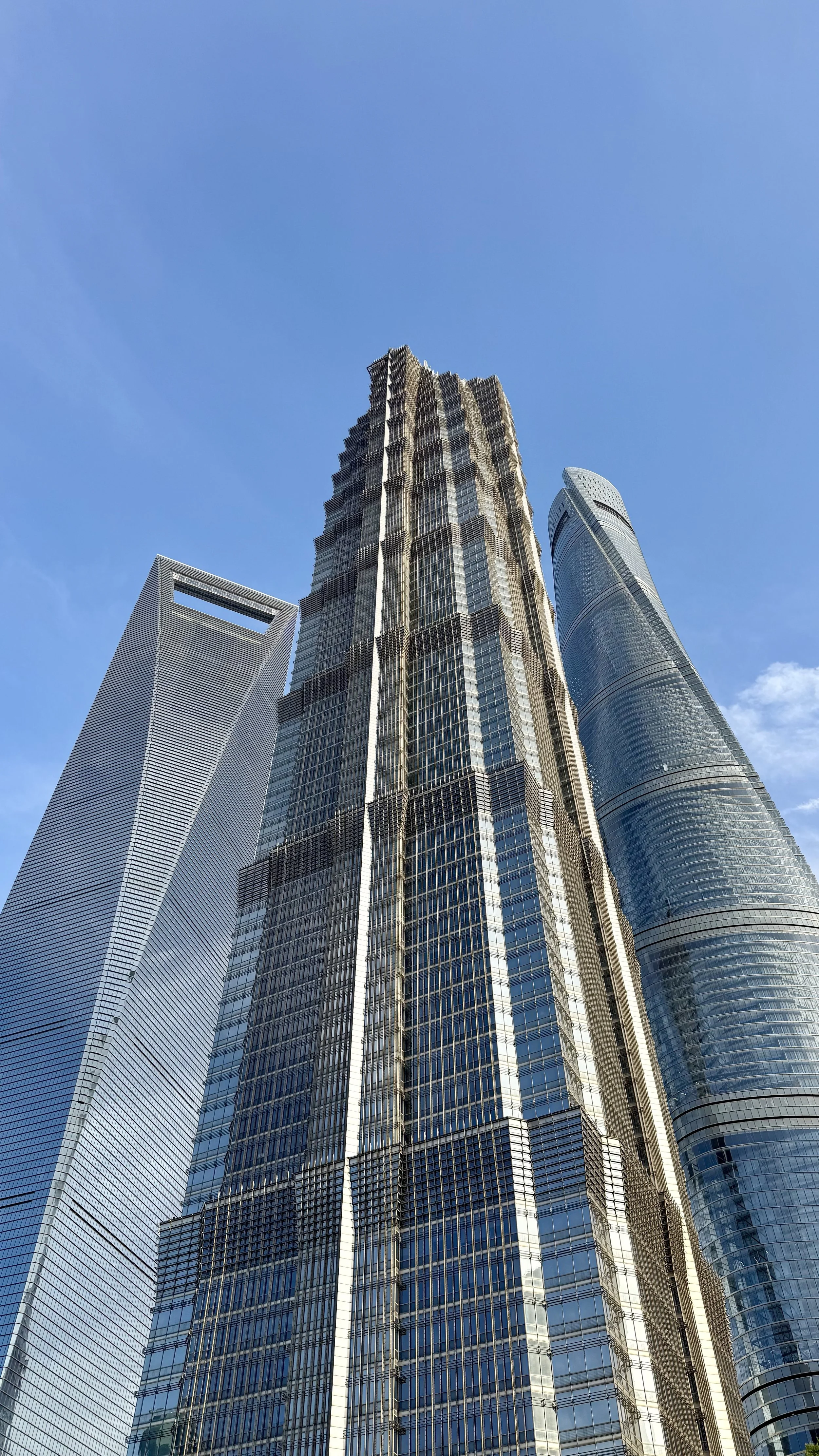
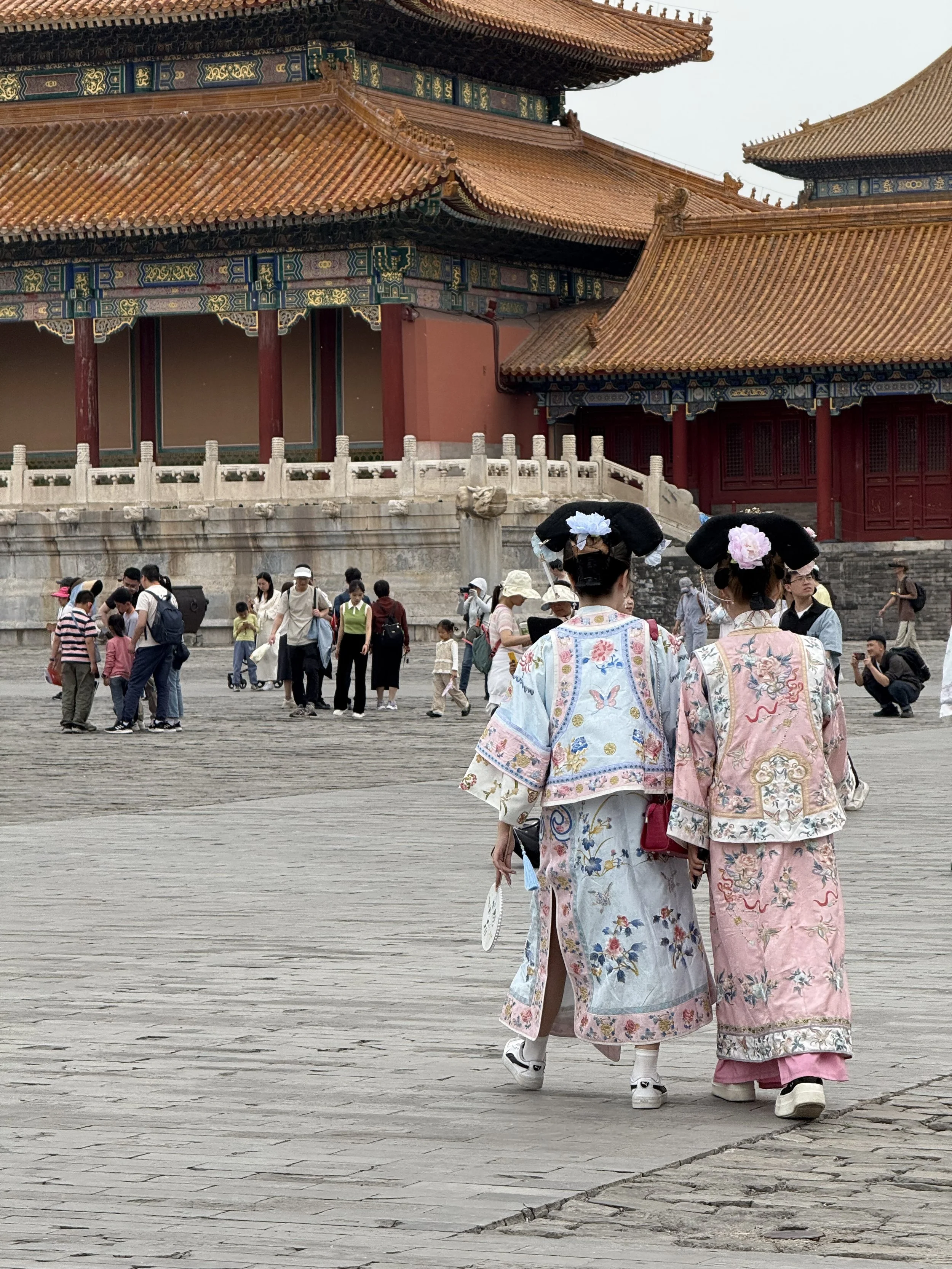
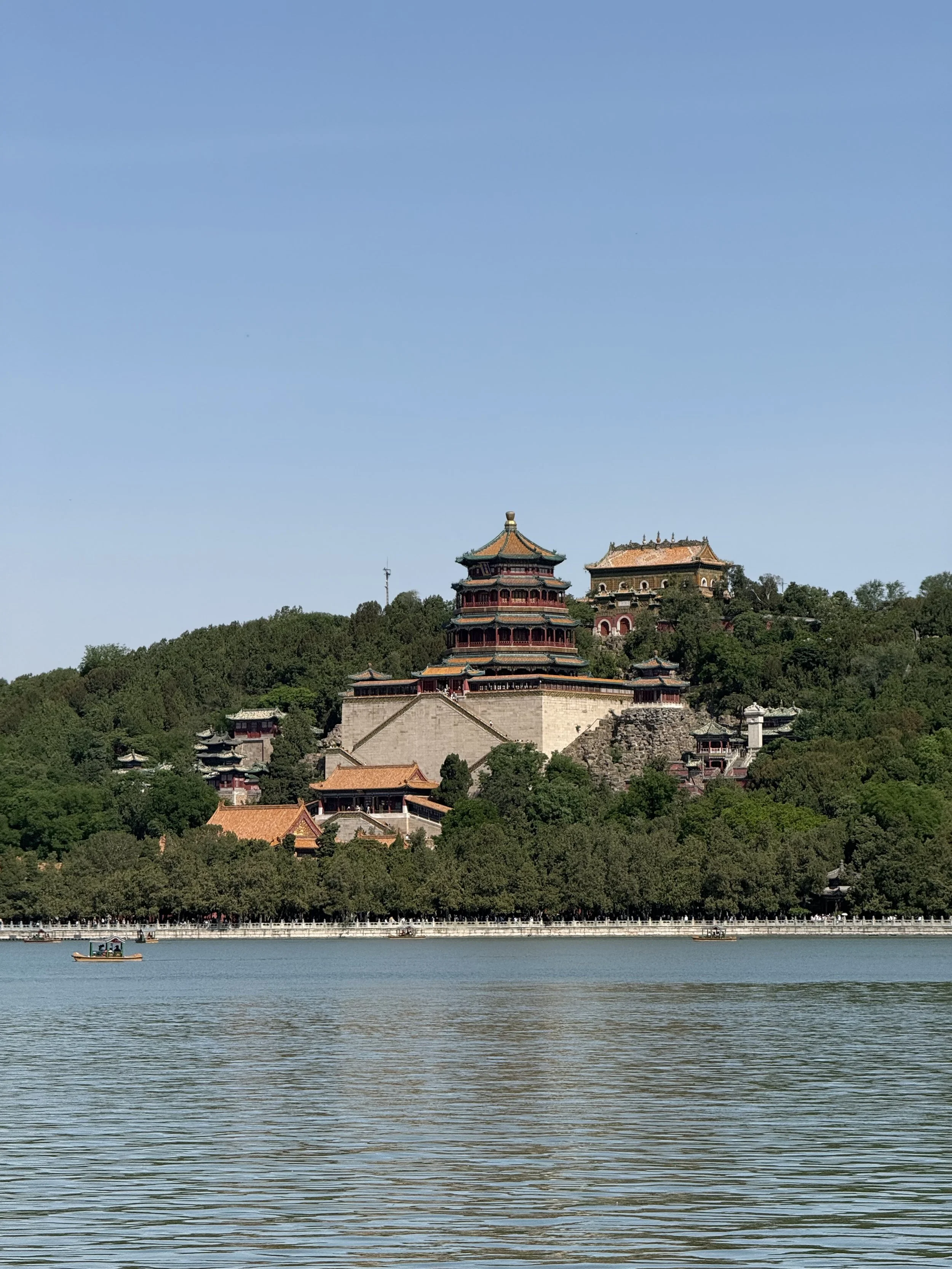
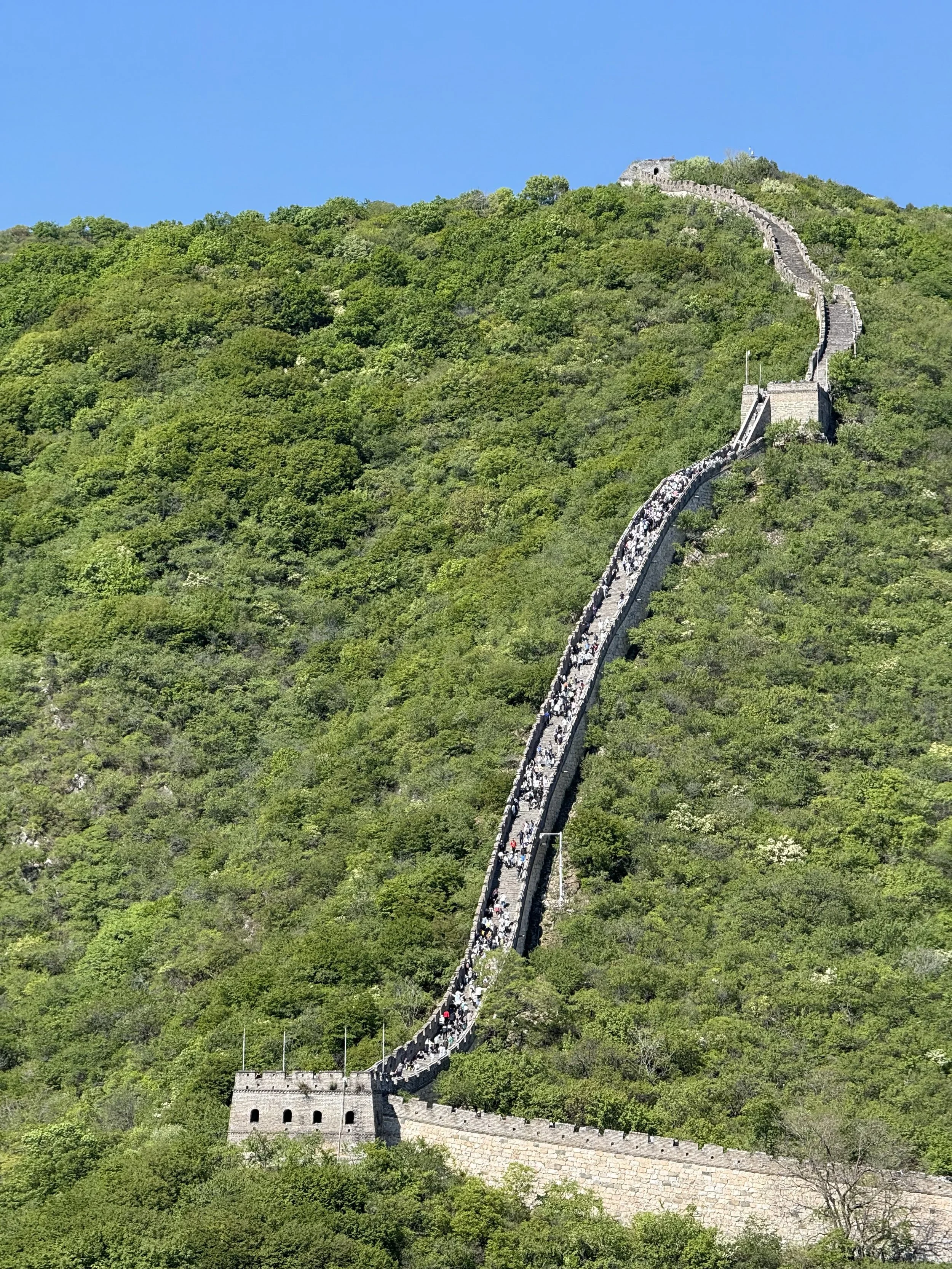
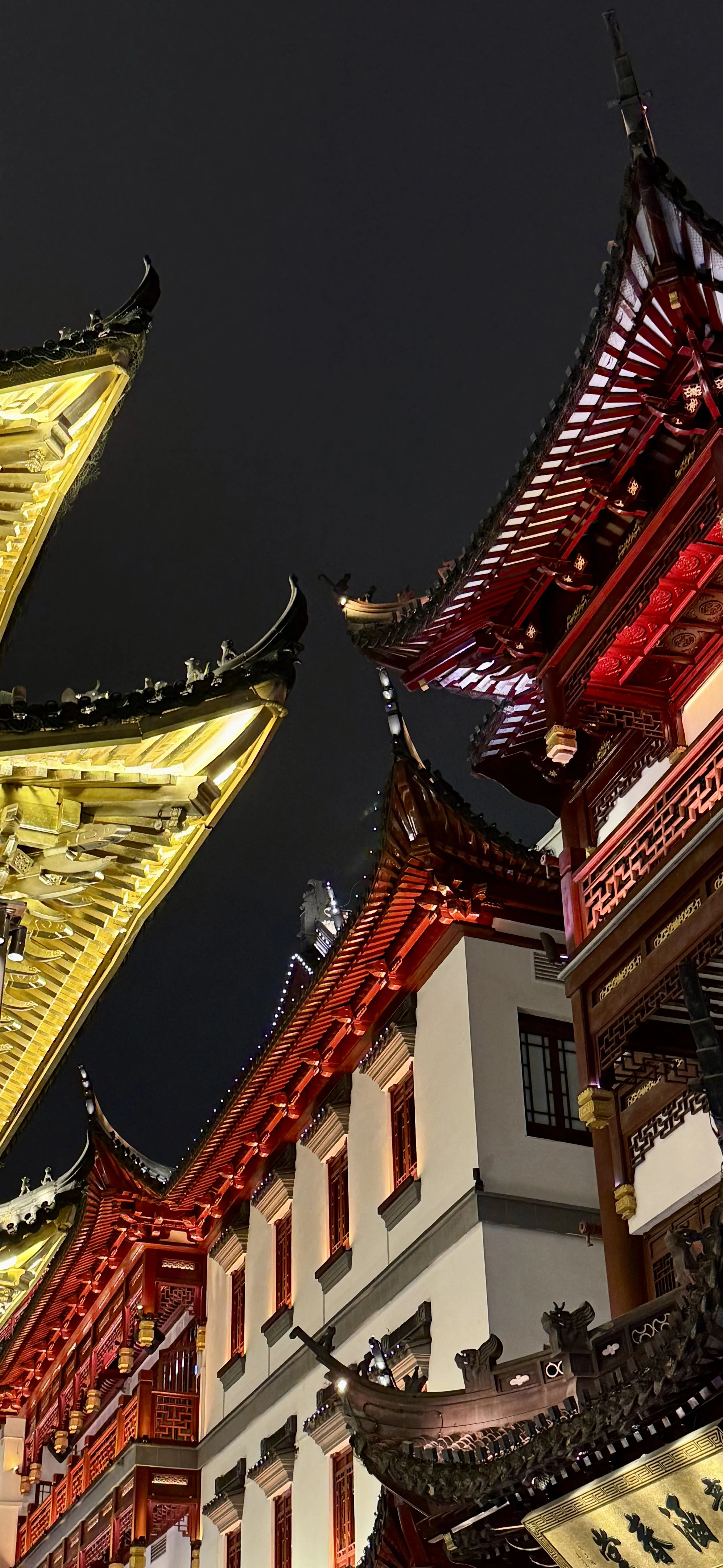
Key moments from our time in China (Shanghai and Beijing)
Entry Requirements
At the time we travelled, we used China’s visa-free transit policy, which allowed us to stay for up to six days without needing a full visa. Since then, visa-free entry has expanded to up to 30 days for UK travellers, making this kind of stopover even more appealing. These things do change, so make sure you check the latest policy before booking.
Flying with Air China
Here was our route:
London Gatwick → Shanghai Pudong (~10h)
Shanghai Pudong → Tokyo Narita (~2h)
Osaka Kansai → Beijing Capital (~2h)
Beijing Capital → London Heathrow (~11h)
We had good flight times, 25kg checked luggage each, and paid just £750 per person. We felt like this was an incredibly good deal. To add some context, Western airlines were coming in at nearly double the price and adding at least four hours to the long-haul legs.
I’d read mixed reviews about Air China beforehand, so I wasn’t sure what to expect — but after four flights, I’d happily fly with them again. Everything was smooth, comfortable, and the food was absolutely fine. The Wi-Fi didn’t work… but that feels fairly standard across most airlines anyway.
Shanghai (3 Days)
First Impressions
Shanghai immediately exceeded expectations. It’s one of the largest cities in the world, but what stands out isn’t just the scale — it’s how clean, modern and efficient everything feels. The city runs smoothly in a way that feels noticeably ahead of many Western cities.
One of the strangest first impressions was how quiet the roads are. Almost everything is electric — cars, buses, even motorbikes — so despite the traffic, there’s very little engine noise. It’s slightly surreal at first. However, that quietness is often replaced by a different kind of noise: megaphones, public announcements, and taxi sat-navs played at full volume. It can feel quite intense at times — we ended up using noise-cancelling AirPods more than expected.
Even so, the overall feeling is that Shanghai is incredibly polished, safe, and easy to navigate.
Where We Stayed
We stayed at Yitel Premium Nanjing Road. It wasn’t the most characterful hotel, but the location was hard to beat — right on Nanjing Road, within walking distance of the Bund and well connected to the metro. At around £63 per night (for two, including breakfast) for this four star hotel, it was excellent value.
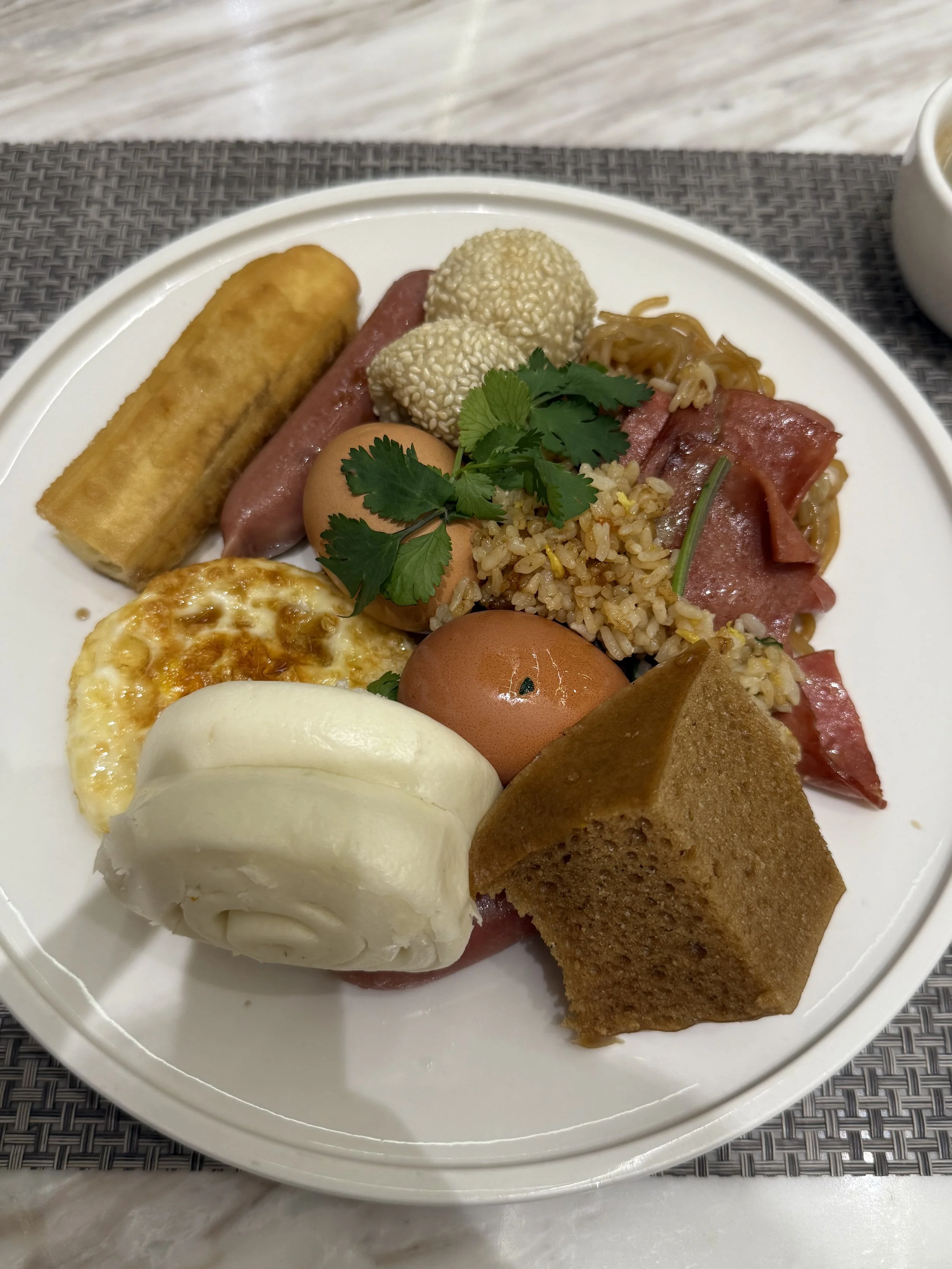
The breakfast was a traditional Chinese buffet — noodles, rice, buns — which was good to try, but very heavy. By day three, we opted out.
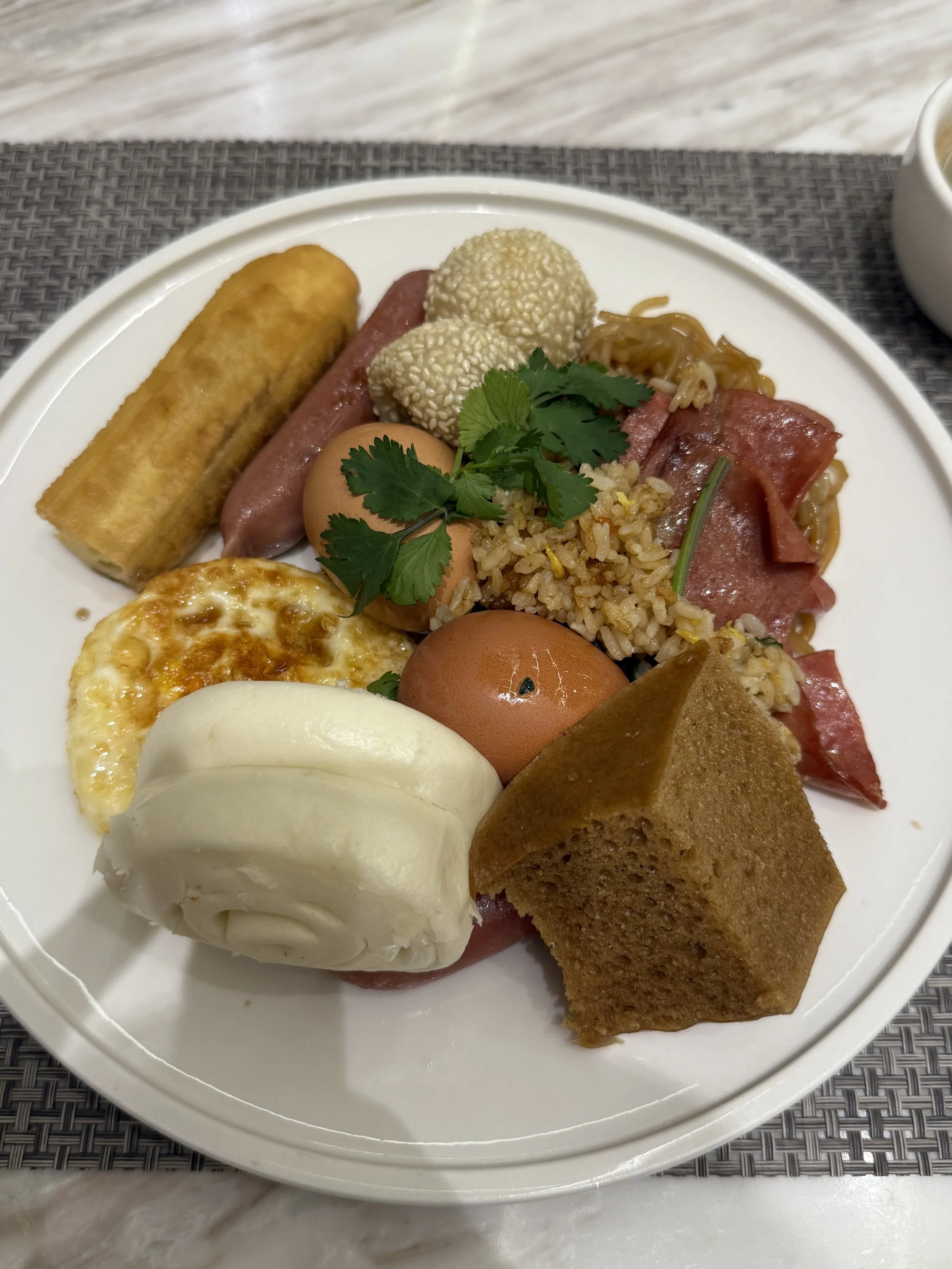
Breakfast at the Yitel Premium Nanjing Road
What We Did in Shanghai
The Bund
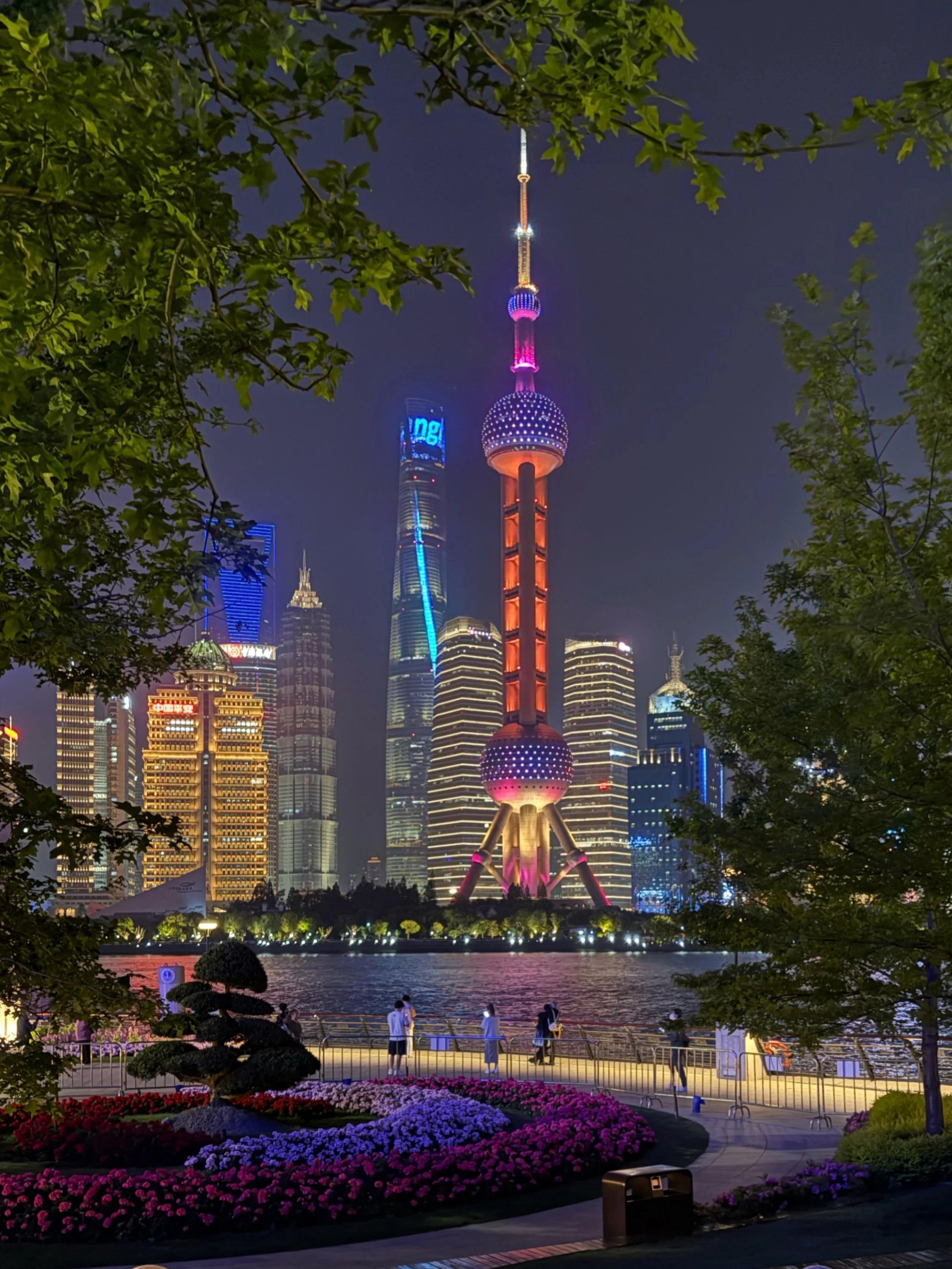
The Bund is the best place to start. It runs along the Huangpu River and perfectly captures the contrast that defines Shanghai. On one side, you have historic European-style buildings from the city’s trading past. Across the river, Pudong’s skyline is ultra-modern — dominated by some of the most futuristic skyscrapers in the world. Standing there, you’re effectively looking at old Shanghai and new Shanghai at the same time.
It’s especially good in the evening when the skyline lights up and there are light shows every hour — just make sure you arrive before 9pm. We turned up at 10pm on the first night, only to watch the entire city lights switch off almost instantly. This was actually very funny but hopefully you can learn from our mistake.
A great viewpoint is at the North Bund Greenland. I’d recommend to visit here both during the day and at night time.
If we had more time I would have definitely done a Huangpu river cruise at night. We saw these motoring past and they looked so cool.
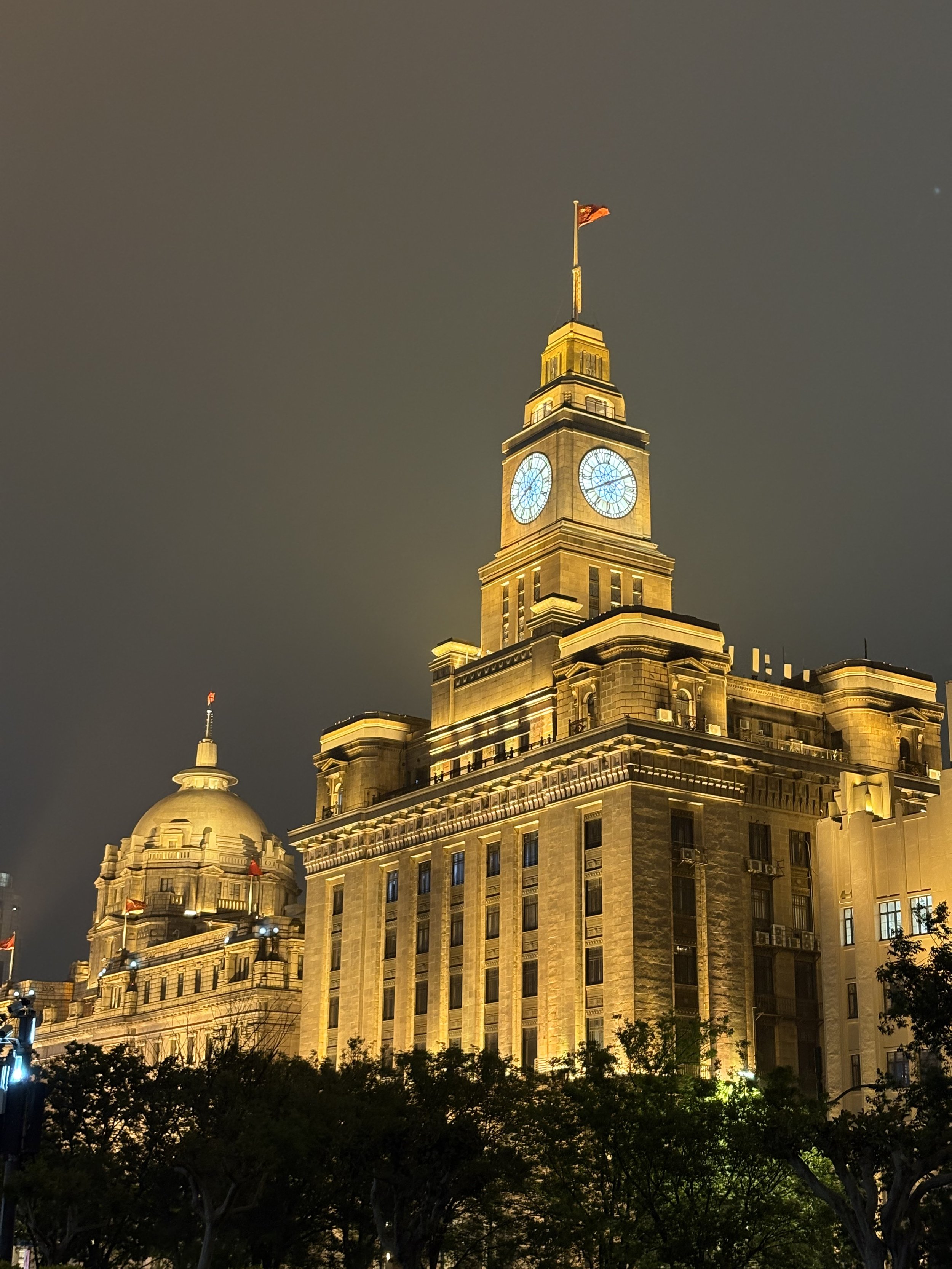
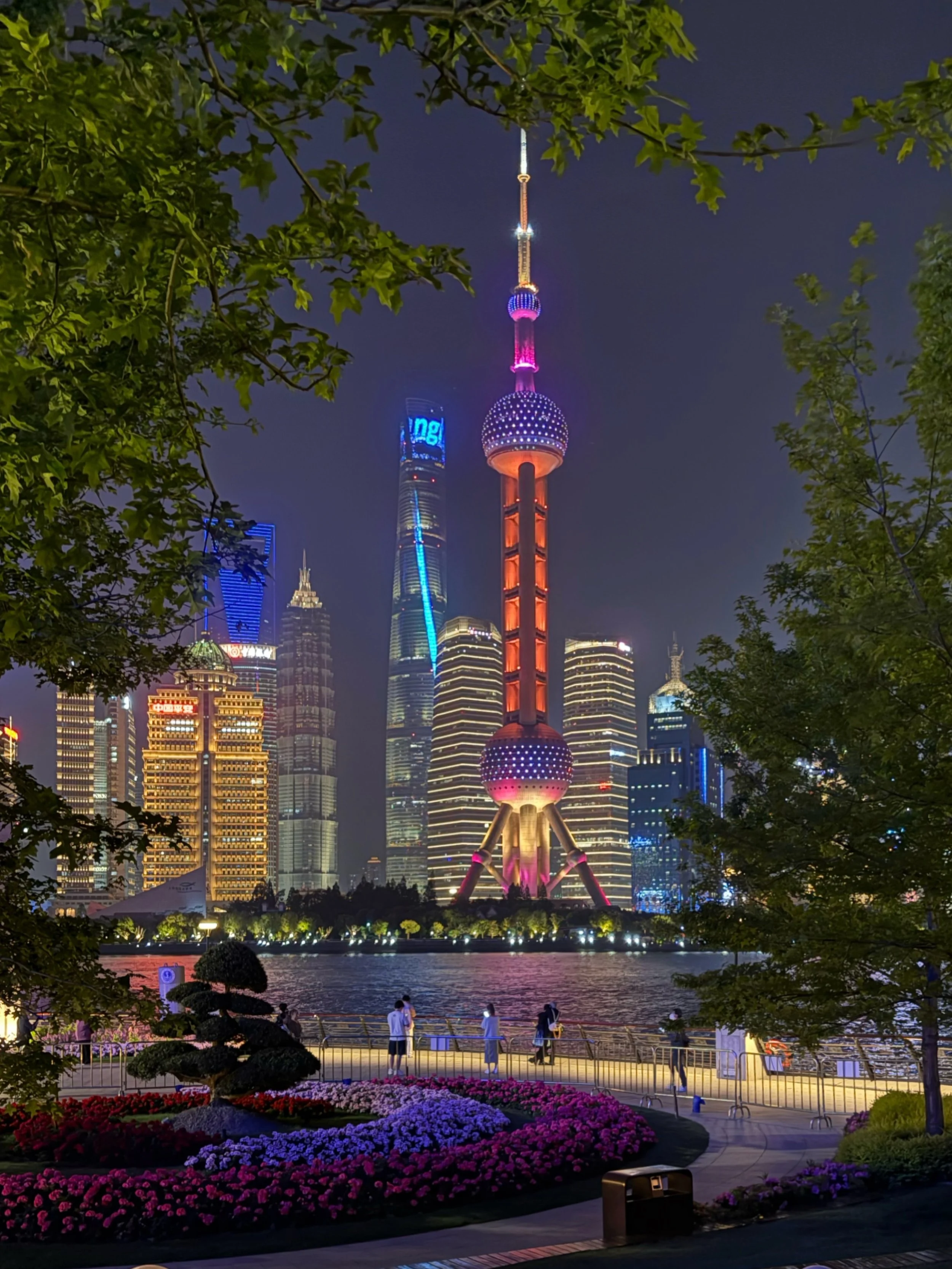
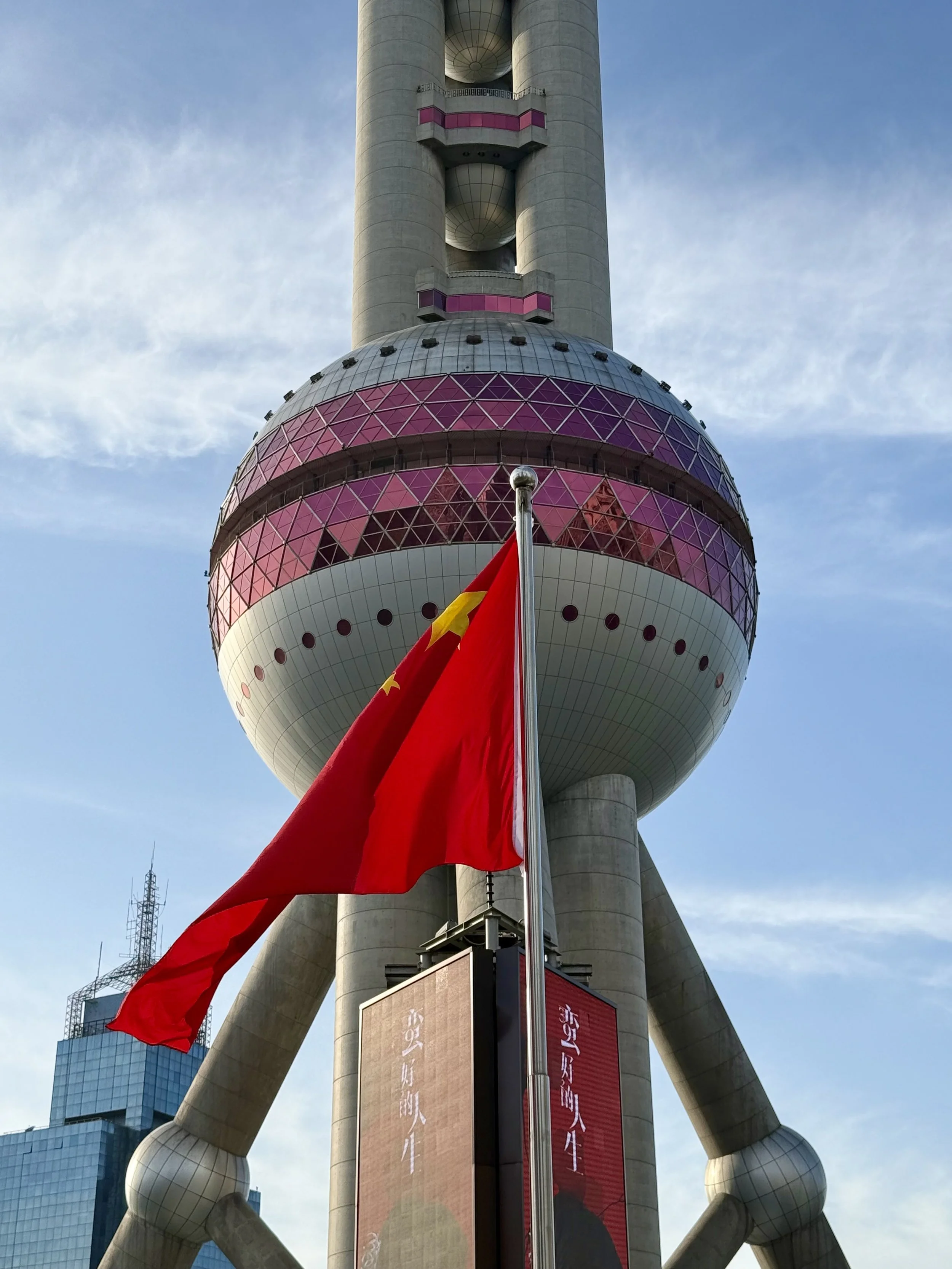
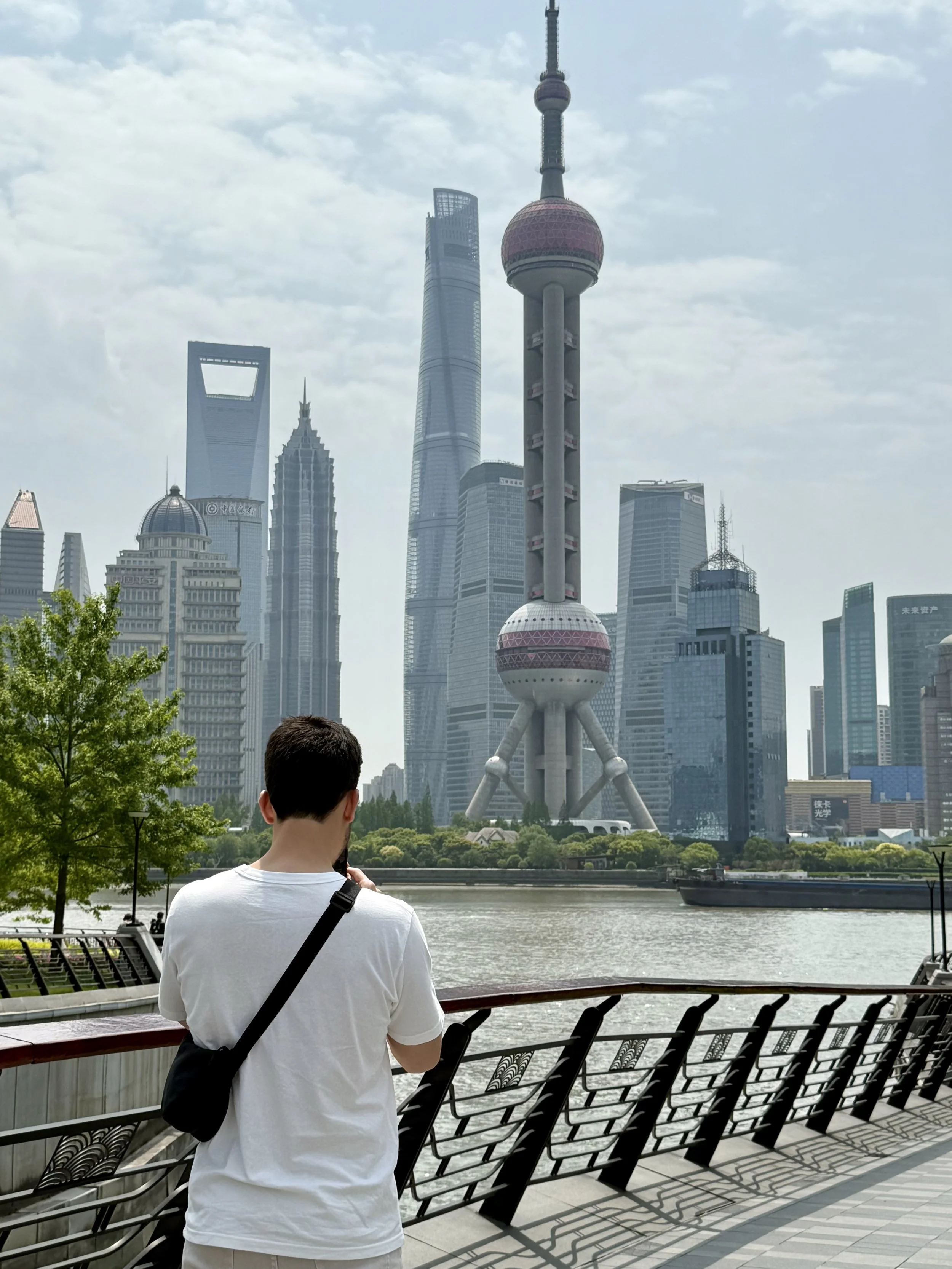
The Bund
Shanghai Tower & Lujiazui
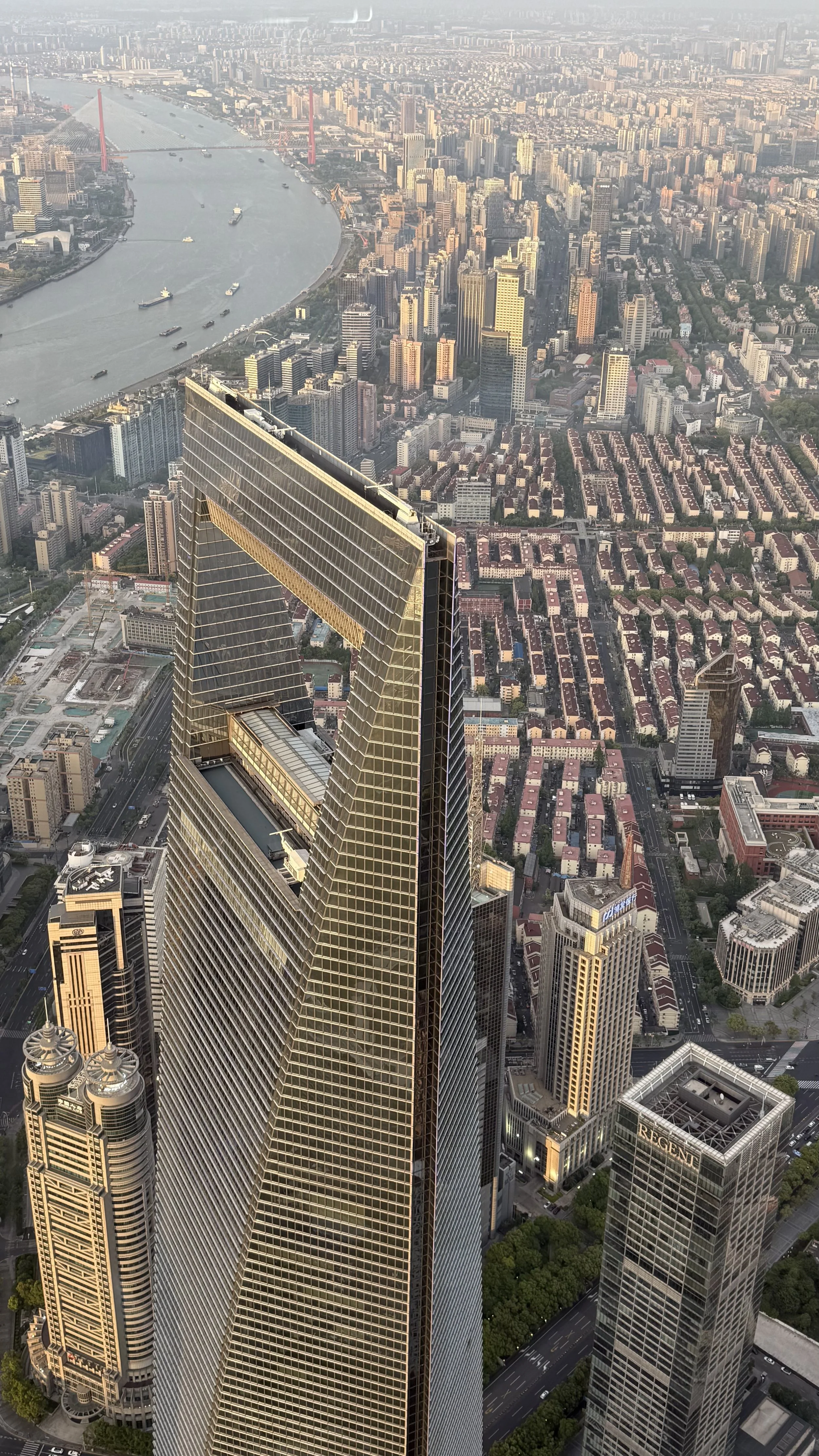
The Shanghai Tower is the second tallest building in the world, and going up it gives you a proper sense of the city’s scale. We got our ticket from Get Your Guide, which was £39 per person. This felt quite expensive but I would say it was worth the money.
From the top, Shanghai feels endless — dense, vertical, and stretching far beyond what you can take in at street level. One of the most surreal parts is looking down on the neighbouring mega-skyscrapers: Shanghai World Financial Centre, the Jin Mao Tower, and the Oriental Pearl Tower.
Even if you don’t go up, the elevated walkway area around Lujiazui— especially near the metro — is worth exploring for the views of the super-tall buildings. There is a great elevated walkway.
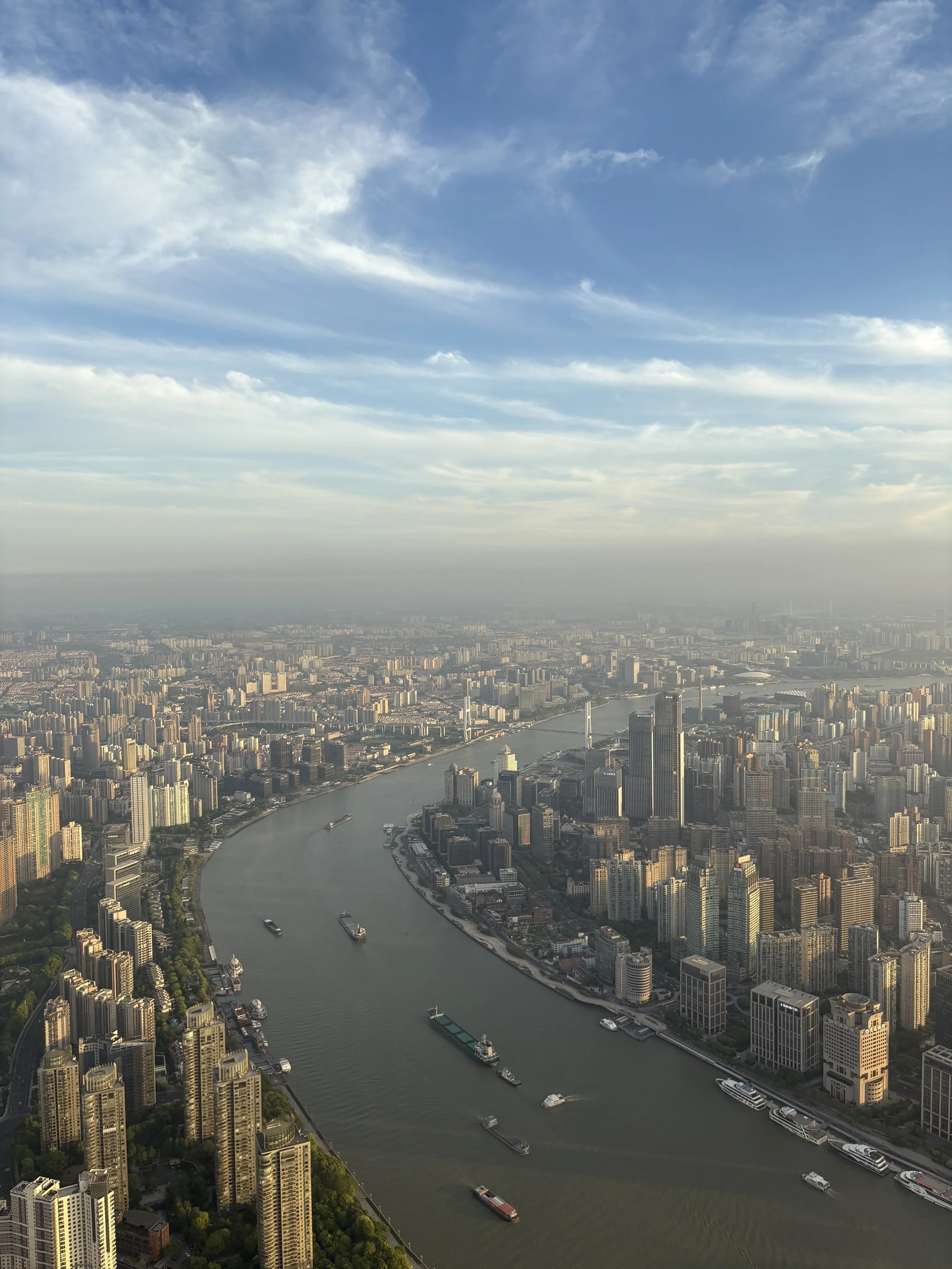
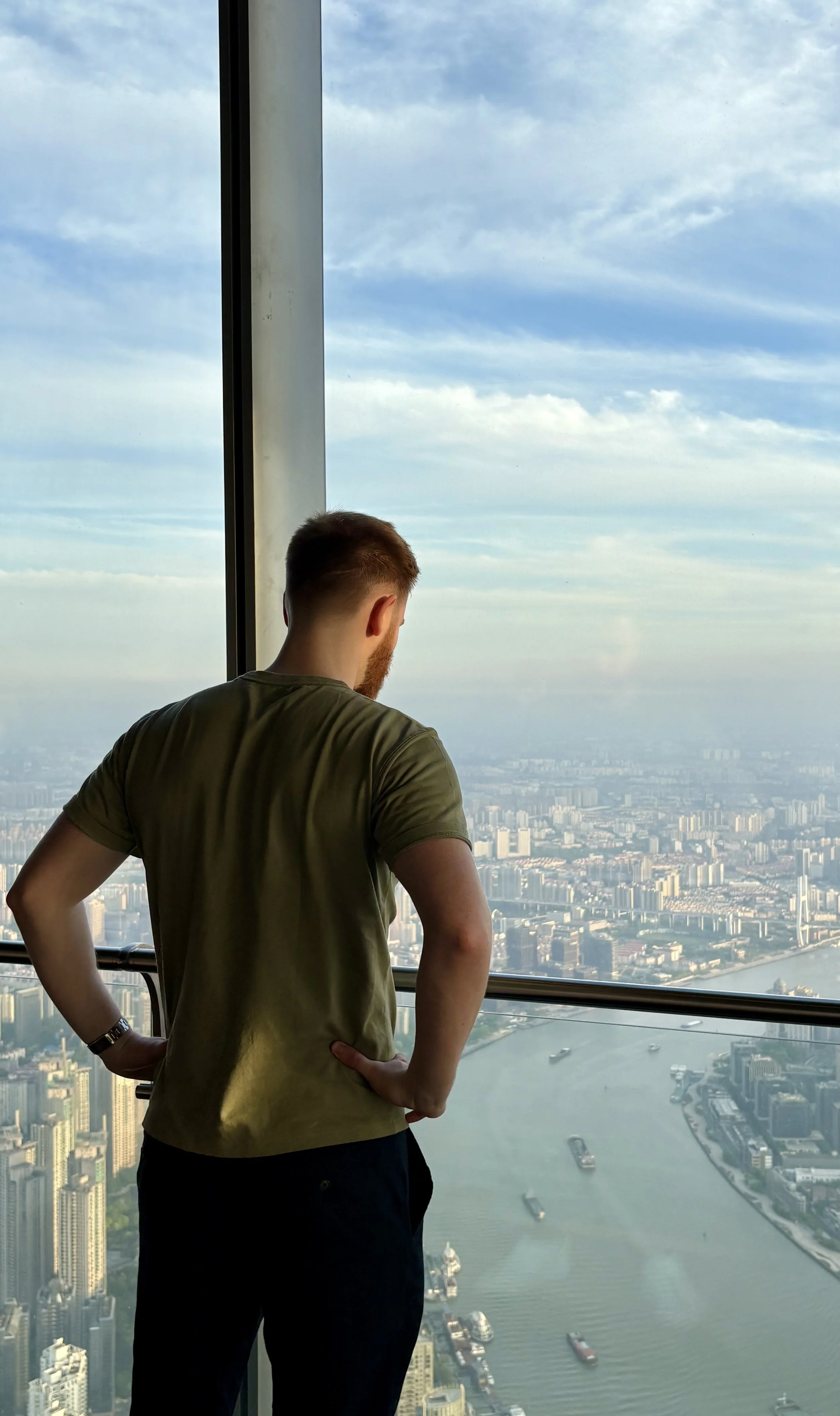
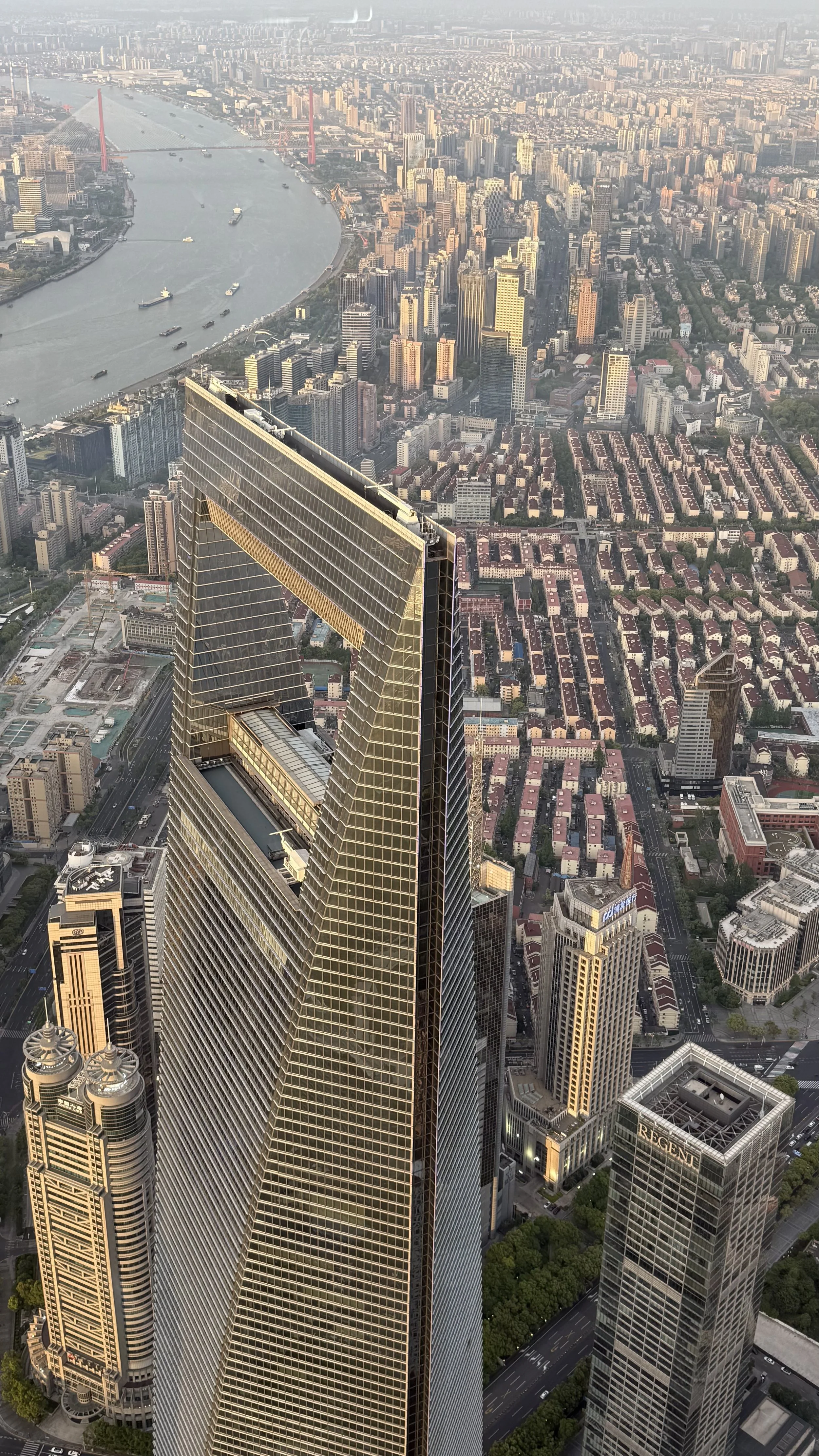
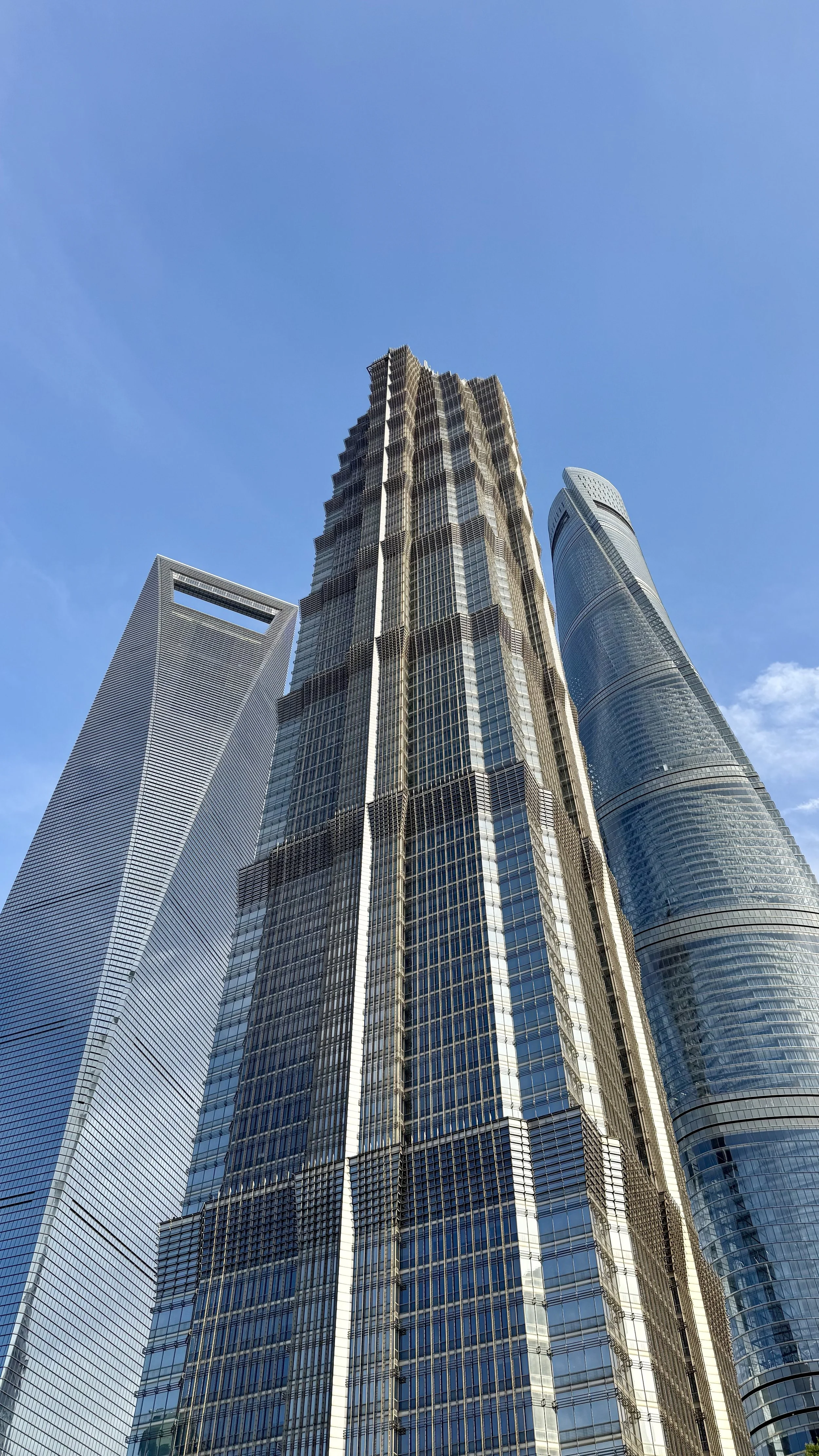
Shanghai Tower and Lujiaziu
1933 Old Millfun
The 1933 Old Millfun is an incredible brutalist building. Originally a 1930s slaughterhouse, it’s now a maze of concrete walkways, ramps and spiral staircases. There’s not a huge amount to “do” here — it’s more about exploring the architecture itself.
It doesn’t take long, but it’s a worthwhile detour if you’re into design or want something a bit different from the typical Shanghai highlights. We cycled there in 20 minutes from the Bund.
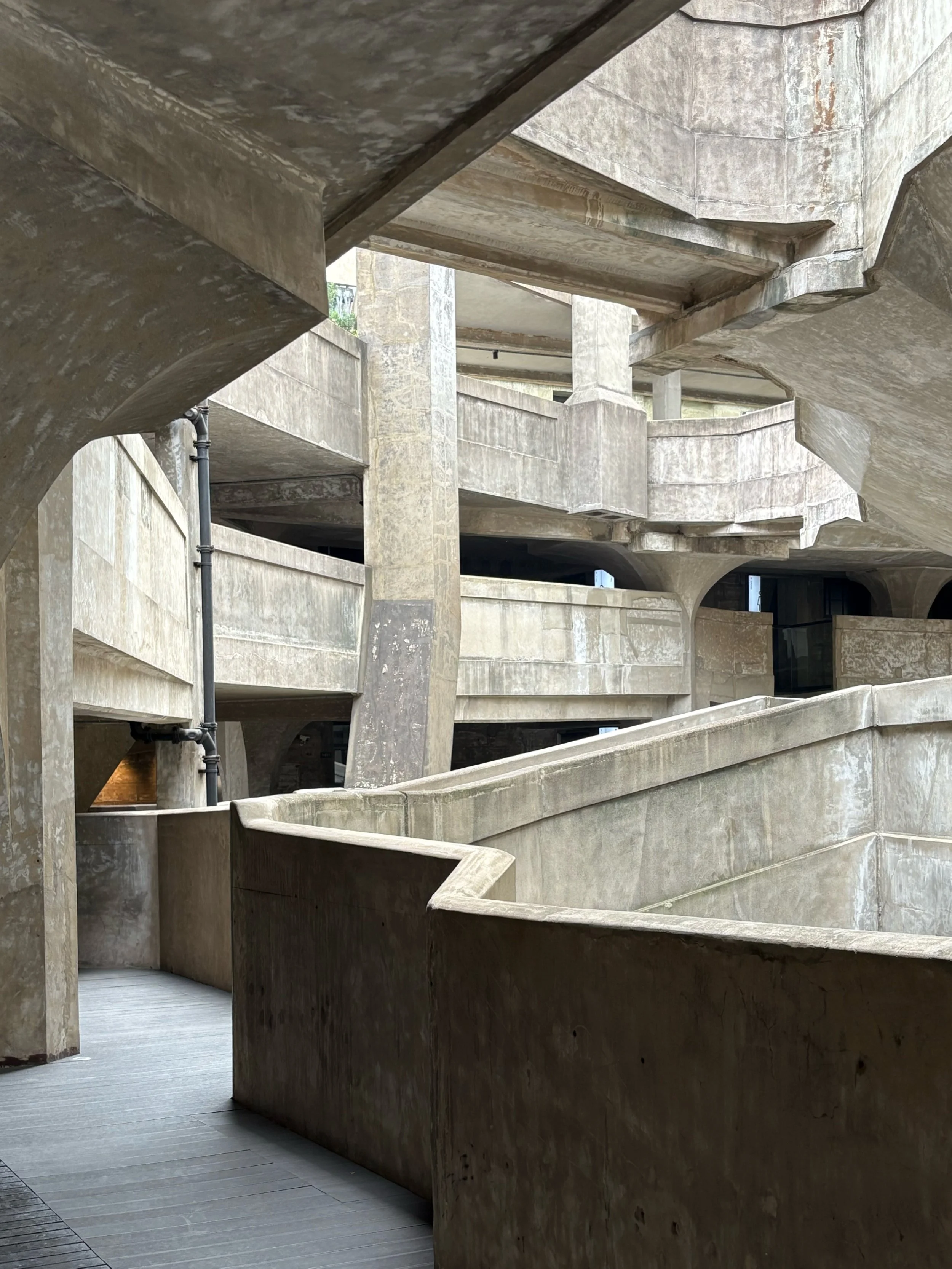
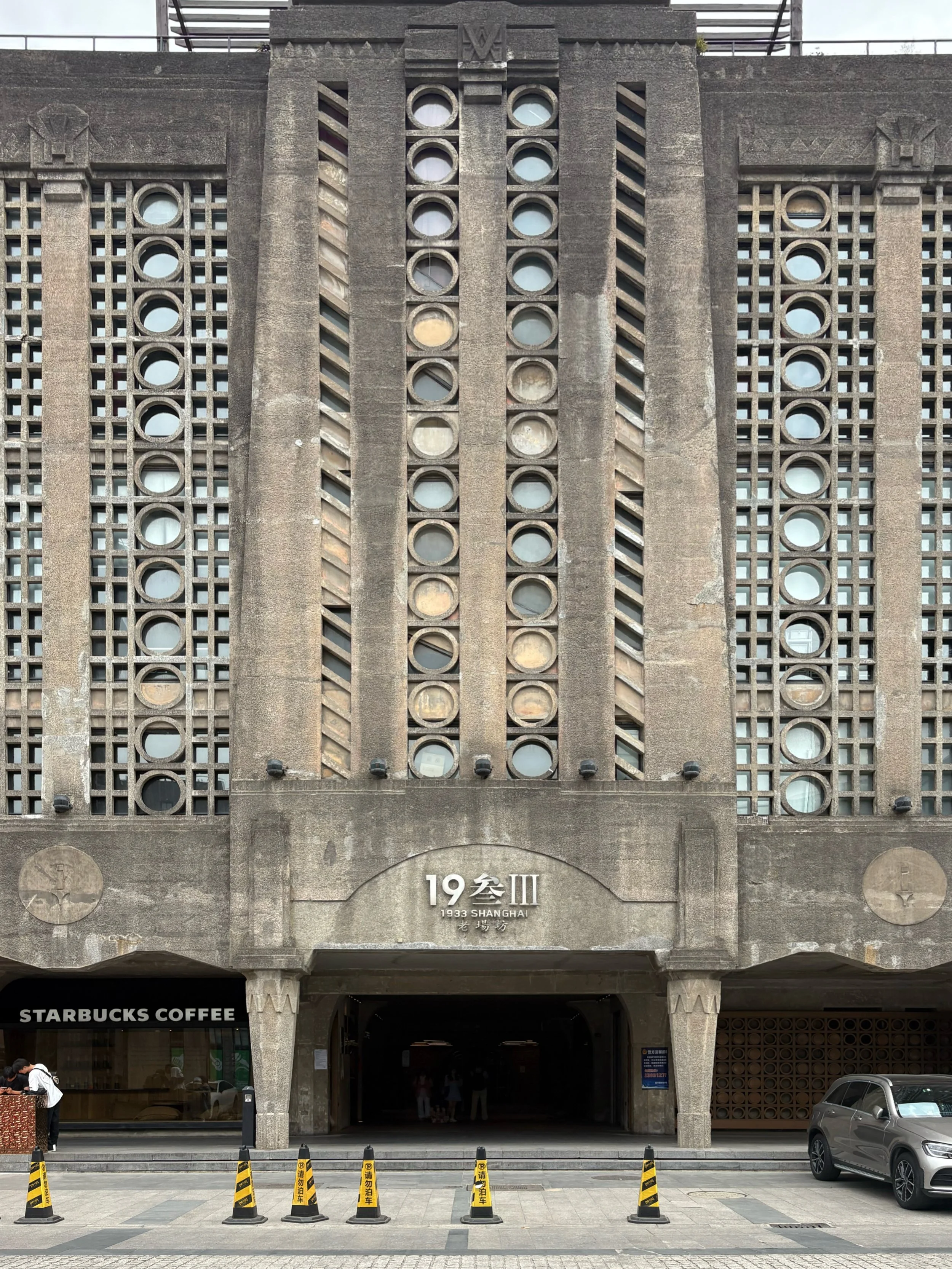
1933 Old Millfun
Former French Concession & Wukang Road
The Former French Concession offers a completely different side of Shanghai. Tree-lined streets, low-rise buildings, cafés and boutiques — it feels calmer and more liveable compared to the intensity of areas like the Bund or Nanjing Road.
It’s a great place to slow down for a few hours. Wukang Road is particularly nice to wander. We had a fantastic hotpot at the Guo Bi Pen Da restaurant.
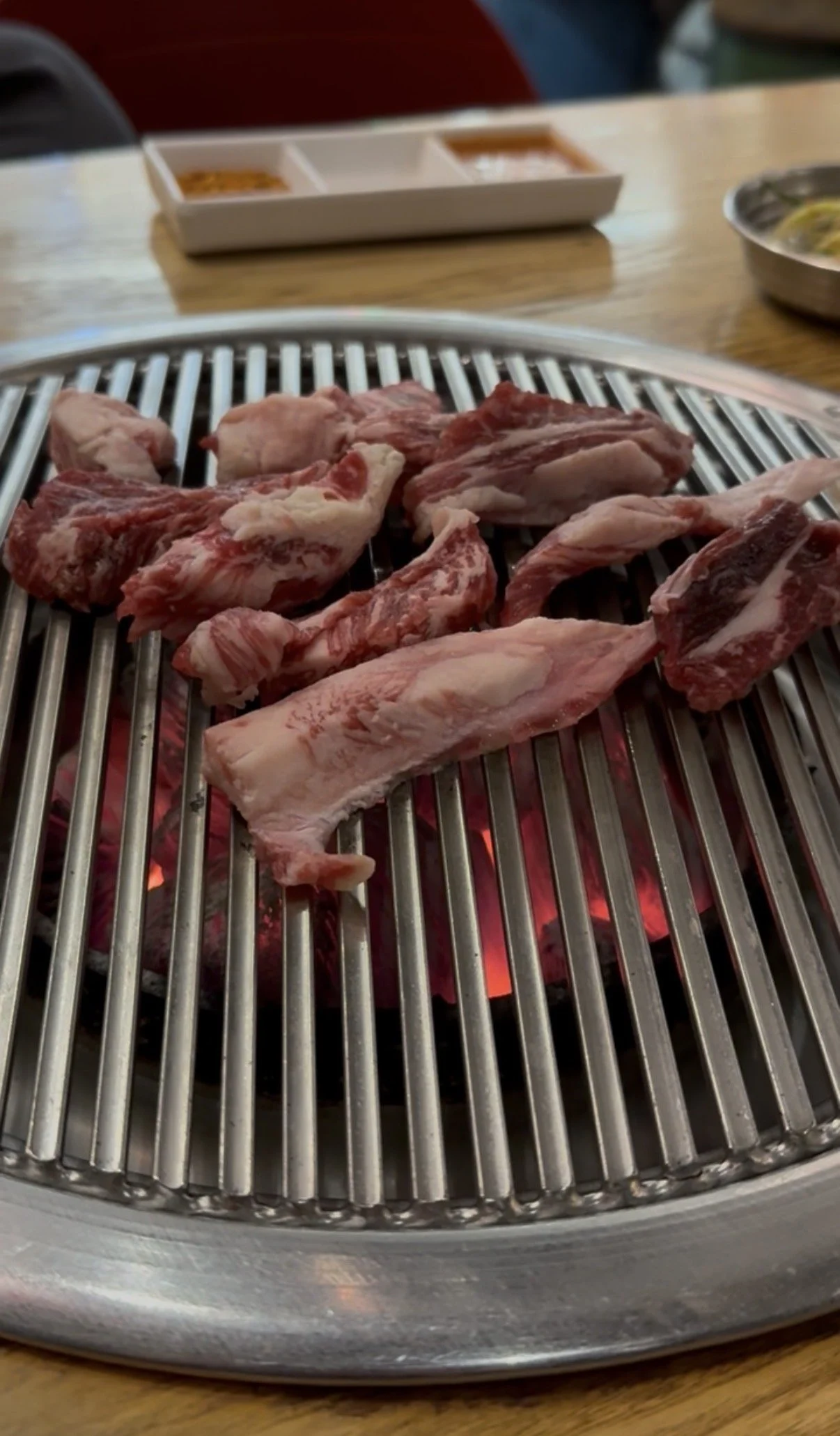
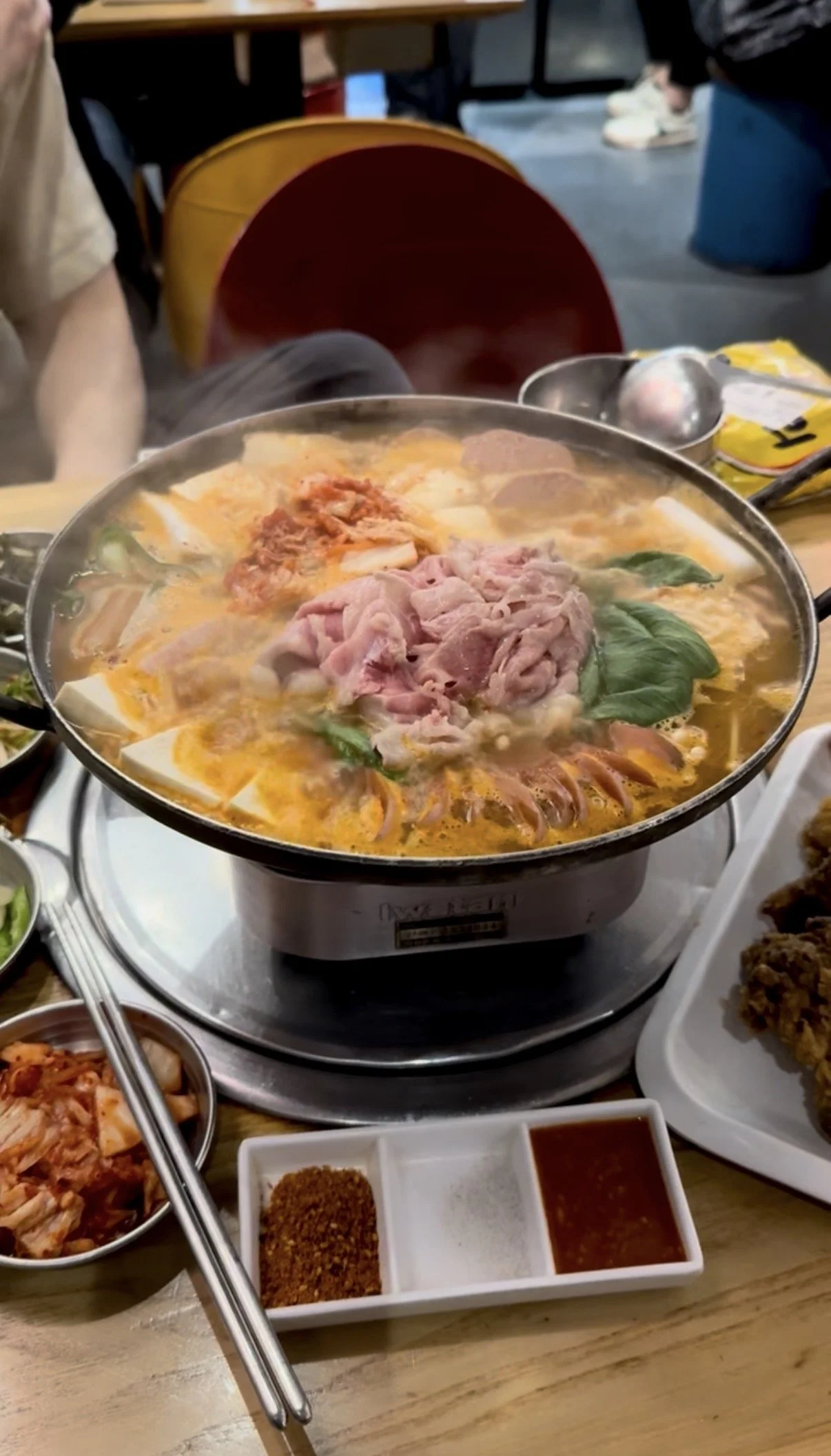
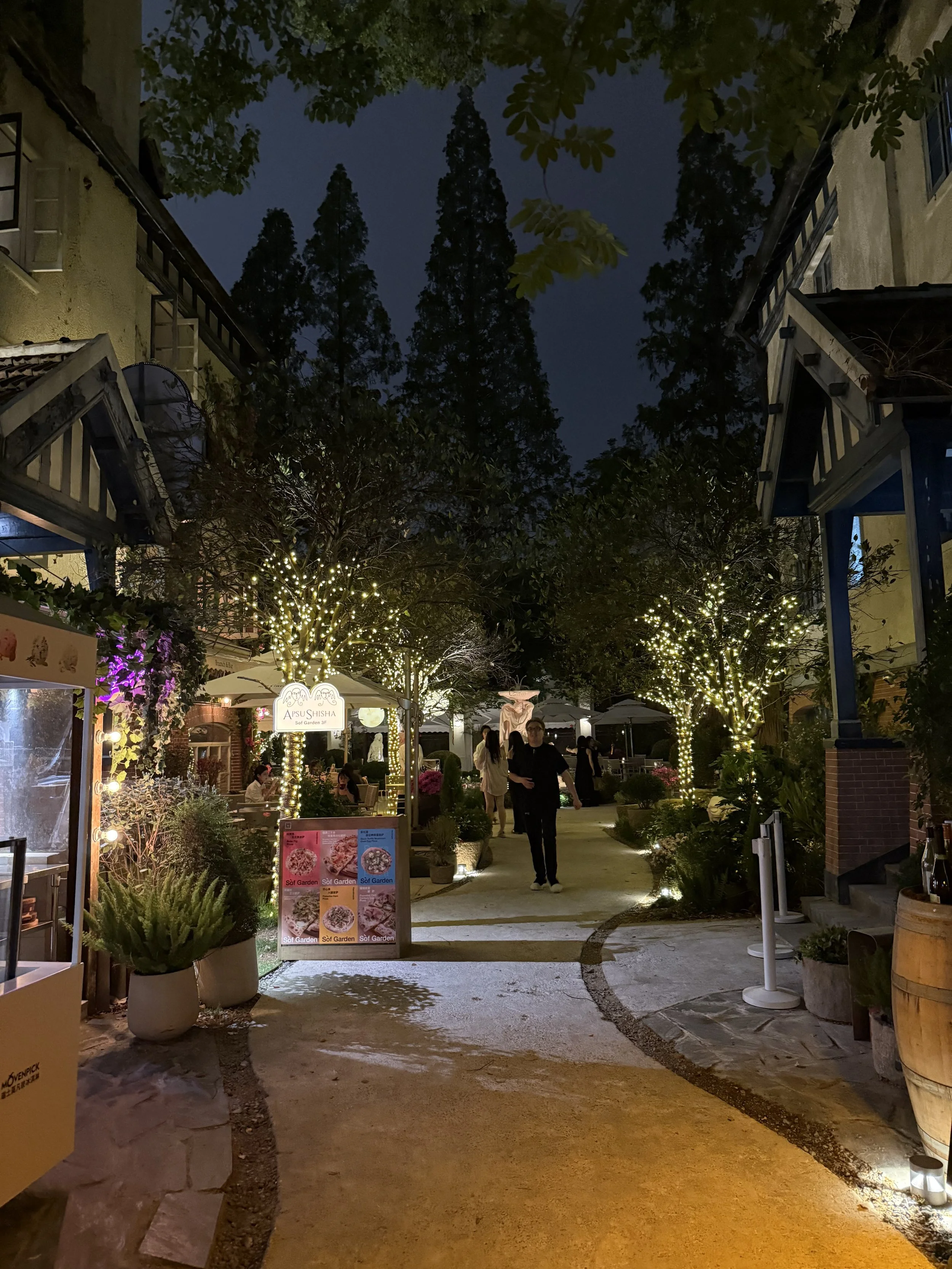
French Concession and Wukang Road
Yu Garden & Yuyuan Bazaar
Yu Garden is one of the best examples of classical Chinese garden design in the city, dating back to the Ming dynasty. Inside, you’ll find traditional pavilions, ponds, bridges and intricate wooden architecture — a stark contrast to Shanghai’s modern skyline. That said, the surrounding Yuyuan Bazaar is extremely busy and tourist-heavy, so expect crowds. There’s plenty of places to eat although, again, some felt a bit touristic.
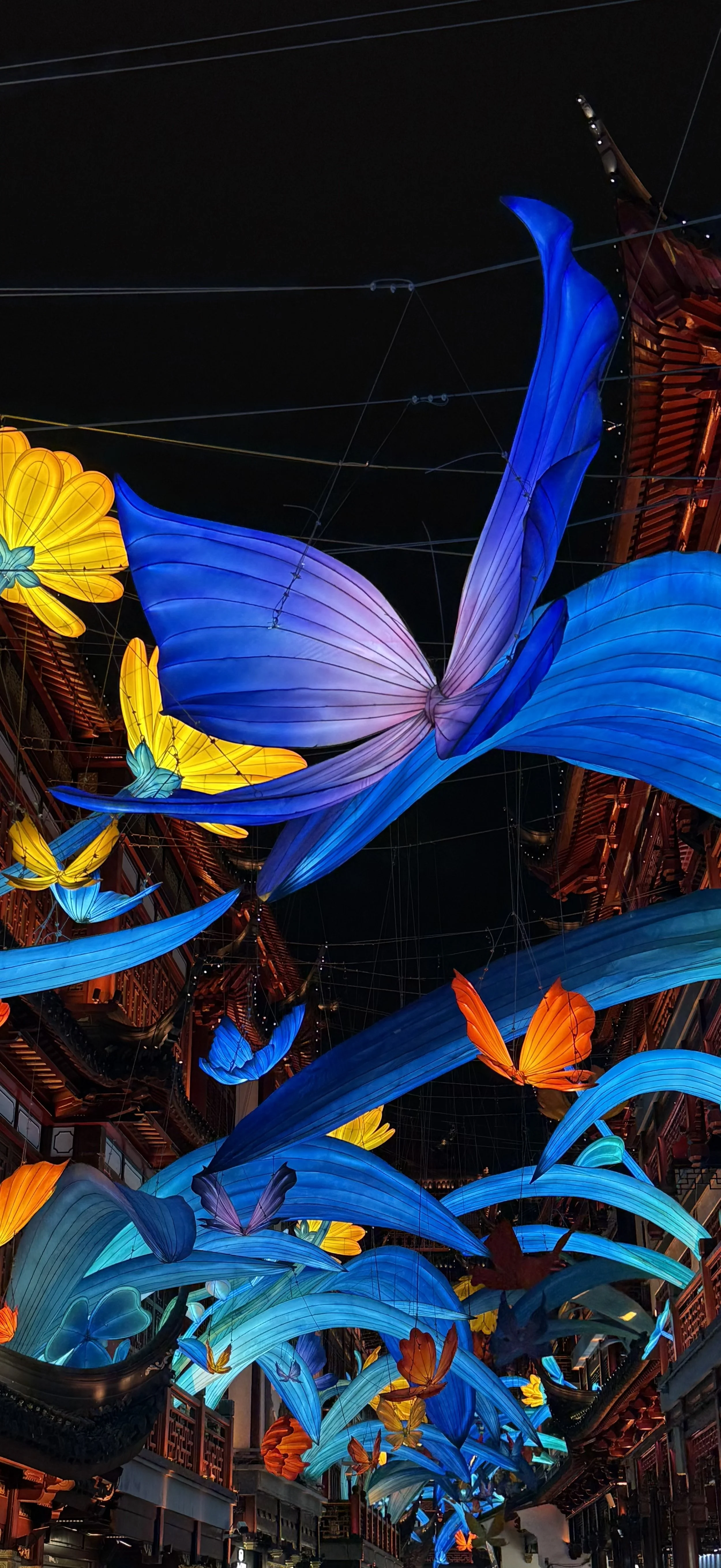
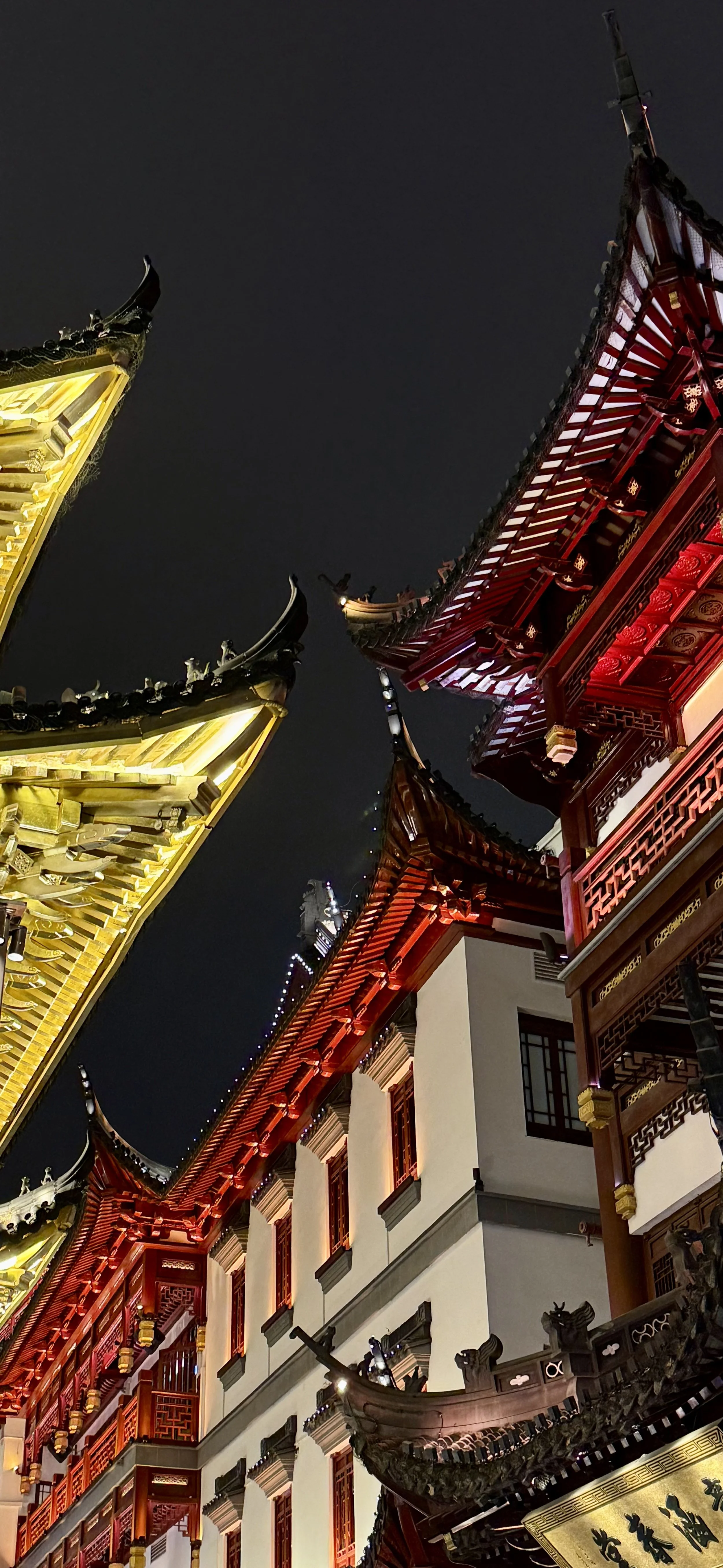
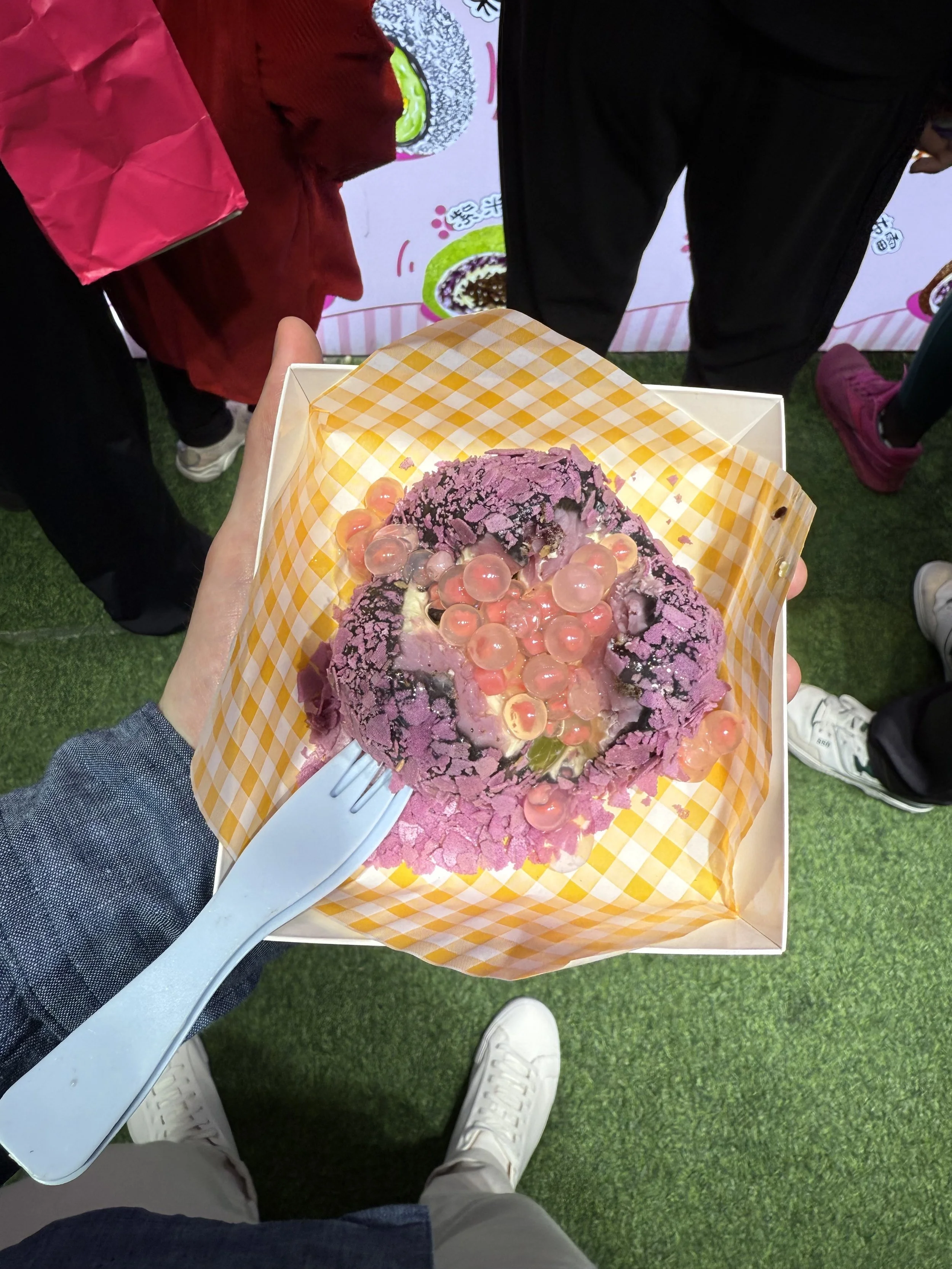
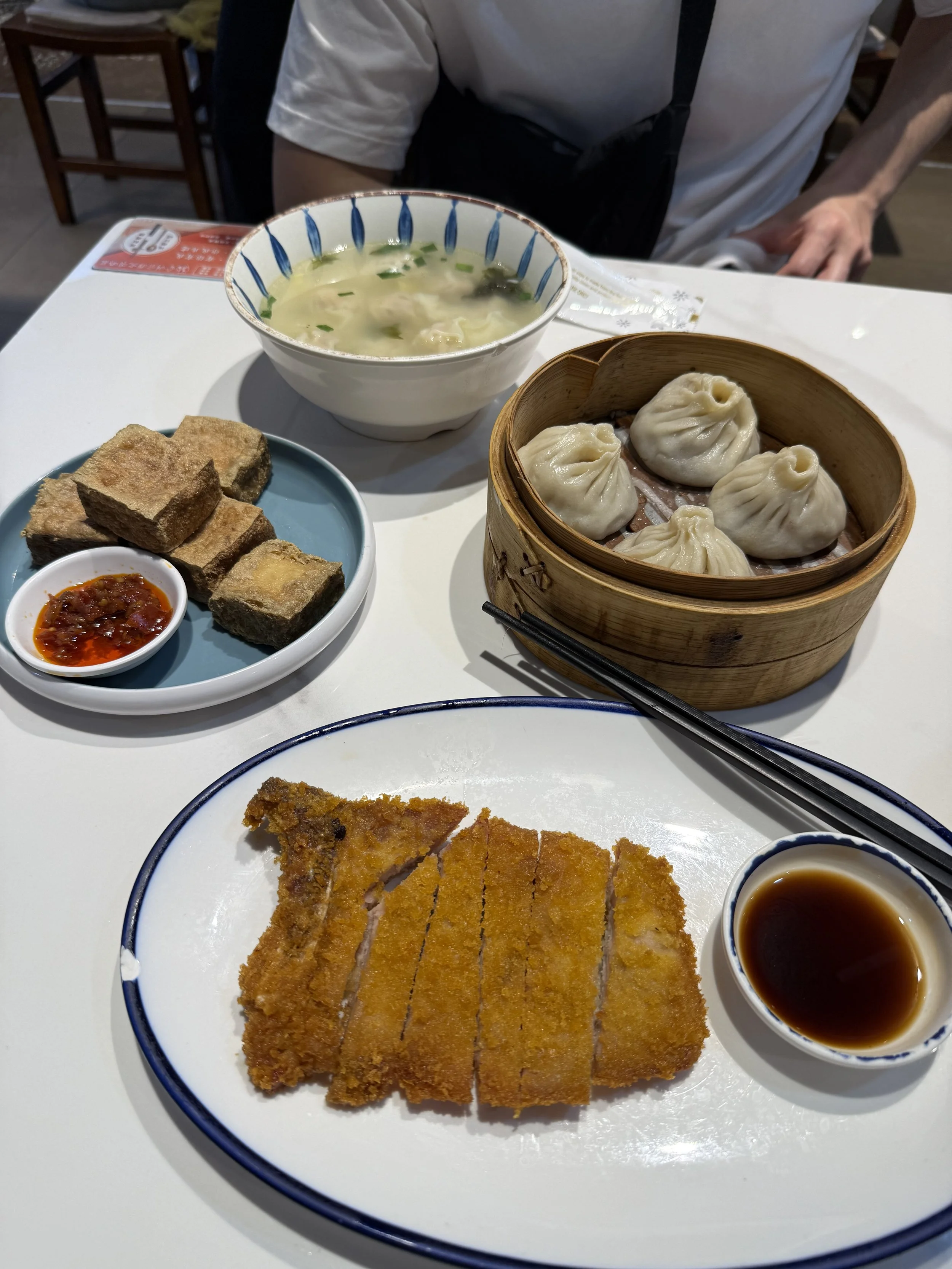
Yu Garden & Yuyuan Bazaar
Nanjing Road and Jing’An Temple
Nanjing Road is Shanghai at full intensity. You will see huge crowds, bright lights, giant screens, endless shops — it’s chaotic, but worth experiencing at least once. It feels like a concentrated snapshot of urban China at scale. Staying at the Yitel Premium Nanjing Road made it easy for us to dip in and out without being overwhelmed. The area around Jing’An Temple (Nanjing Road West) is also worth visiting for its architecture and high end shops.
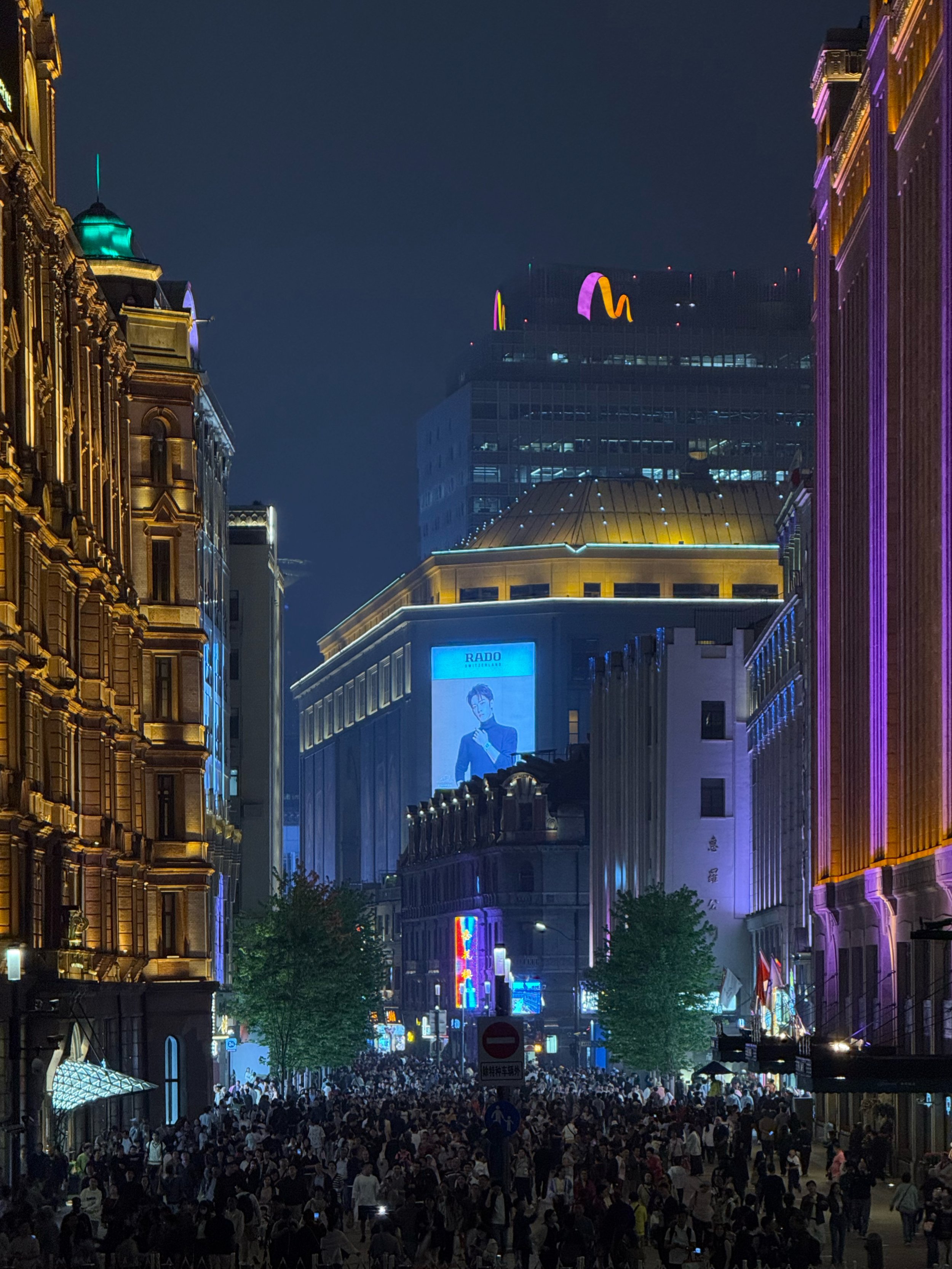
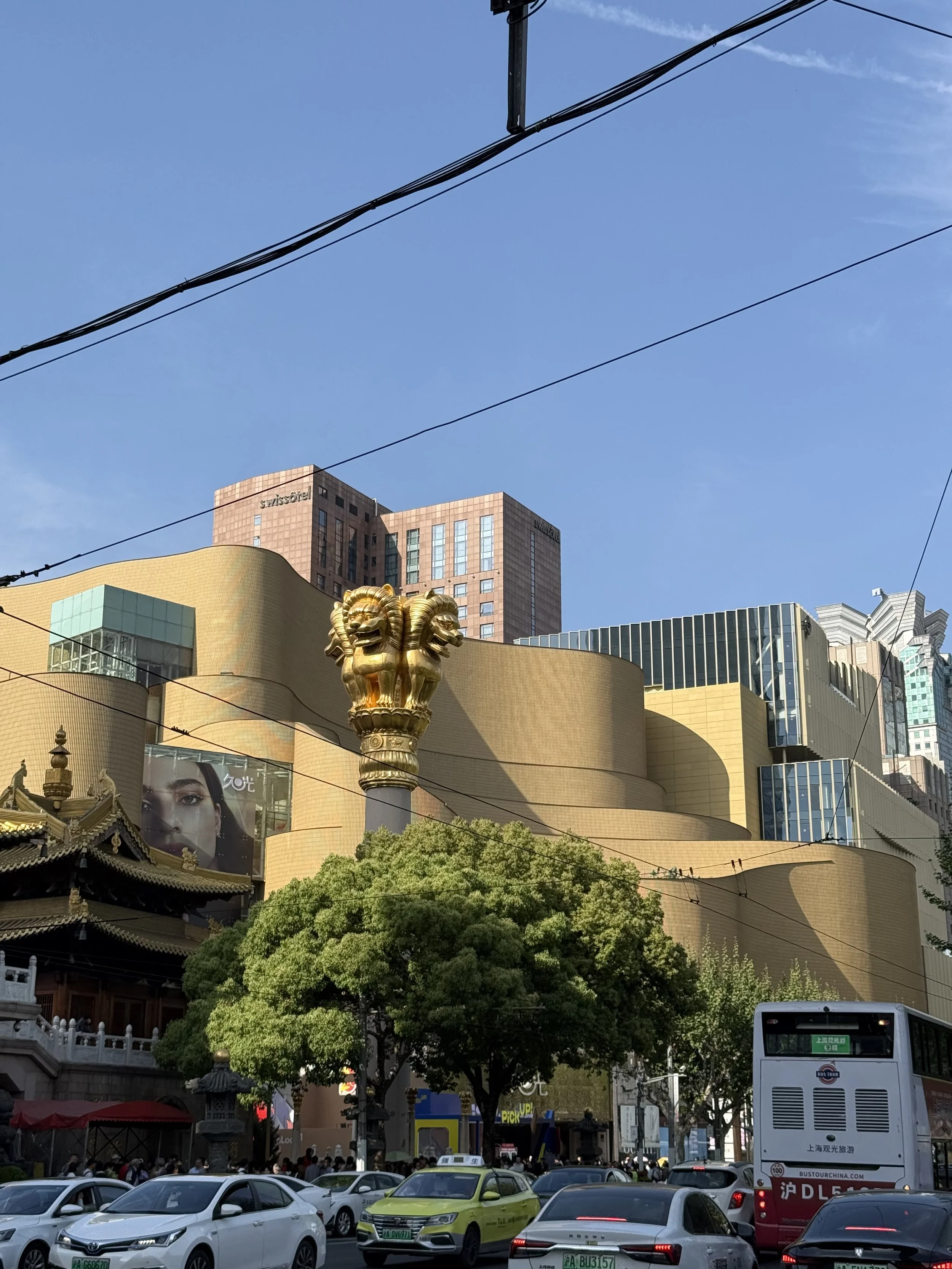
Nanjing Road and Jing’An Temple
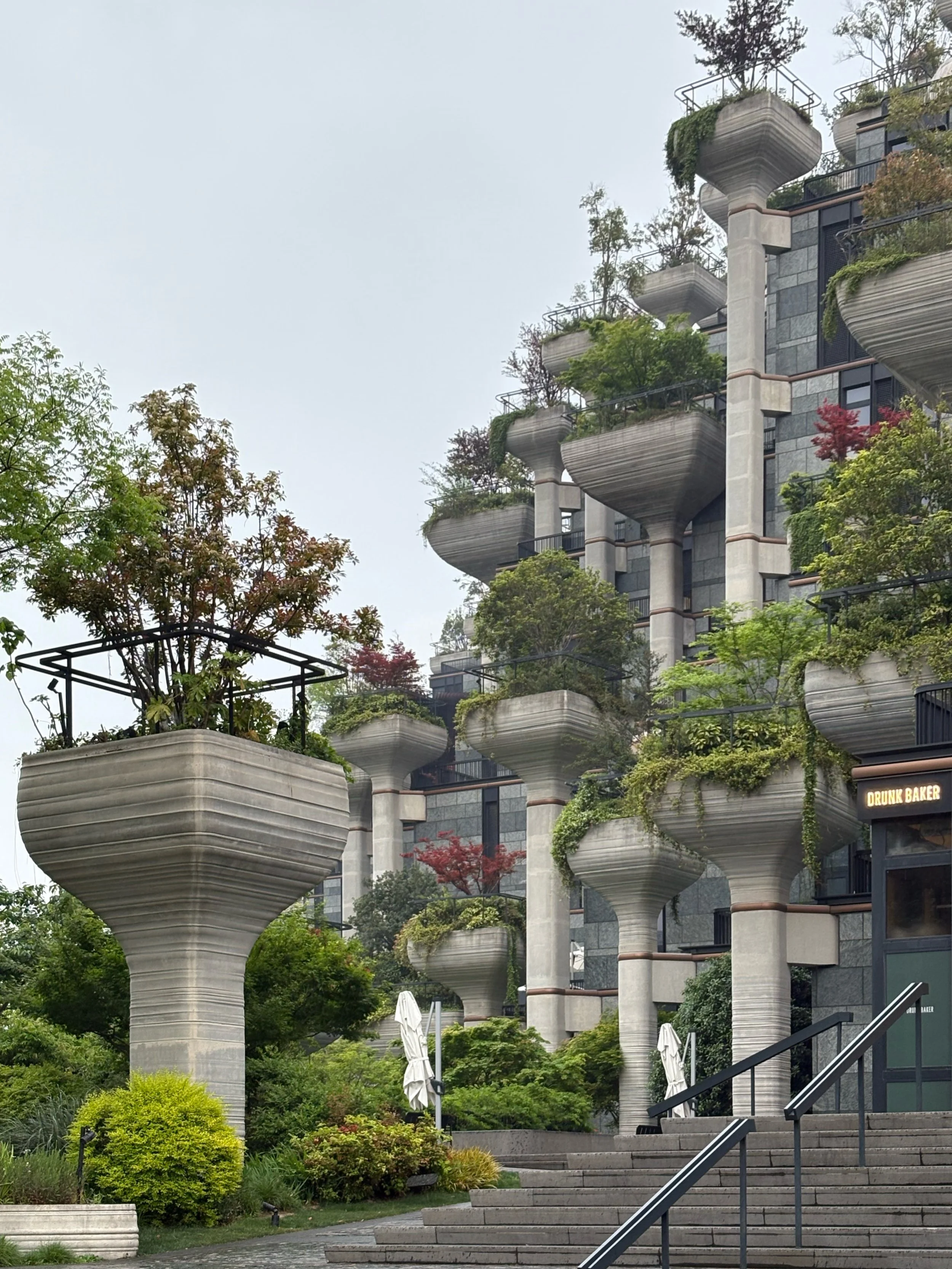
1000 Trees
1000 Trees was one of the most interesting architectural spots we visited. Designed by Heatherwick Studio, it’s a stepped structure covered in hundreds of planted trees — part brutalist, part eco-project. It doesn’t look like anything else in the city. For me, it summed up Shanghai’s willingness to experiment. The surrounding context is also incredible, with monster residential tower blocks all around.
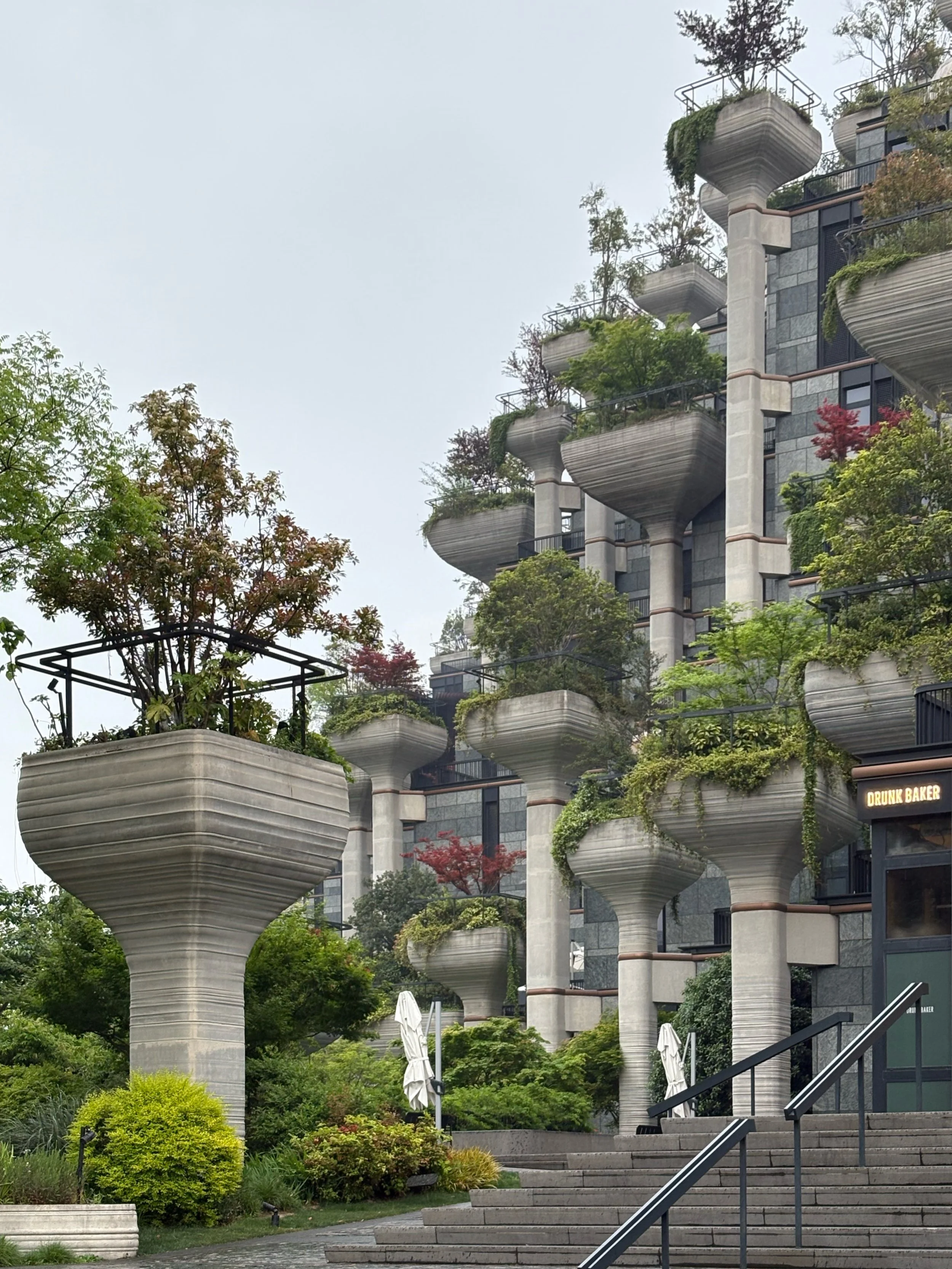
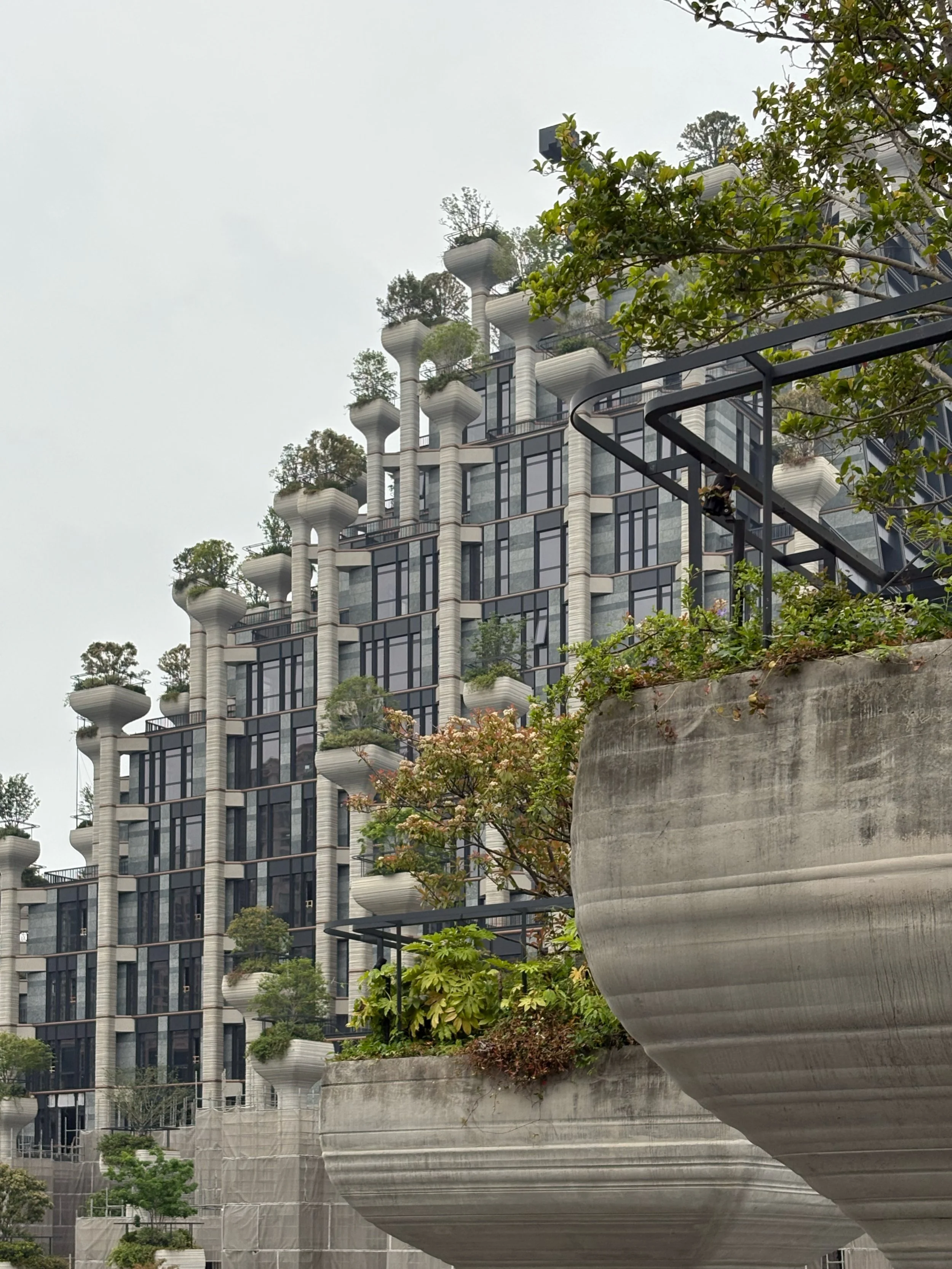
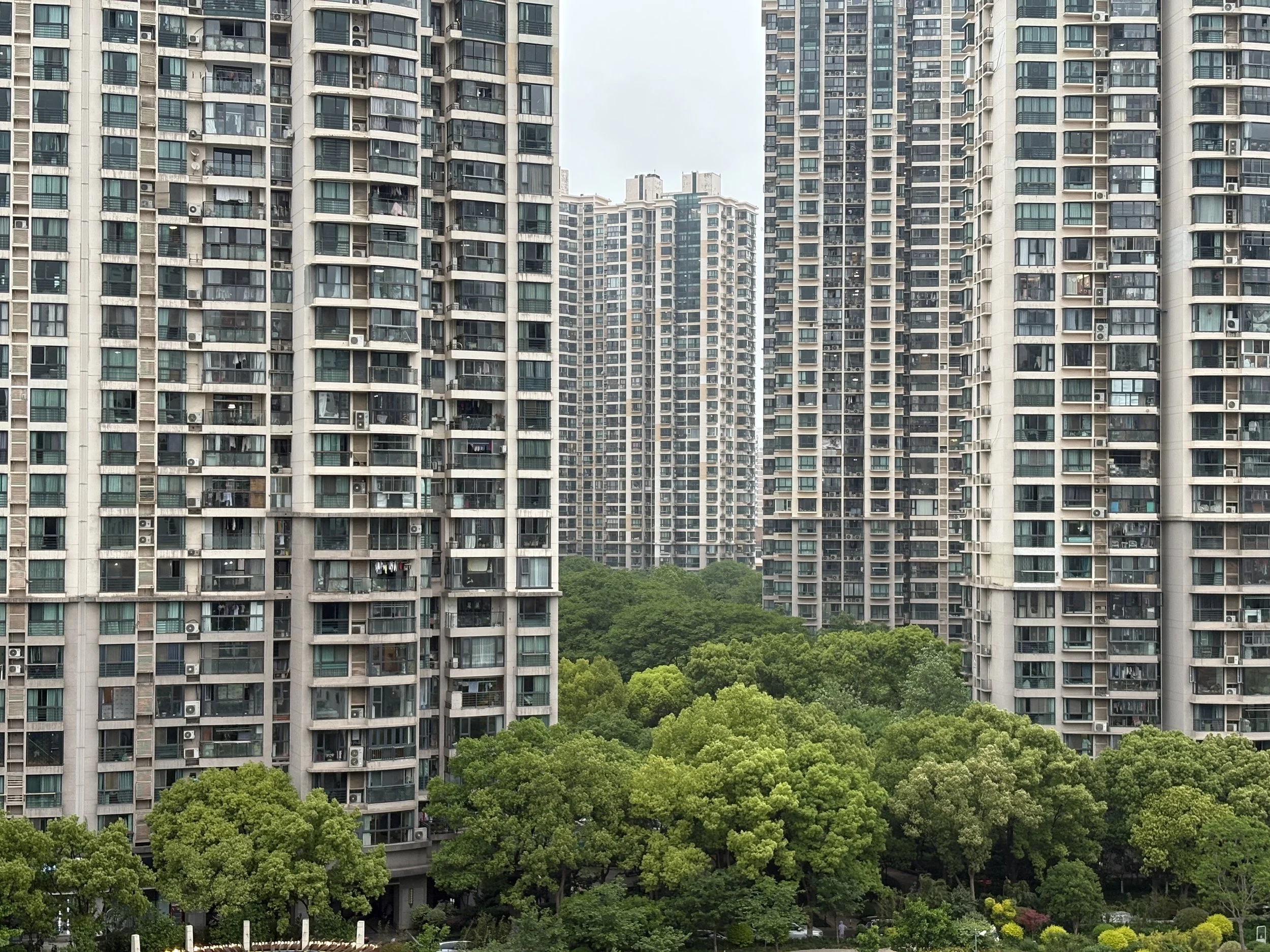
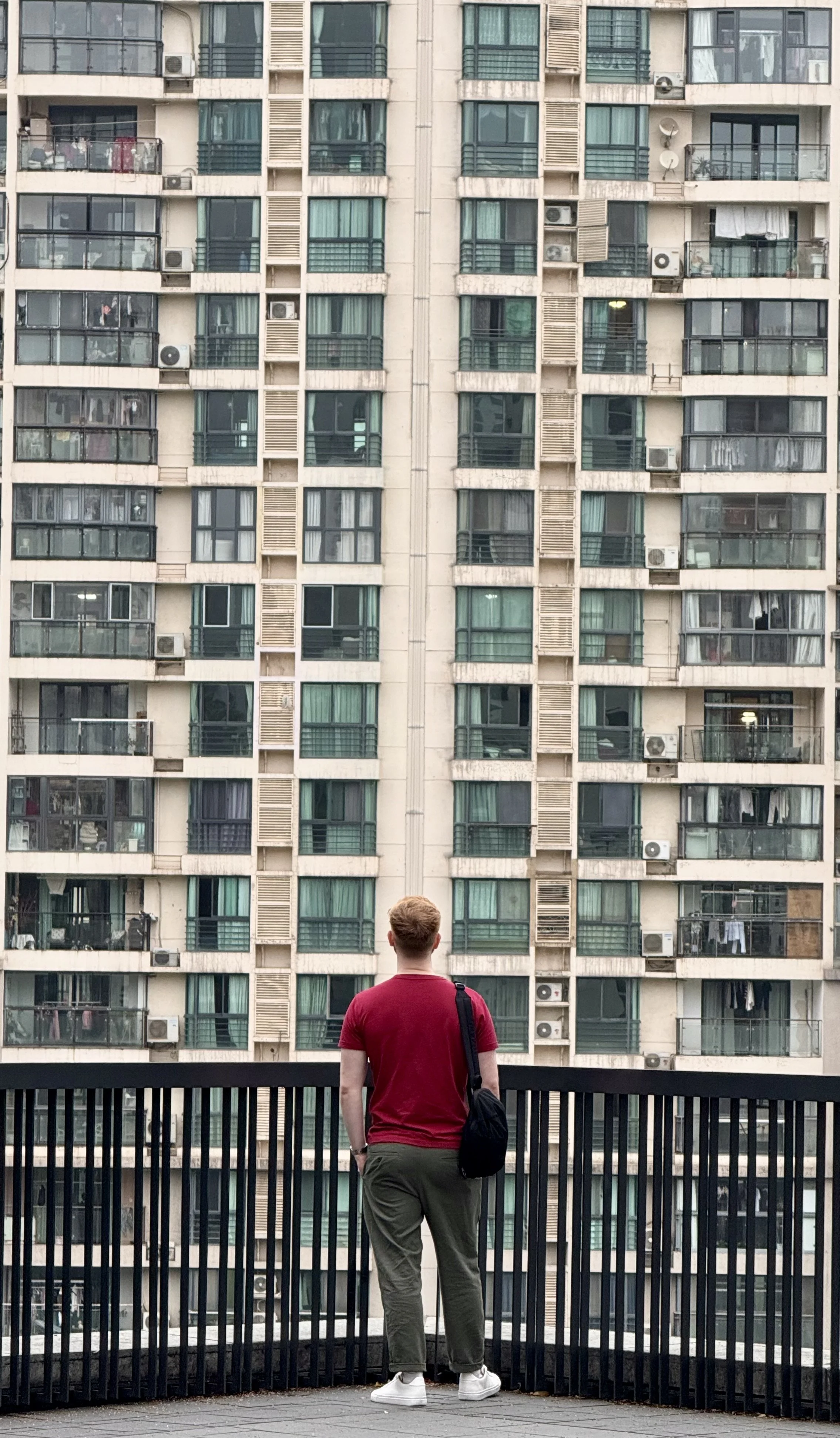
1000 Trees by Heatherwick Studio, and surrounding area
West Bund Art District
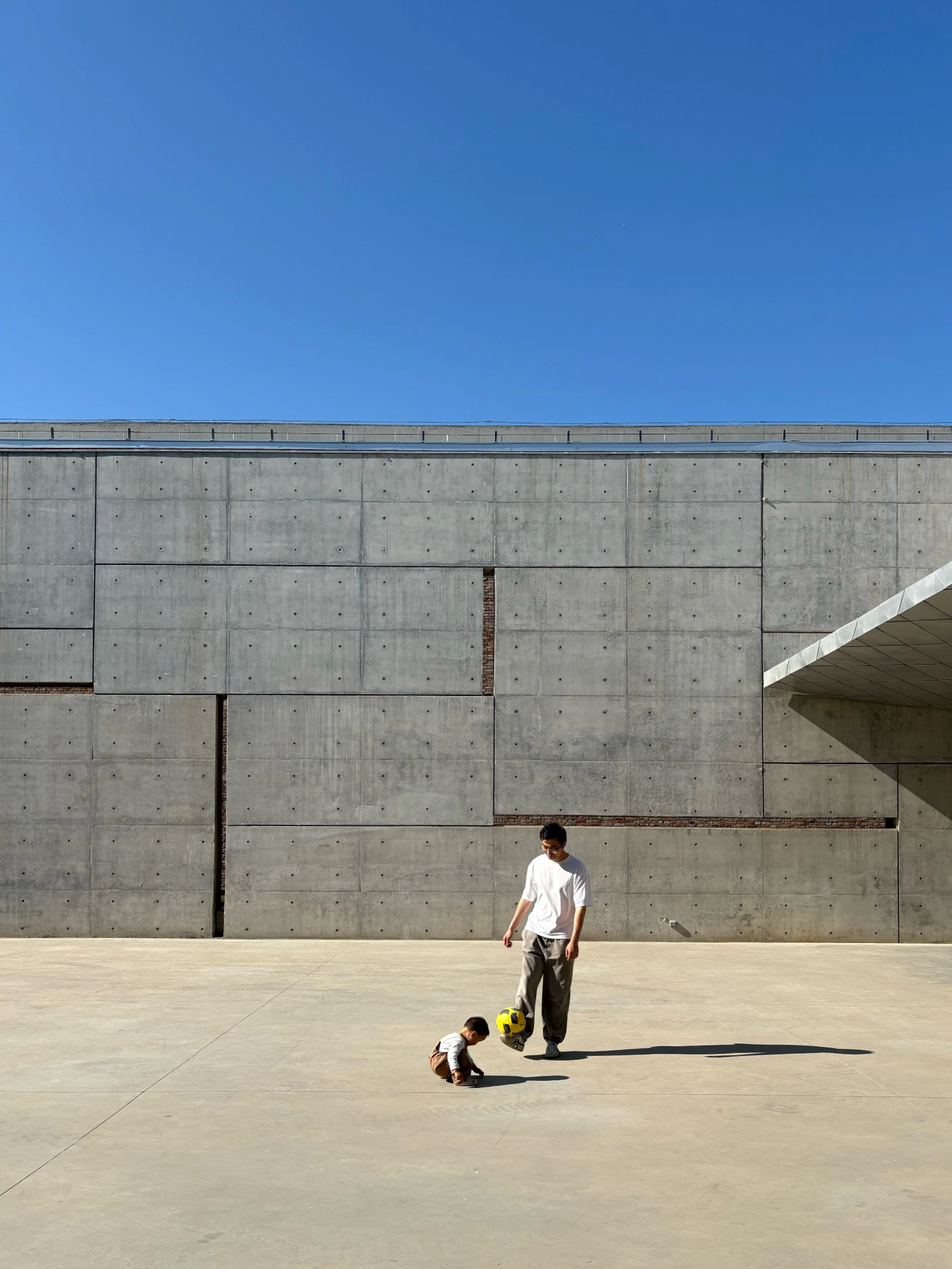
The West Bund Art District was one of our favourite parts of Shanghai — a stretch of former industrial riverfront turned into a clean, design-led “museum mile” along the Huangpu. If you’re short on time, prioritise the Long Museum (West Bund) where the raw concrete architecture is just as impressive as the art inside.
For something a bit different, stop by Tank Shanghai — a set of repurposed oil tanks turned into galleries — before finishing with a sunset walk along the riverfront, which is arguably the highlight of the whole area.
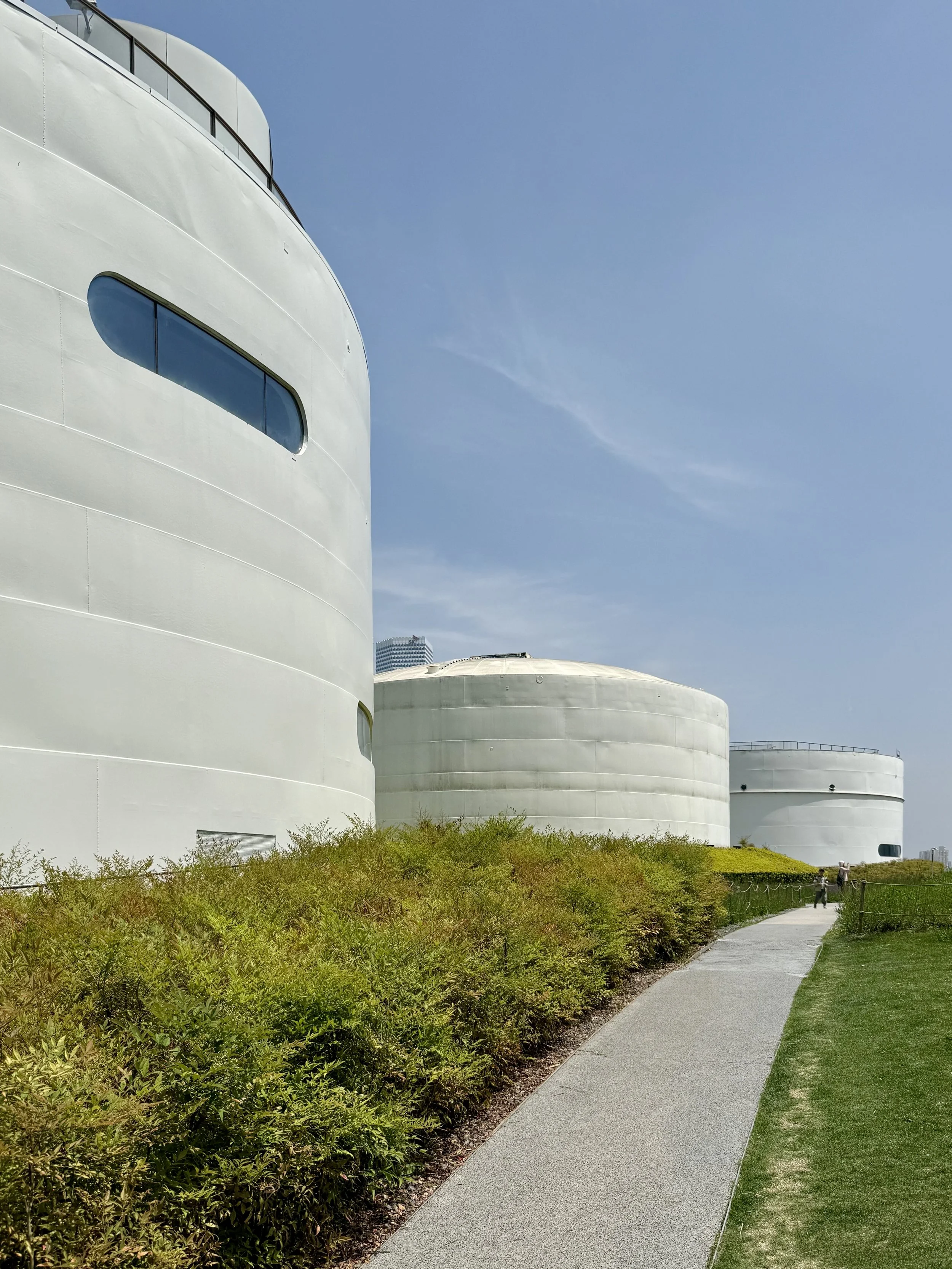
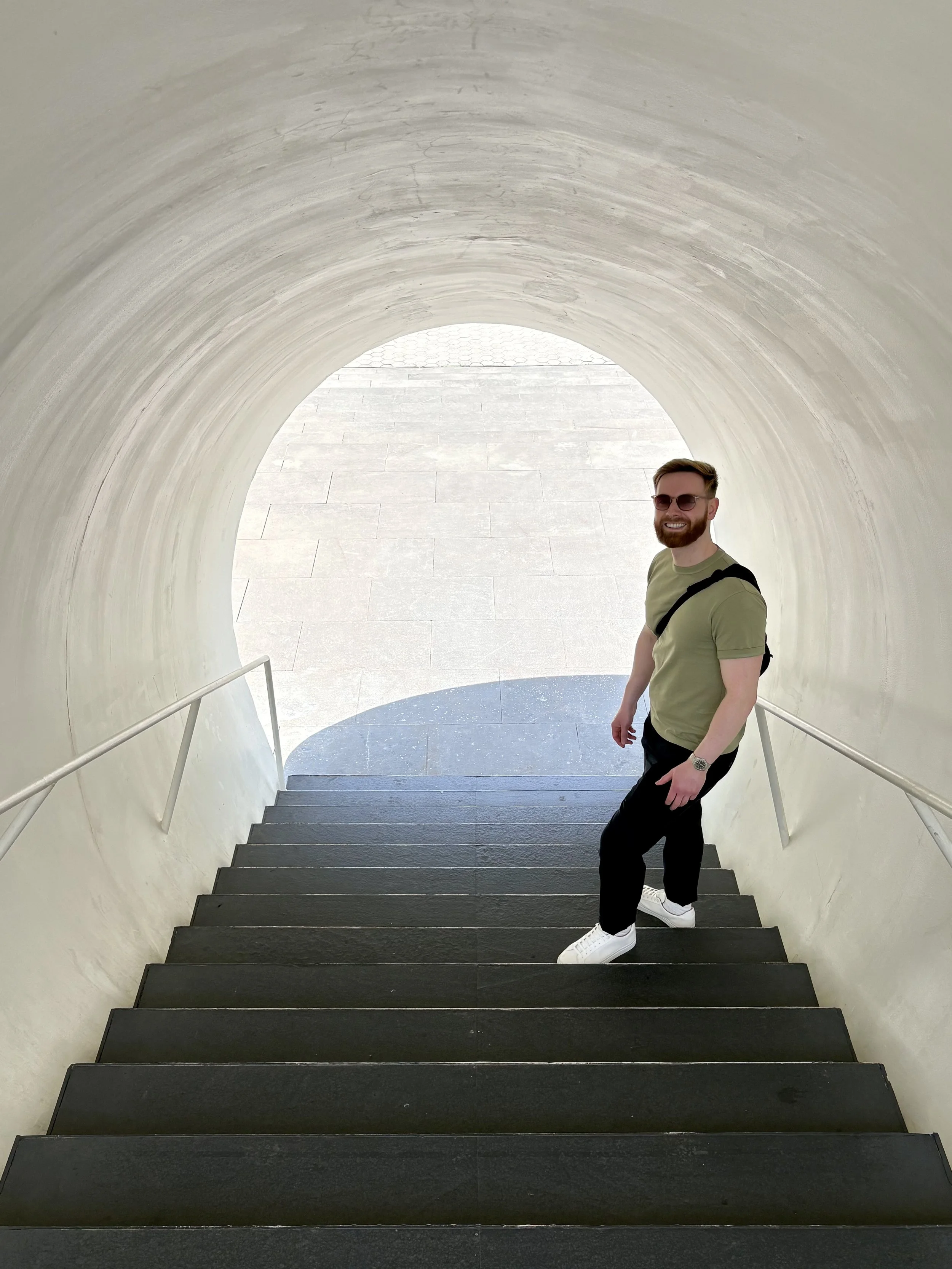
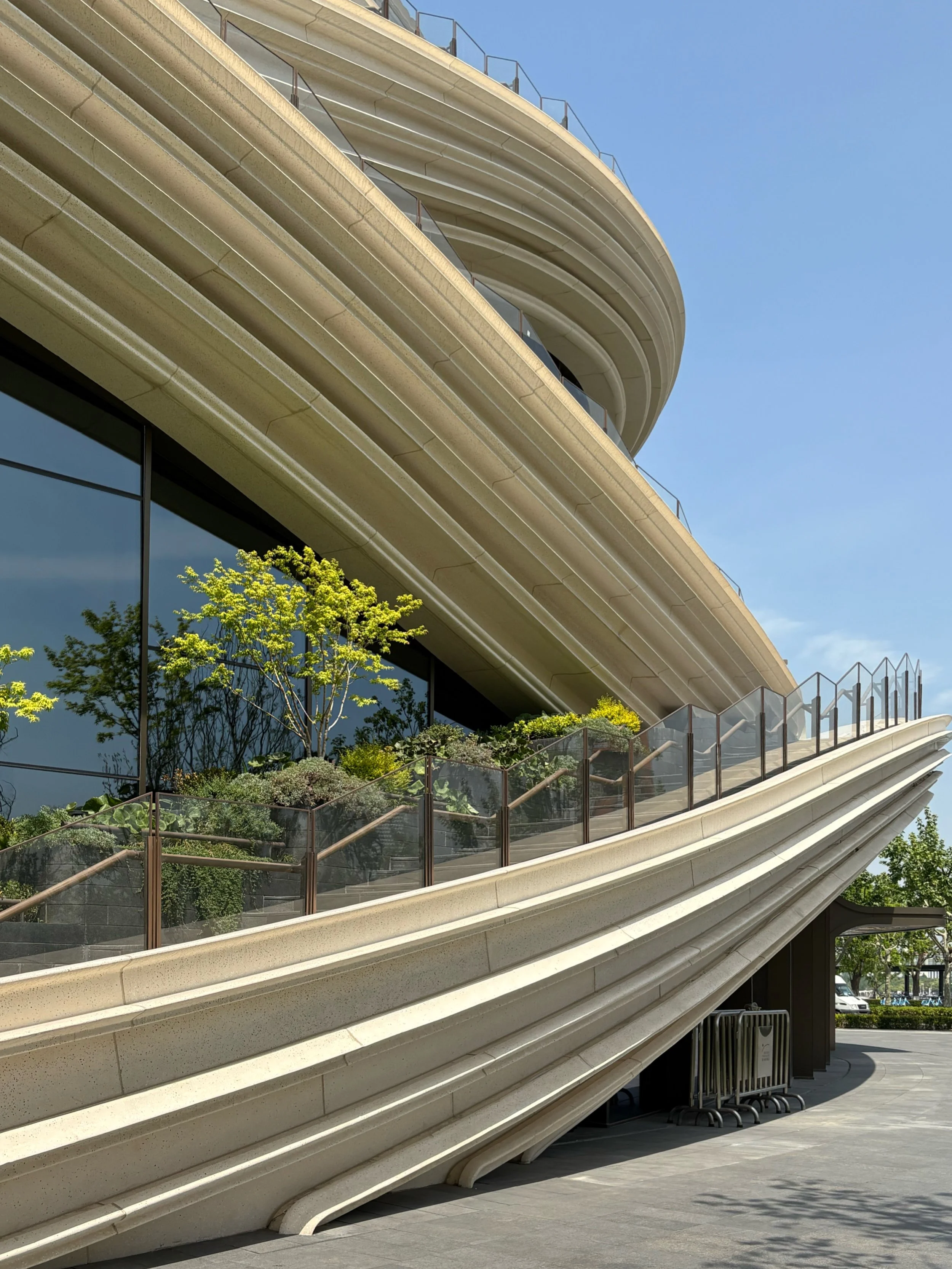
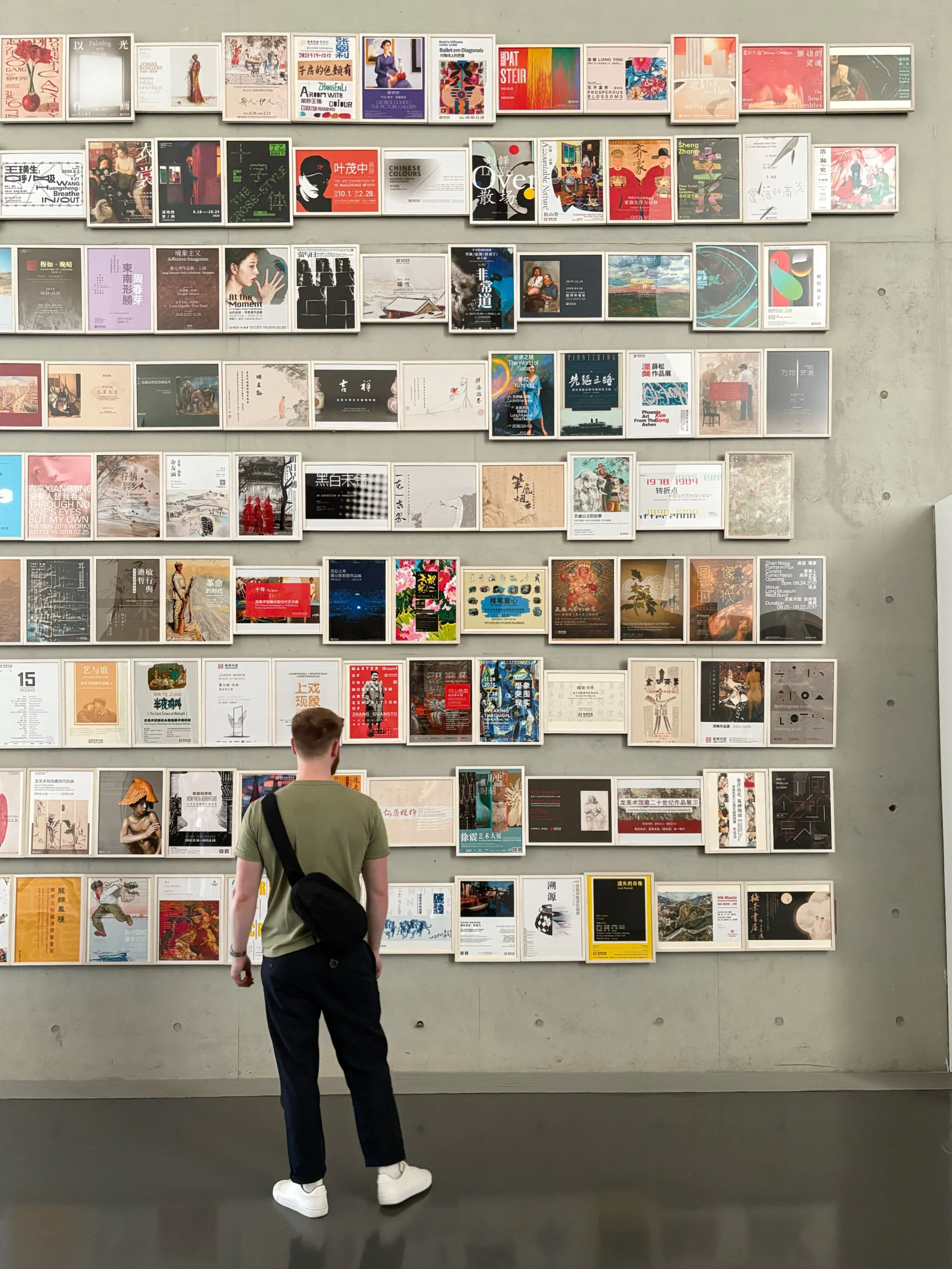
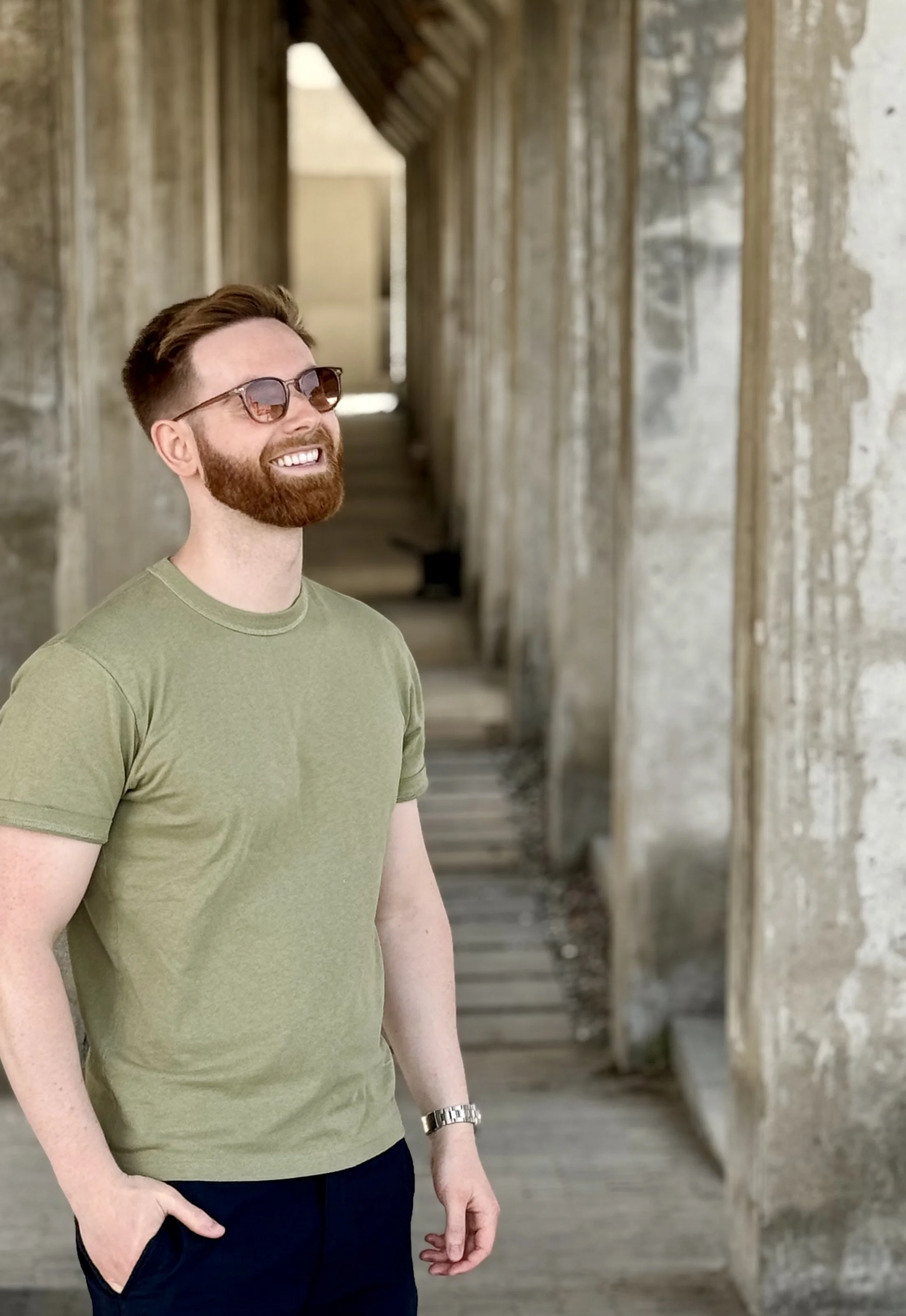
West Bund Arts District
Zhujiajiao Water Town (Day Trip)
On our final day in Shanghai, we visited Zhujiajiao, a historic water town about an hour outside the city. The contrast with central Shanghai is immediate: here you will find canals, arched stone bridges, Chinese lanterns and traditional houses lining the water.
The taxi (DiDi) cost around £20 each way between two of us, making it a very straightforward and great value half-day or day trip. Guided tour options from Shanghai with a boat trip are available.
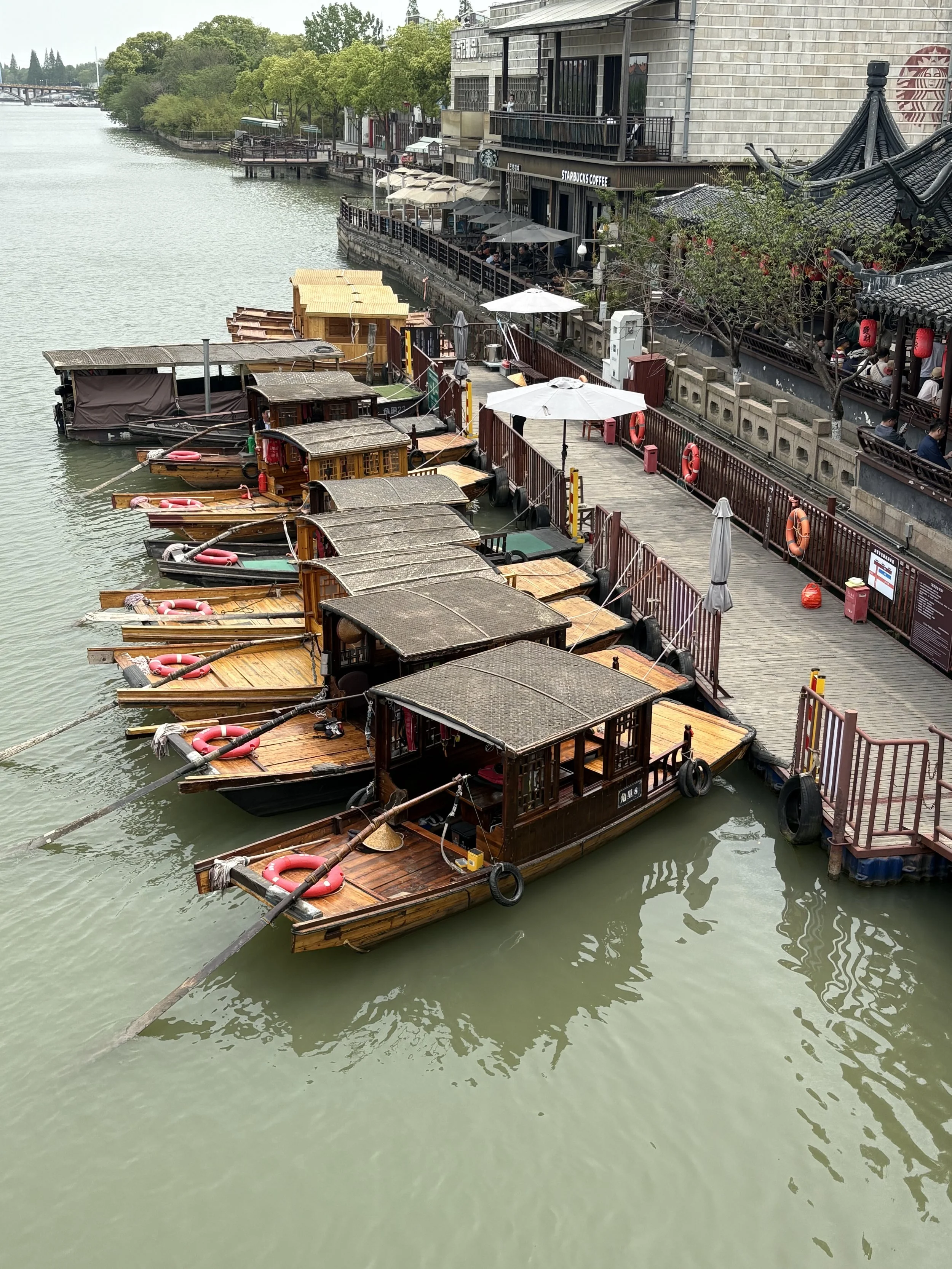
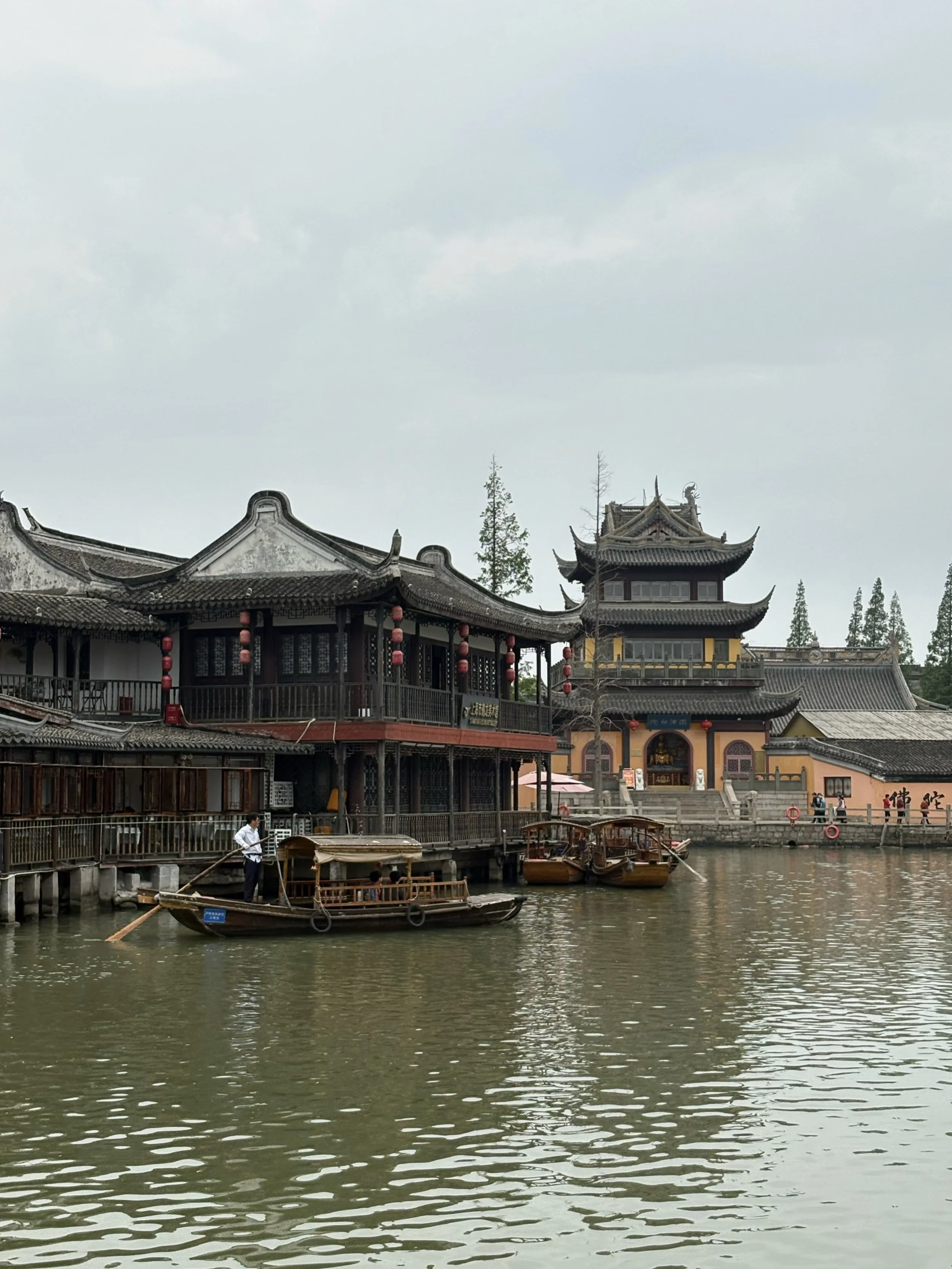
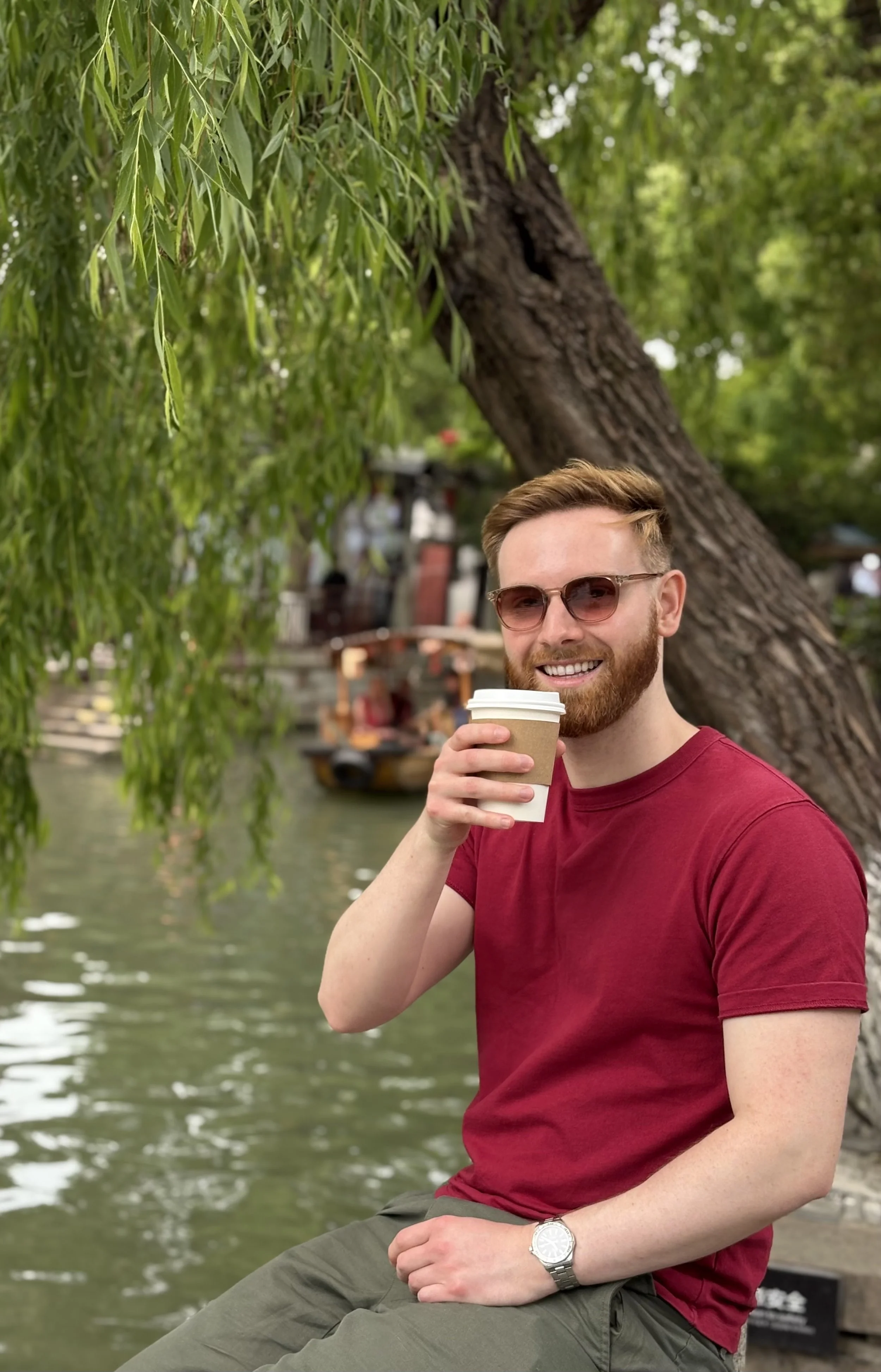
Zhujiajiao Water Town
Getting Around Shanghai
Once you’re set up with the right phone apps, Shanghai is fairly easy to navigate.
Metro: It is fast, clean, and extensive (≈ £0.50 per journey via Alipay)
Bikes: You can hire bikes pretty much anywhere and there is excellent cycle infrastructure. They are super cheap (≈ £0.20 per journey via Alipay)
Taxis (DiDi): The easiest and most convenient way to get around (≈ £2.00 for a 10-minute ride). Taxis would arrive in less than 2 minutes once ordered
Everything runs through Alipay, including DiDi. I’ll cover the essential apps you need at the end of this post.
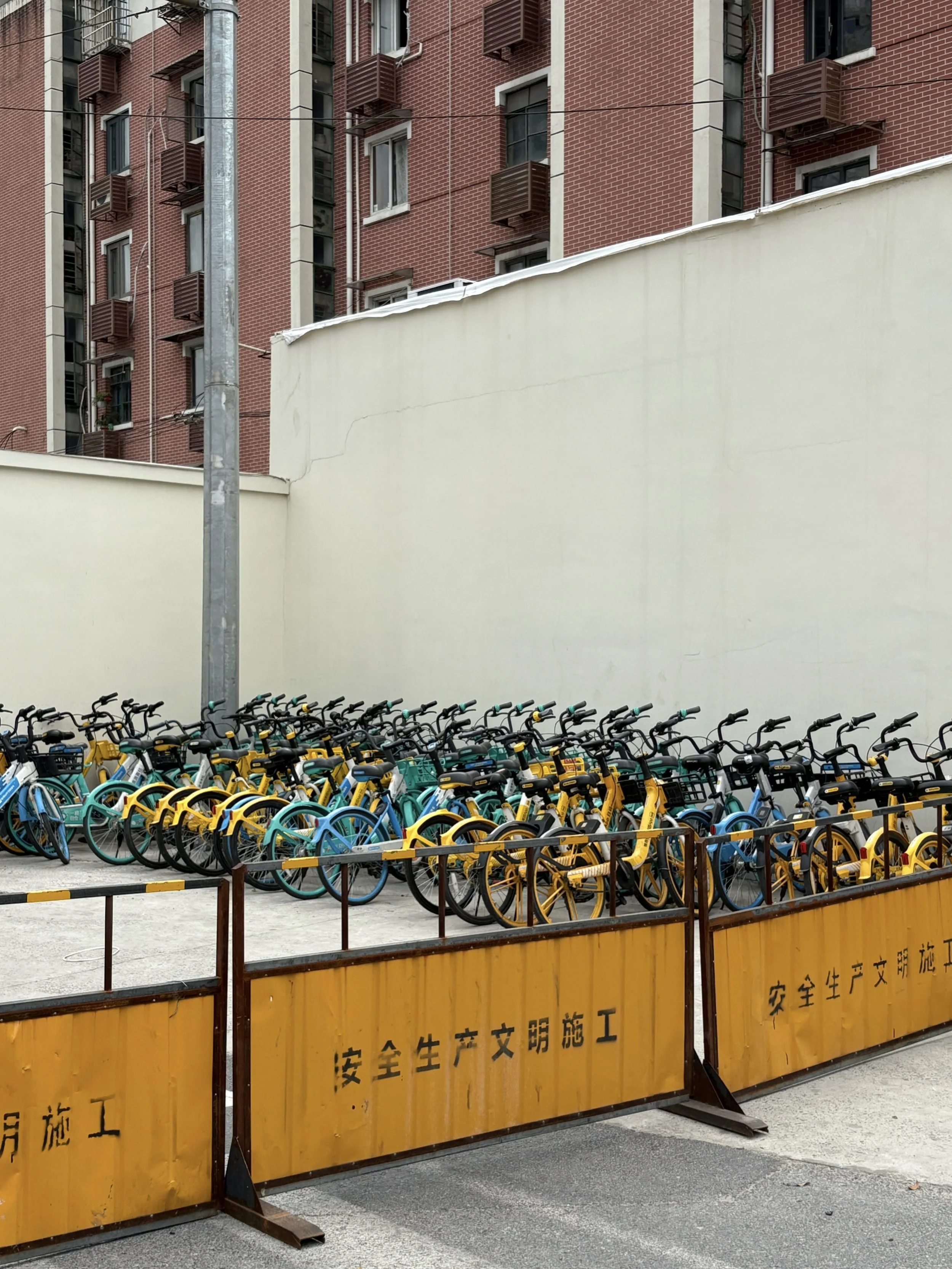
There are bike parts EVERYWHERE
Beijing (3 Days)
First Impressions
Beijing felt very different from the moment we arrived.
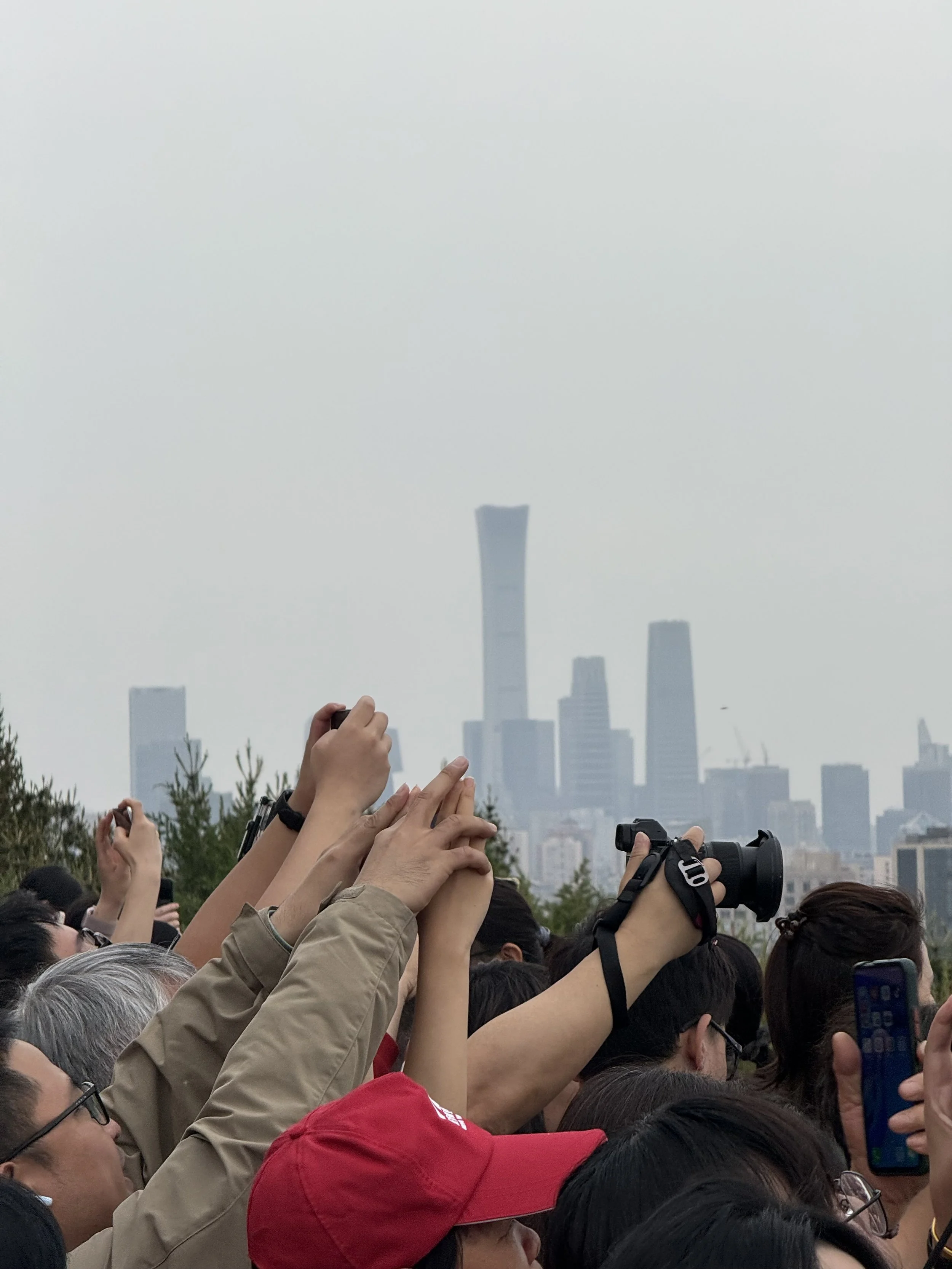
Where Shanghai felt polished and controlled, Beijing felt busier, louder and more chaotic. It also felt more overtly historic. You can sense immediately that this is a political and cultural capital, not just a commercial one. Our visit coincided with Golden Week — a national holiday — which meant the city was extremely busy with domestic tourists. This definitely amplified the intensity.
Before you go:
Some practical notes before you go:
We had our passports checked several times throughout our stay, so I’d recommend carrying it with you at all times in Beijing.
We booked all of our tickets individually through Get Your Guide. We found navigating all of the attraction websites in Chinese very complicated and so it was great to be able to book everything simply in English through the app. It was also good to have all the confirmations and tickets in one place for ease of access. There is the option of doing tours that take you around all of the sites but we opted to do this ourselves to immerse ourselves in the city.
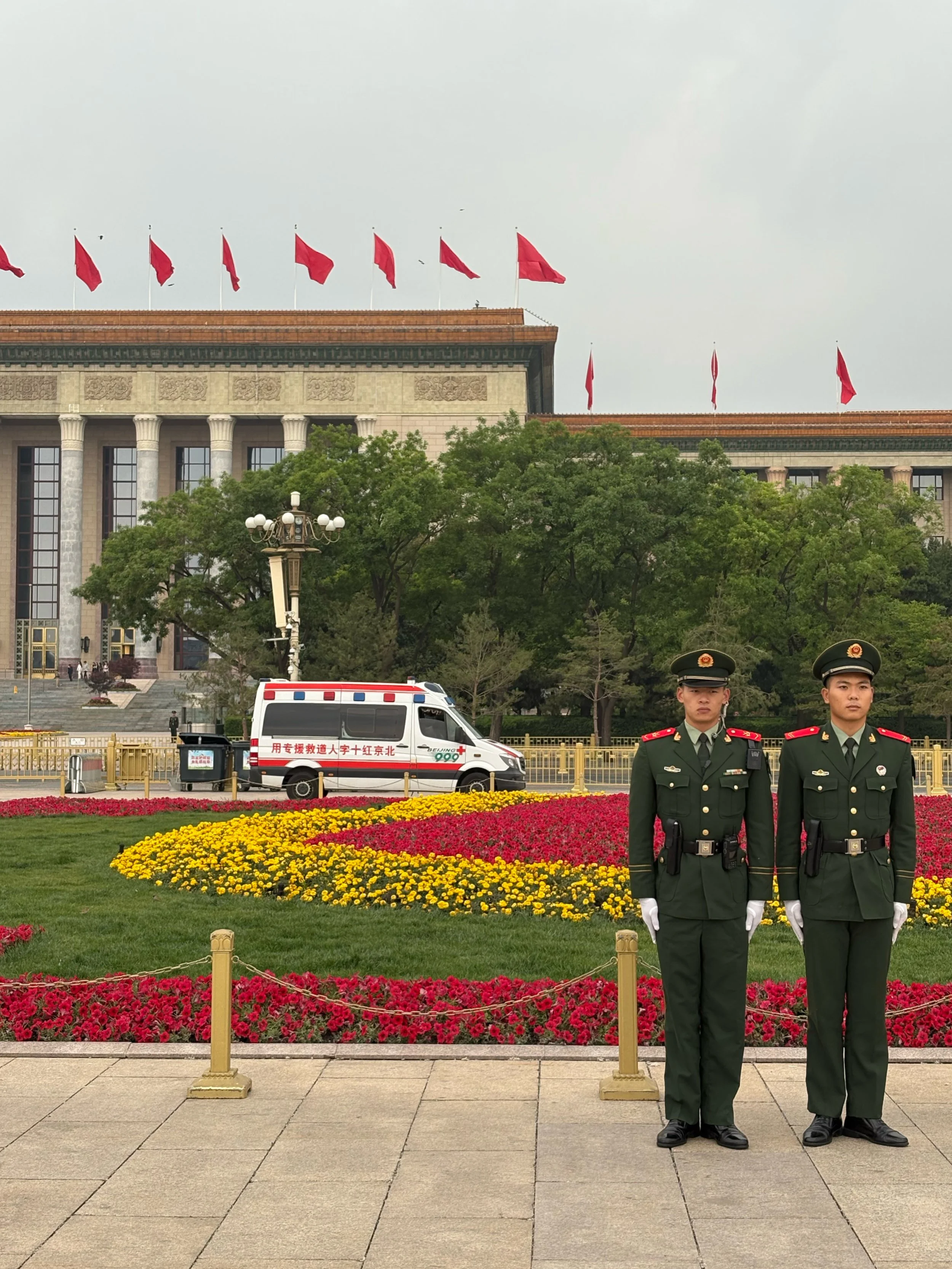
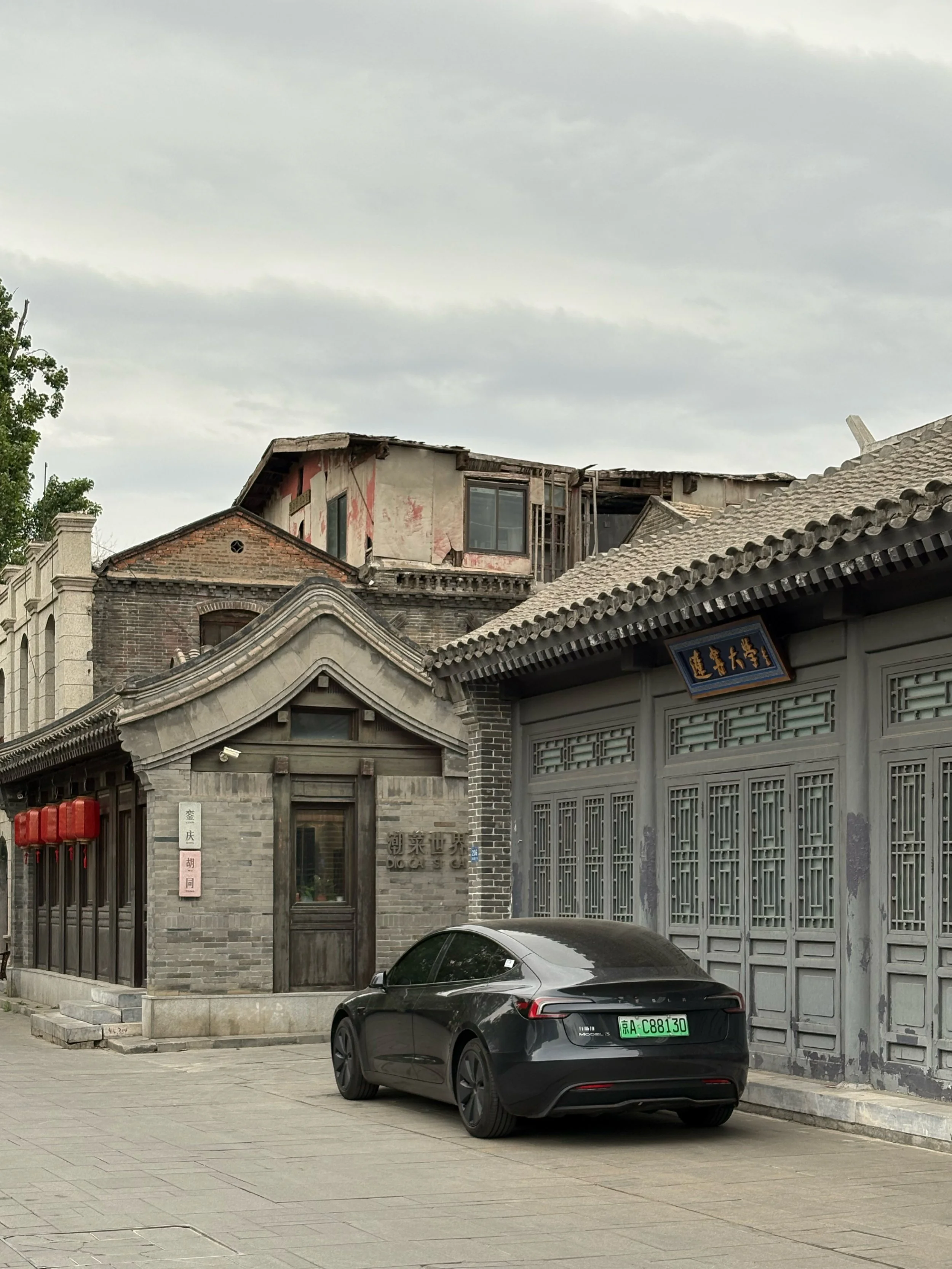
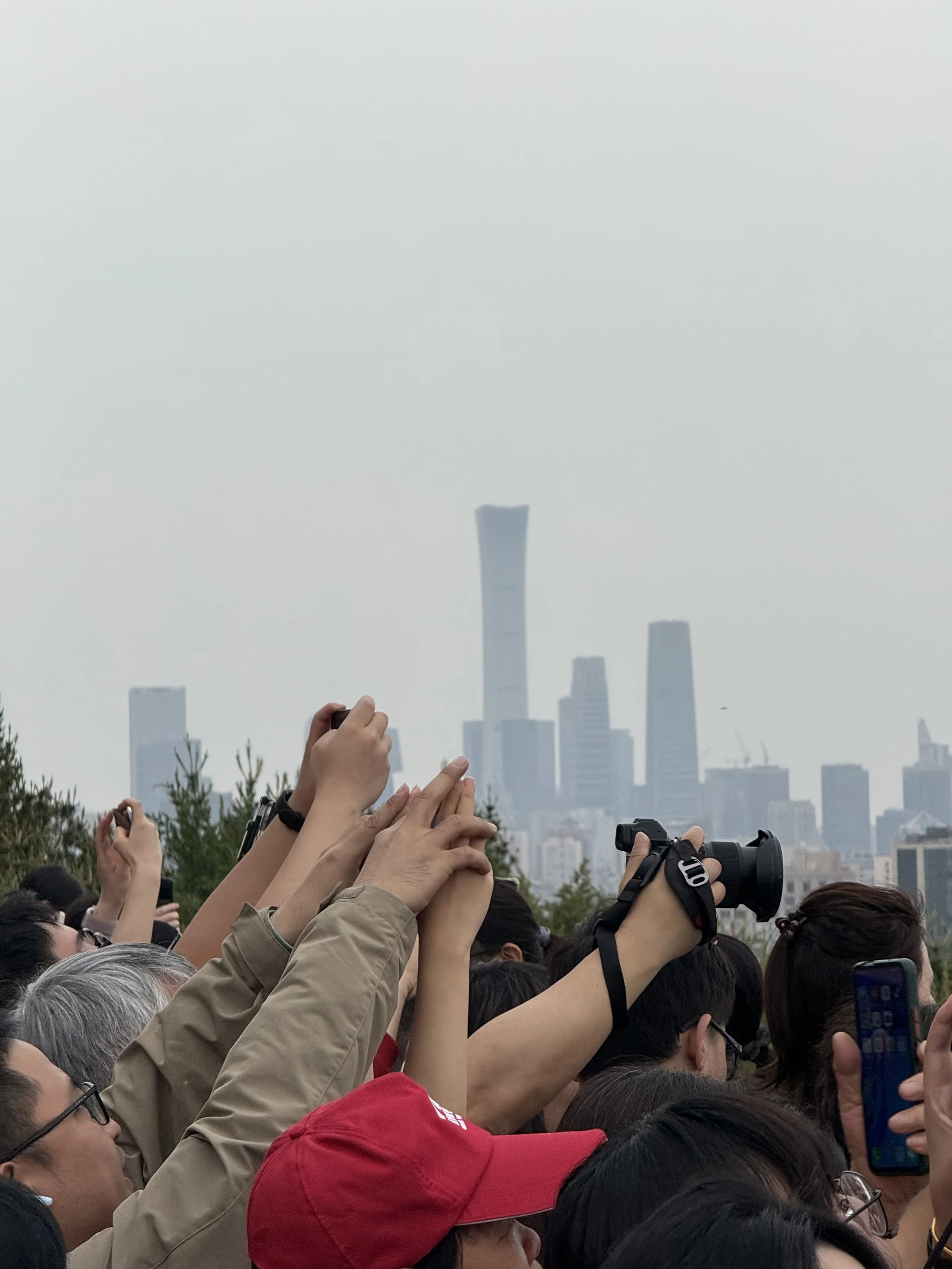
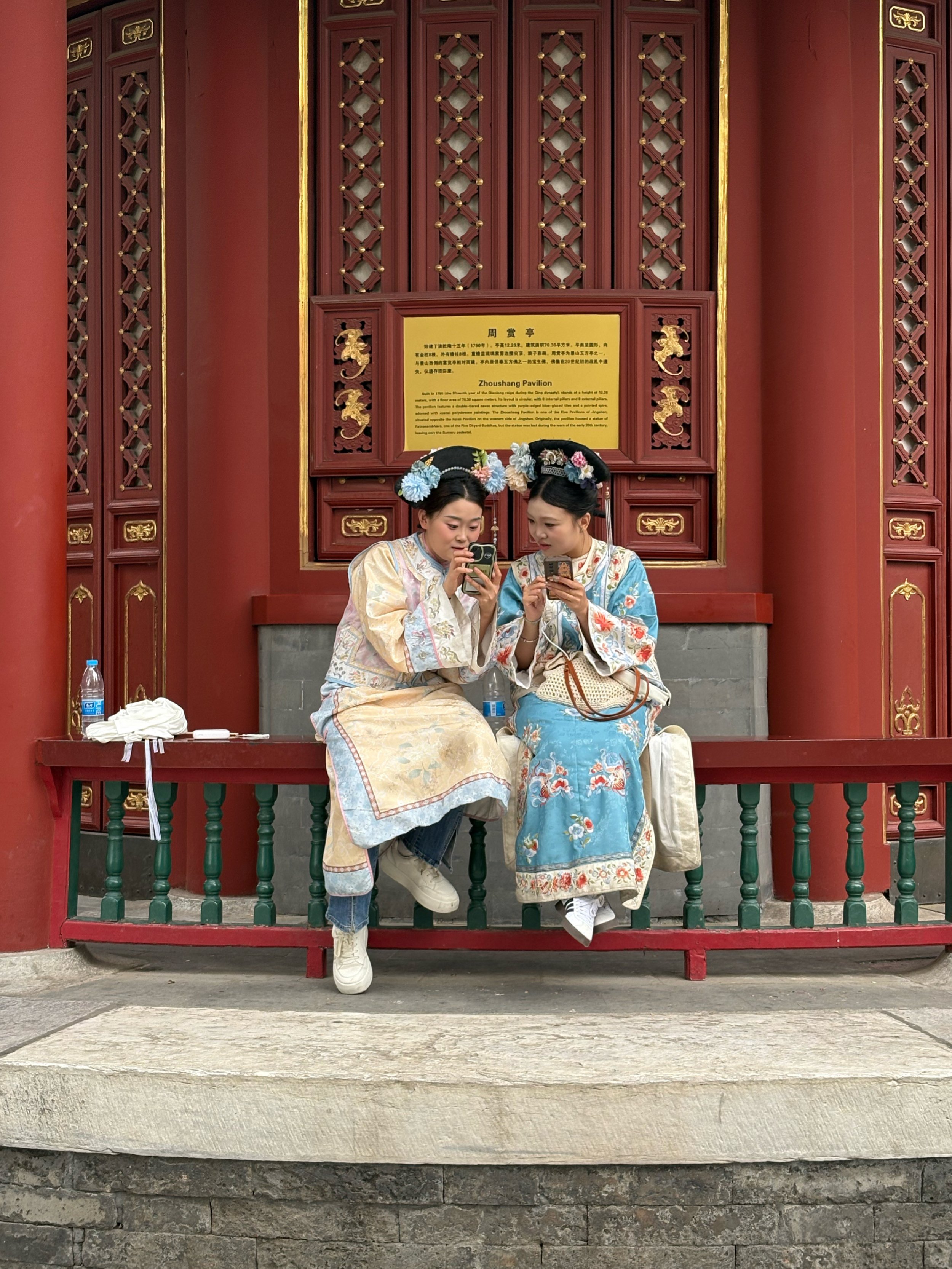
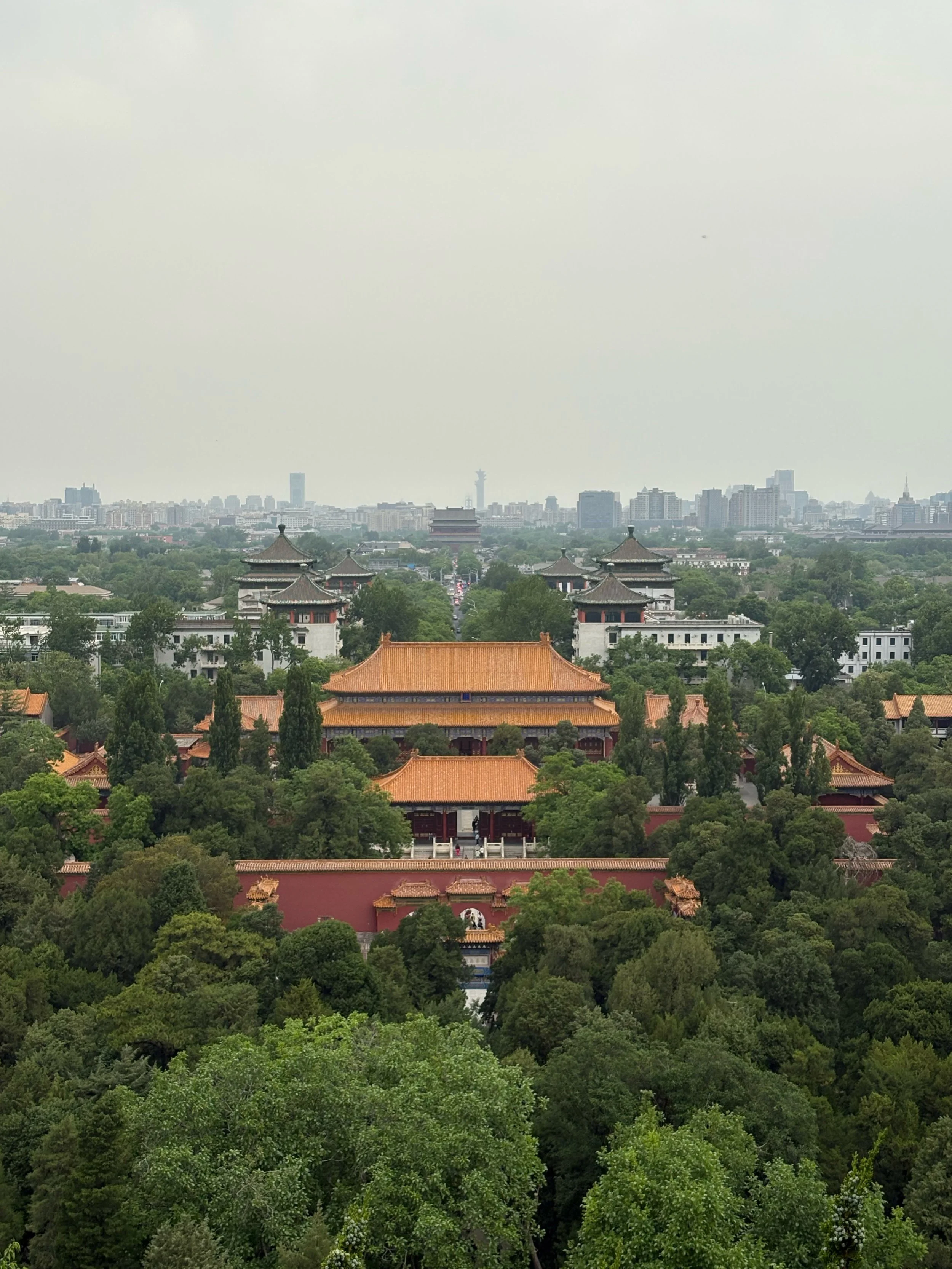
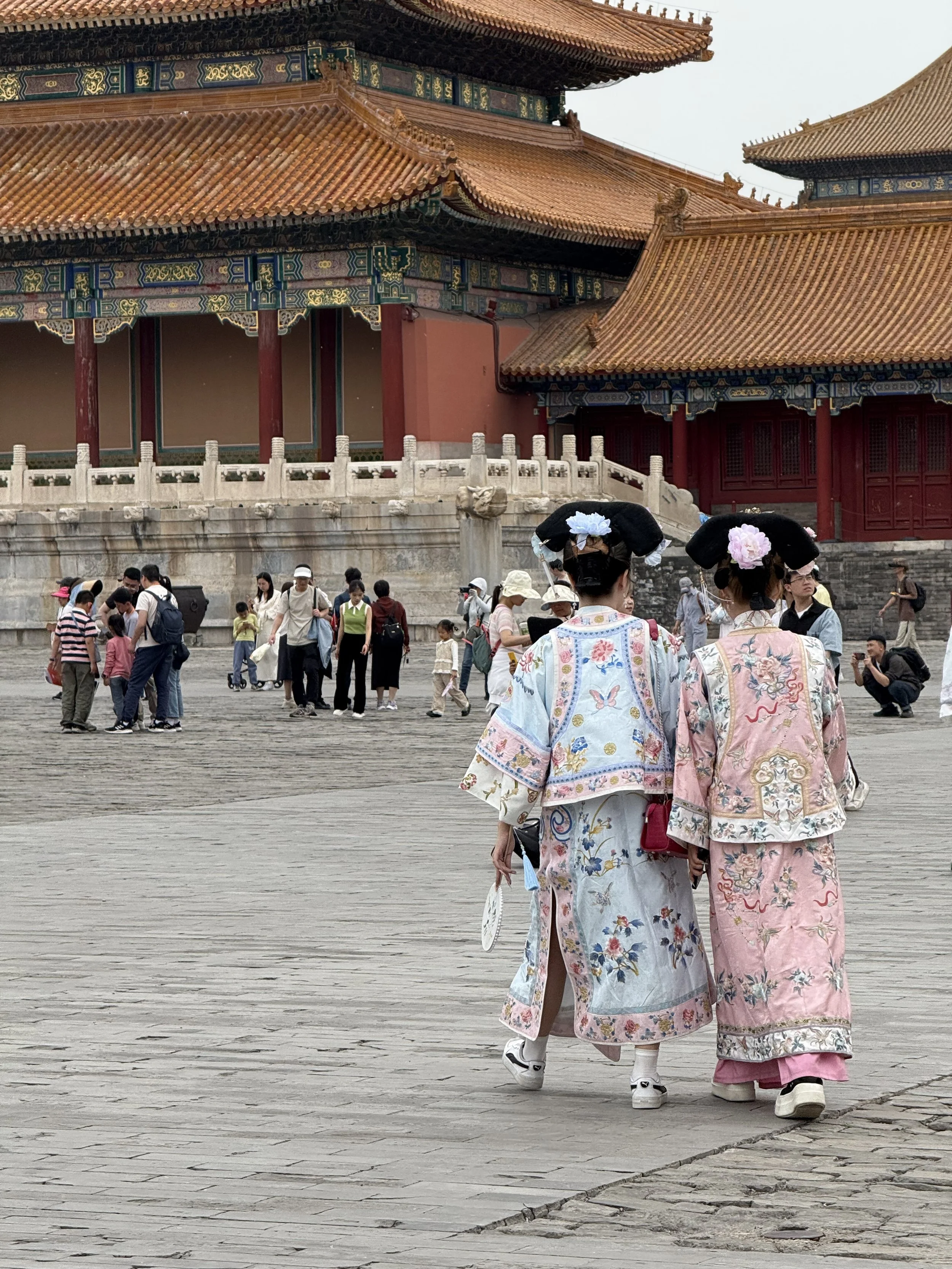
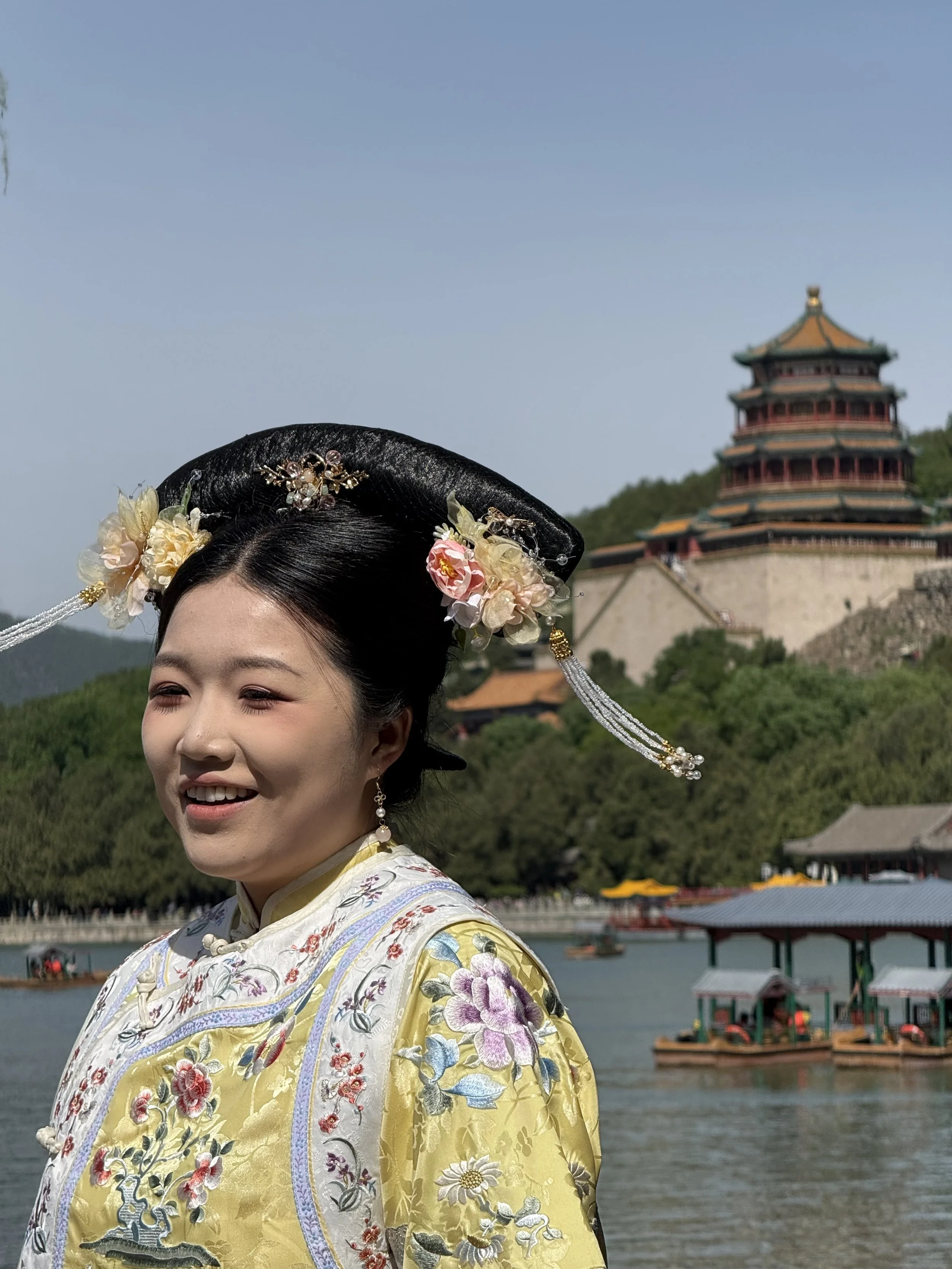
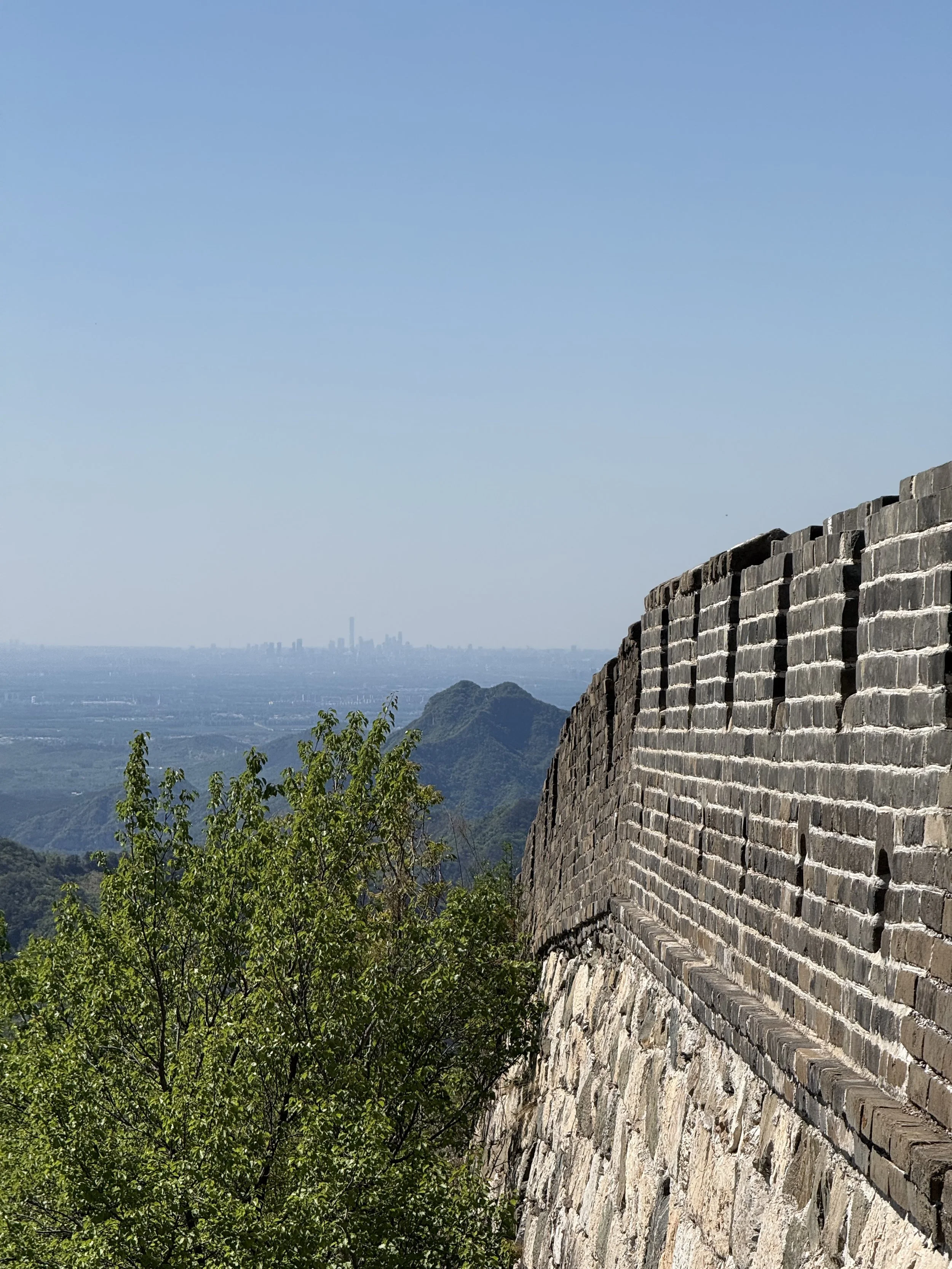
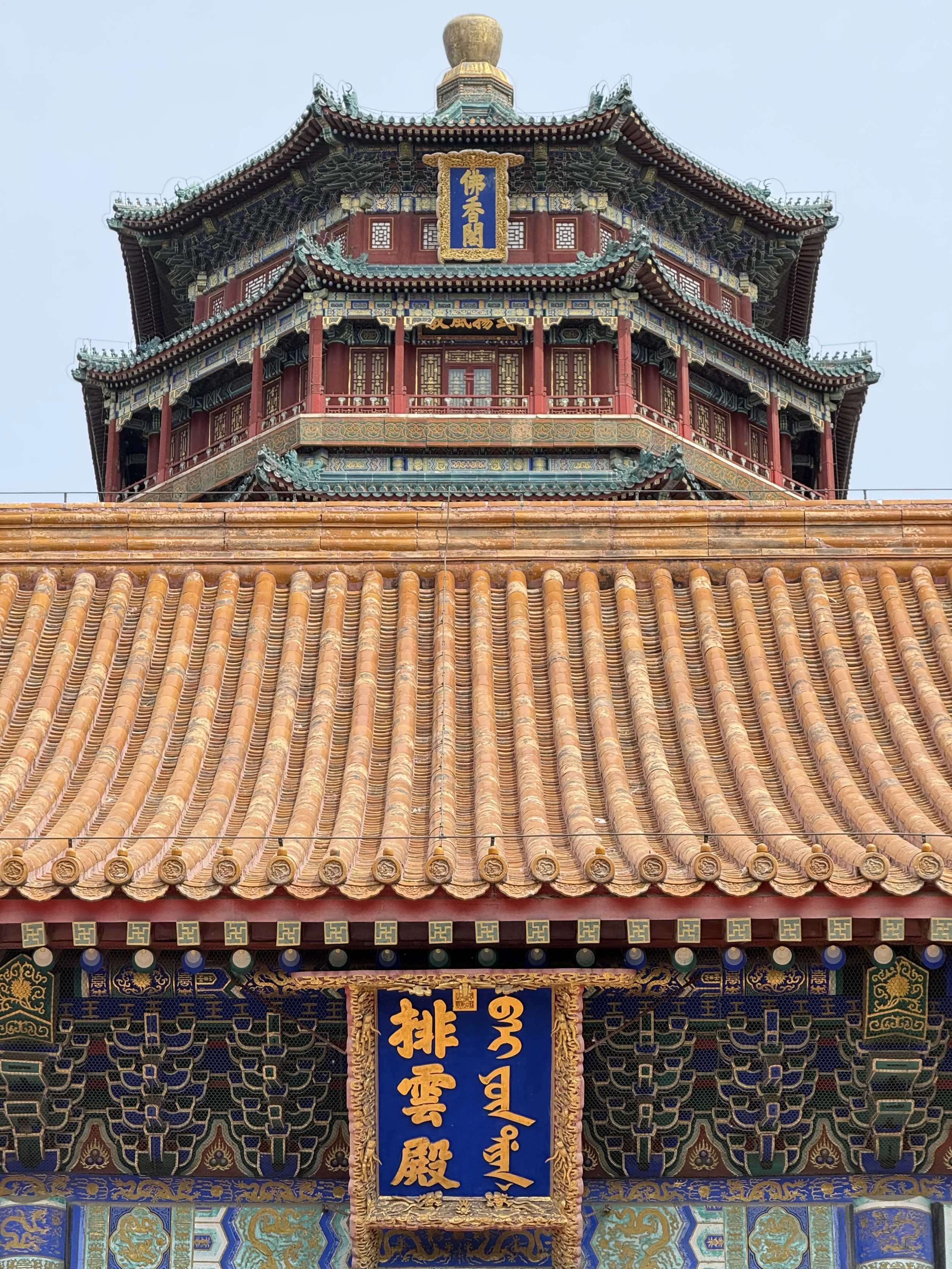
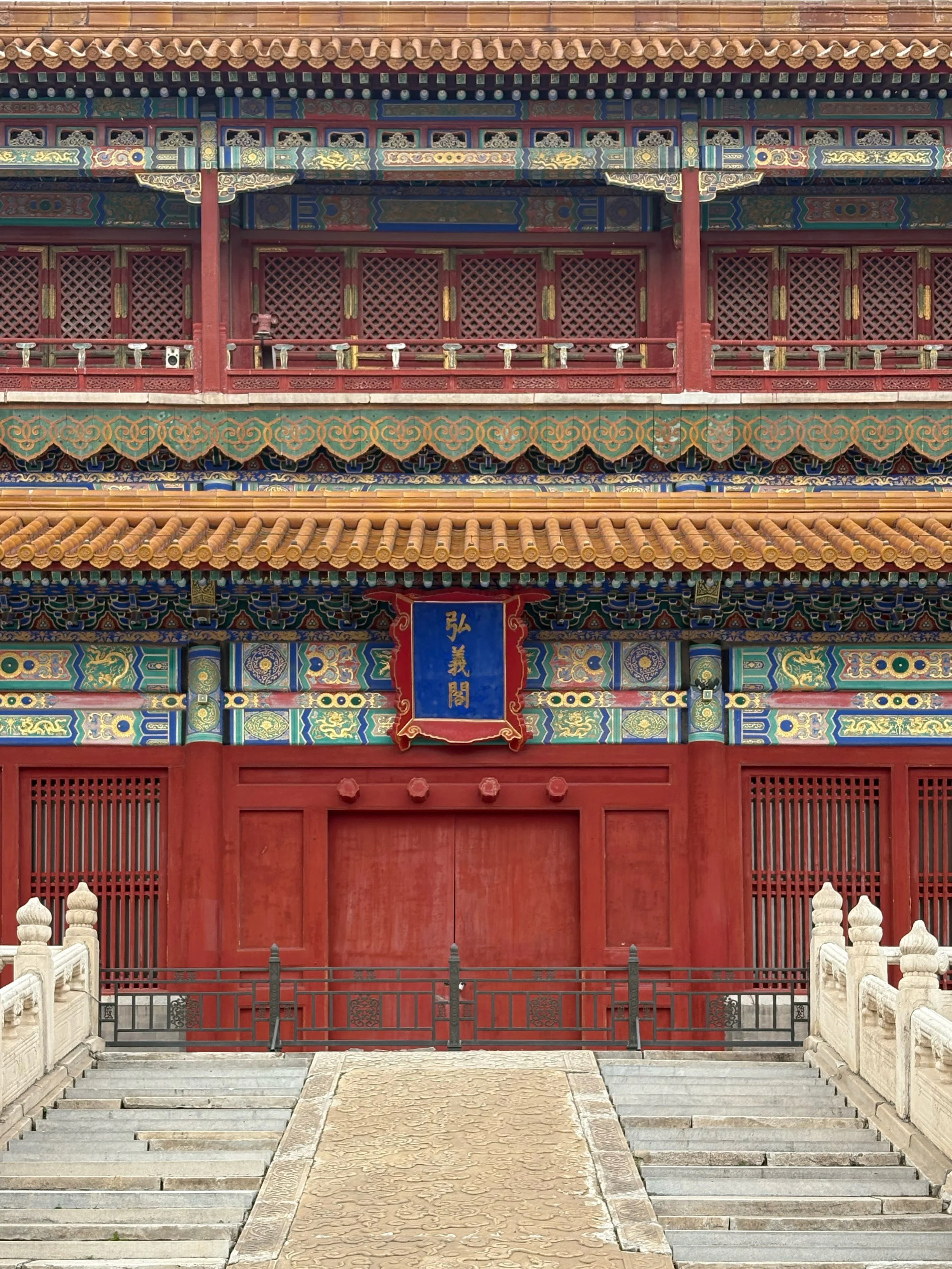
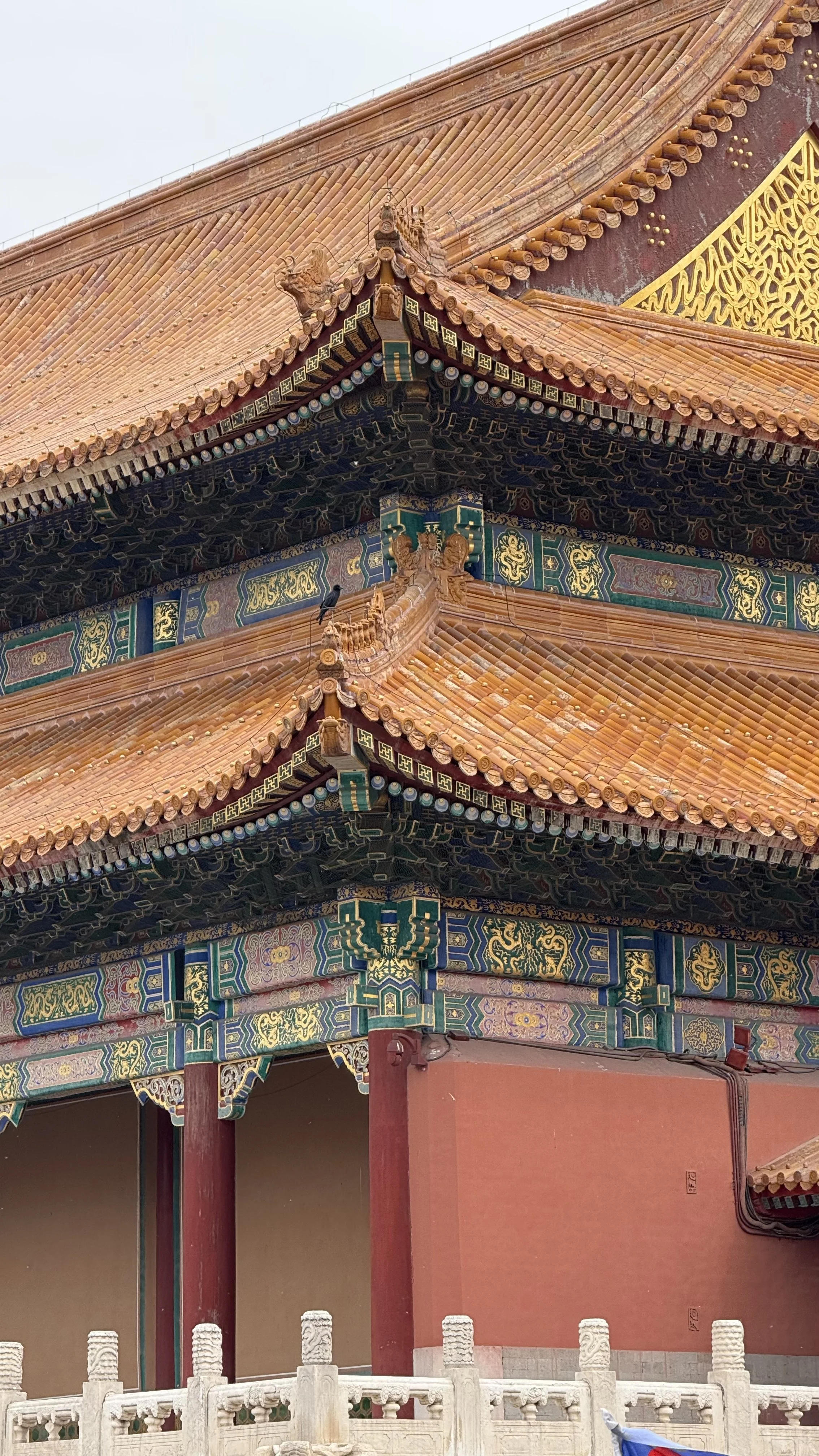
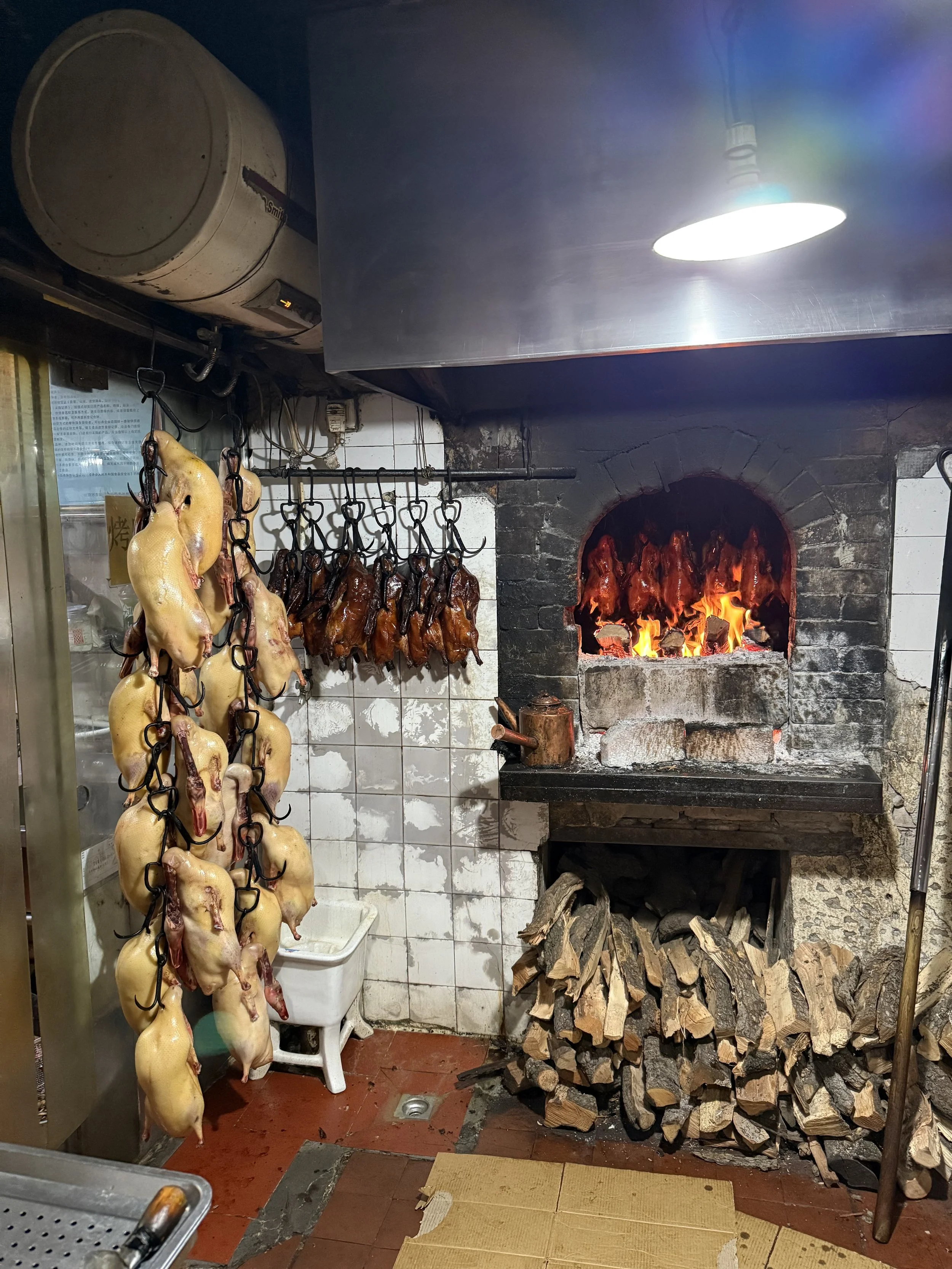
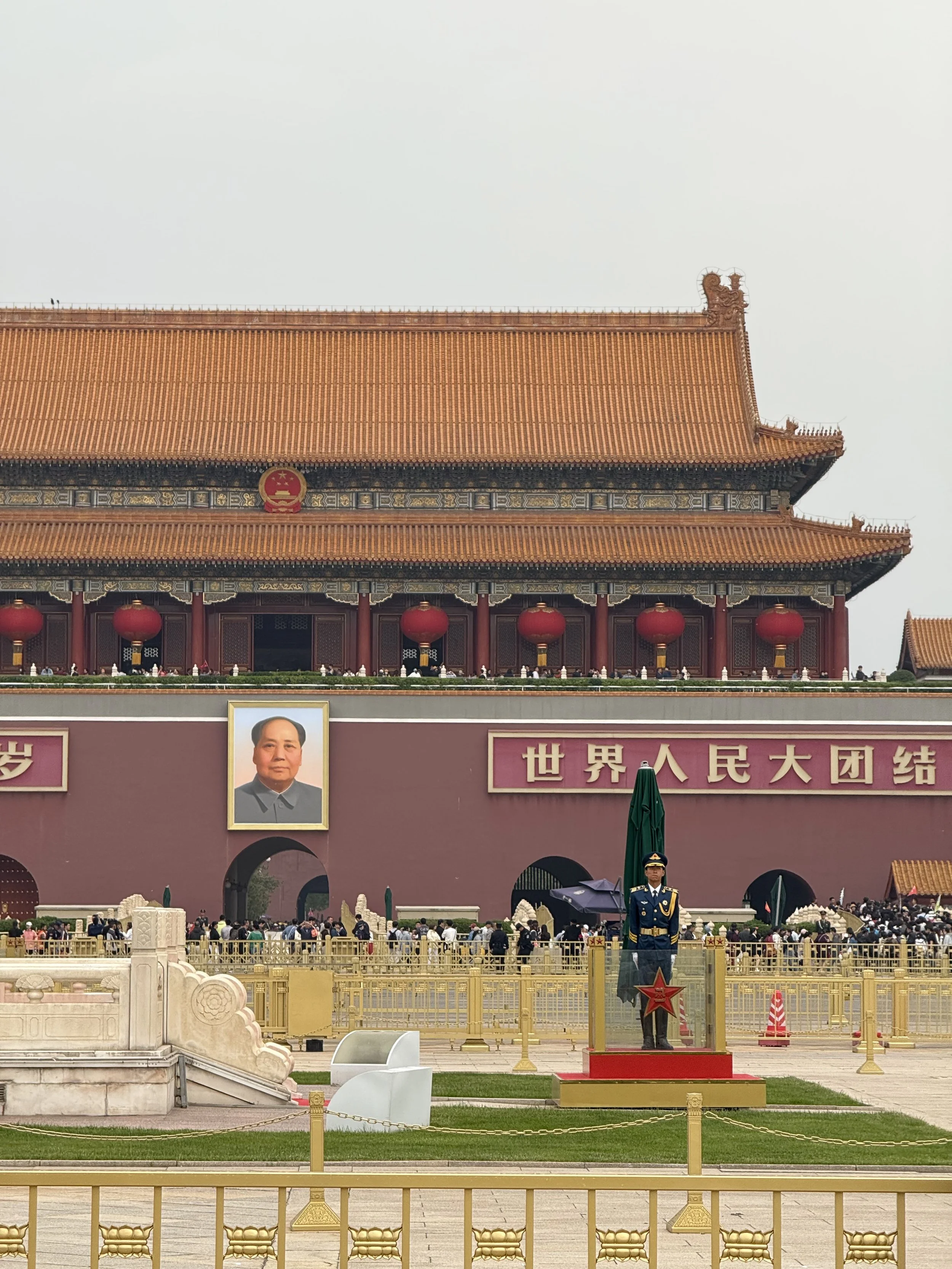
Key moments from our time in Beijing
Where We Stayed
We stayed at Hefengjingli Courtyard Hotel.
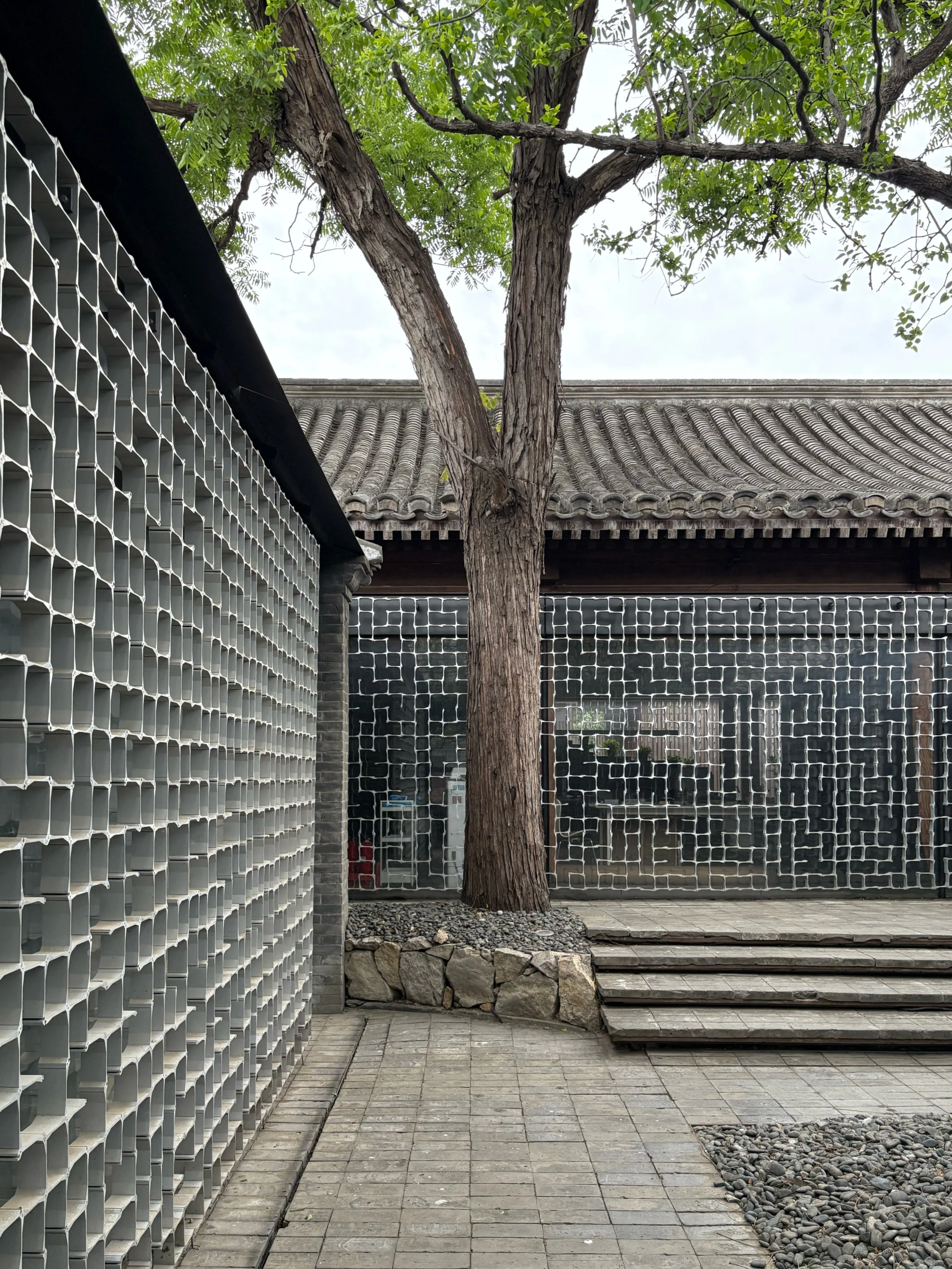
This was one of our favourite stays of the trip (Japan included). The hotel is set within a traditional hutong courtyard, which gave it a lot more character than our Shanghai base. It felt calm, tucked away, and much more reflective of “old Beijing”. At around £102 per night (for two), it was more expensive than Shanghai — likely due to Golden Week demand — but still good value for the experience.
What We Did in Beijing
Walked around the Hutongs
Exploring the hutongs was one of the best ways to understand Beijing. These narrow alleyways are lined with courtyard homes, small shops and local life. Compared to the scale of Beijing’s main landmarks, they feel much more intimate and lived-in. They provide a useful counterbalance to the city’s more monumental sites and give you a better sense of everyday life. If we had more time I would have loved to have gone on this hutongs culinary tasting tour.
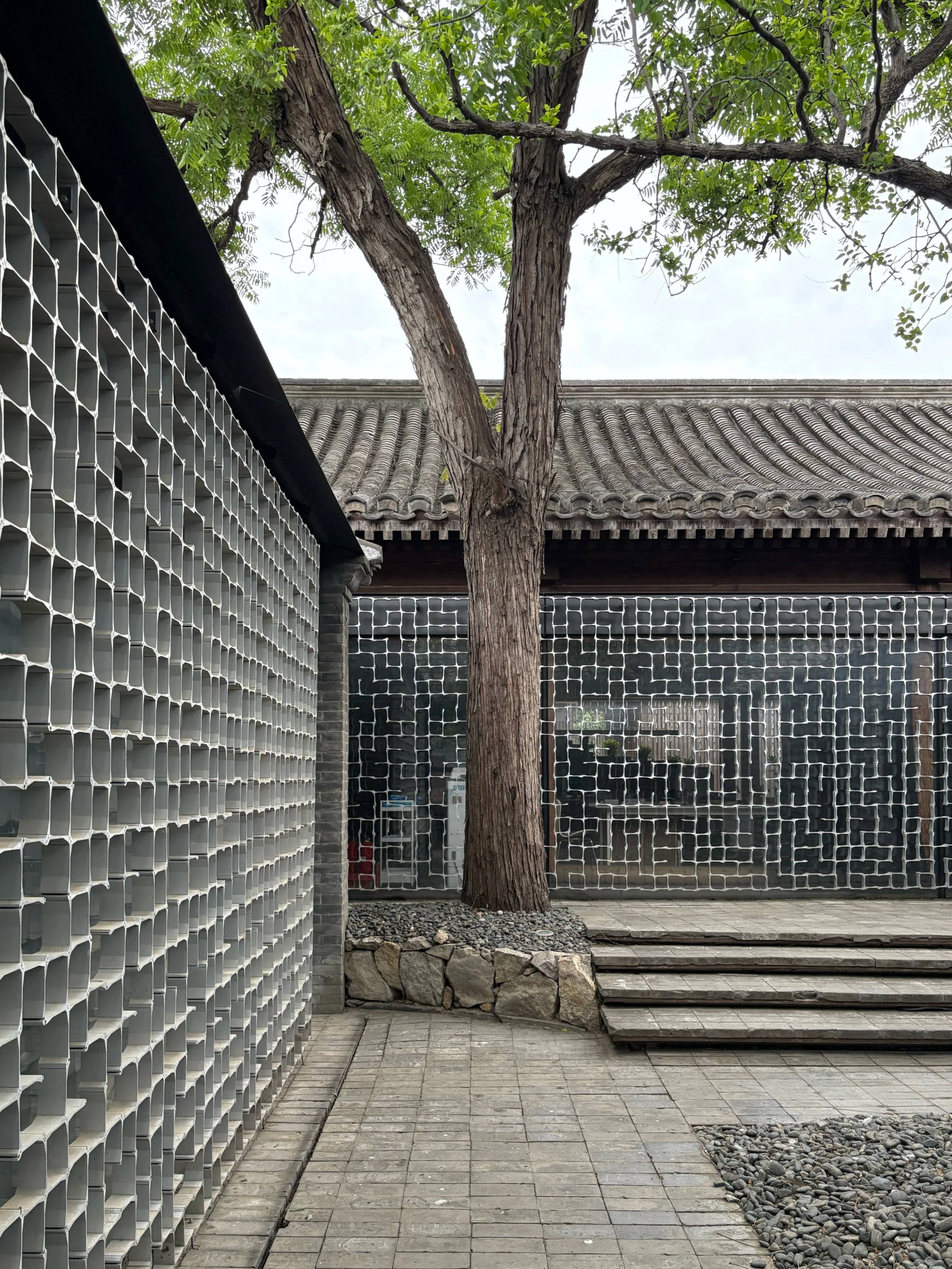
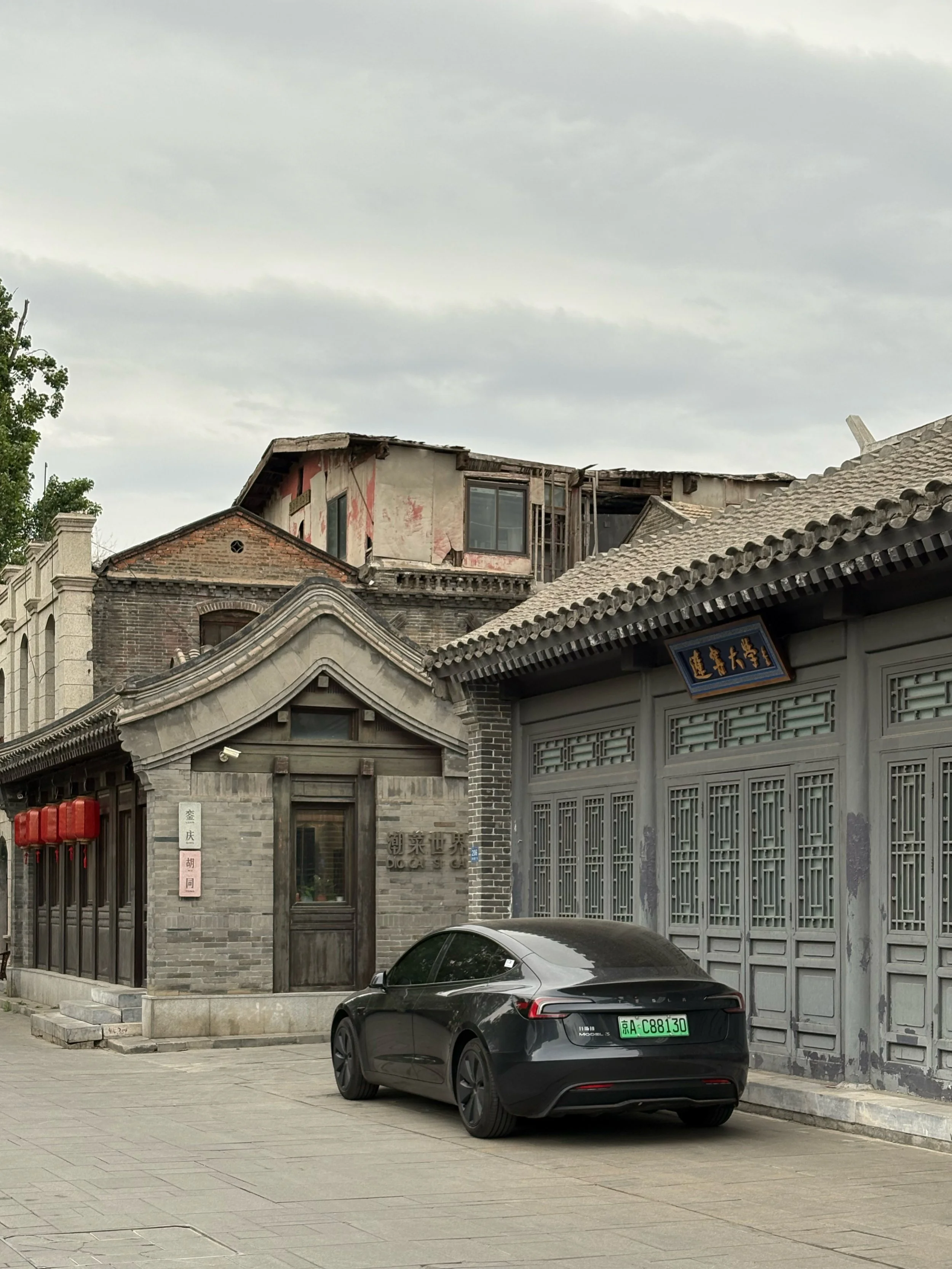
The beautiful hutongs of Beijing
Tiananmen Square
Tiananmen Square is one of the most politically significant places in China — and one of the largest public squares in the world.
The experience of visiting is less about aesthetics and more about scale, symbolism and process. Access was far more complex than expected, with multiple security checks, unclear routes and a very controlled flow of people. It’s worth allowing extra time and planning ahead.
Despite the slightly overwhelming build-up, standing in the square itself felt significant. It really does feel like the centre of the country. We got our tickets up front through Get Your Guide for £3.
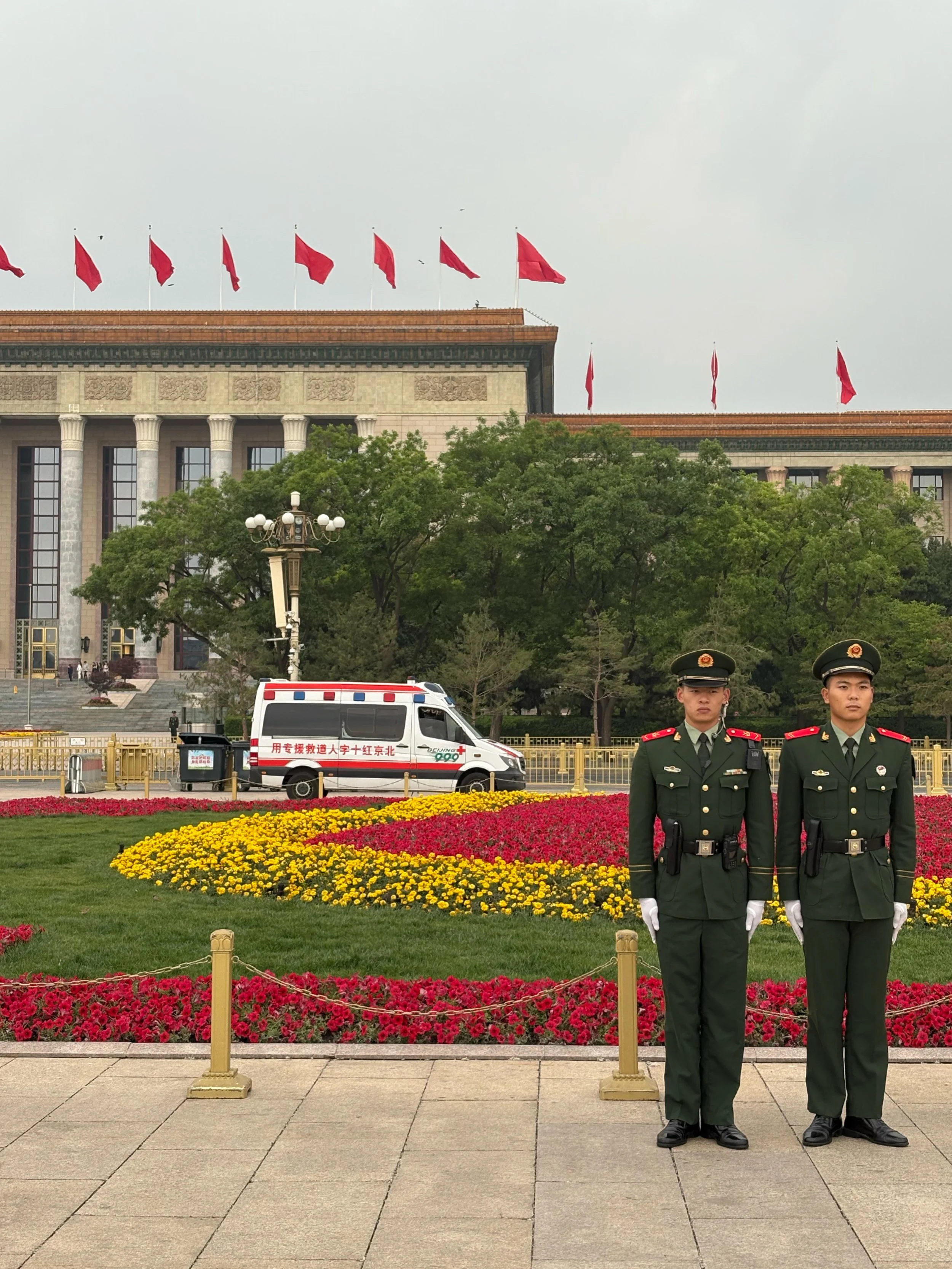
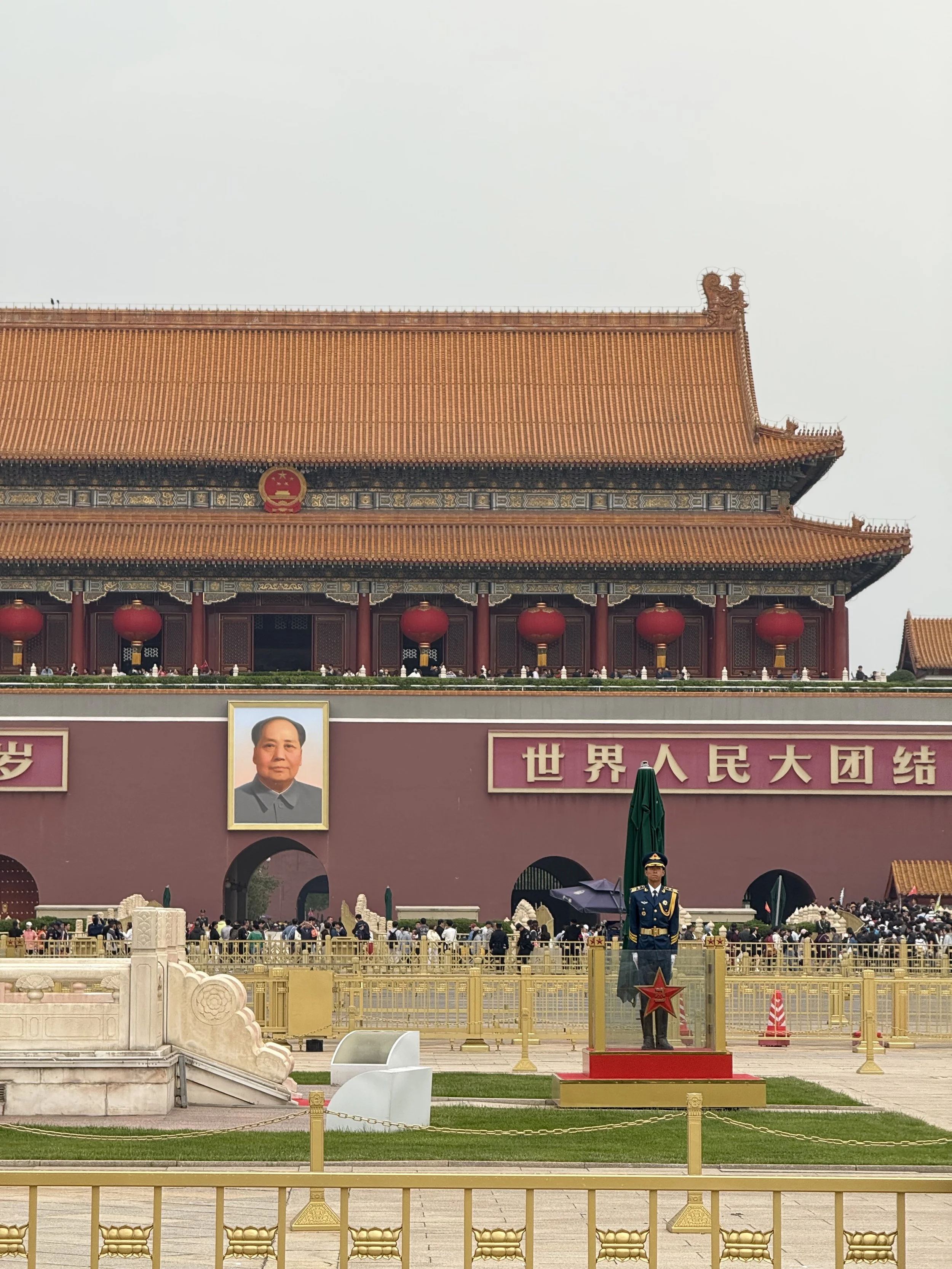
Tiananmen Square
The Forbidden City
The Forbidden City is one of the main reasons to visit Beijing. It’s vast — not a single palace, but a huge complex of halls, courtyards and gates laid out along a strict central axis. What stands out is the repetition and symmetry, reinforcing a strong sense of hierarchy and power as you move through it. It’s also a lot of walking, and it gets very crowded.
We booked this guided tour through Get Your Guide in advance (including entry), which I would strongly recommend. It cost £39 per person. Tickets had actually sold out, and we were only able to go because we got lucky with cancellations.
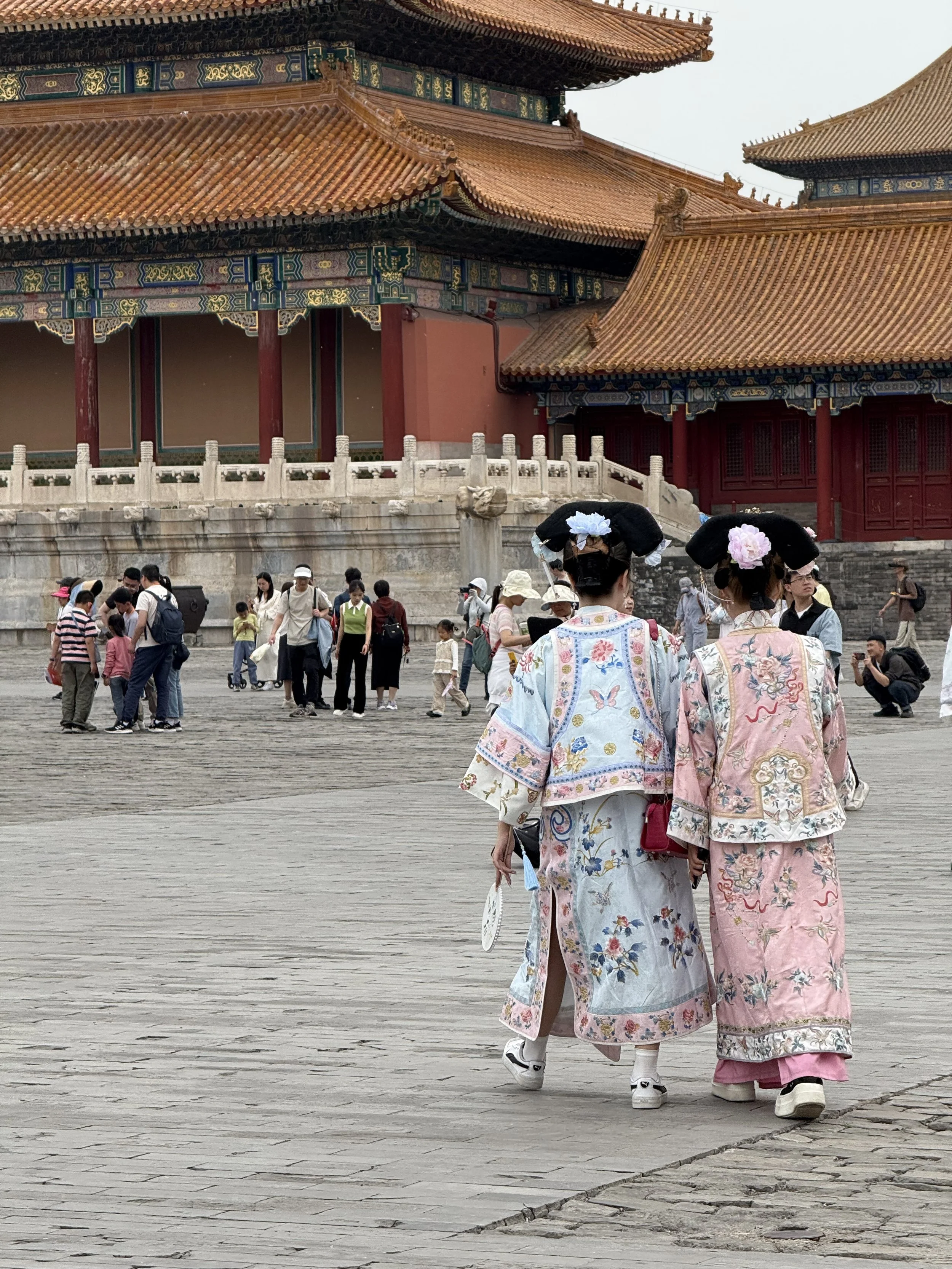
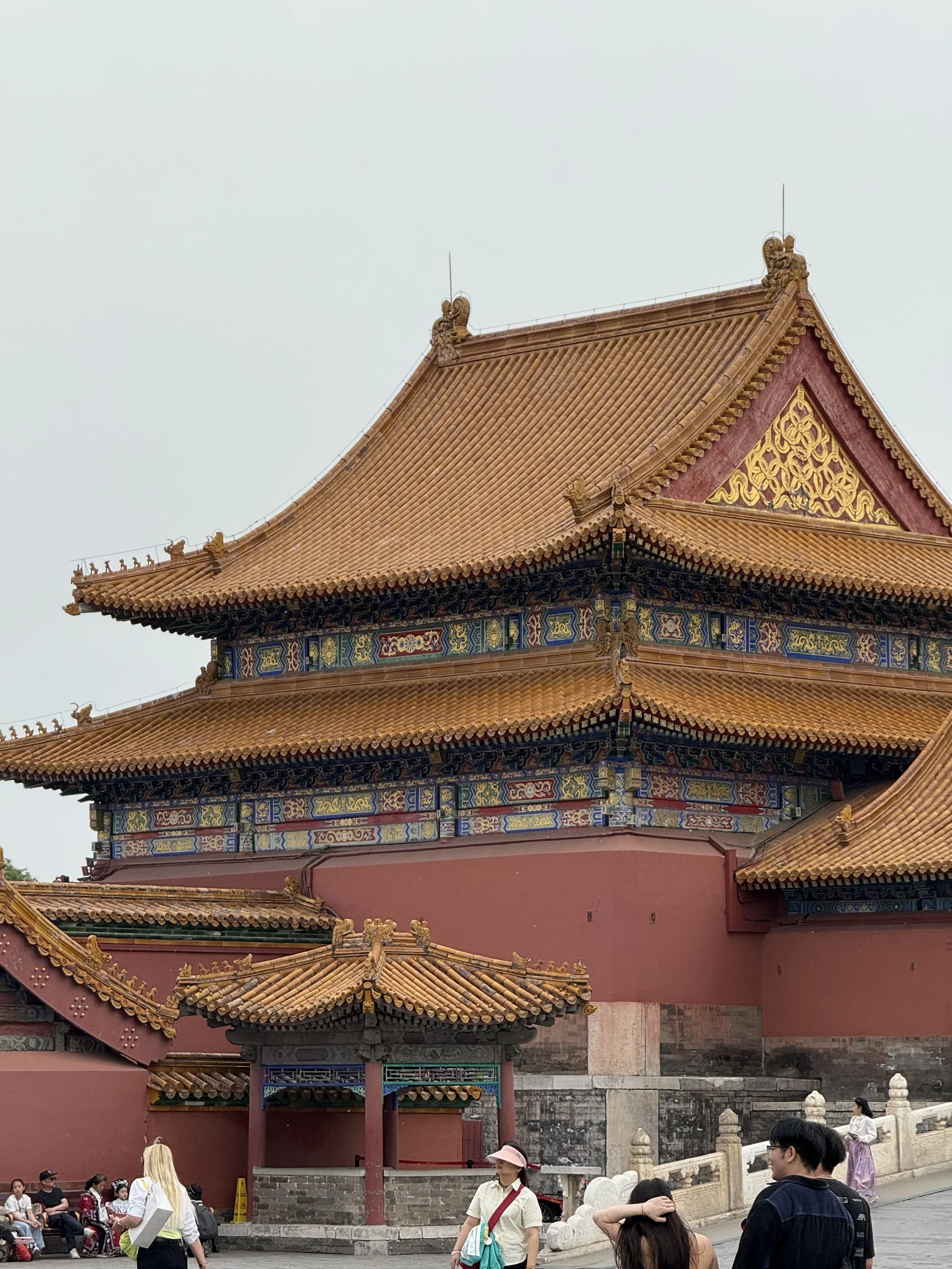
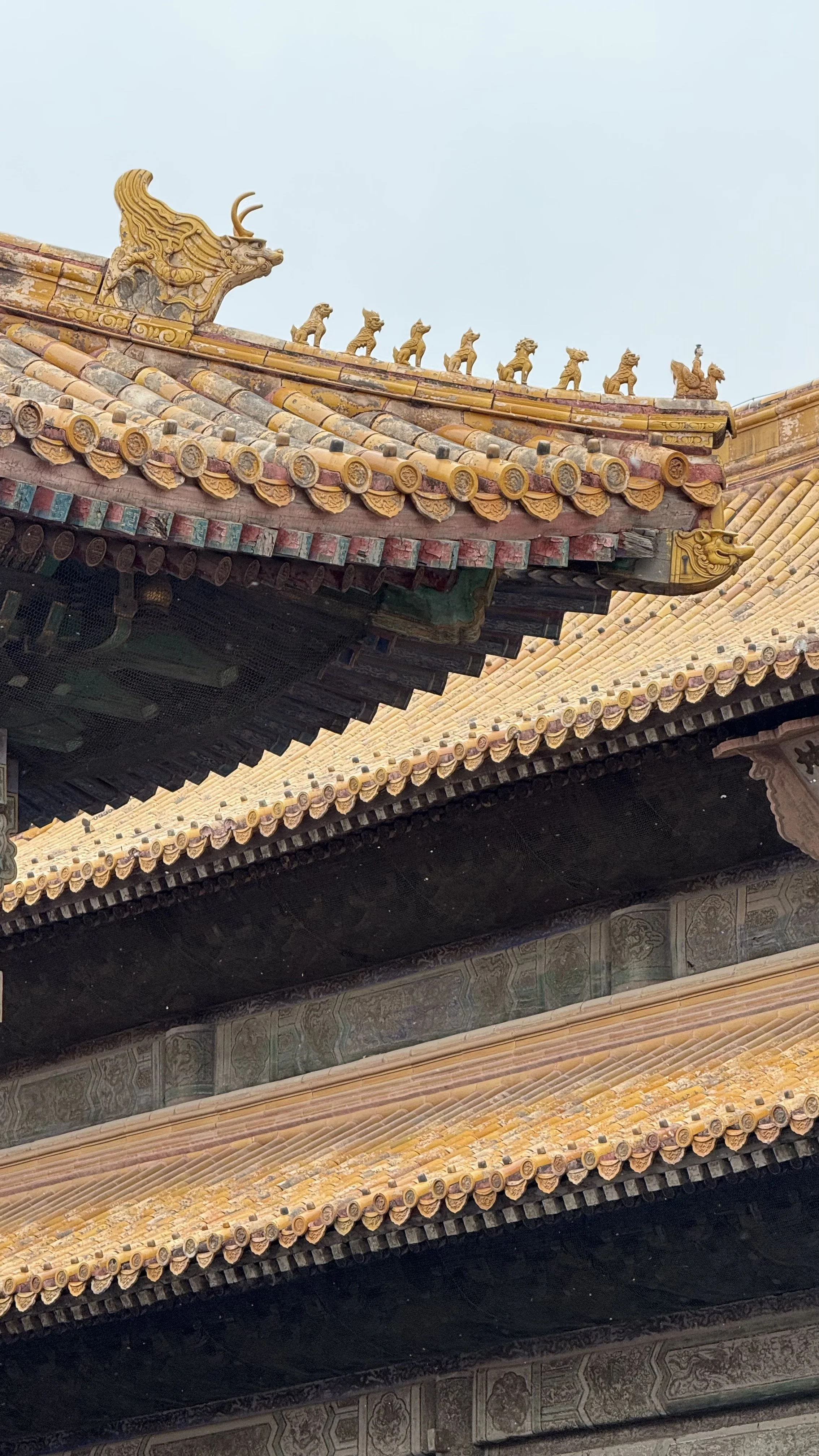
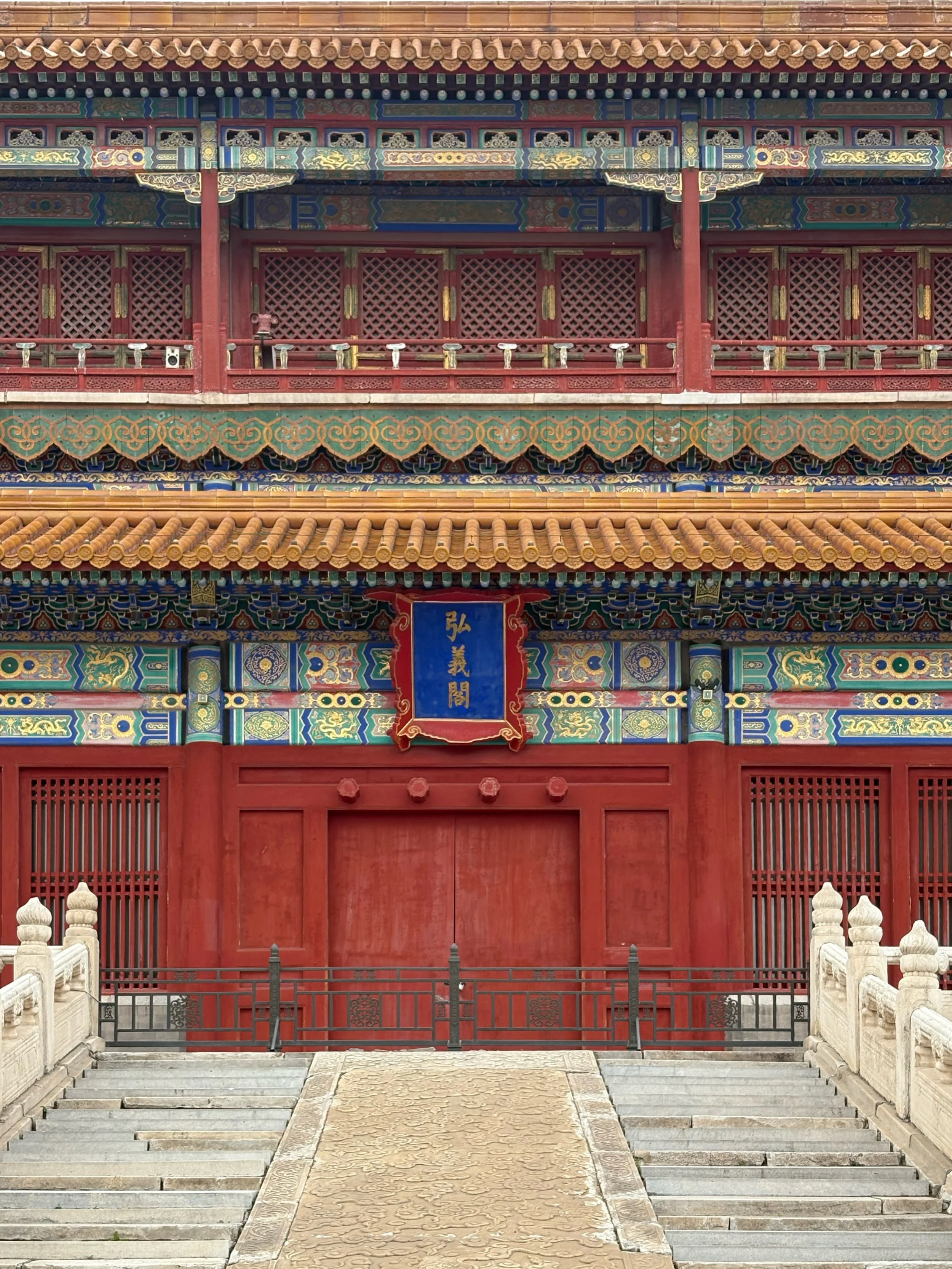
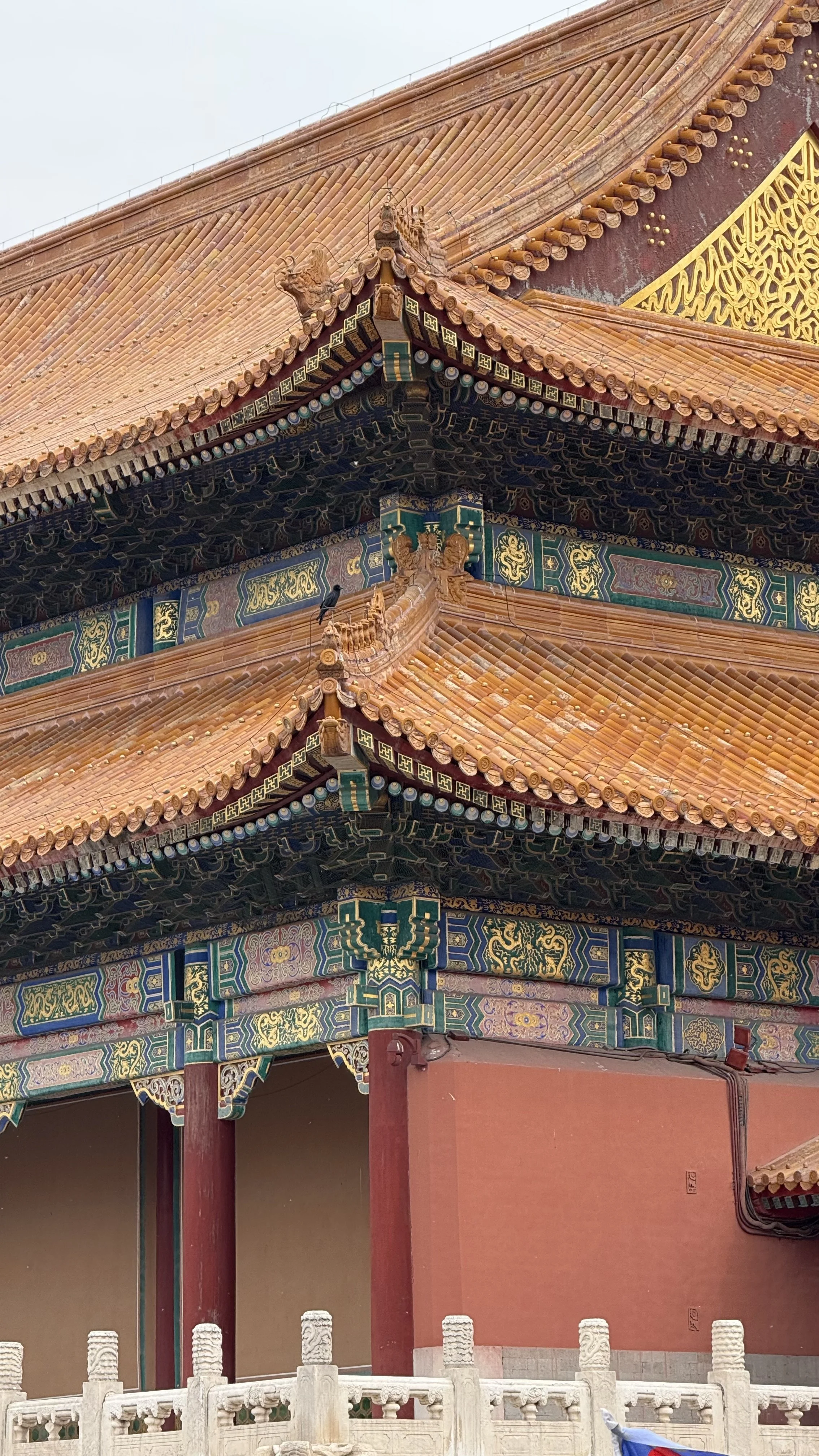
The Forbidden City
Jingshan Park
We visited Jingshan Park immediately after the Forbidden City. The main draw is the hilltop viewpoint overlooking the palace — although this was extremely busy. What stood out more was the atmosphere within the park itself. Groups of locals, particularly older residents, were gathered singing together, which gave it a really authentic and unexpected feel. Again, we booked this ticket through Get Your Guide, costing £4 per person.
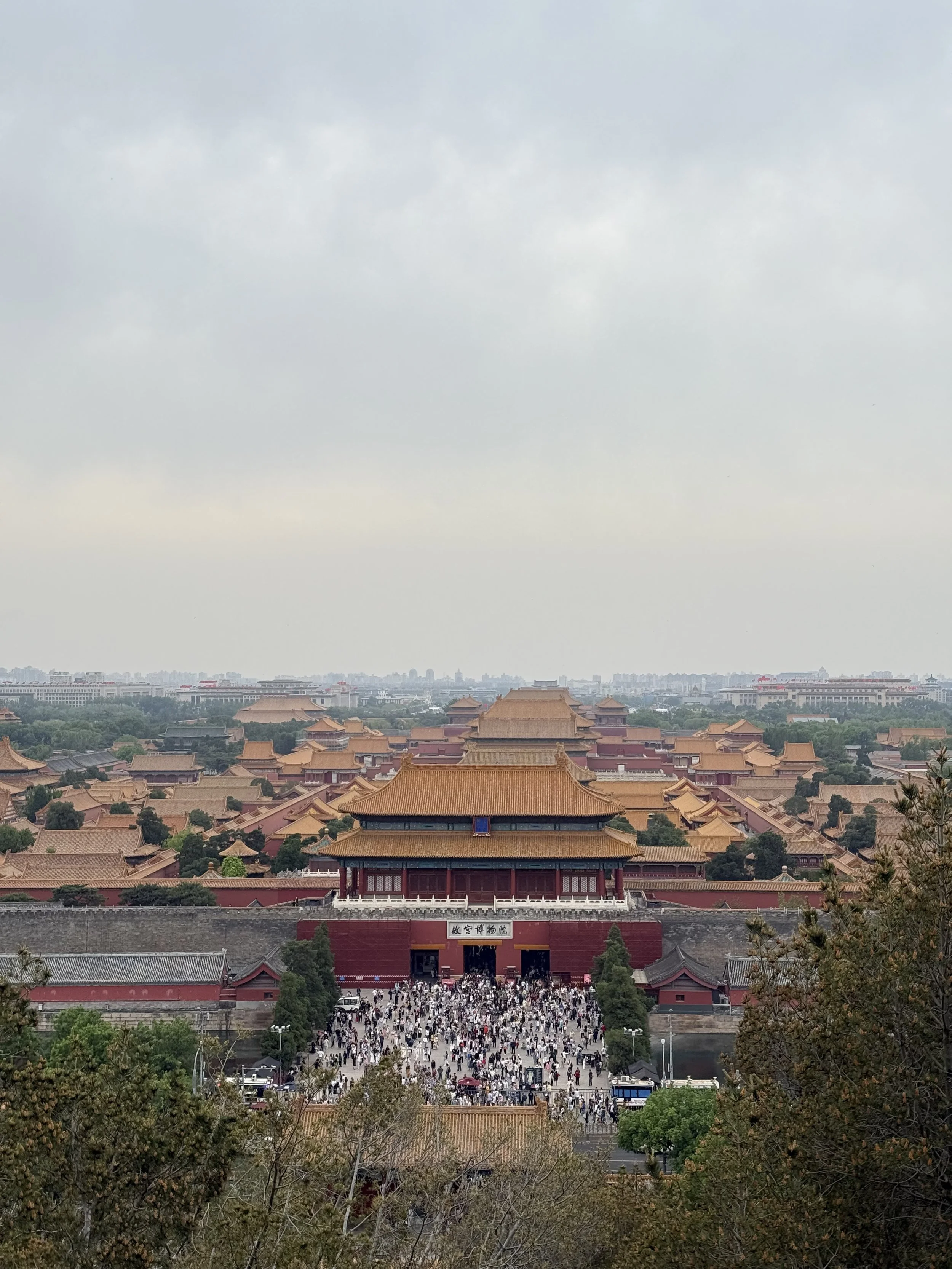
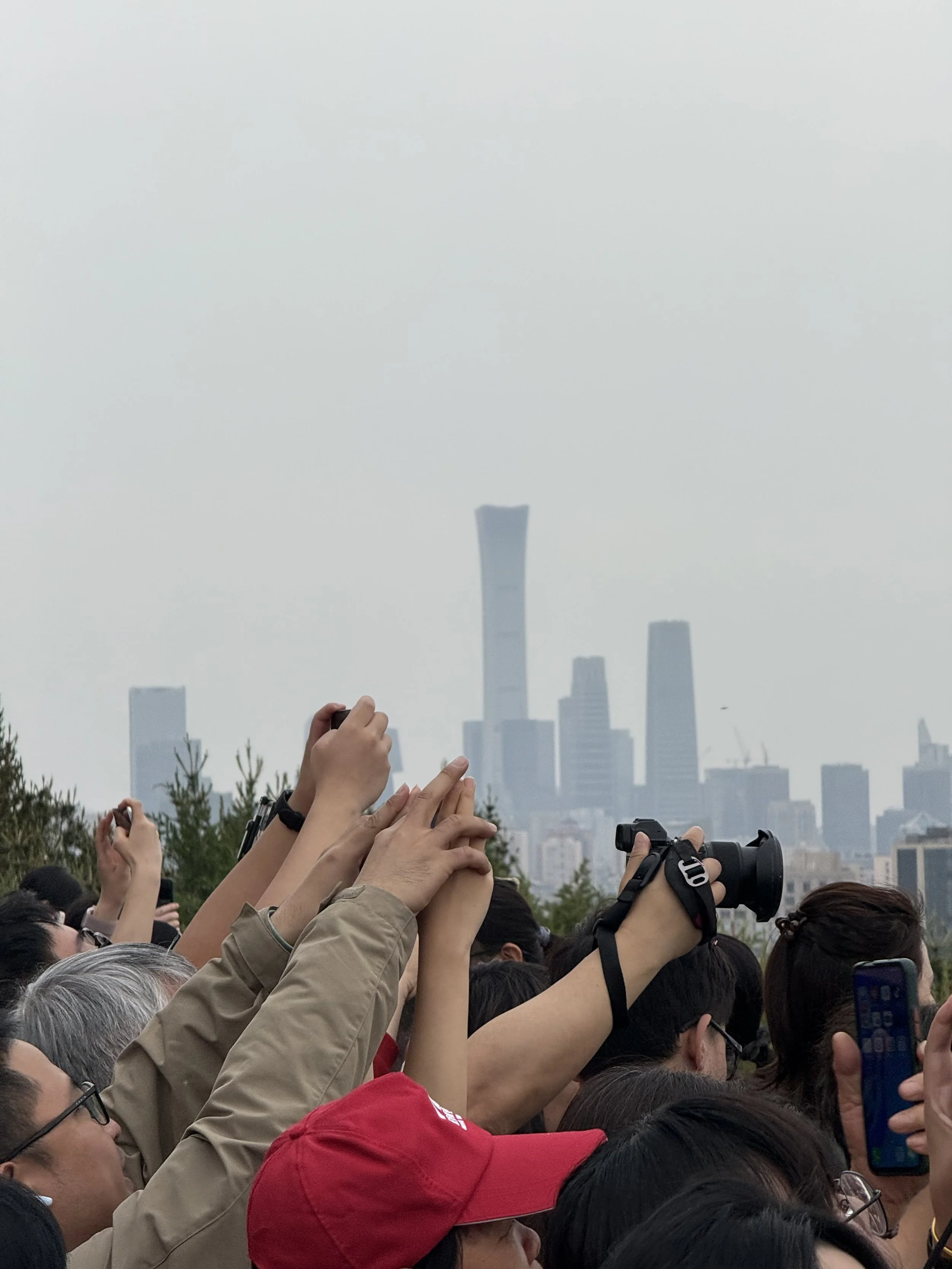
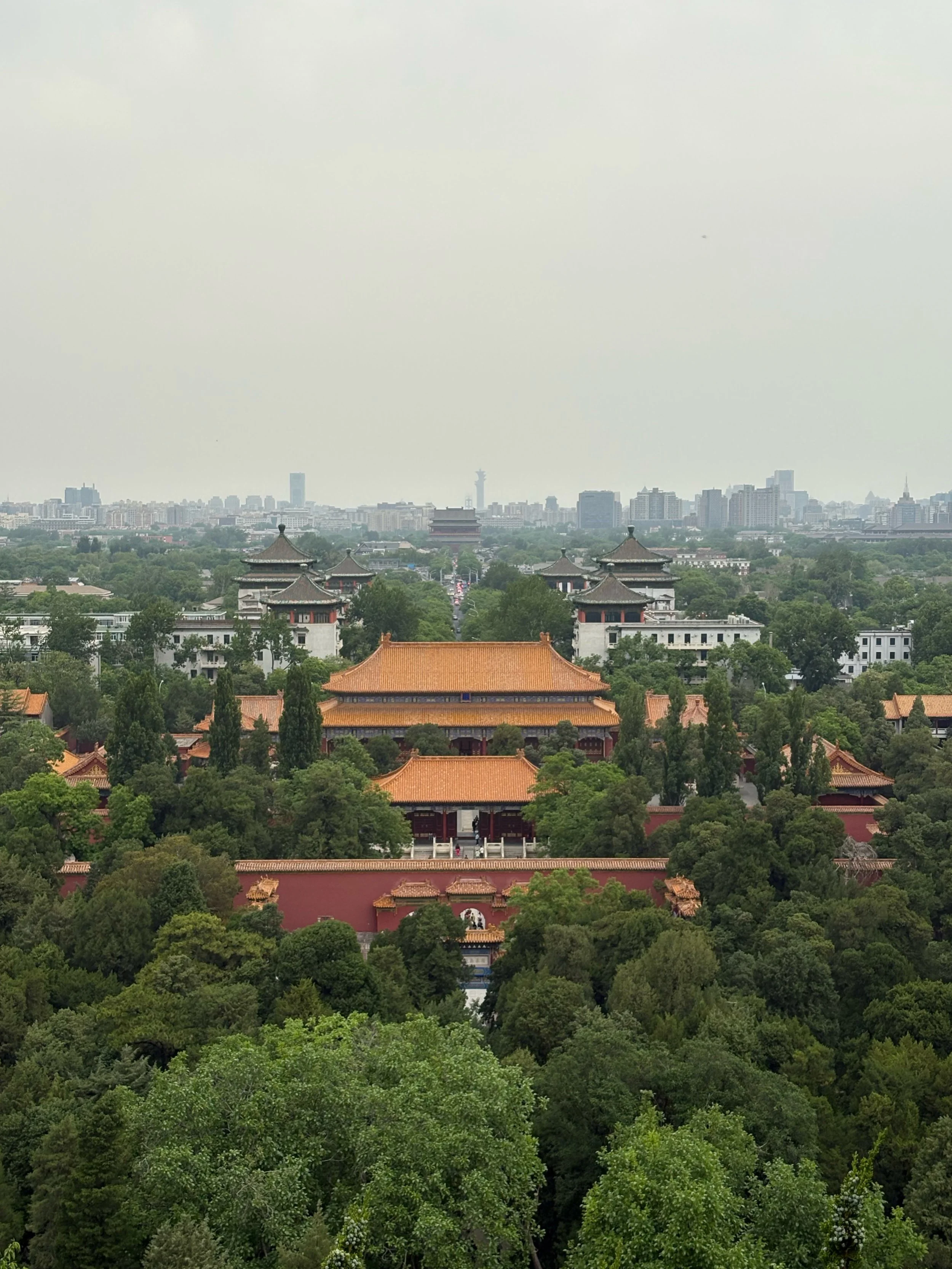
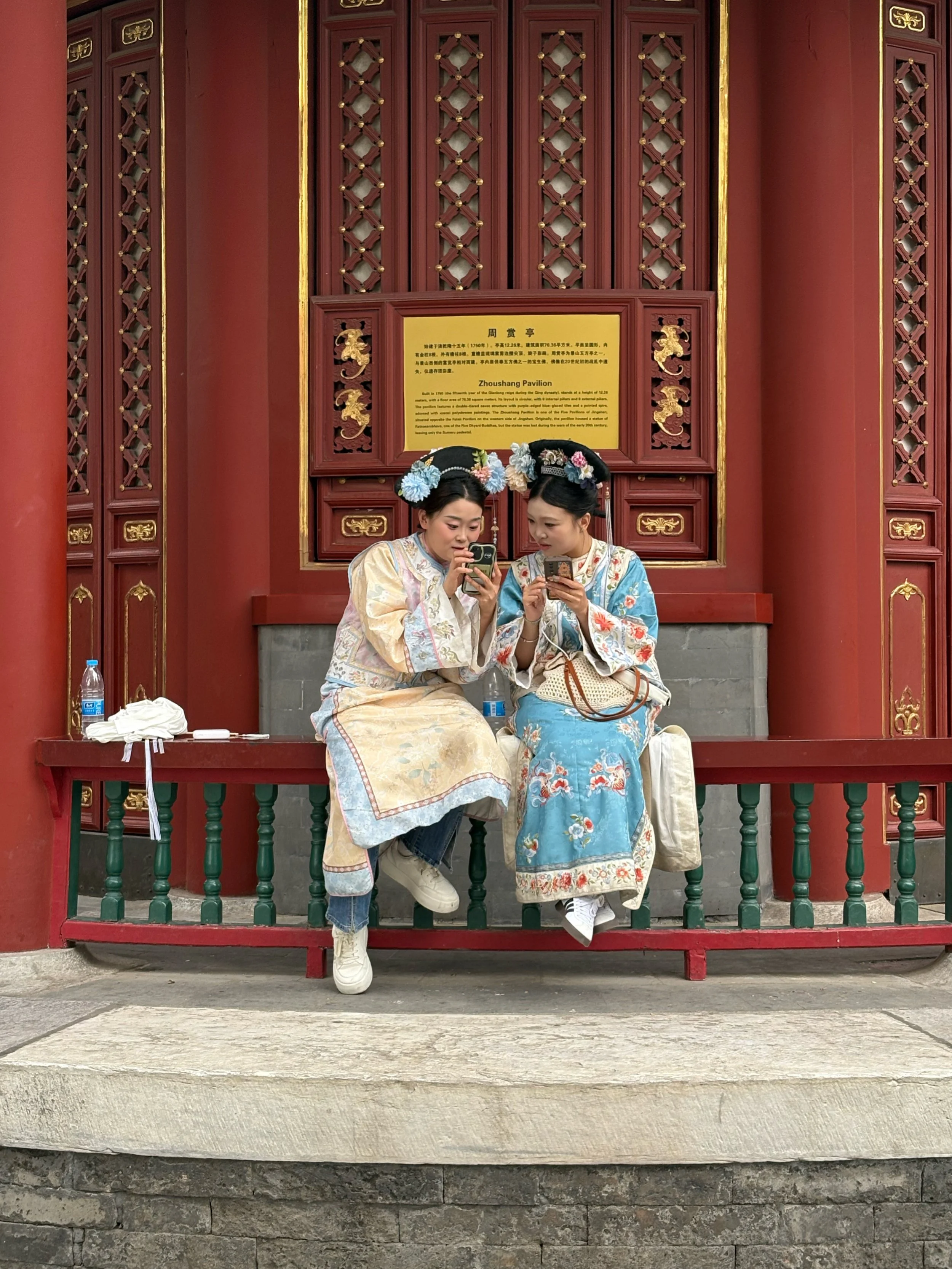
Jingshan Park and the view over the Forbidden City
Many groups of local people were singing in the park which was beautiful to see
Qianhai Waterfront (Evening Walk)
Walking back from Jingshan Park to our hotel via Qianhai ended up being one of the highlights of the trip. As the evening set in, the entire waterfront came to life. Bars and cafés lined the lake, many with open doors and windows, and inside there was live music — with people gathering outside to watch from the street.
It felt very organic, almost like the whole area had turned into one long, informal live music venue. You’d walk a few steps and hear a completely different song drifting out from the next bar. There was a real energy to it, but still relaxed and local. It’s not something we had planned, but it ended up being one of the most memorable parts of Beijing.
Qianhai bars and restaurants
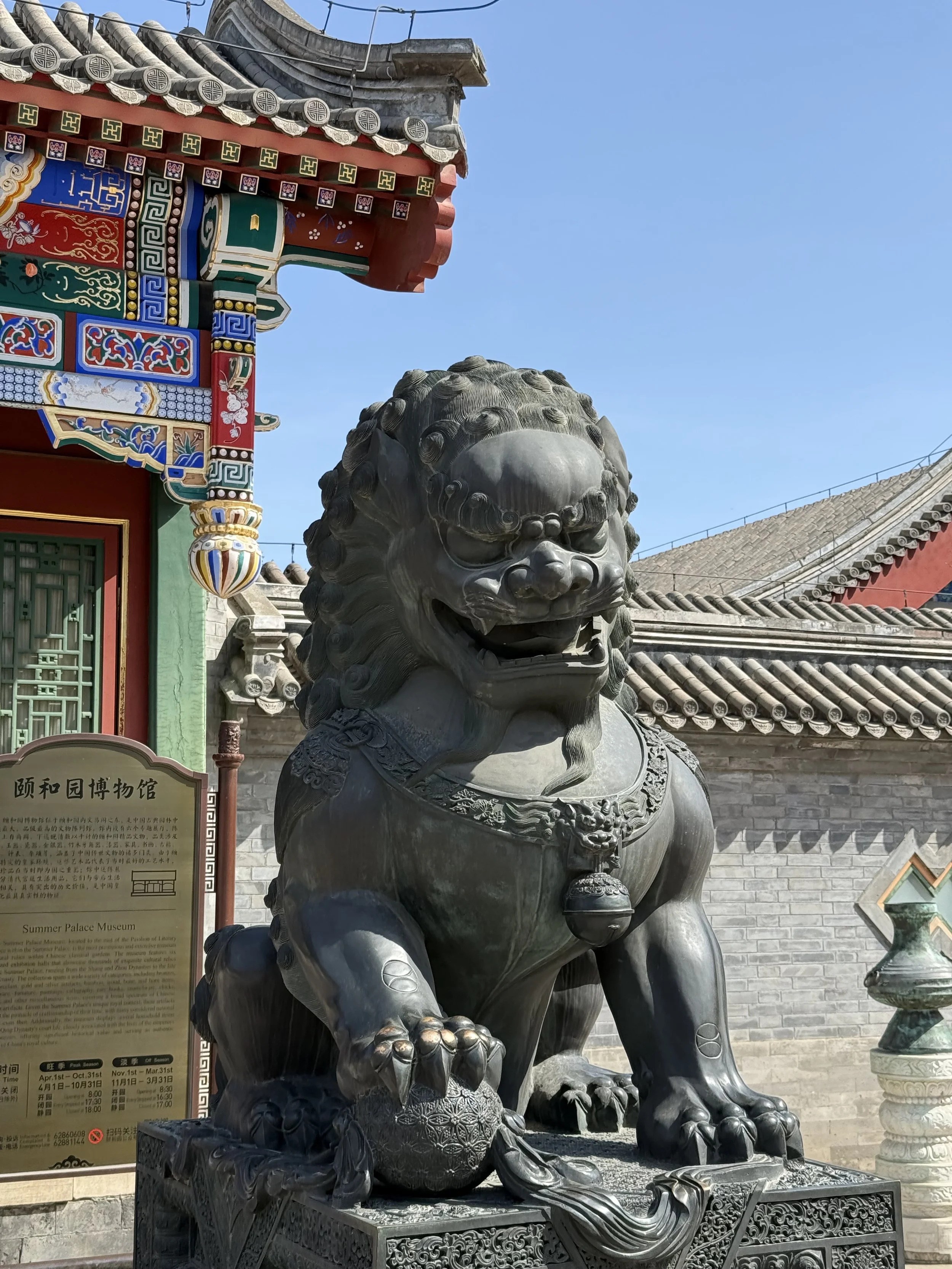
Summer Palace
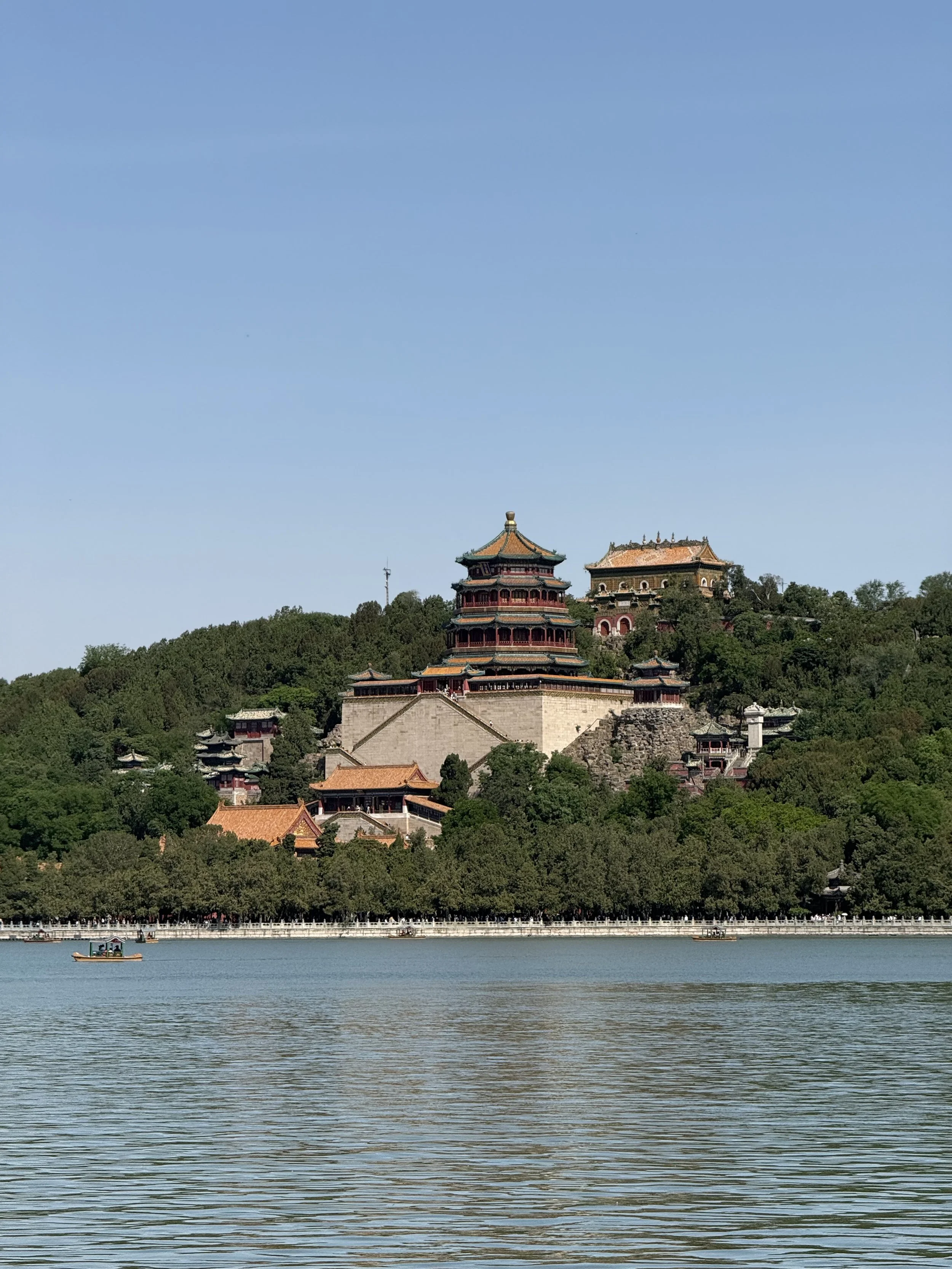
The Summer Palace offers a completely different experience to the Forbidden City. Where the Forbidden City is formal and dense, the Summer Palace is open and scenic — built around a large lake, with bridges, gardens and long walkways. It was designed as a retreat for the imperial family, and that sense of escape comes through. It felt calmer and easier to enjoy overall.
We only spent a morning here and left feeling like we’d barely scratched the surface. If you have time, a full day would be ideal. Again, we booked these entry tickets through Get Your Guide, for £7 per person.
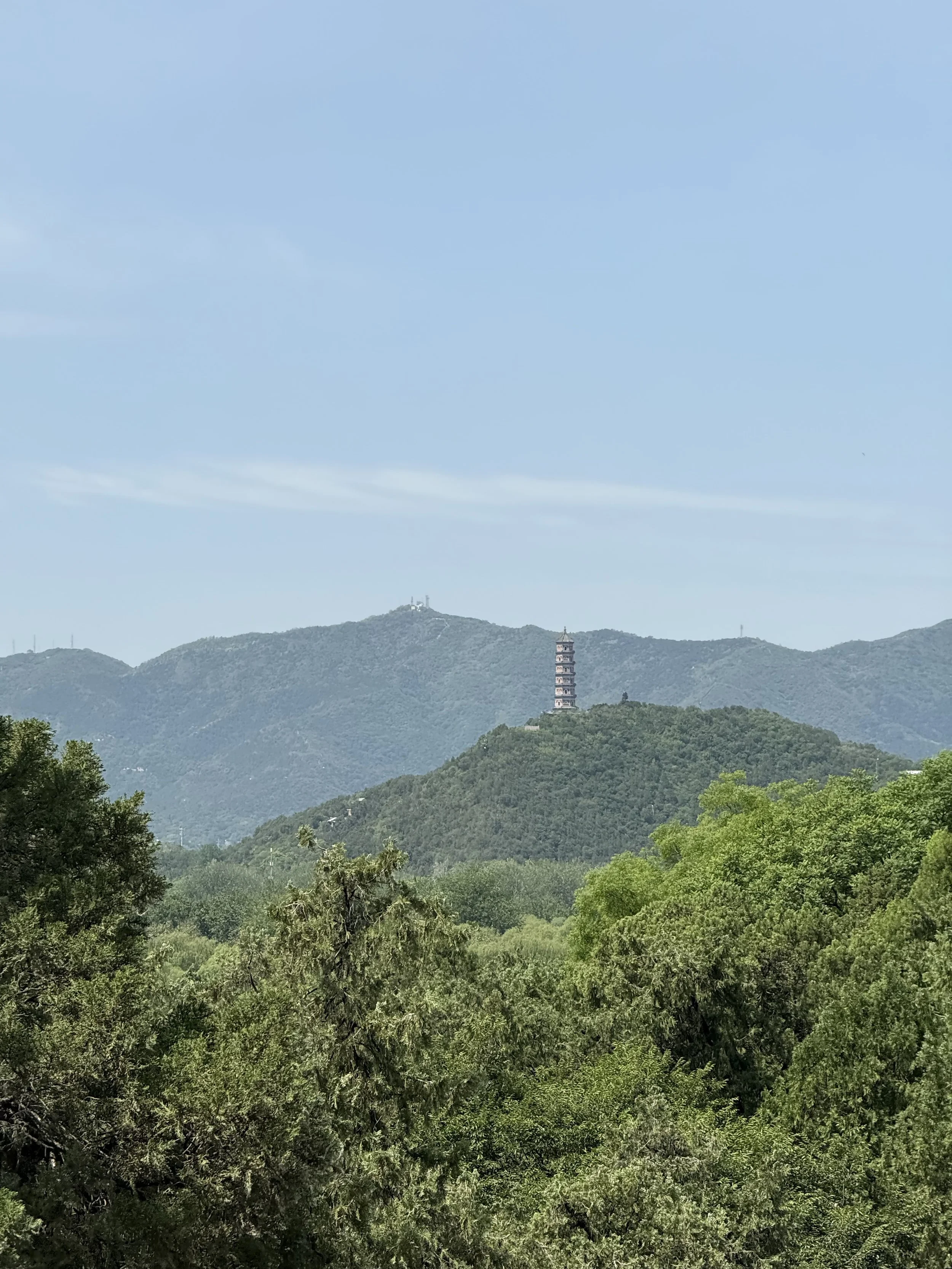
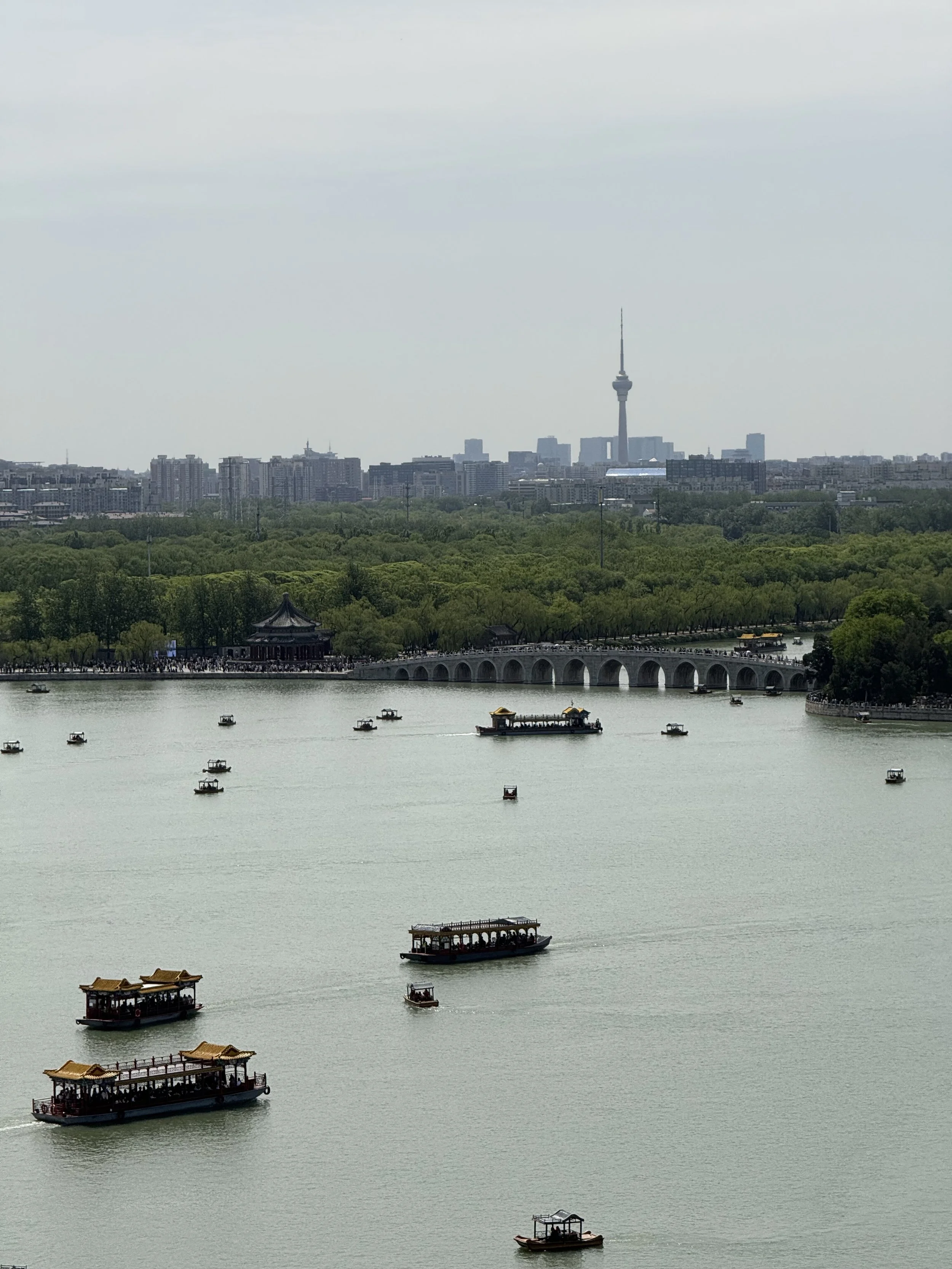
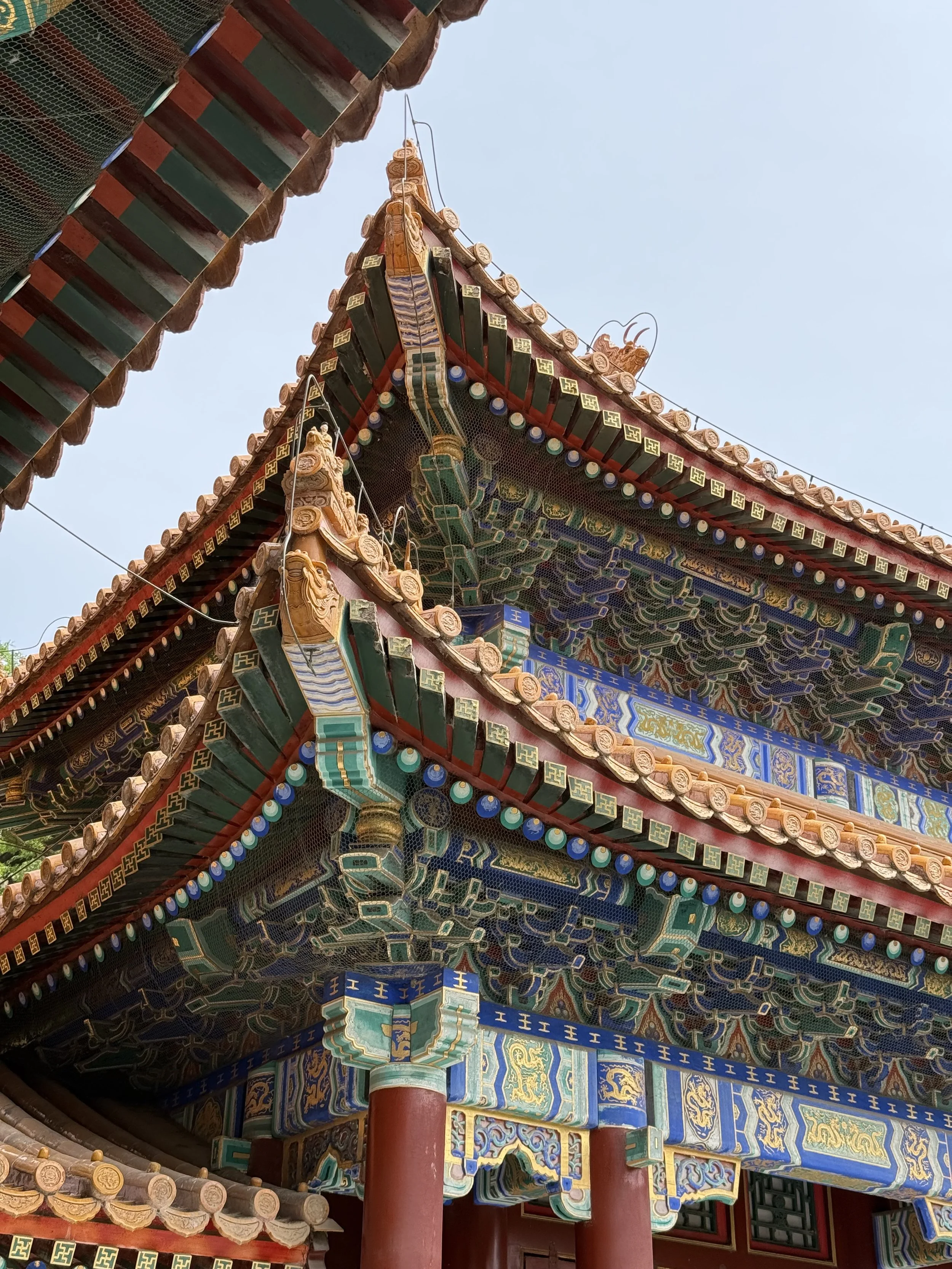
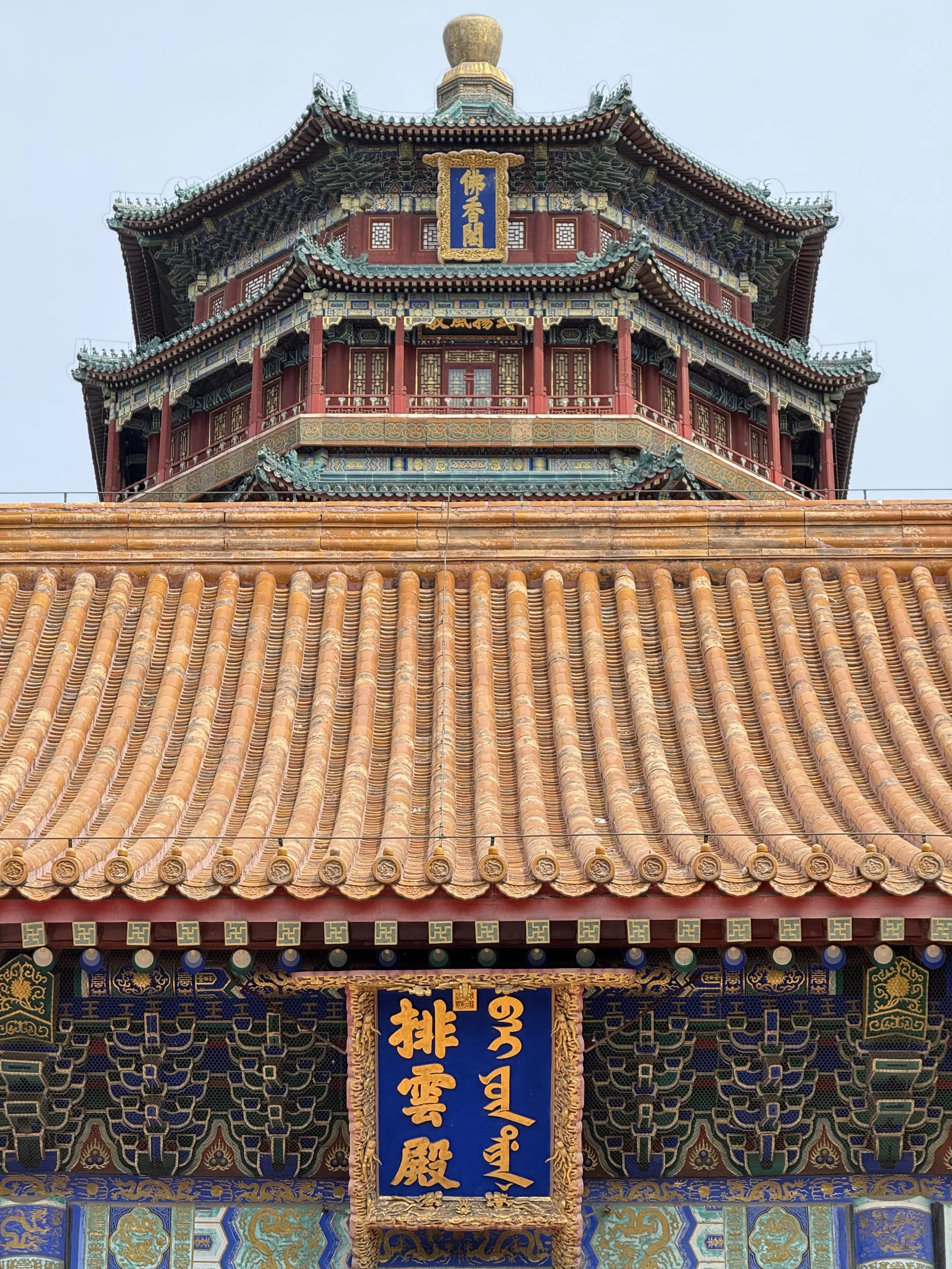
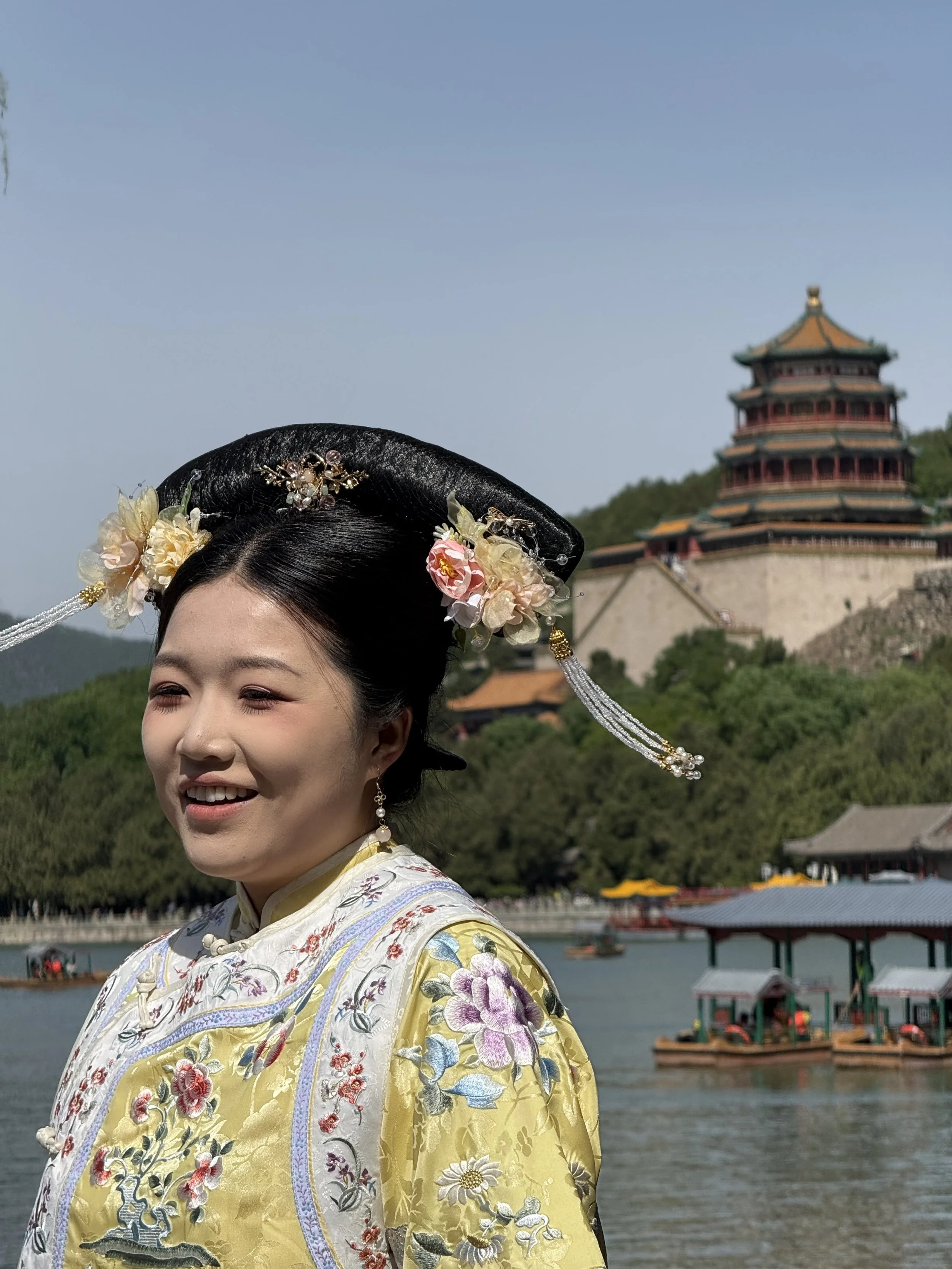
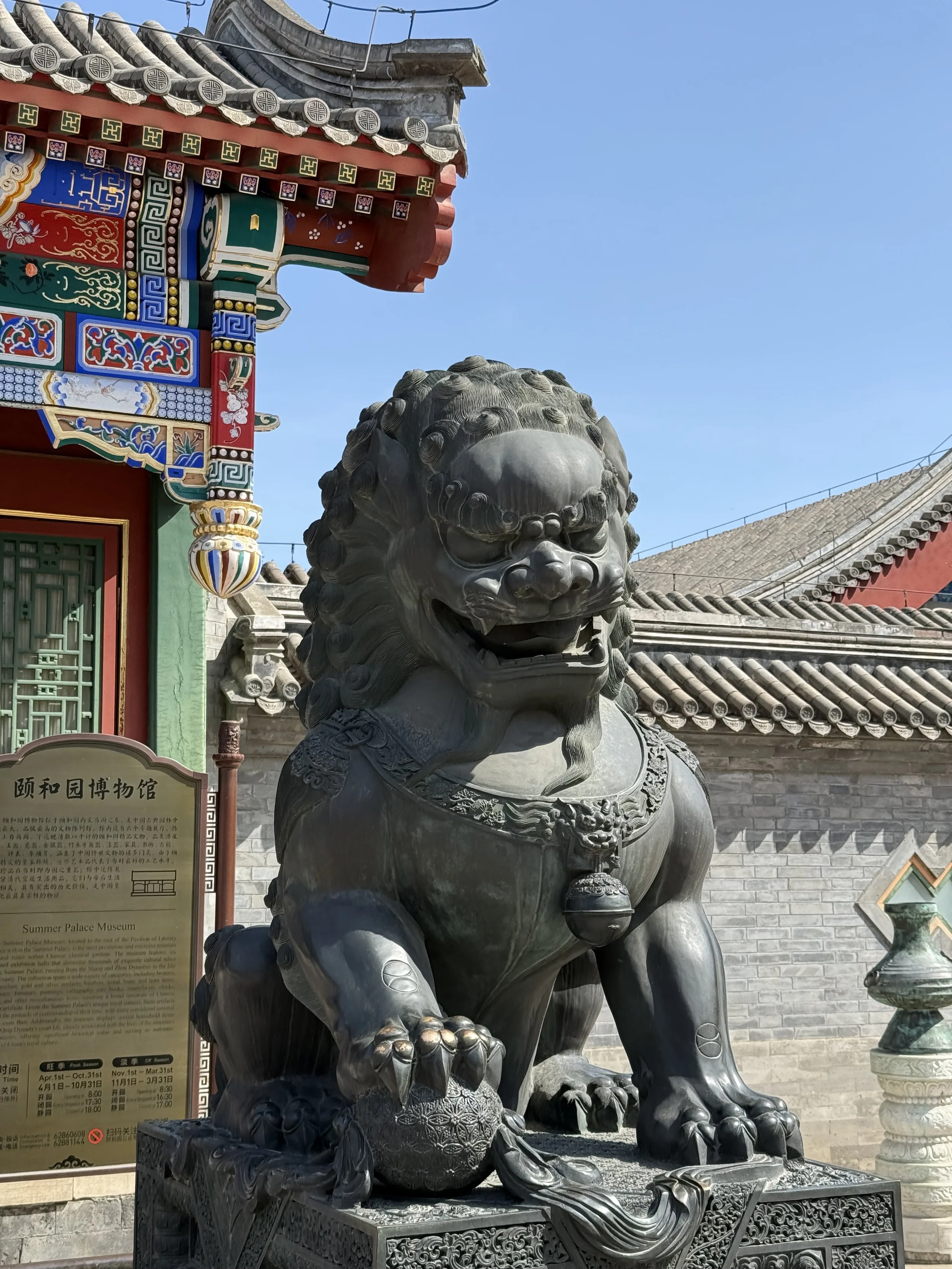
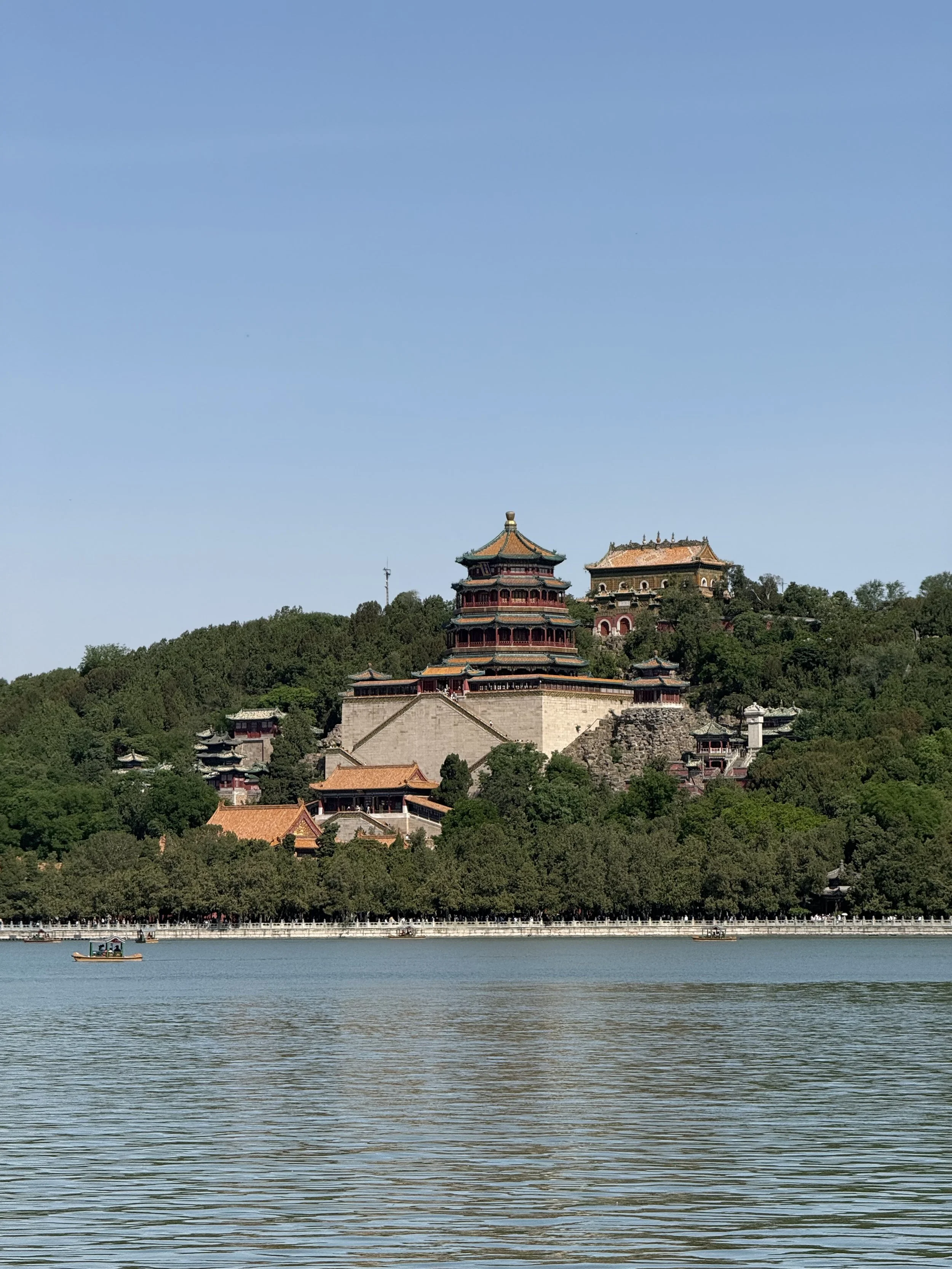
The Summer Palace
Great Wall of China (Mutianyu Section)
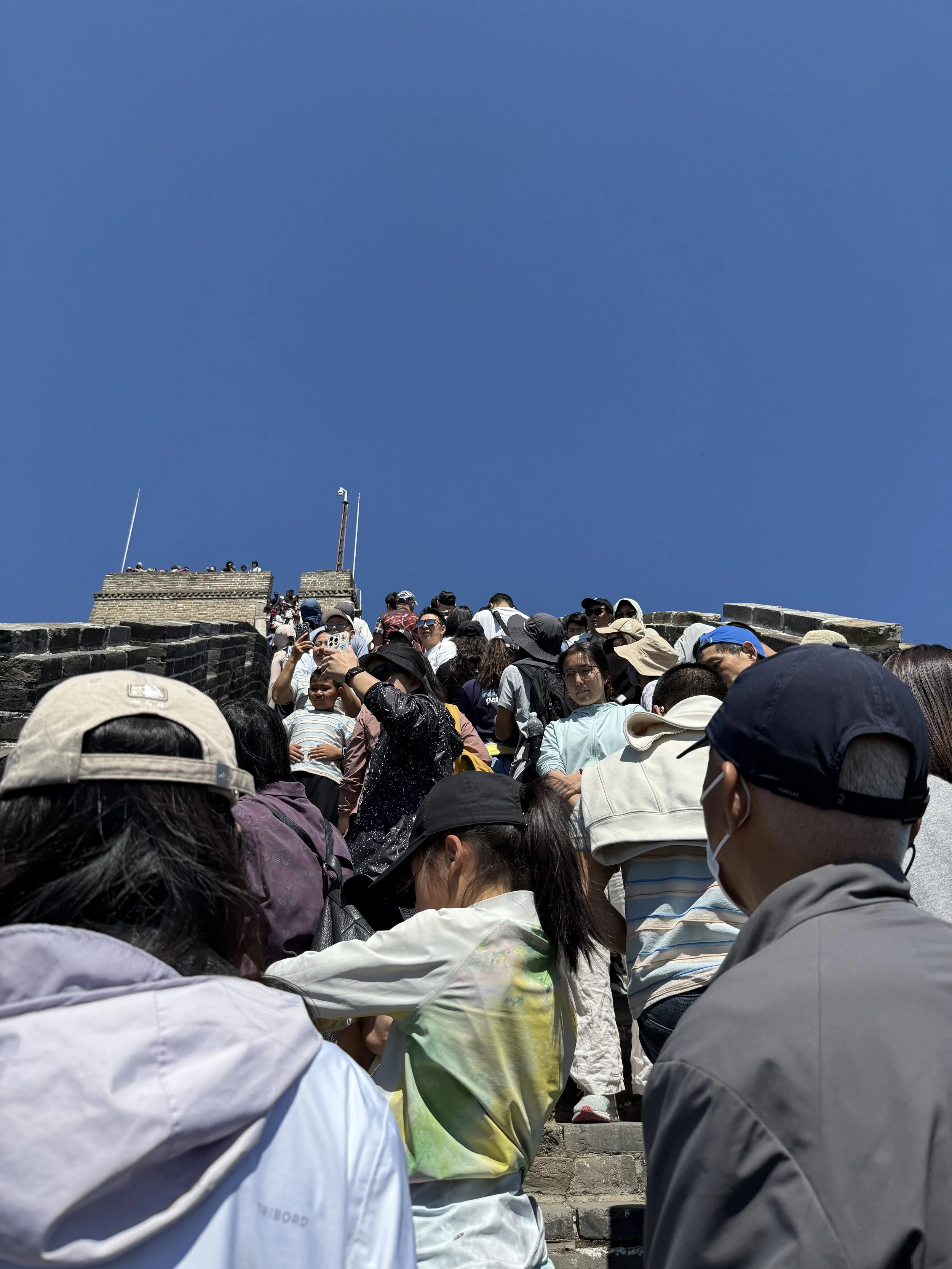
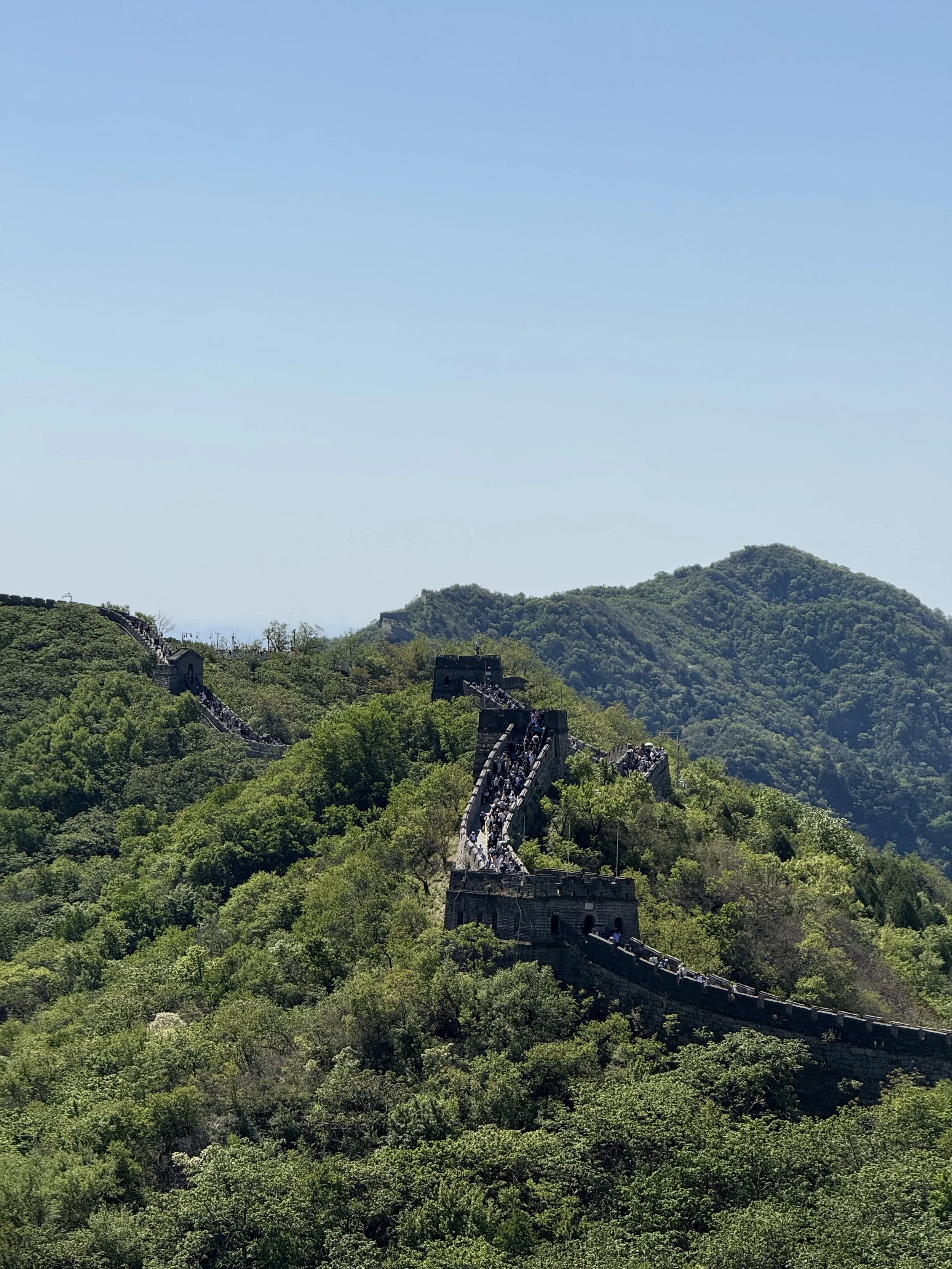
The Great Wall of China fully lived up to expectations. What stood out most was how it moves across the landscape — following ridgelines, climbing and dipping across the hills. It’s far more dynamic in person than it appears in photos.
The visibility was also a surprise. We had expected haze and pollution, but the views were clear and far-reaching — we could even see parts of the city skyline in the distance (about 75km away).
We took a DiDi taxi, which cost around £25 each way between two of us. Each leg takes approximately 2 hours. We bought these tickets up front through - you guessed it - Get Your Guide for £11. There are various sections of the wall that you can visit from Beijing. We chose Mutianyu due to its ease of accessibility and scenic viewpoints, however it is one of the most touristic sections of the wall. It was so, so busy during our time there (during the national holiday).
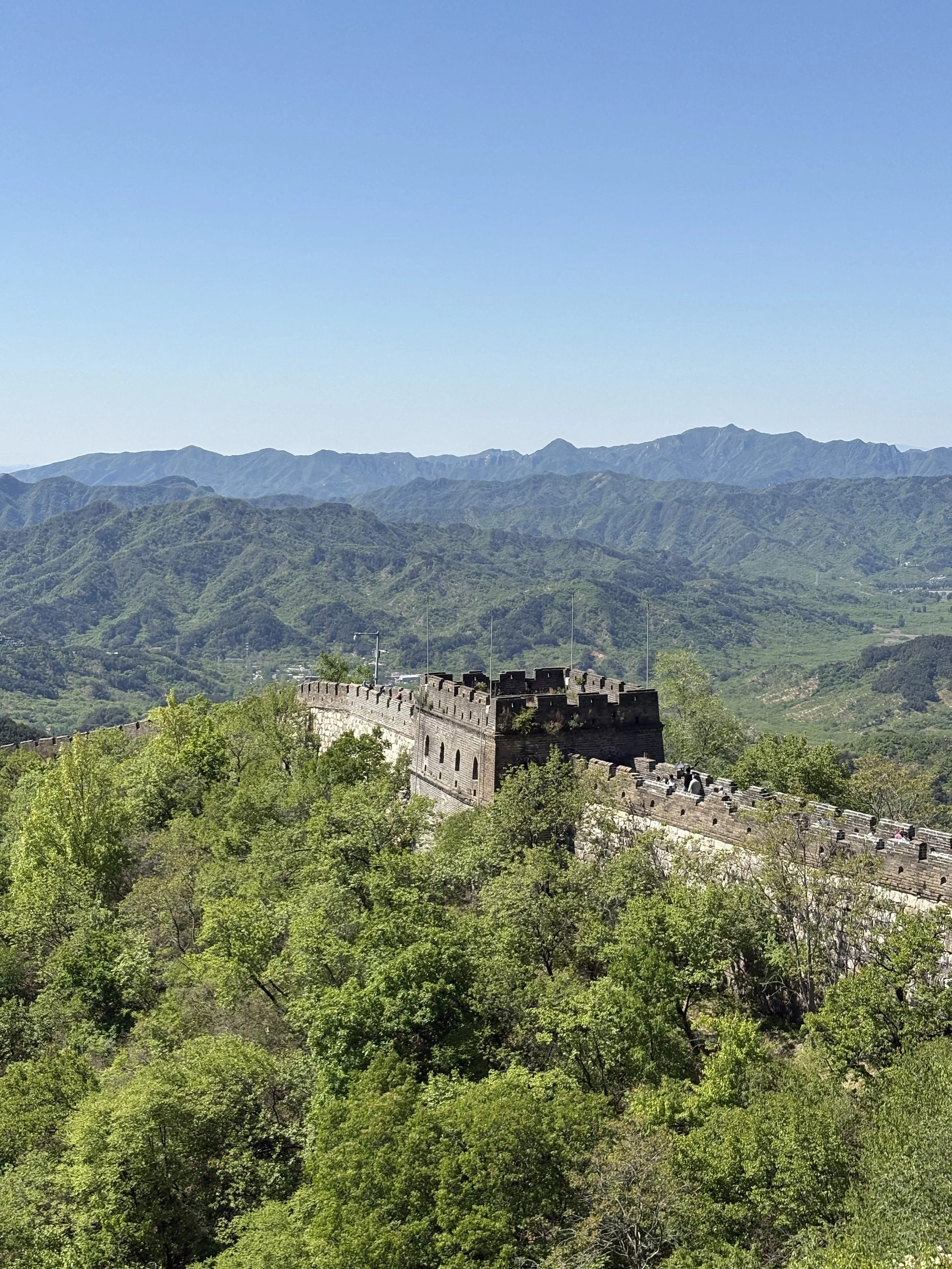
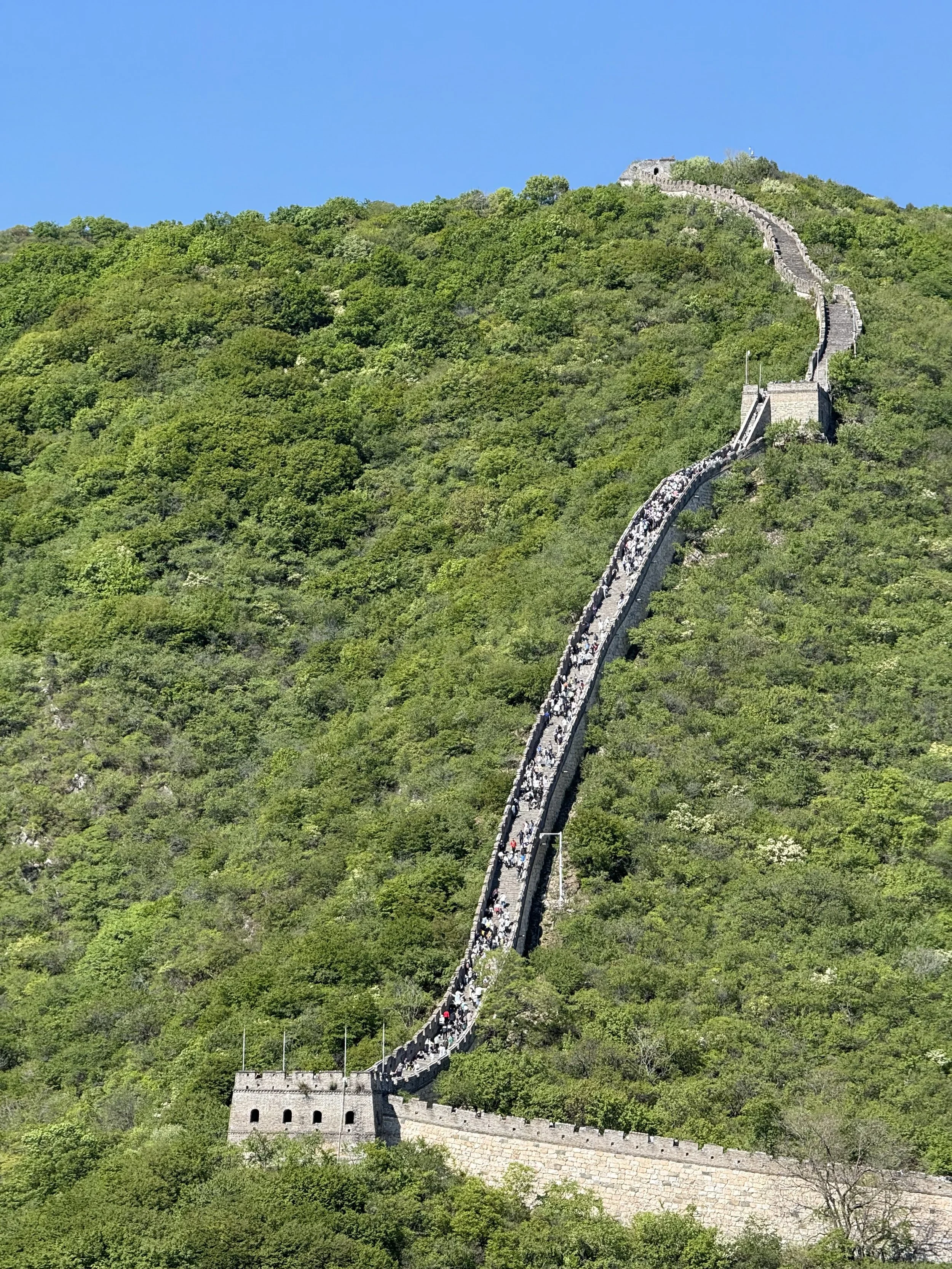
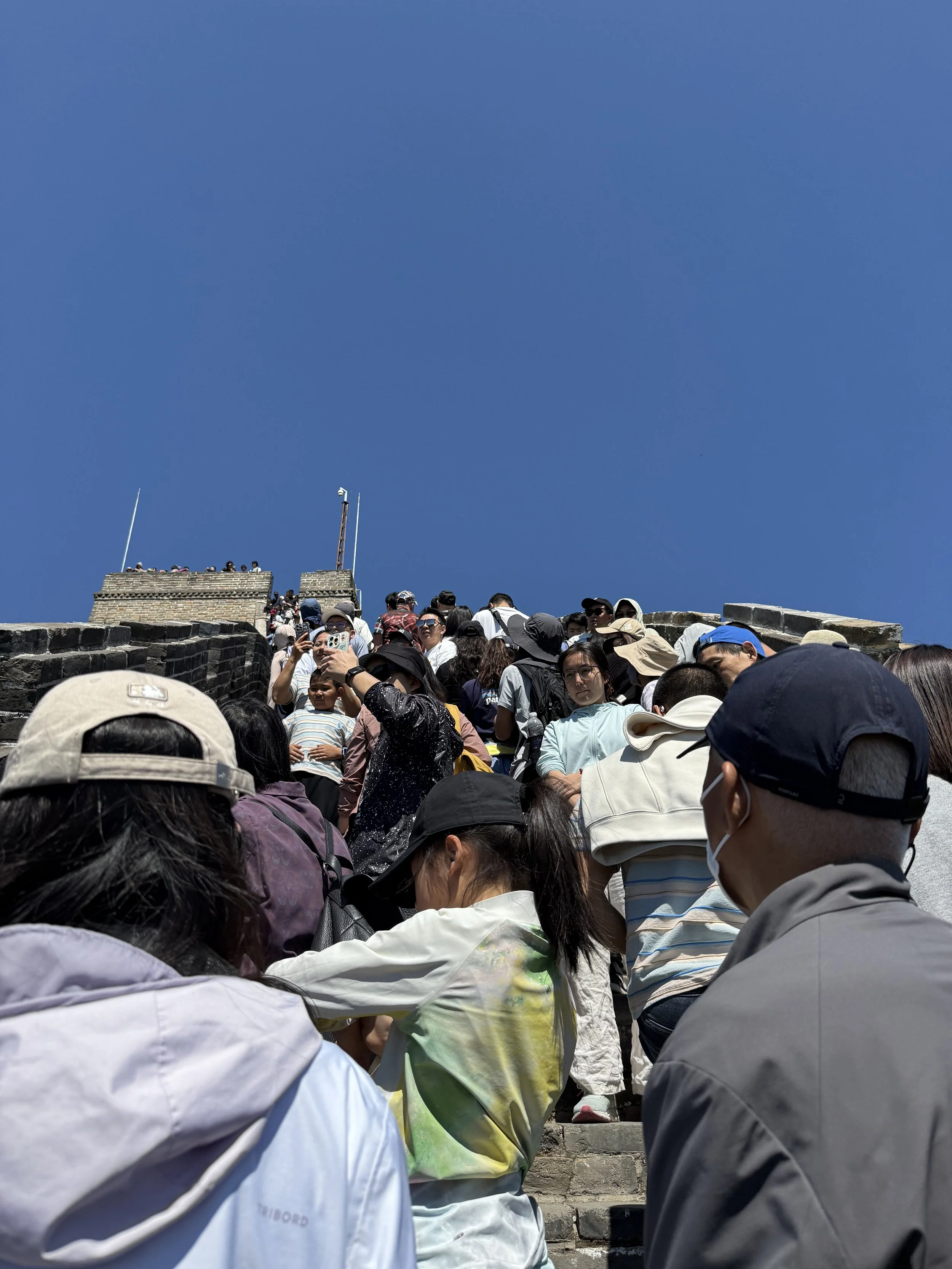
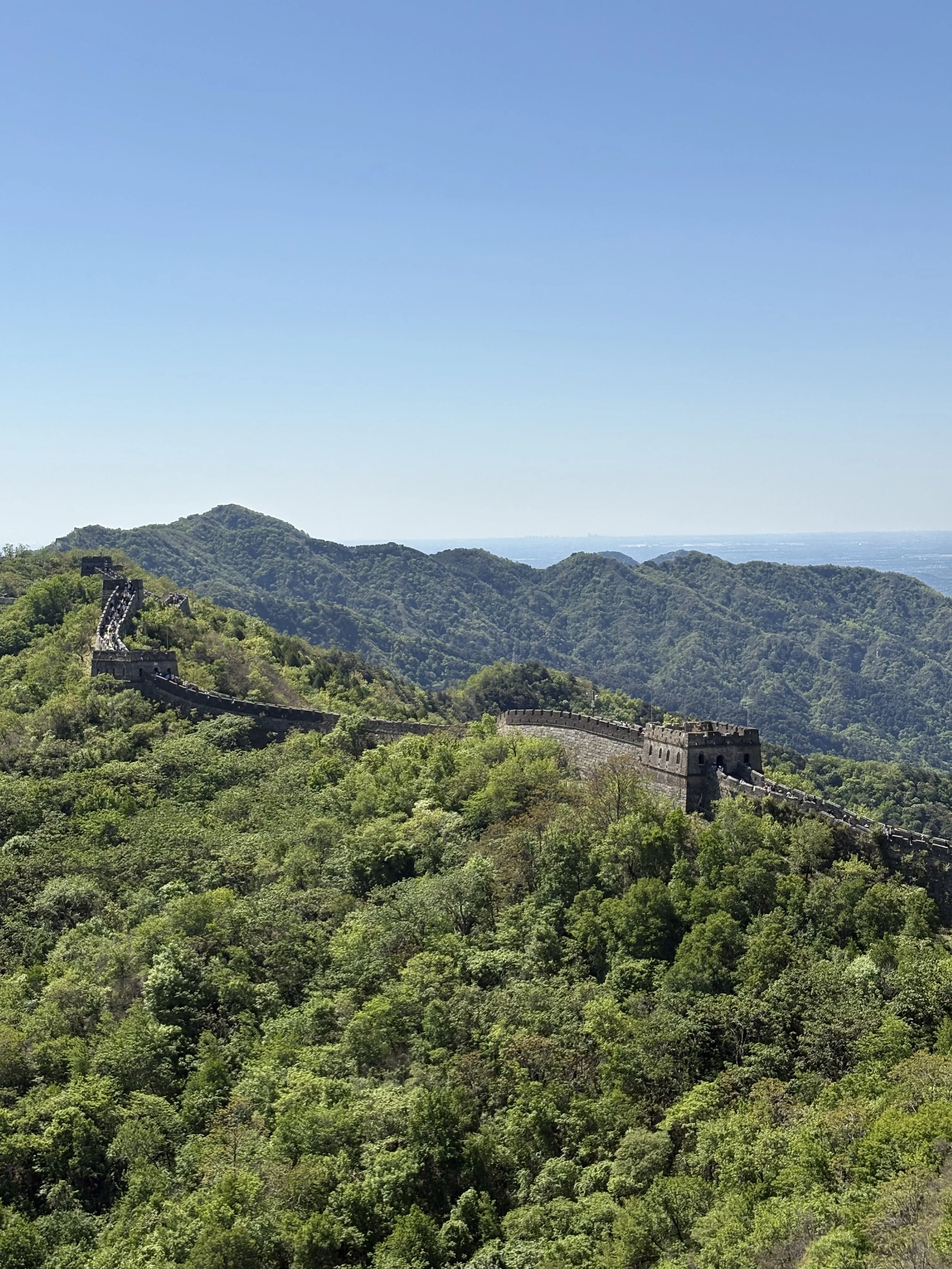
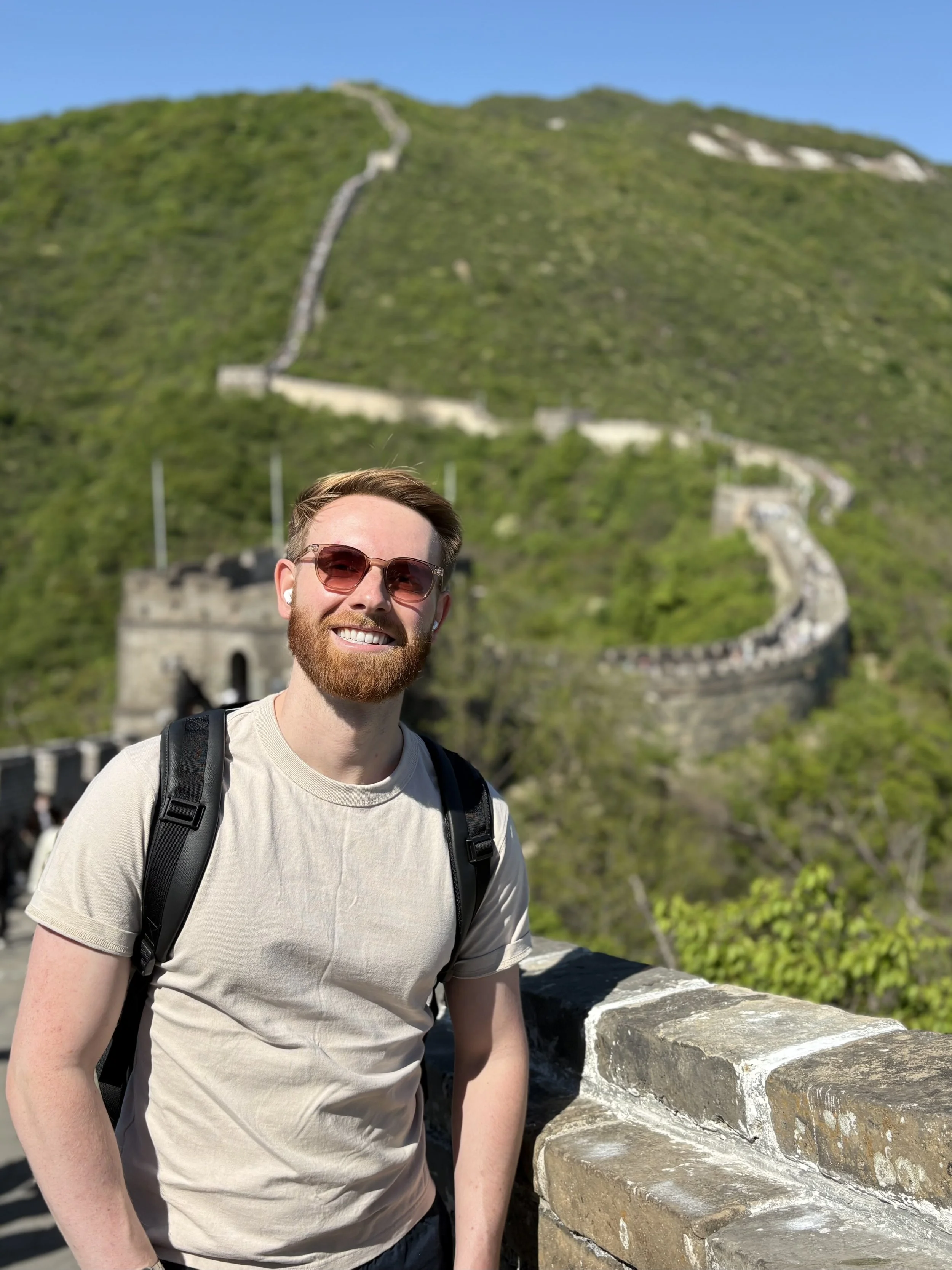
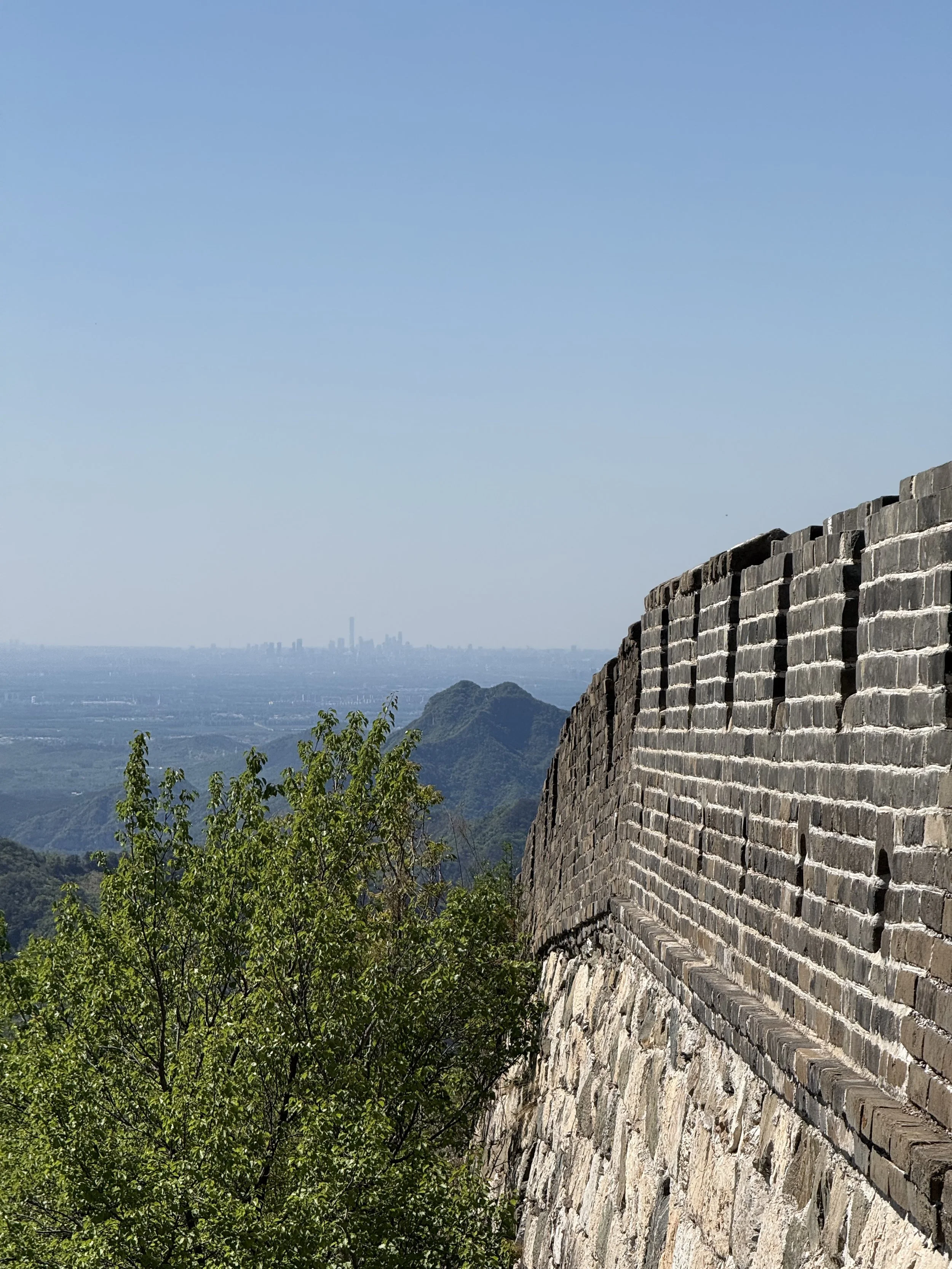
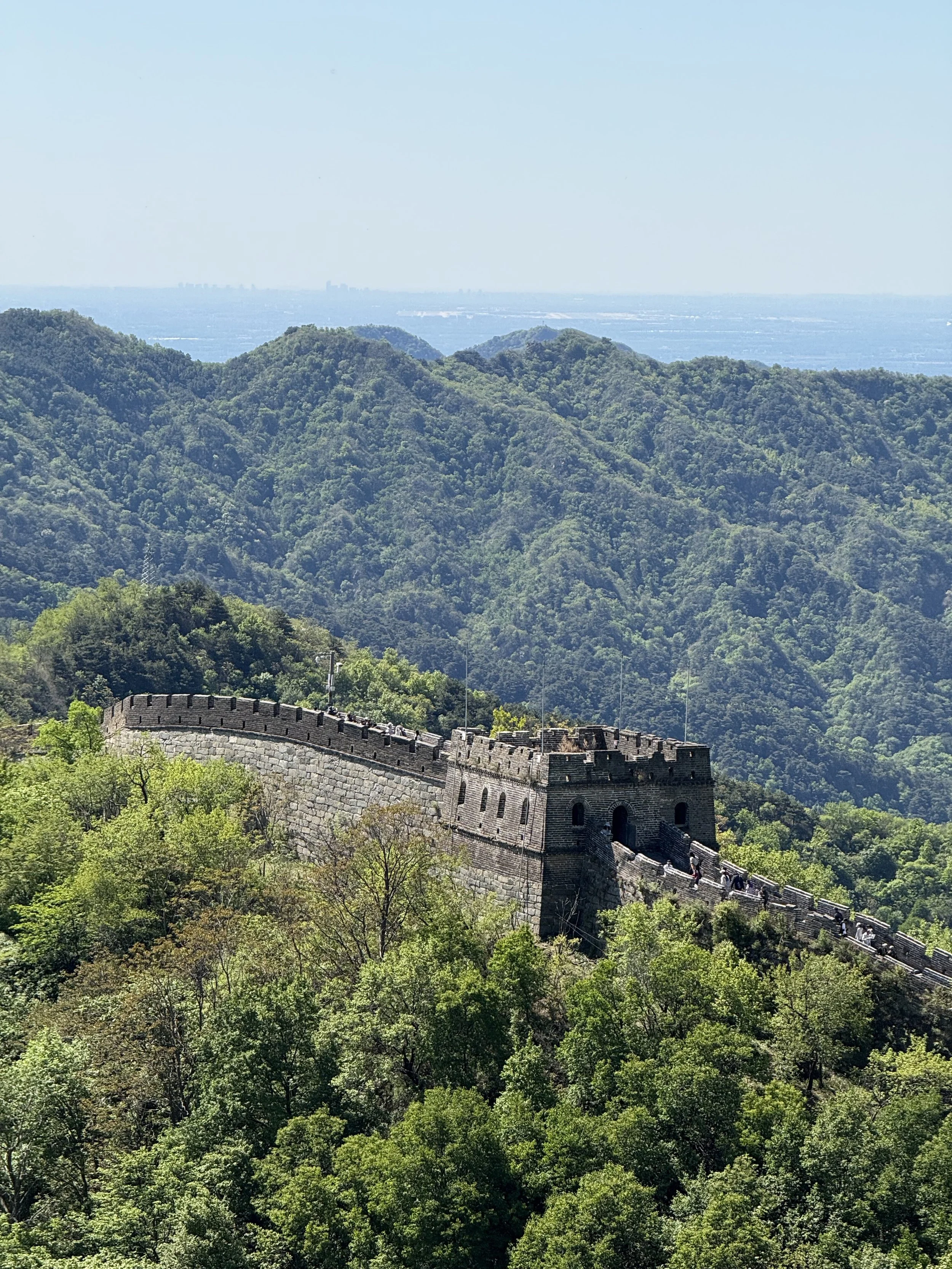
The Great Wall of China at Mutianyu
Olympic Park
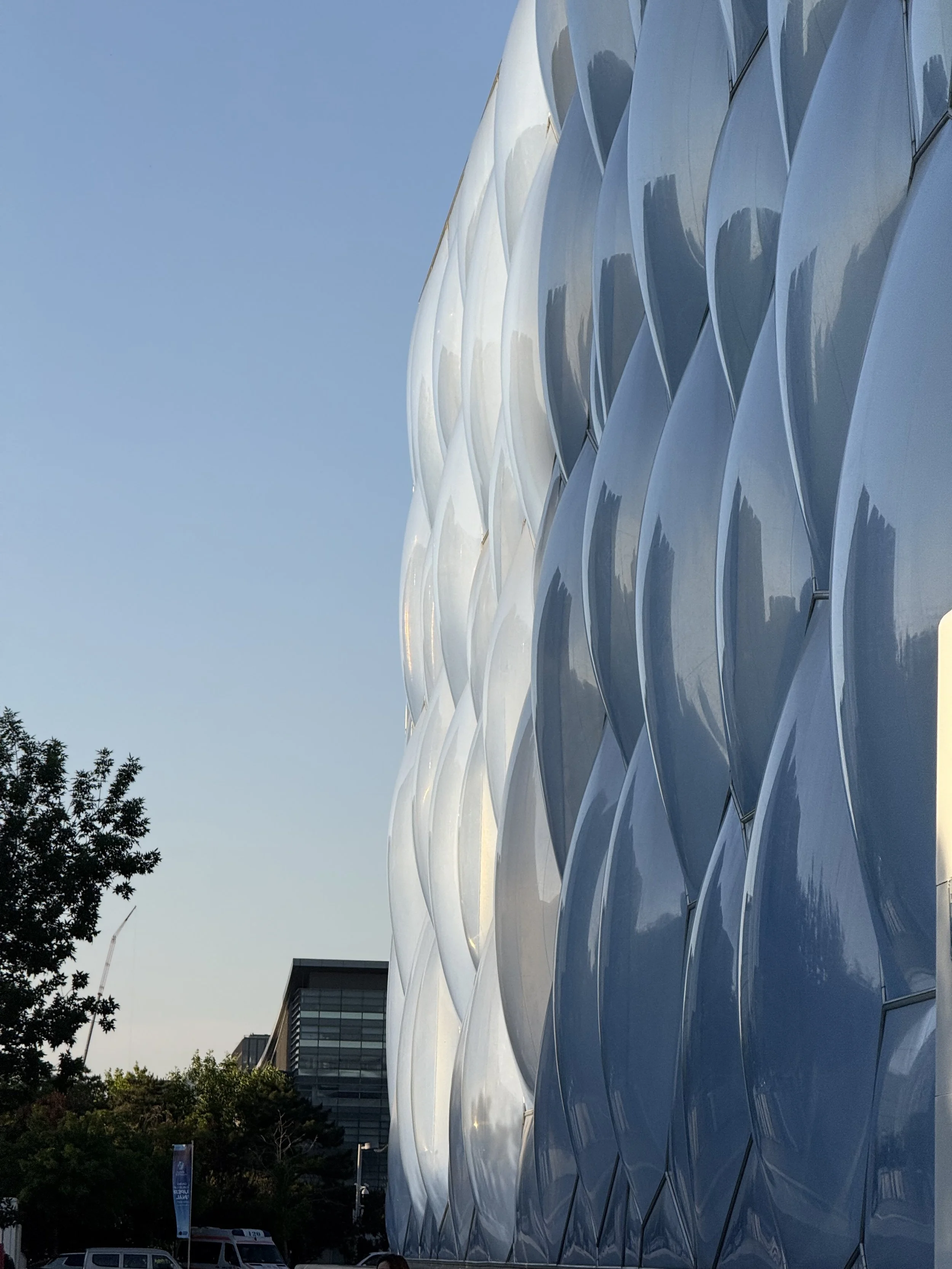
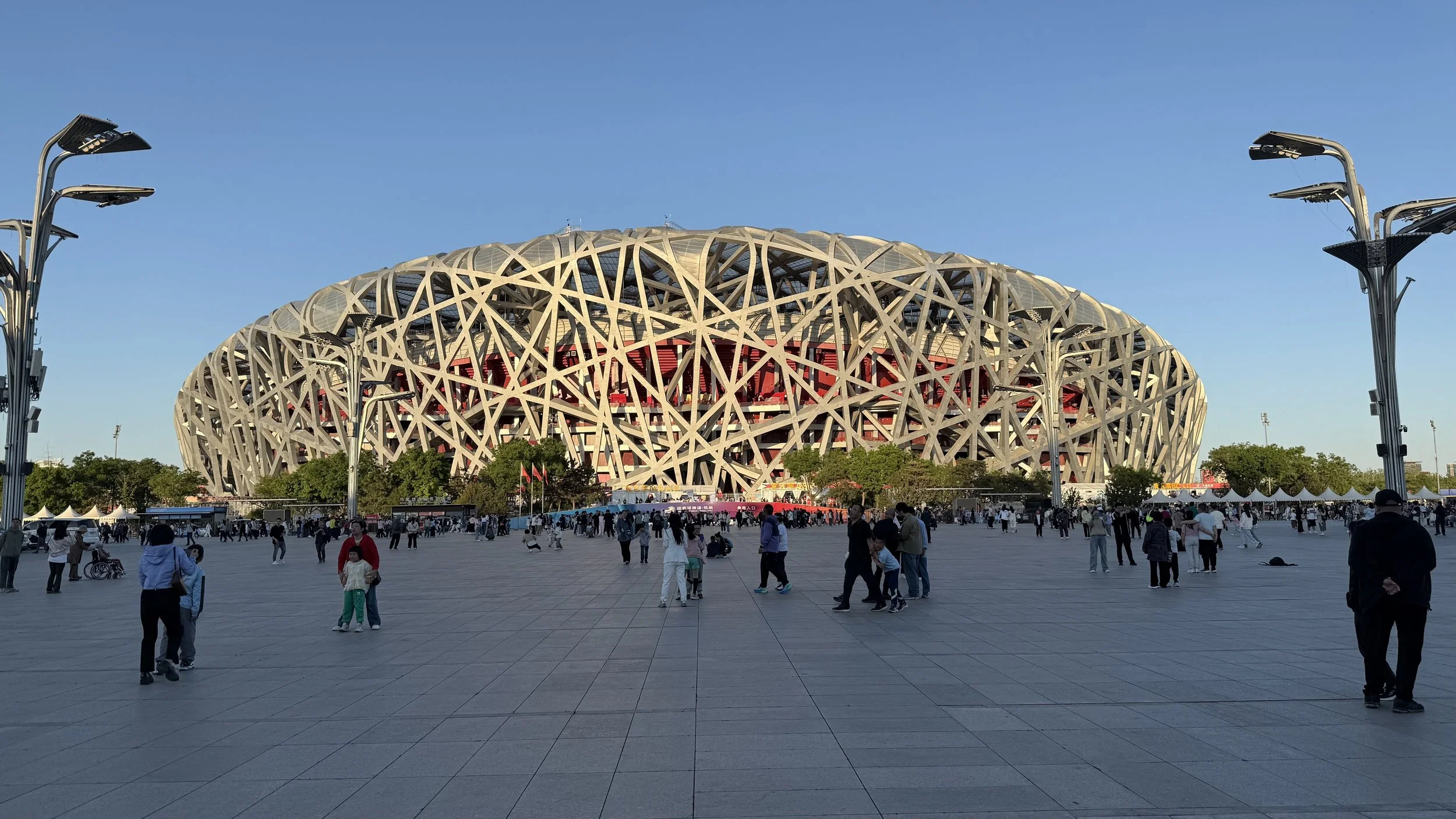
We also stopped by the Olympic Park, home to the Bird’s Nest and Water Cube.
It’s a reminder that Beijing isn’t only about history — it has also presented itself as a modern, global city. Visiting brought back a surprising sense of nostalgia from watching the 2008 Olympics on TV when I was a teenager.
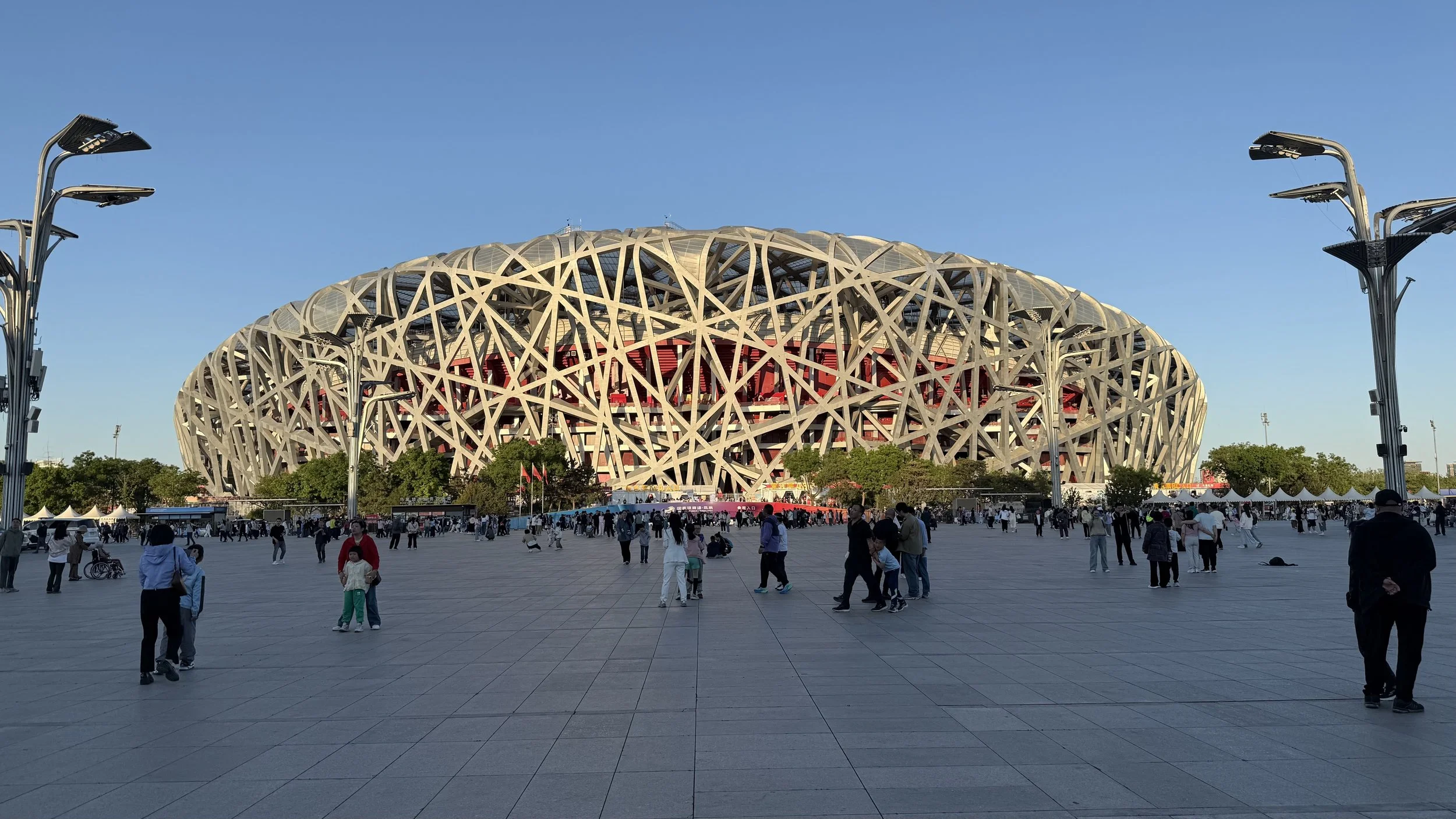
The Bird’s Nest stadium and the Water Cube - from the 2008 Olympic Games
798 Art District
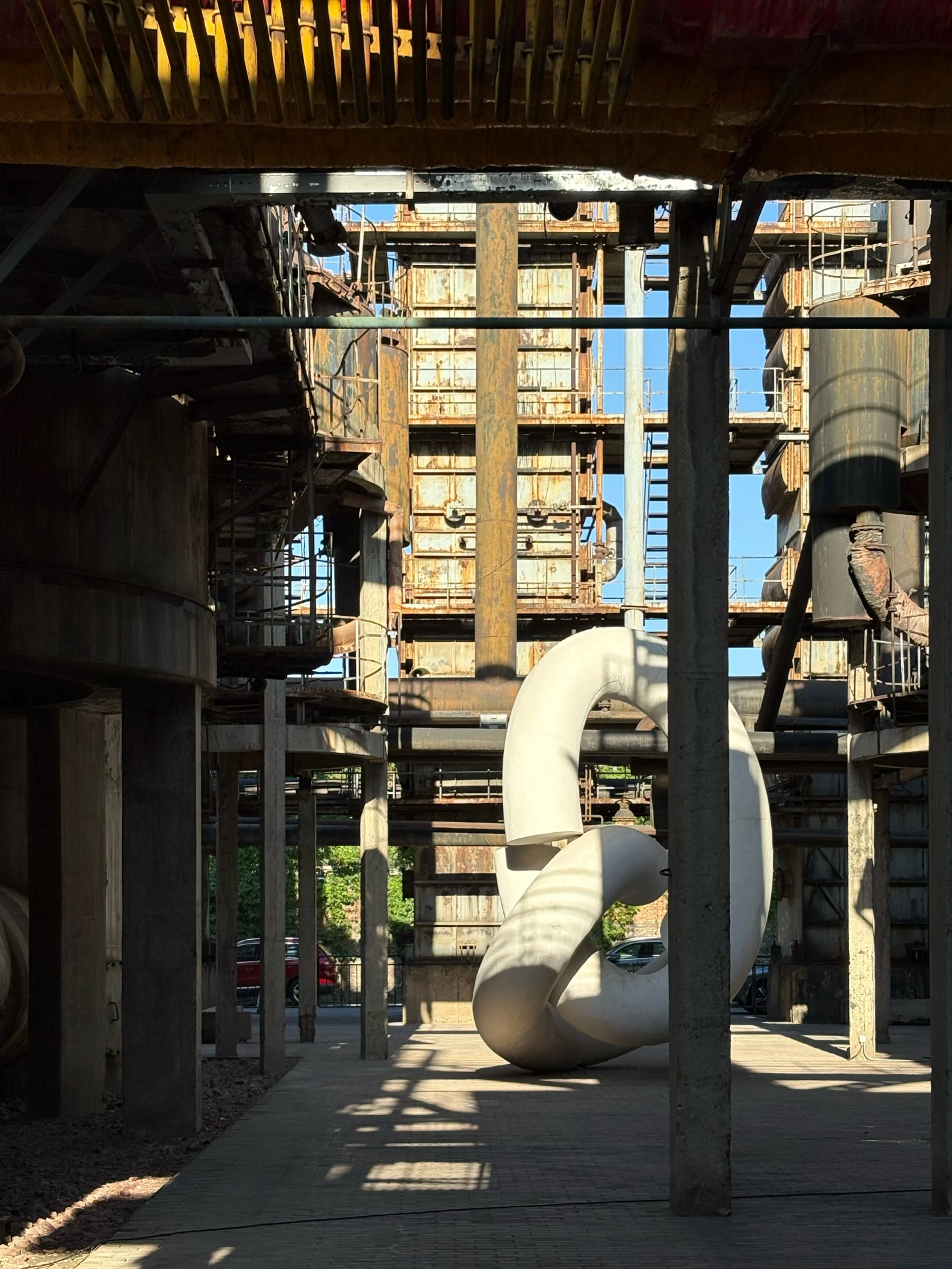
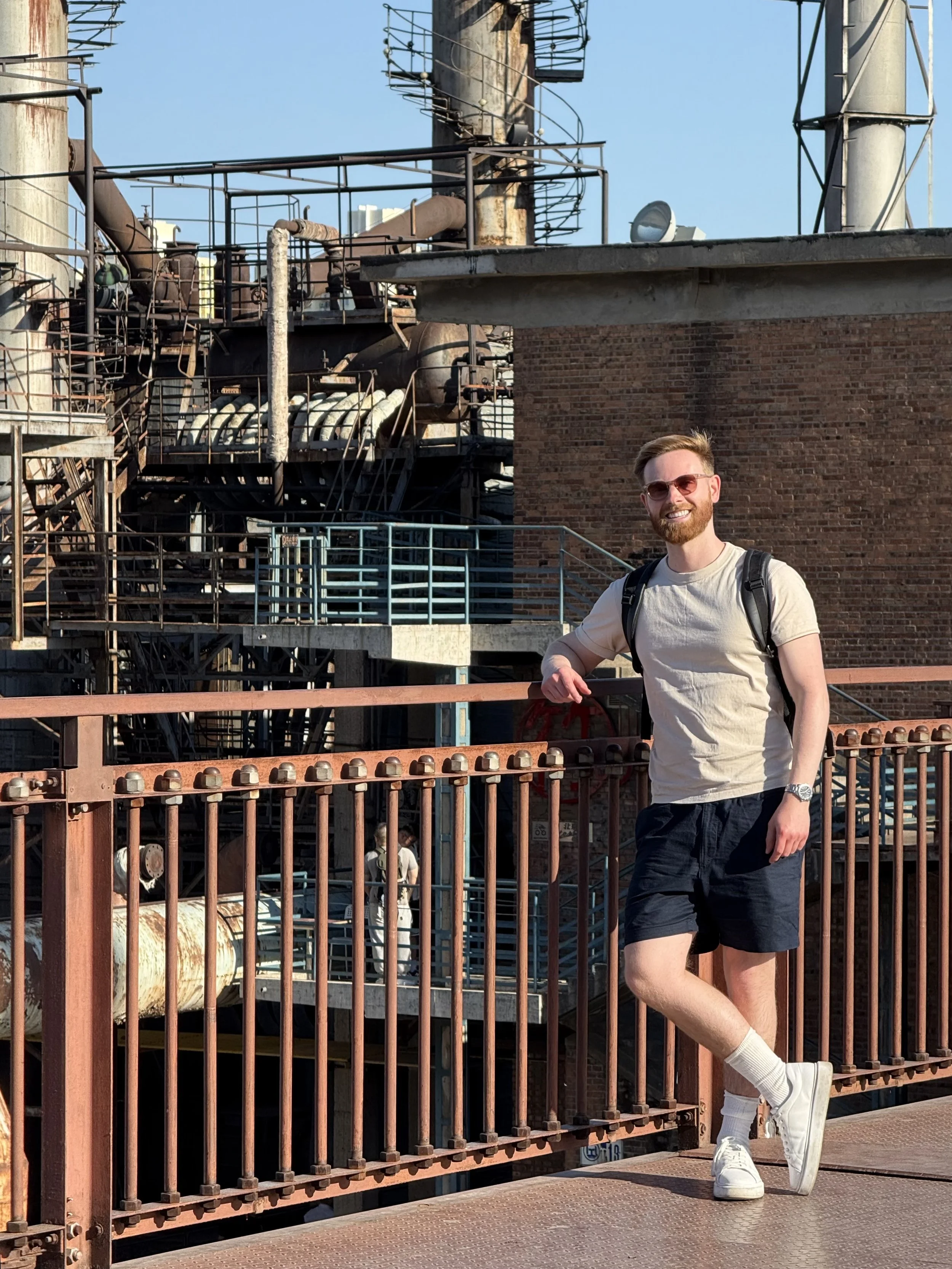
The 798 Art District offers a completely different side of Beijing. Set in a former industrial complex, it’s now filled with galleries, street art, cafés and installations. After several days of imperial landmarks and political spaces, it felt noticeably more contemporary and creative. It’s worth including if you want a bit of contrast in your itinerary.
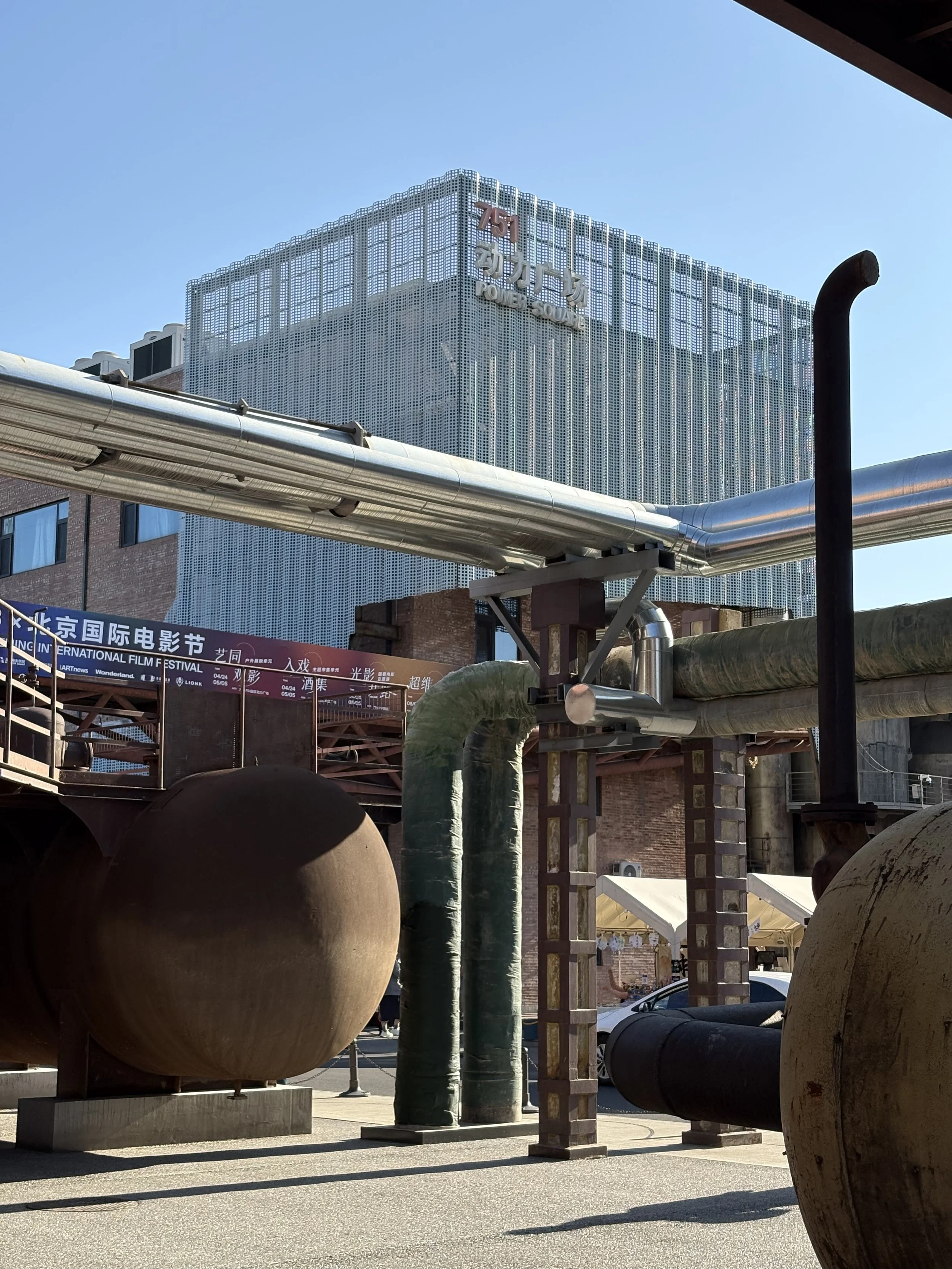
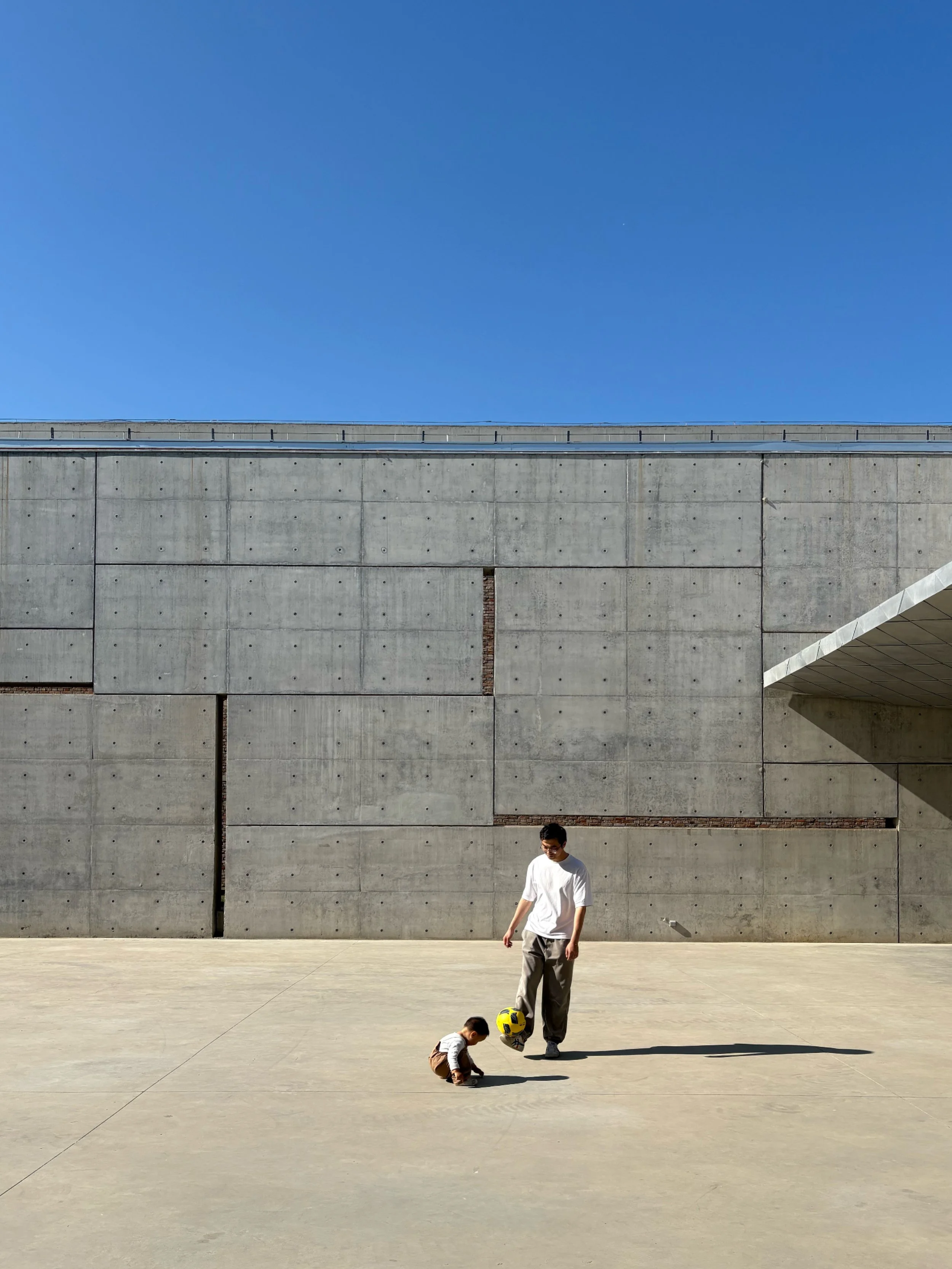
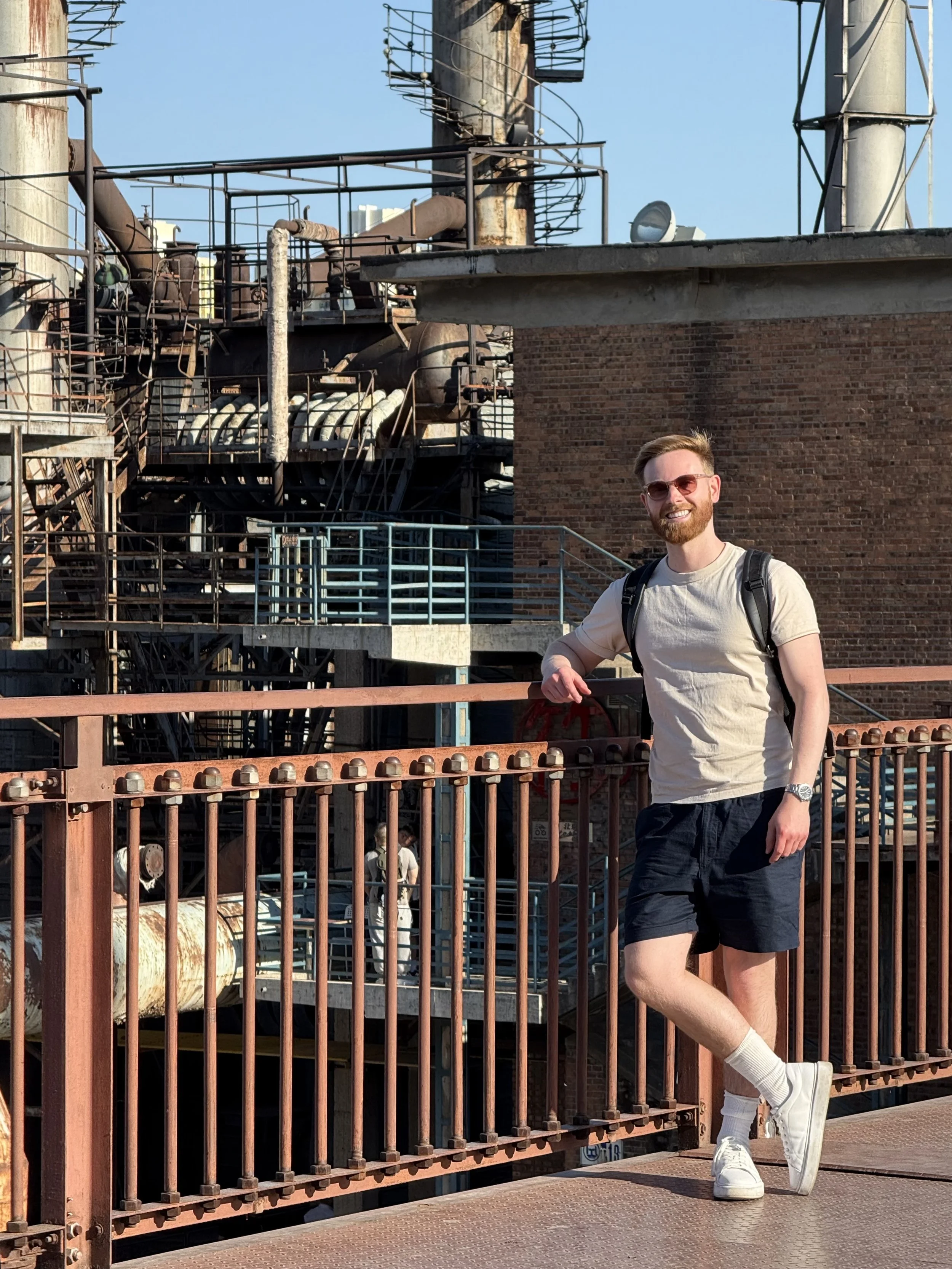
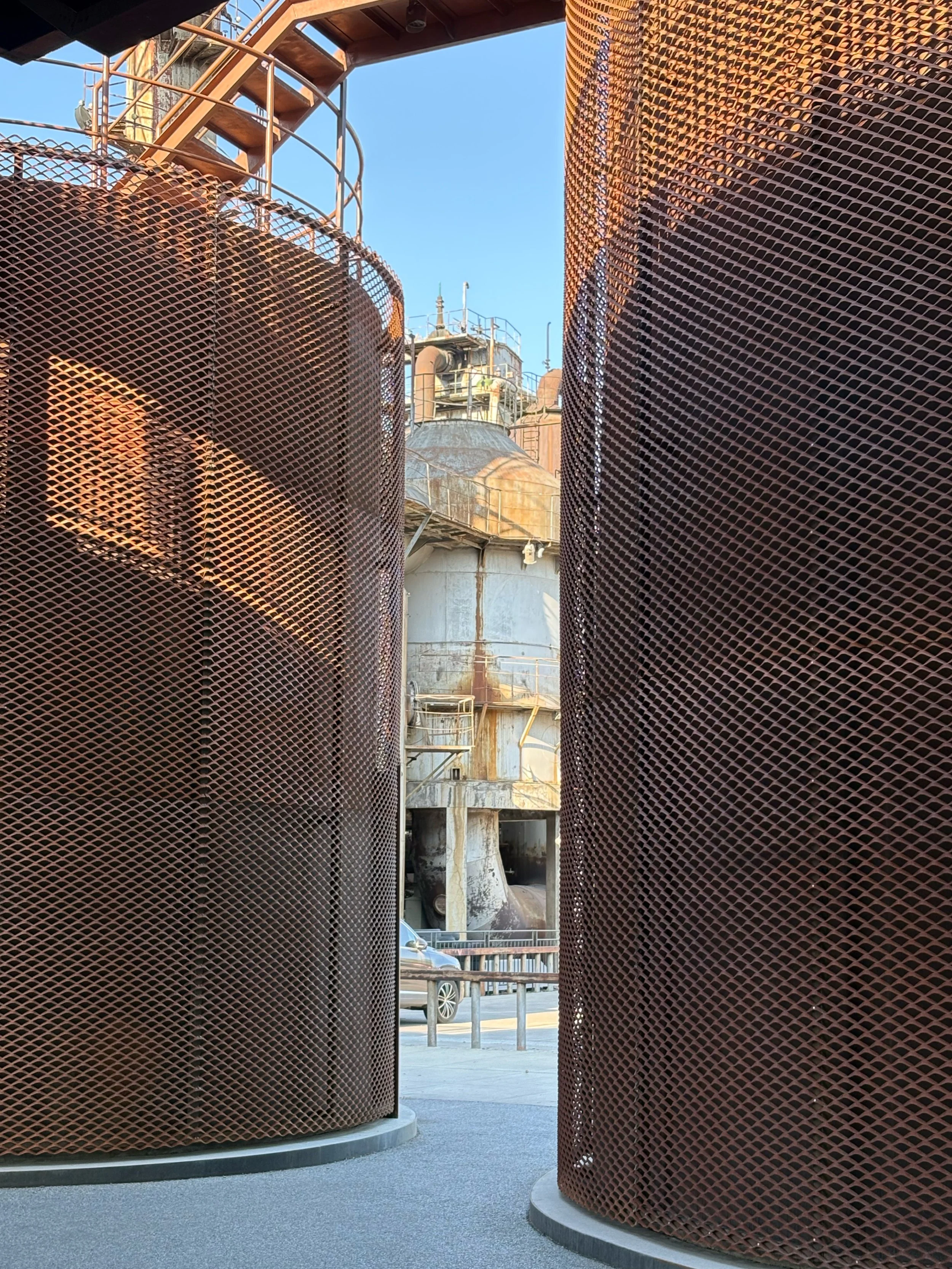
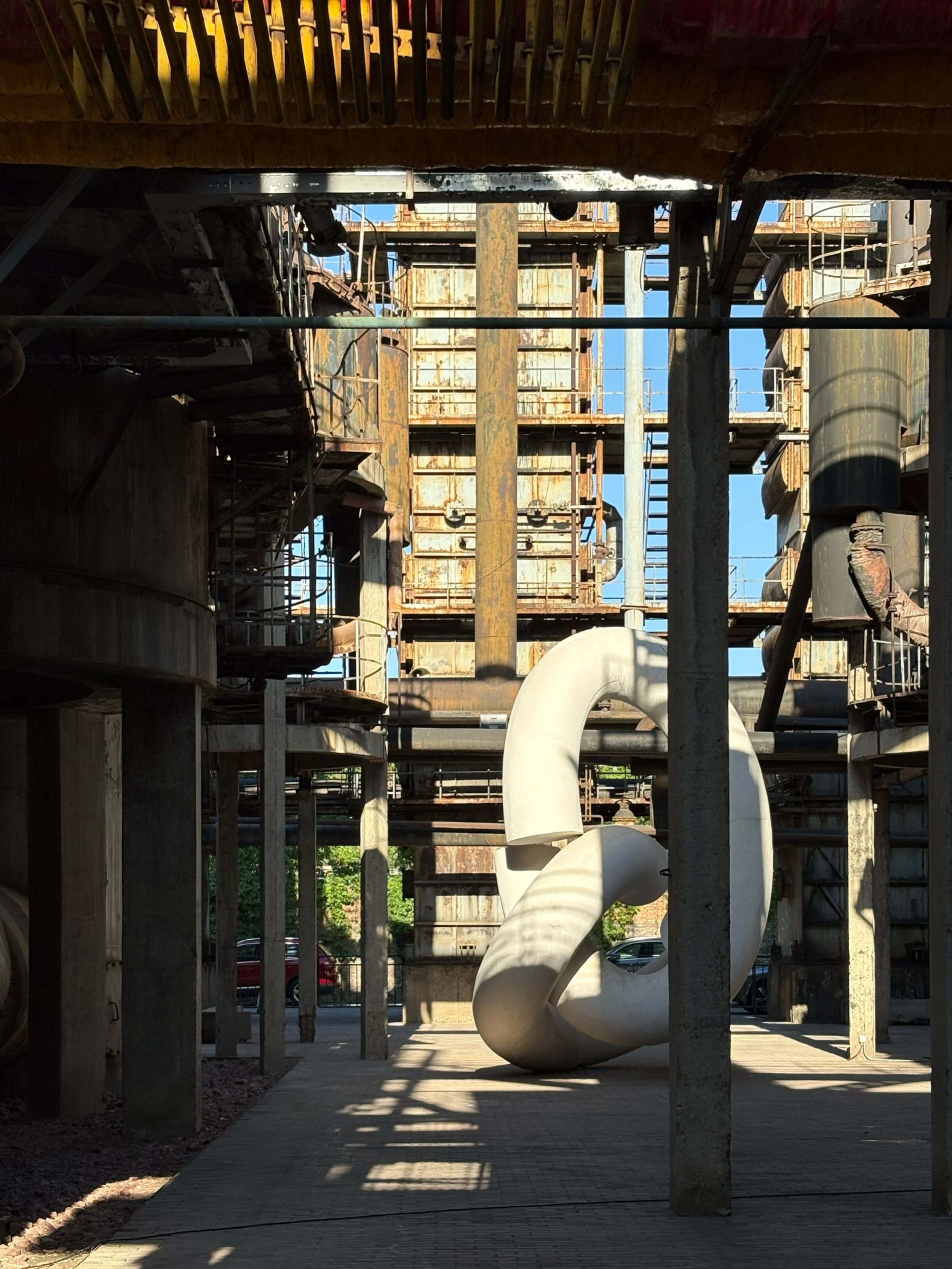
798 Art District is a super cool place for instagram shots
Food in China
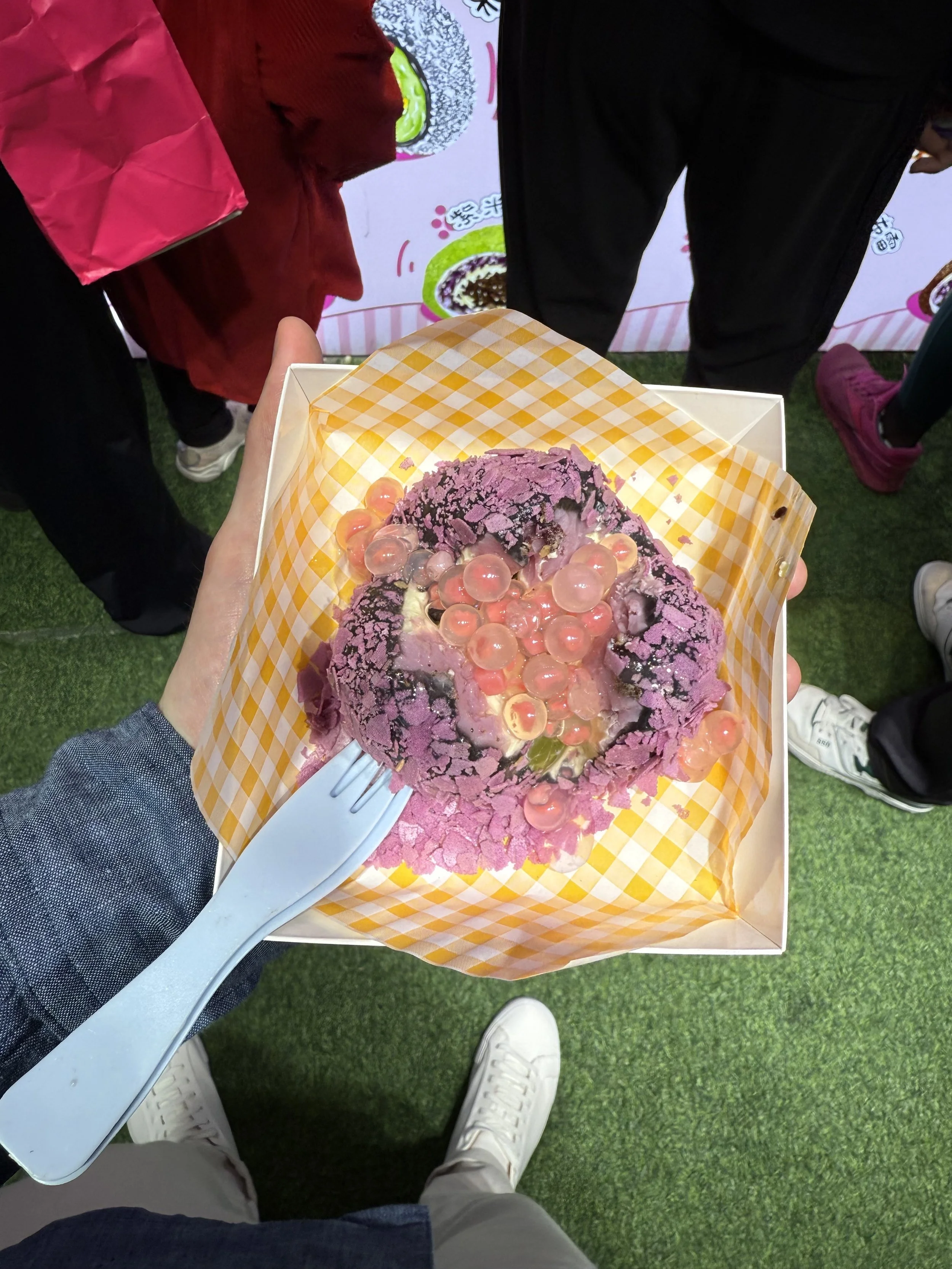
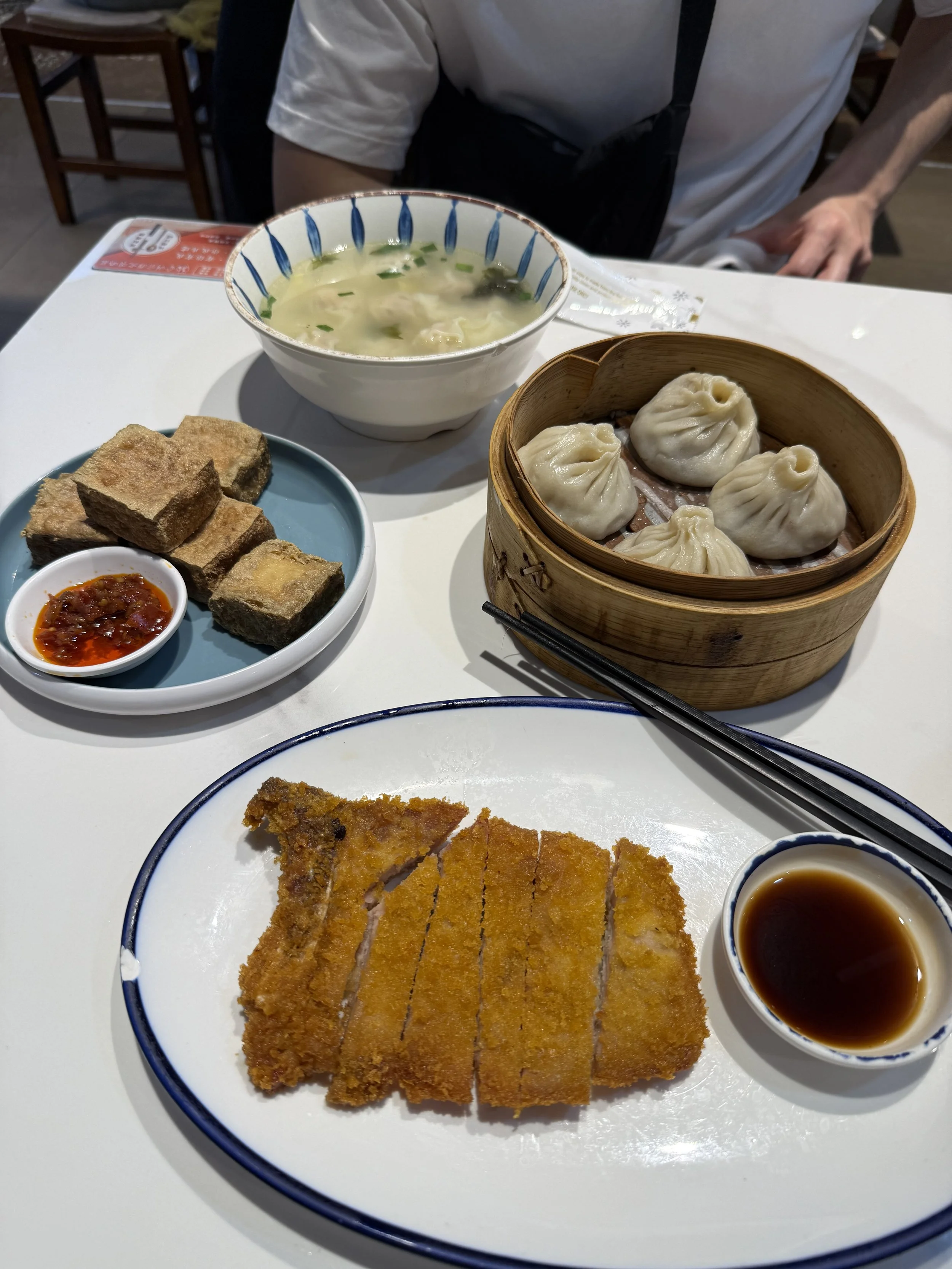
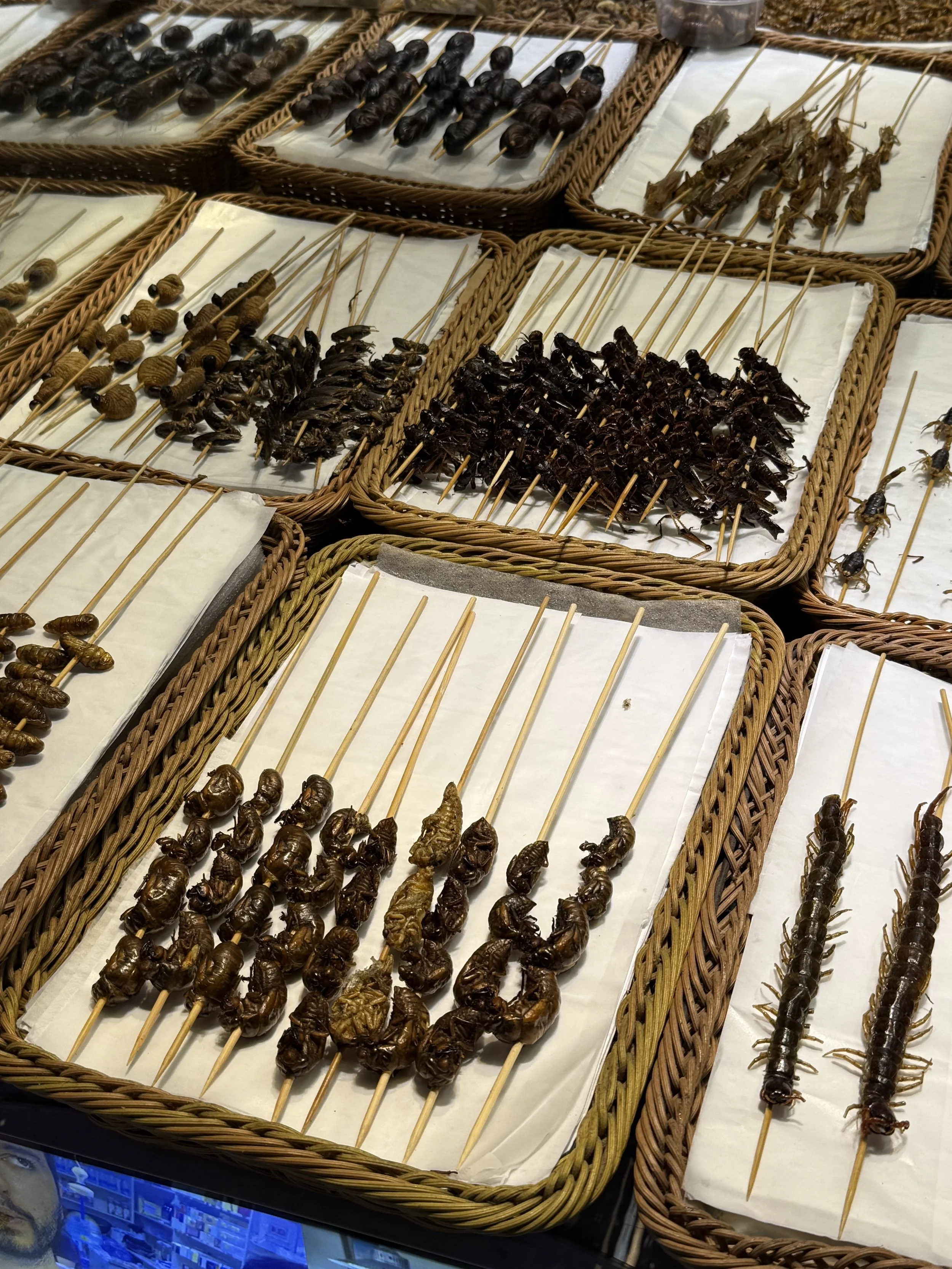
Food was mixed for us. We had high expectations, but overall found it quite heavy — a lot of dishes were oily, rich, and pork-based, which didn’t suit us particularly well. After a few days, we found ourselves craving something lighter. On days that we didn’t want Chinese food, we opted for Mexican. Bizarely there were lots of Mexican restaurants around..
Here are some of the standout meals during our time in both Shanghai and Beijing:
Shanghai
Guo Bi Pen Da - this was a great restaurant for hotpot in the Former French Concession
Los Pacos at Columbia Circle - here I had some of the best tacos I’ve ever had
Beijing
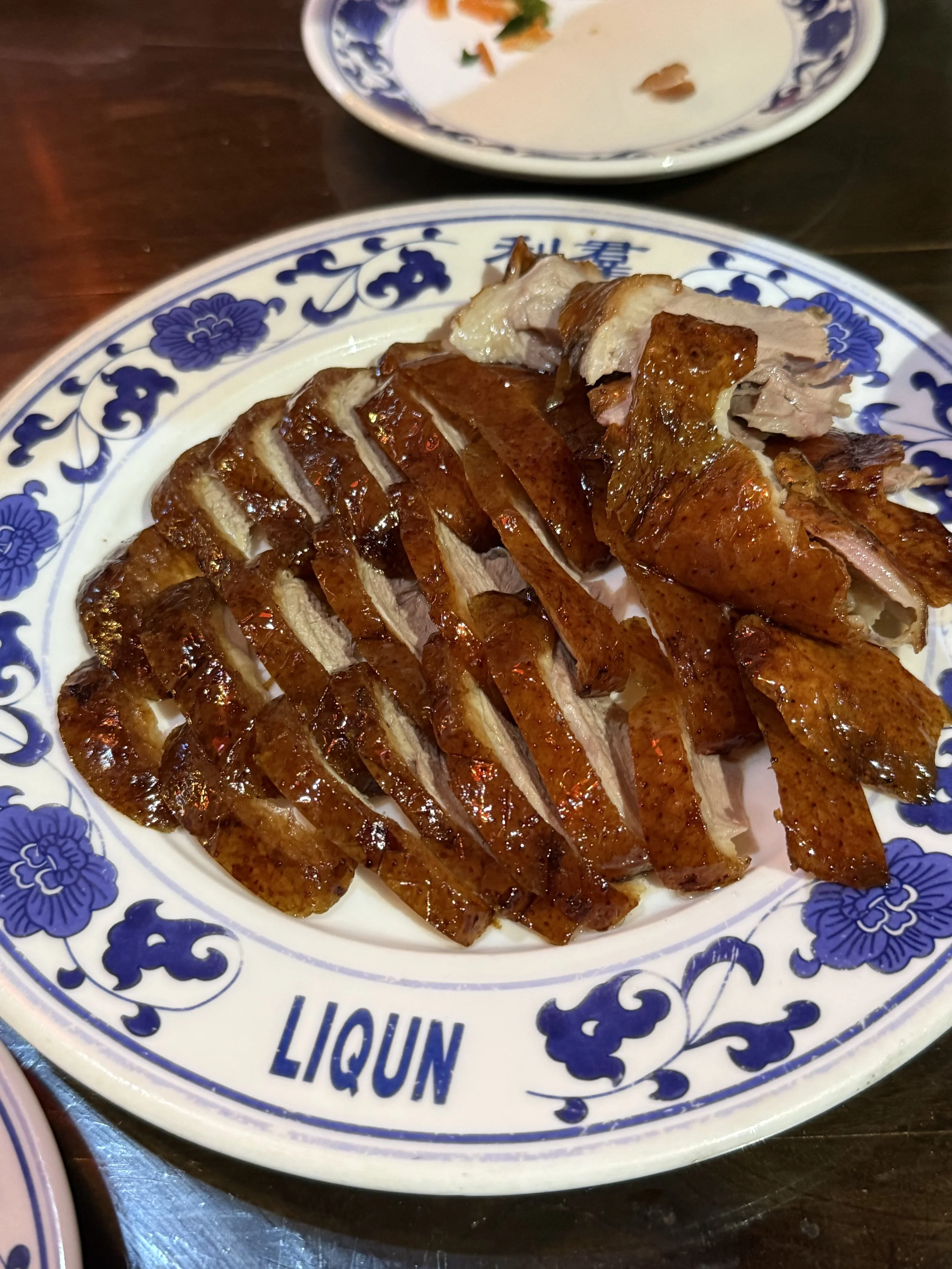
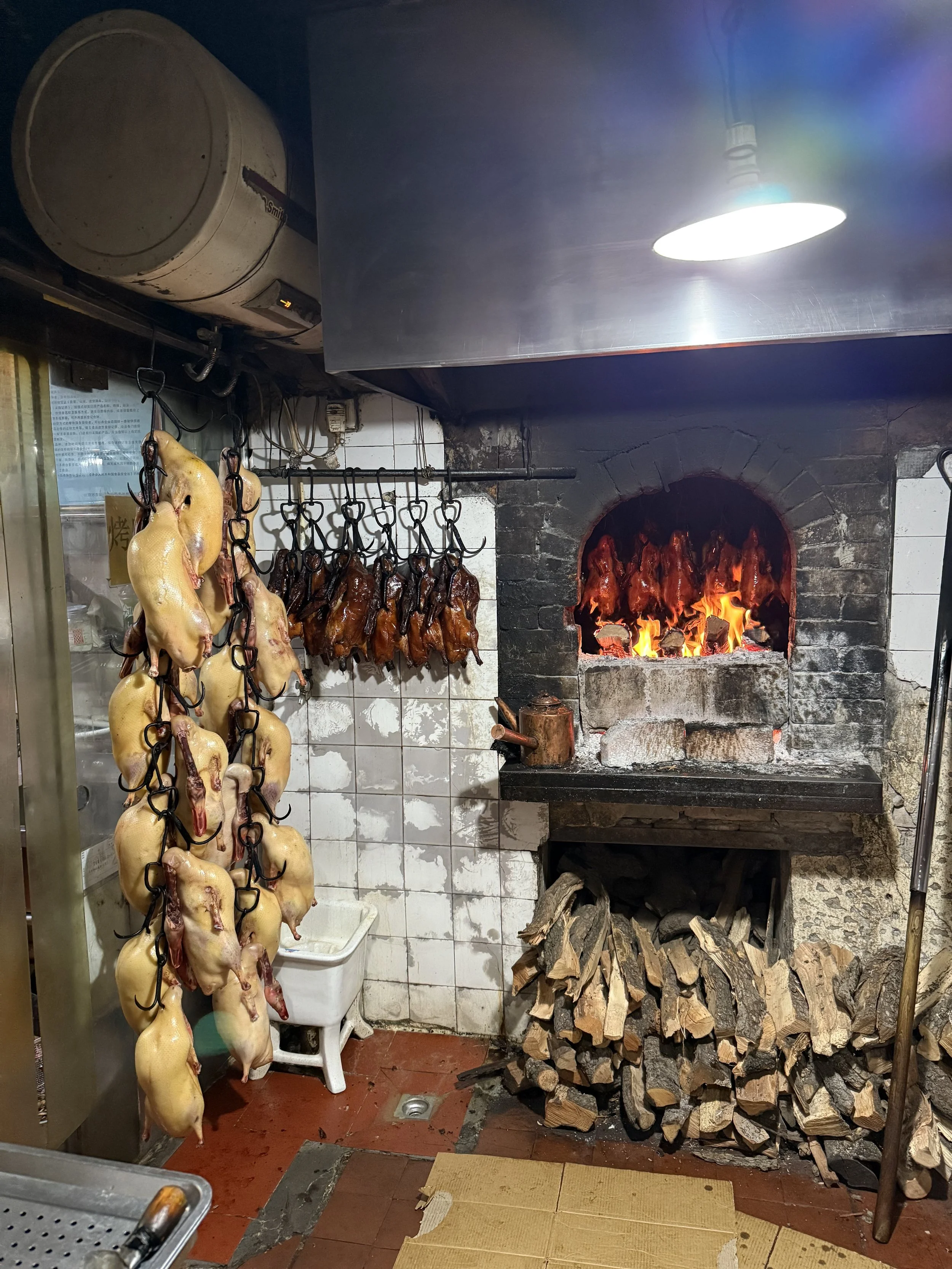
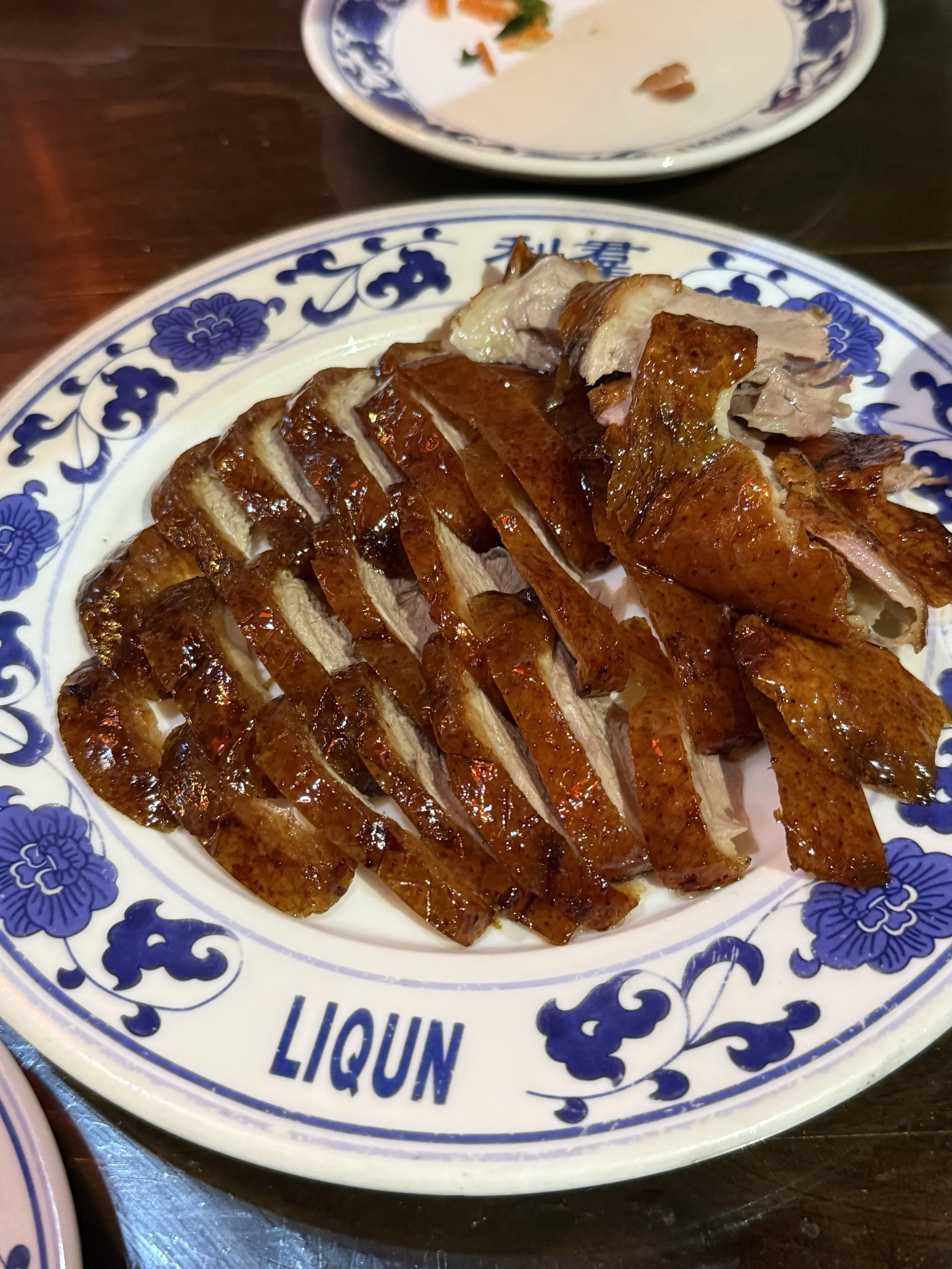
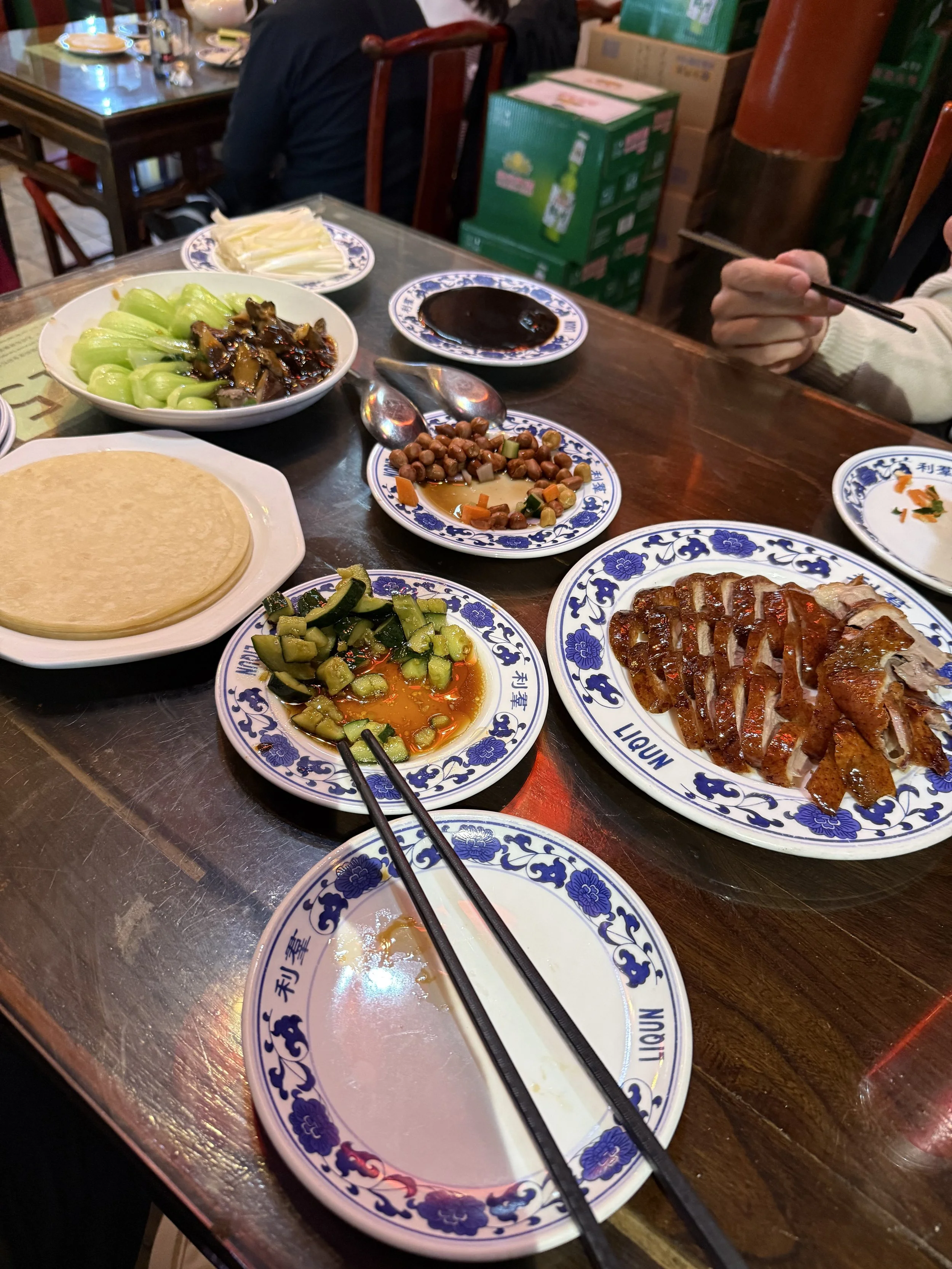
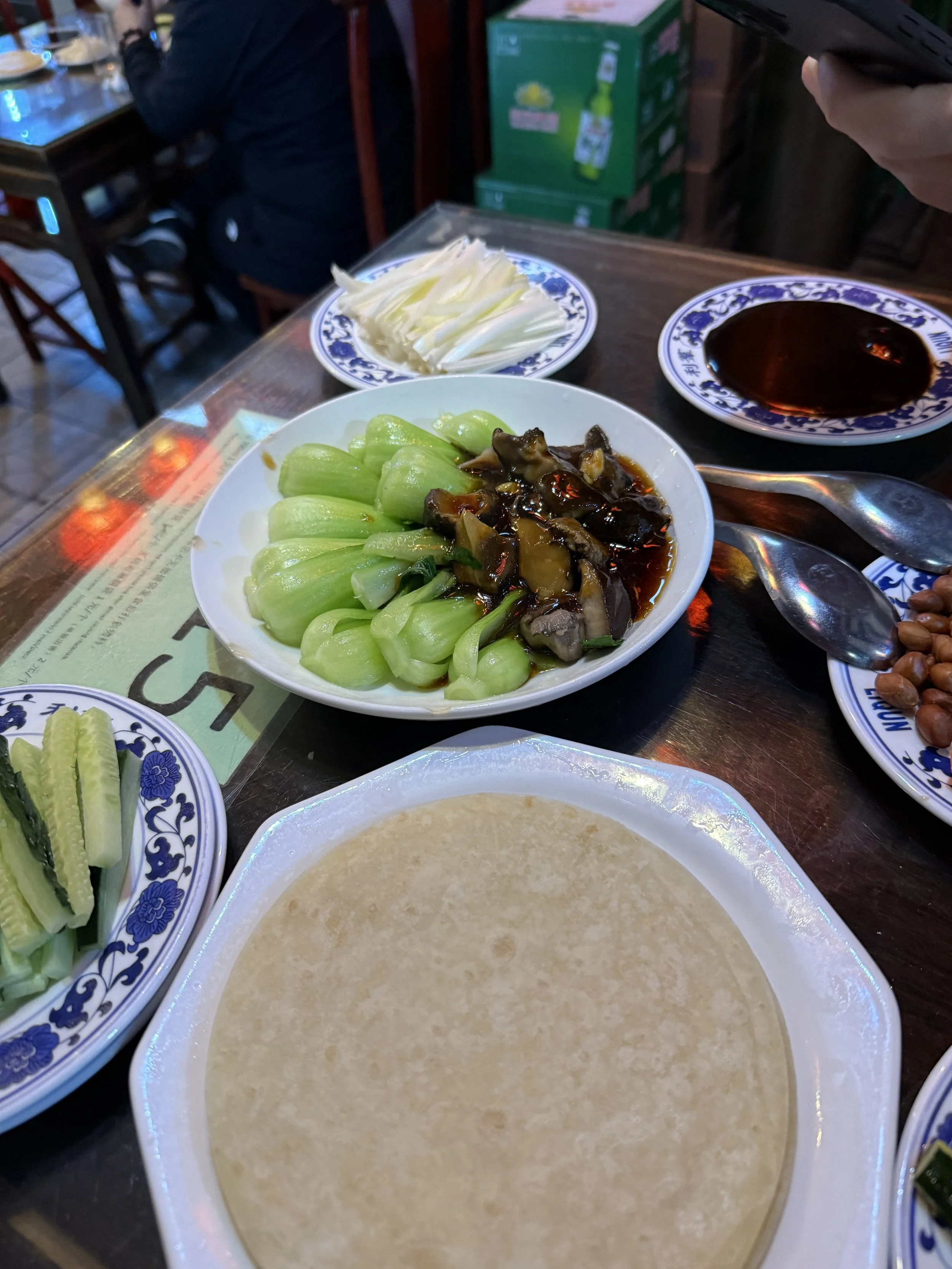
Liqun Roast Duck — chaotic but absolutely worth it. This restaurant is famous and was recommended by a friend local to Beijing
Pang Mei Noodles (Michelin Guide) — very good, but even the ‘slightly’ spicy dishes were very spicy
El Barrio — decent food, with great micheladas, but the service was quite bad
Cultural Nuances
I was seriously expecting to feel more ‘lost’ and overwhelmed in China, but Shanghai especially felt bizarrely somewhat familiar. However, a few cultural nuances stood out quickly:
Little to no queuing culture
People move quickly and directly (expect some bumping - especially in Beijing)
Overall noise levels are higher (especially in Beijing)
Public spitting is common among older generations (again - especially in Beijing)
Some public toilets - even in central Beijing - are very basic and do not have cubicles, toilet roll or sinks
People were often curious and asked for photos with us
That last point was both endearing and, at times, a bit tiring. Parents especially wanted us to have photos with their children. On one occasion, there was a queue of families asking for photos and we had to turn them down in order to continue with our tour guide at the Forbidden City.
Despite this, we always felt safe, and people were always warm and welcoming. On multiple occasions, locals approached us with translated messages simply saying: “Welcome to China.”
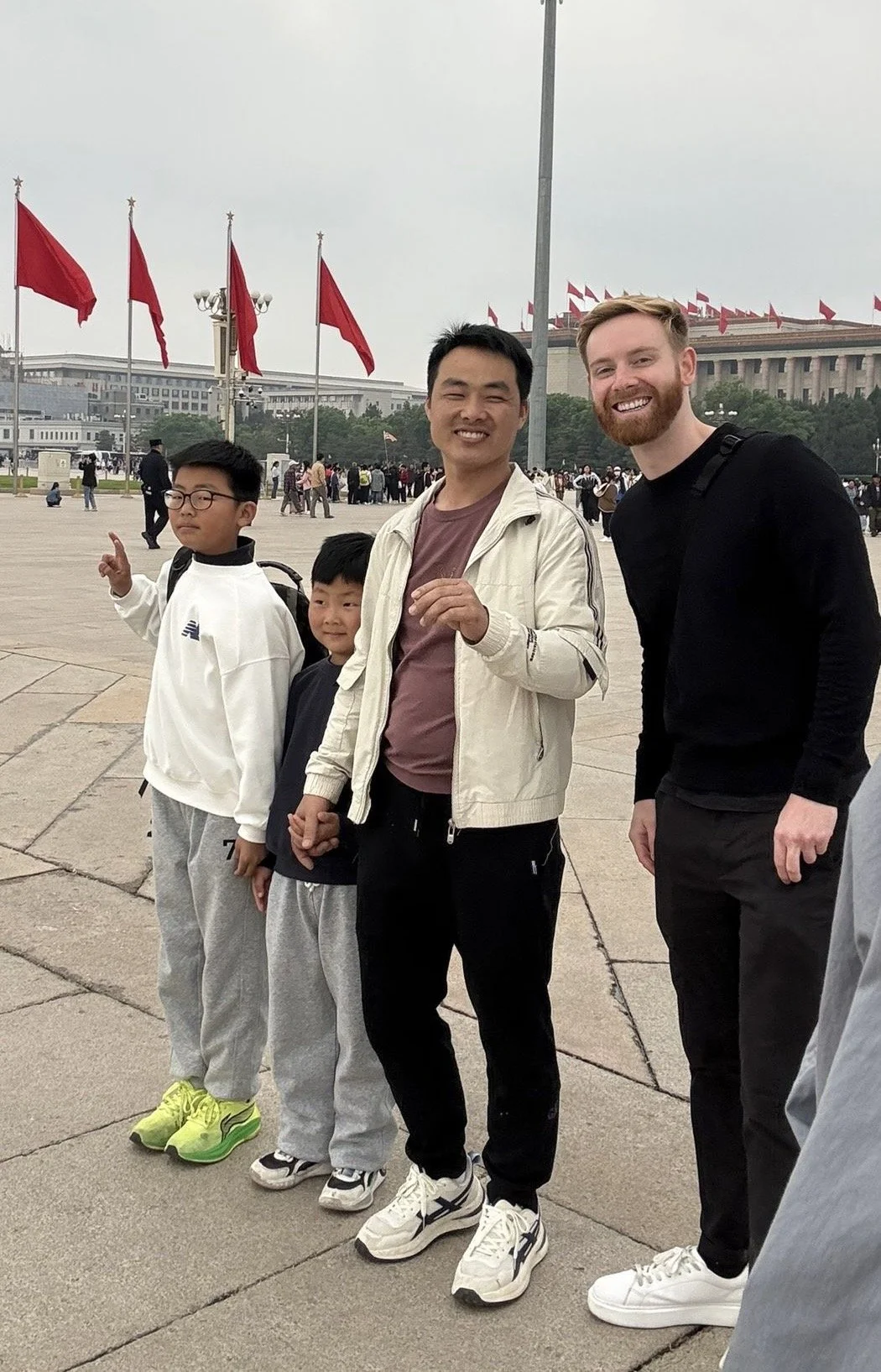
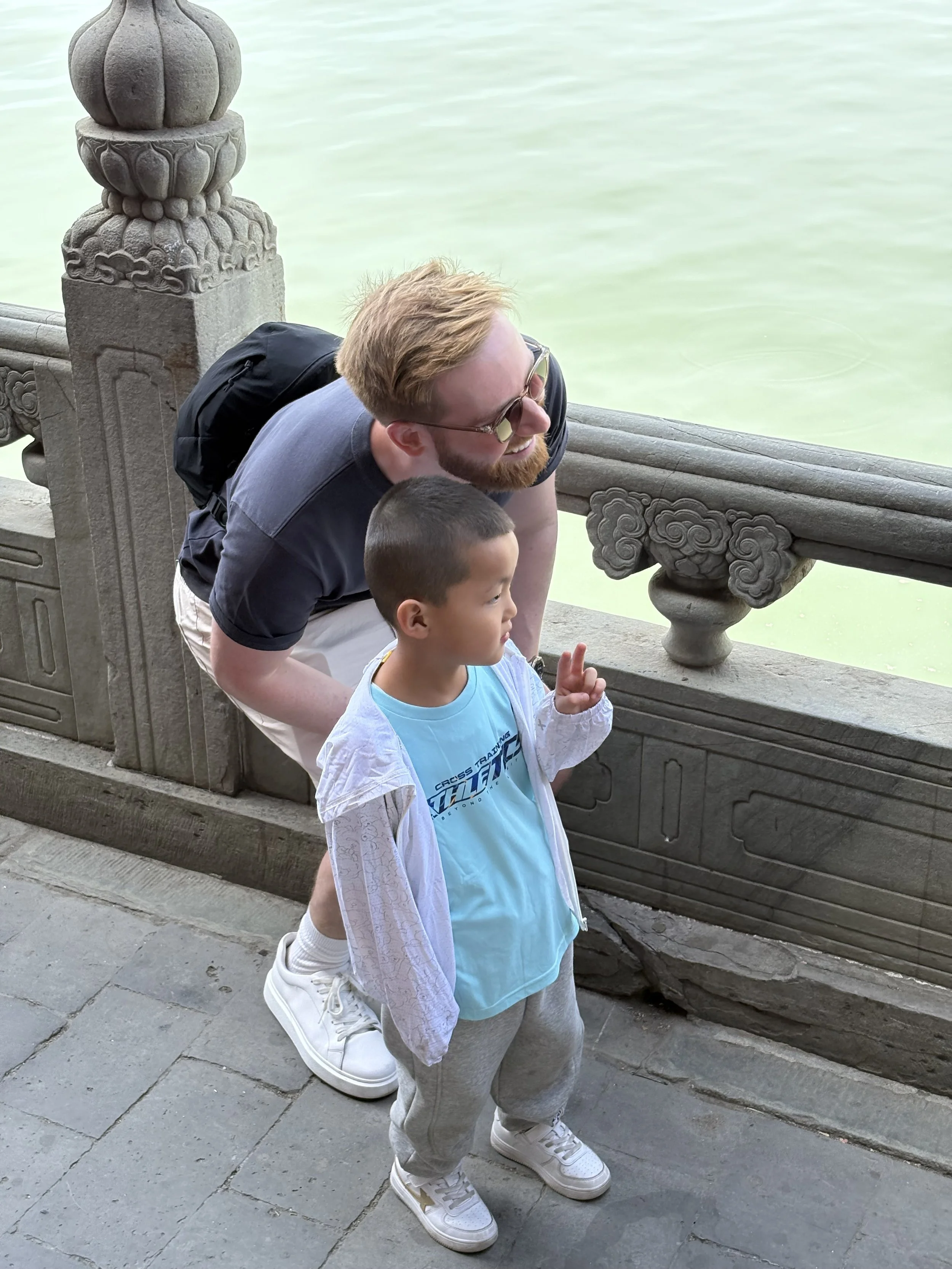
Having photos taken with locals
Apps You Need
China is extremely digital — and having the right apps makes a huge difference.
Alipay is essential. It acts as your:
Wallet
Transport tool
Navigation hub (Amaps)
You’ll use it for almost everything: payments, taxis (DiDi), bikes, metro.
WeChat is useful as a backup for messaging and payments.
VPN (e.g. NordVPN) is essential if you want access to Google, Instagram, WhatsApp etc. Set this up before arrival.
Maps & translation
Apple Maps works well (Google Maps does not)
Download offline maps + translation packs
Camera translate is very useful for menus
Set everything up before you land and take some time to get familiar with the apps — it makes the whole experience much smoother. I’d also recommend installing the China eSIM from Airalo upfront. Depending on the package you go for this can include a VPN.
In China you will be far more dependent on your phone battery as you cannot do anything without your phone. This is the portable charger that I use and highly recommend as it holds up to seven full charges.
Reflections & What I’d Change
Research restaurants in advance — we found options quite repetitive
Avoid travelling during Golden Week and other national holidays if possible
Book major attractions well in advance through Get Your Guide
Allow extra time for navigating security-heavy areas (especially in Beijing)
Use taxis more — they’re extremely cheap and convenient
Bring noise-cancelling headphones if you have them — particularly useful in Beijing
If we had more time I would also take a high speed bullet train to Xi’An to see the Terracotta Army
Do a Huangpu river cruise at night in Shanghai
As Gay Travellers
We experienced no issues at all travelling as a couple.
There were no awkward moments, and everything felt straightforward. We even visited a gay bar — Destination in Beijing — which was huge, with multiple rooms. It was quiet when we arrived but starting to fill up later in the night.
Final Thoughts
What made this trip so interesting was the contrast. Shanghai felt sleek, modern and highly efficient. Beijing felt historic, intense and more chaotic. Seeing both gave a much more layered first impression of China.
At the same time, it made it clear how little we had actually seen. Even after six days, it felt like we had only scratched the surface — culturally, geographically and even linguistically. The difference in accent between the two cities was very strong.
What started as a convenient flight route ended up being one of the most memorable parts of the trip. I would absolutely go back. The next Chinese cities on my list are Chongqing, Guangzhou and Shenzhen.
China isn’t somewhere you fully understand in one visit — but Shanghai and Beijing are a very good place to start.
I hope that you have found this blog post interesting and useful. I would love to hear your comments below.