Marrakech in 3 Days: A Complete Travel Guide to the Chaos and Calm
Marrakech is one of those destinations that feels completely immersive from the moment you arrive — intense, layered and unforgettable in all the right ways.
From London, the flight is only around 3 hours 40 minutes to Marrakech Menara Airport, which makes it one of the best options for a high-impact long weekend.
This 3-day Marrakech itinerary covers the best things to do, from navigating the chaos of the medina to experiencing the calm of riads, gardens and beautifully designed spaces. In just a few days, you can explore historic palaces, vibrant souks, rooftop restaurants, and some of the most atmospheric food and drink experiences in the city.
What defines Marrakech is the contrast. One moment you are in the middle of fast-paced, sensory streets — scooters weaving past, the scent of spices and leather in the air, sound and movement in every direction. The next, you step through a quiet doorway into a riad and everything becomes still, refined and peaceful.
It’s a city of chaos and calm, of texture and detail — and one that reveals itself slowly. If you’re looking for a destination that is stylish, photogenic and completely immersive, Marrakech delivers at every level.
This post contains some affiliate links. This means I may earn a small commission if you book or purchase through these links, at no extra cost to you. I only recommend products, services and experiences I’ve personally used or genuinely believe add value.
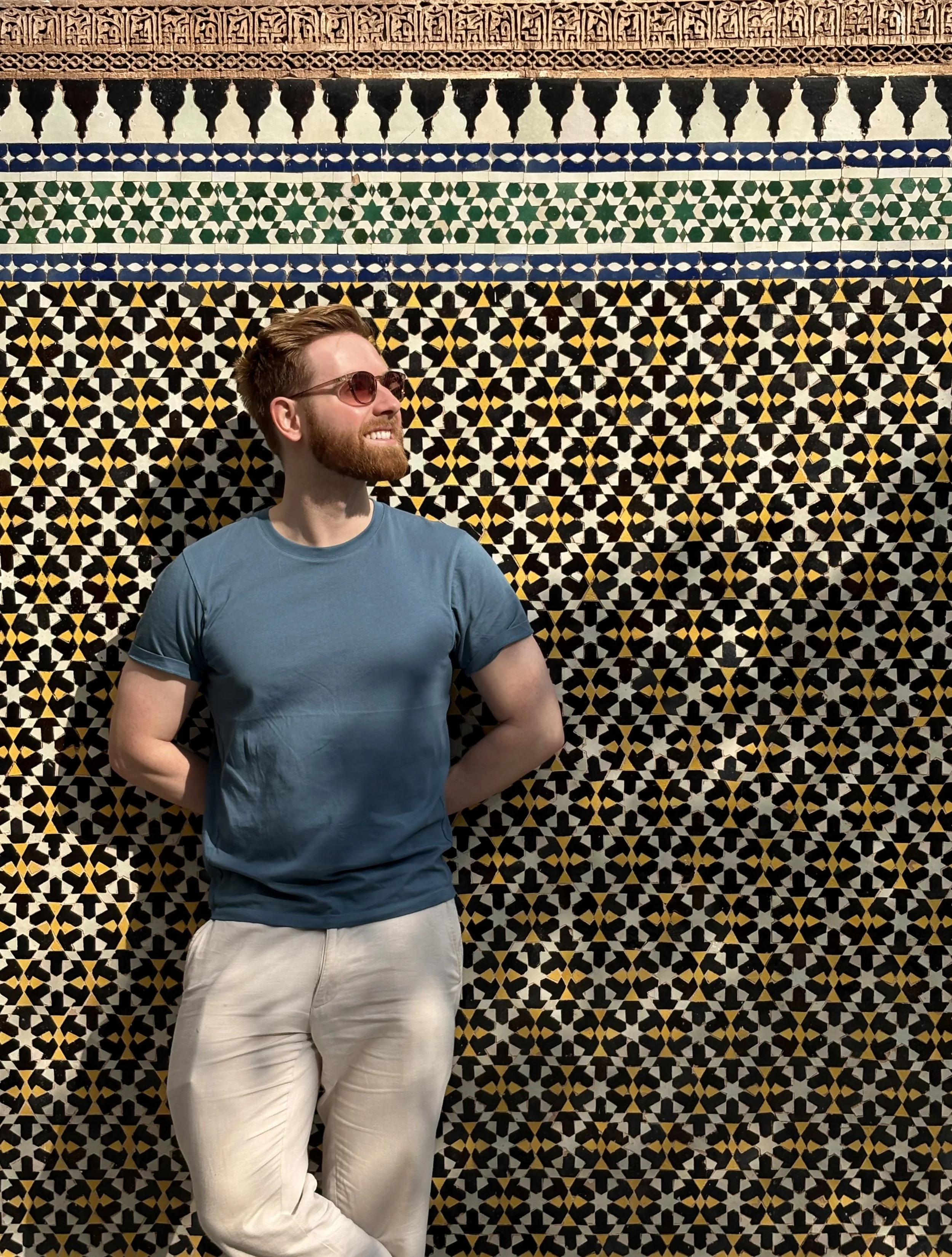
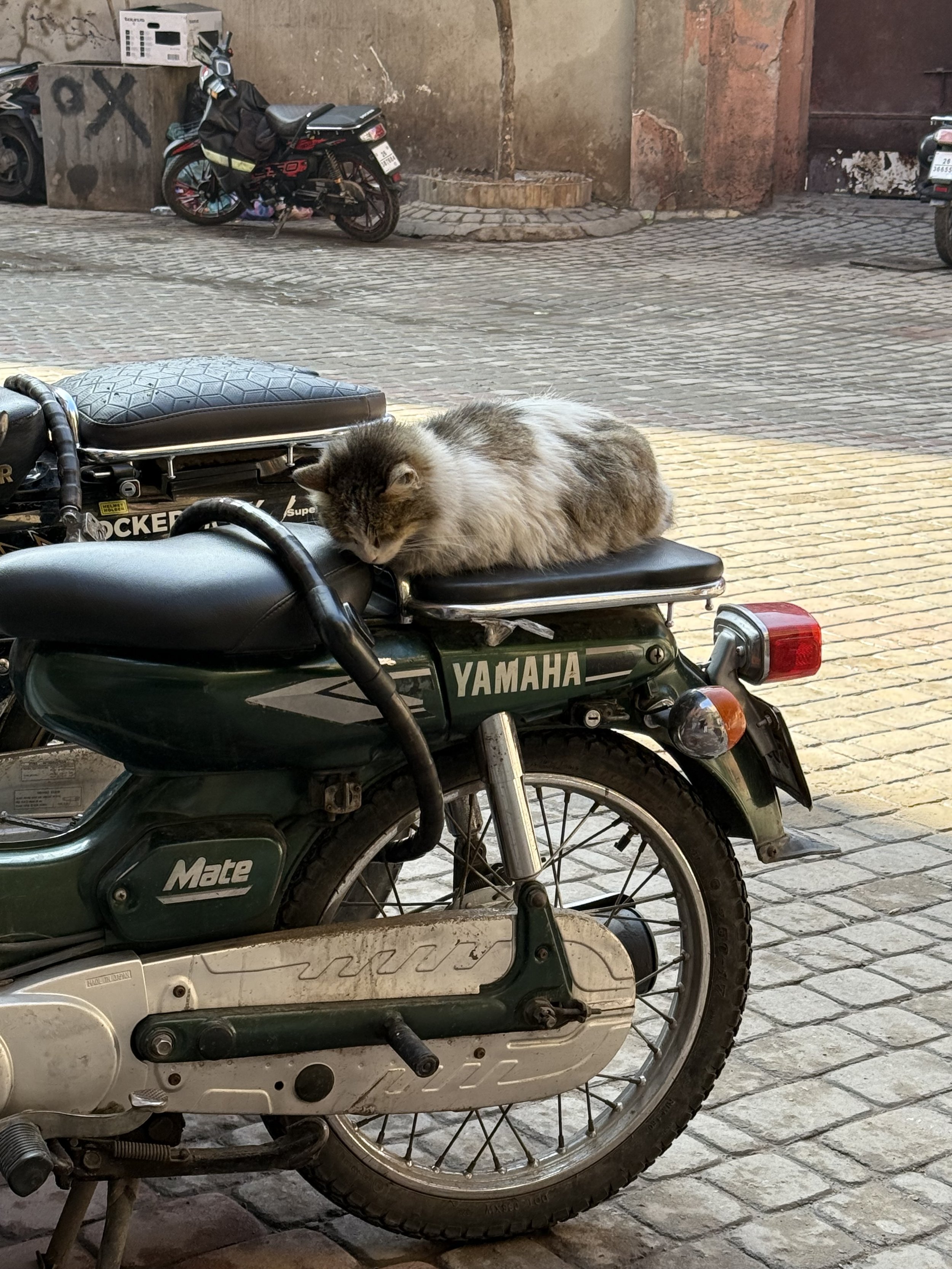
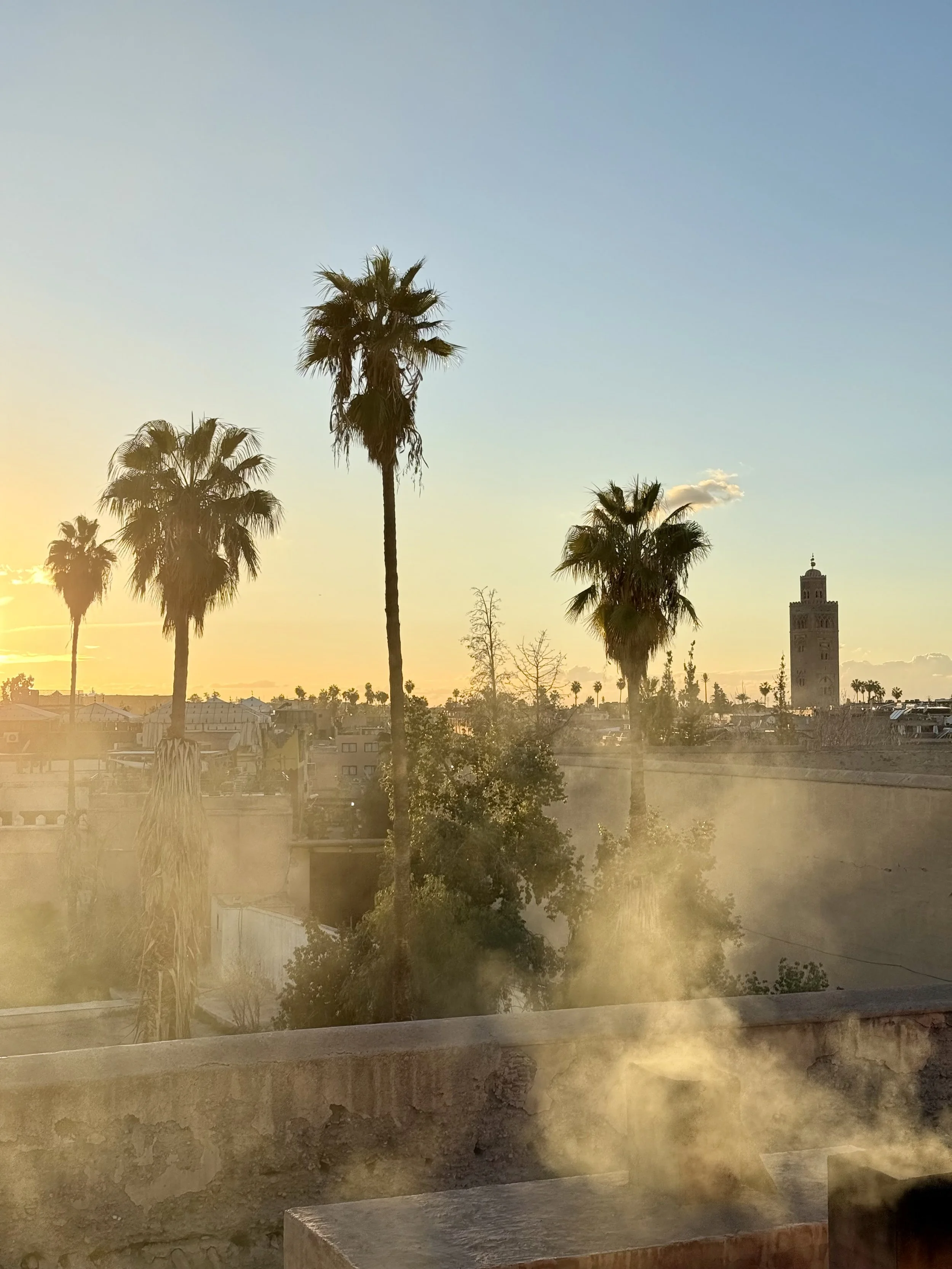
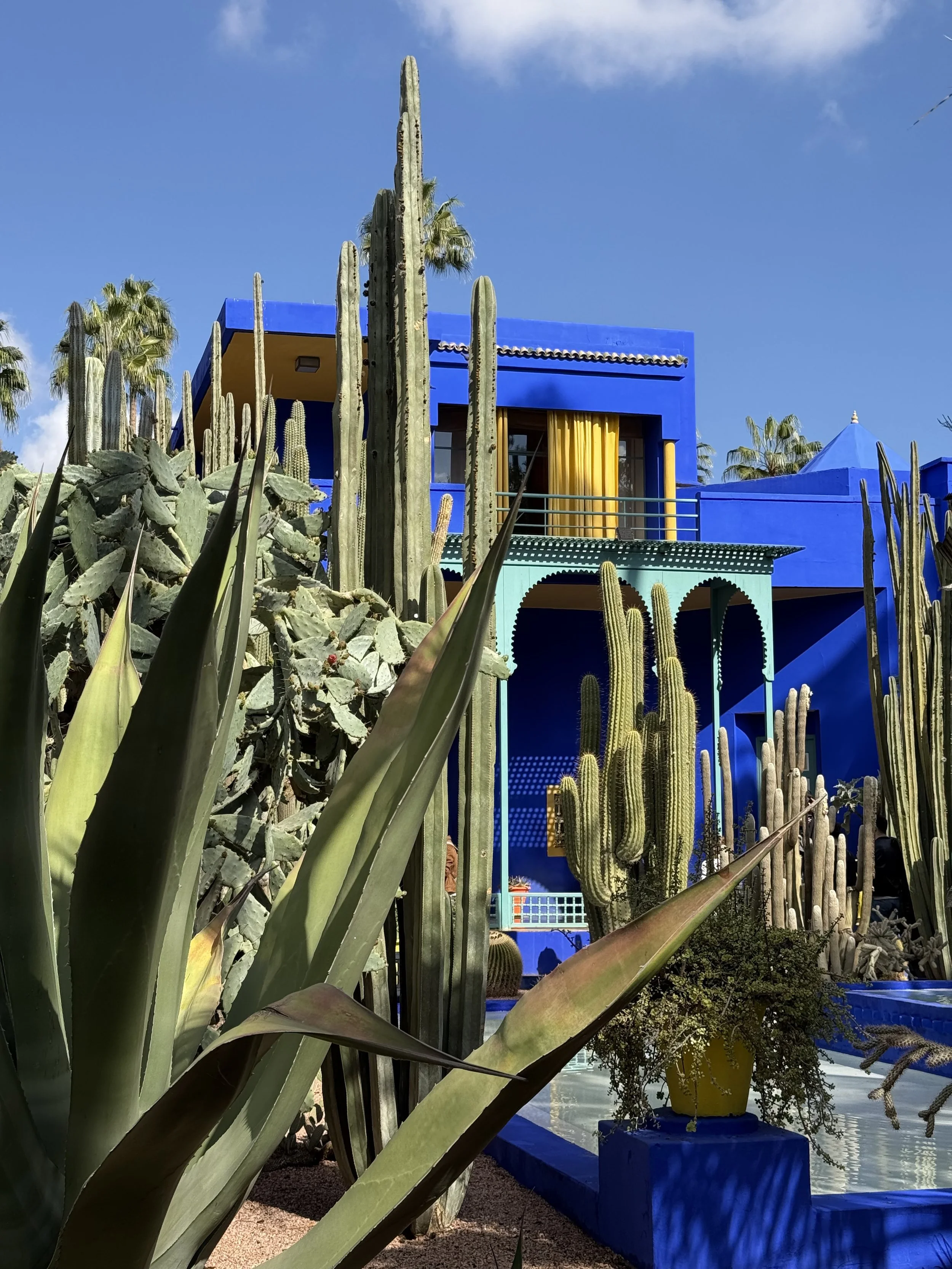
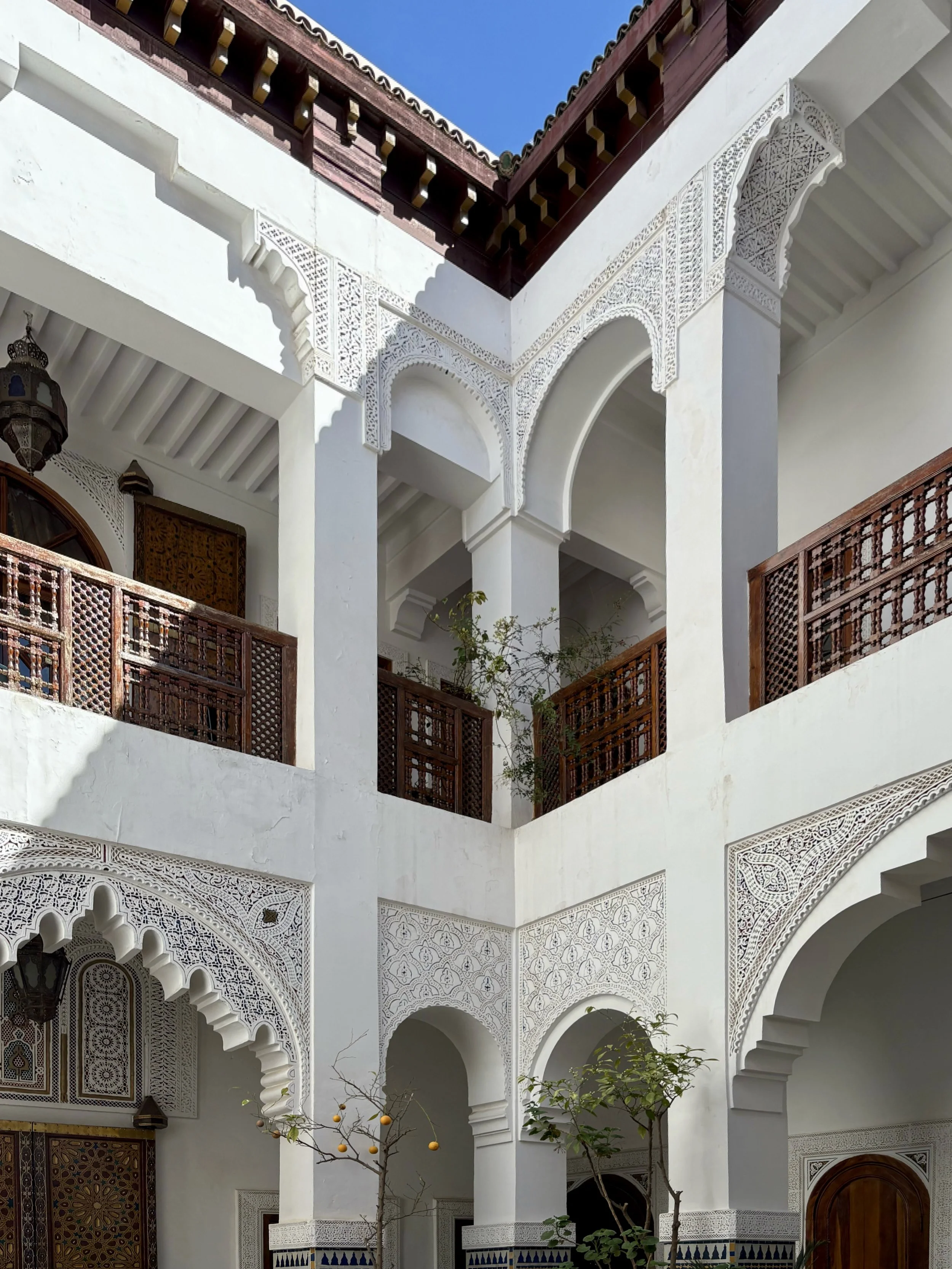
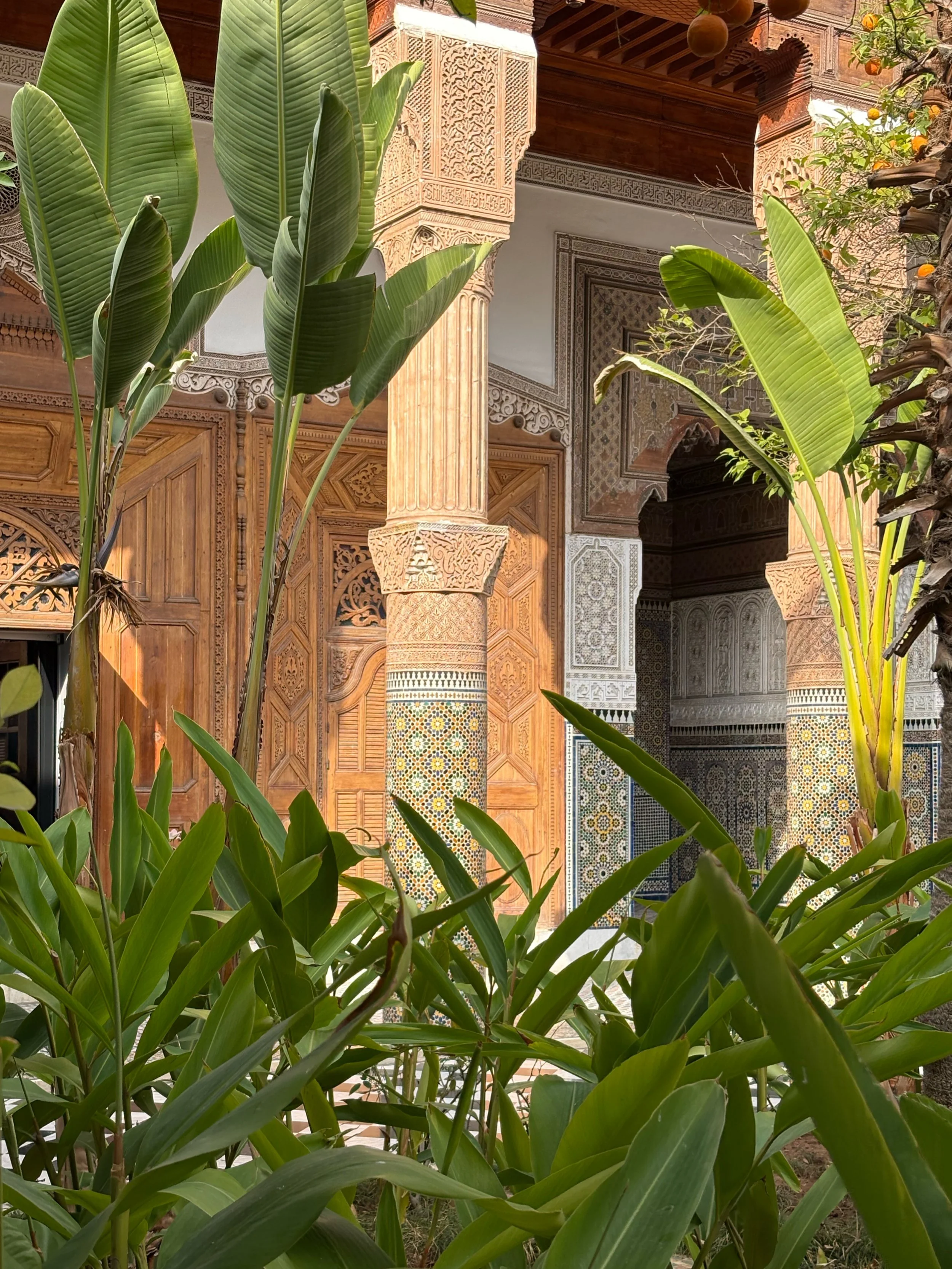
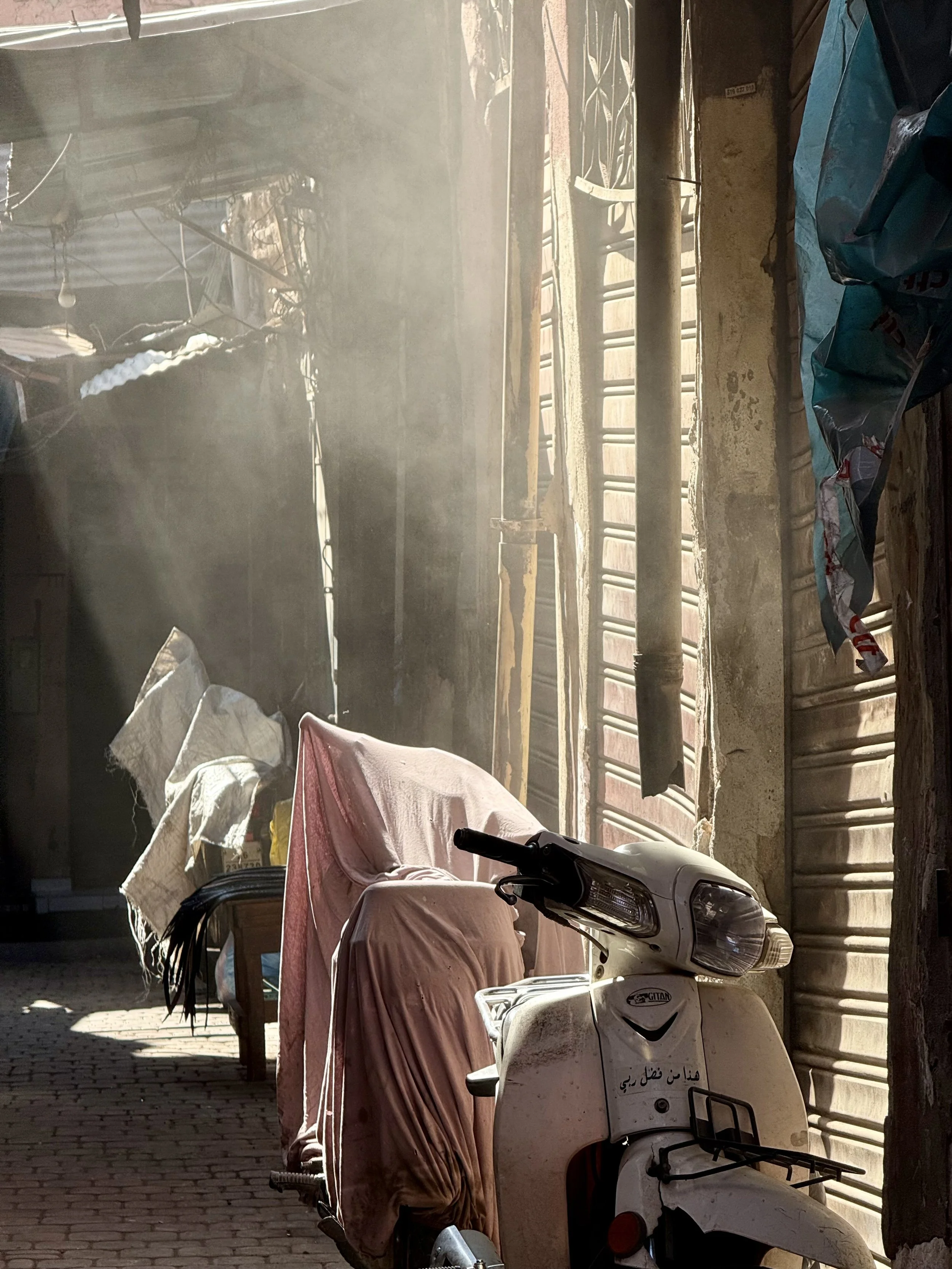
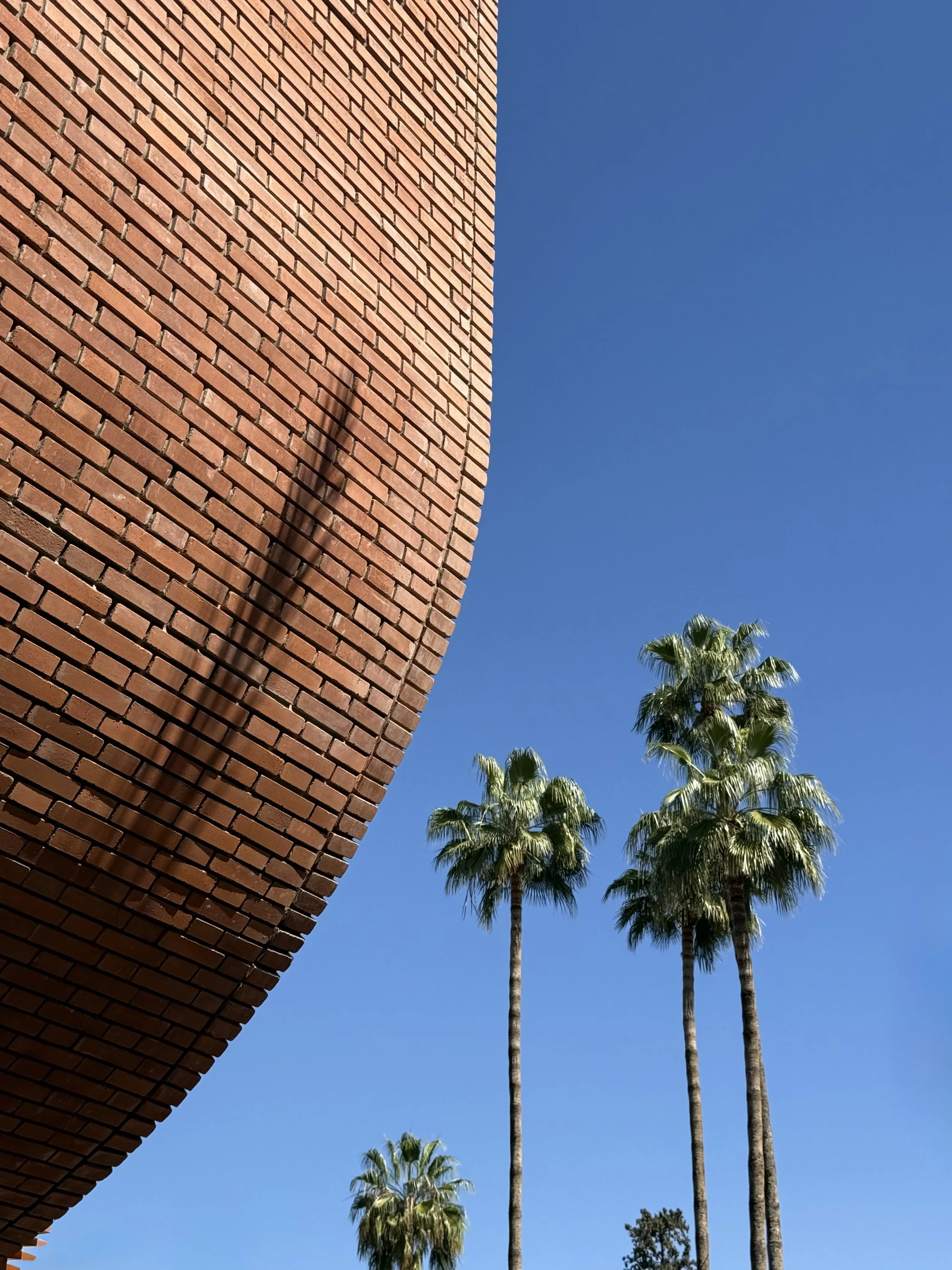
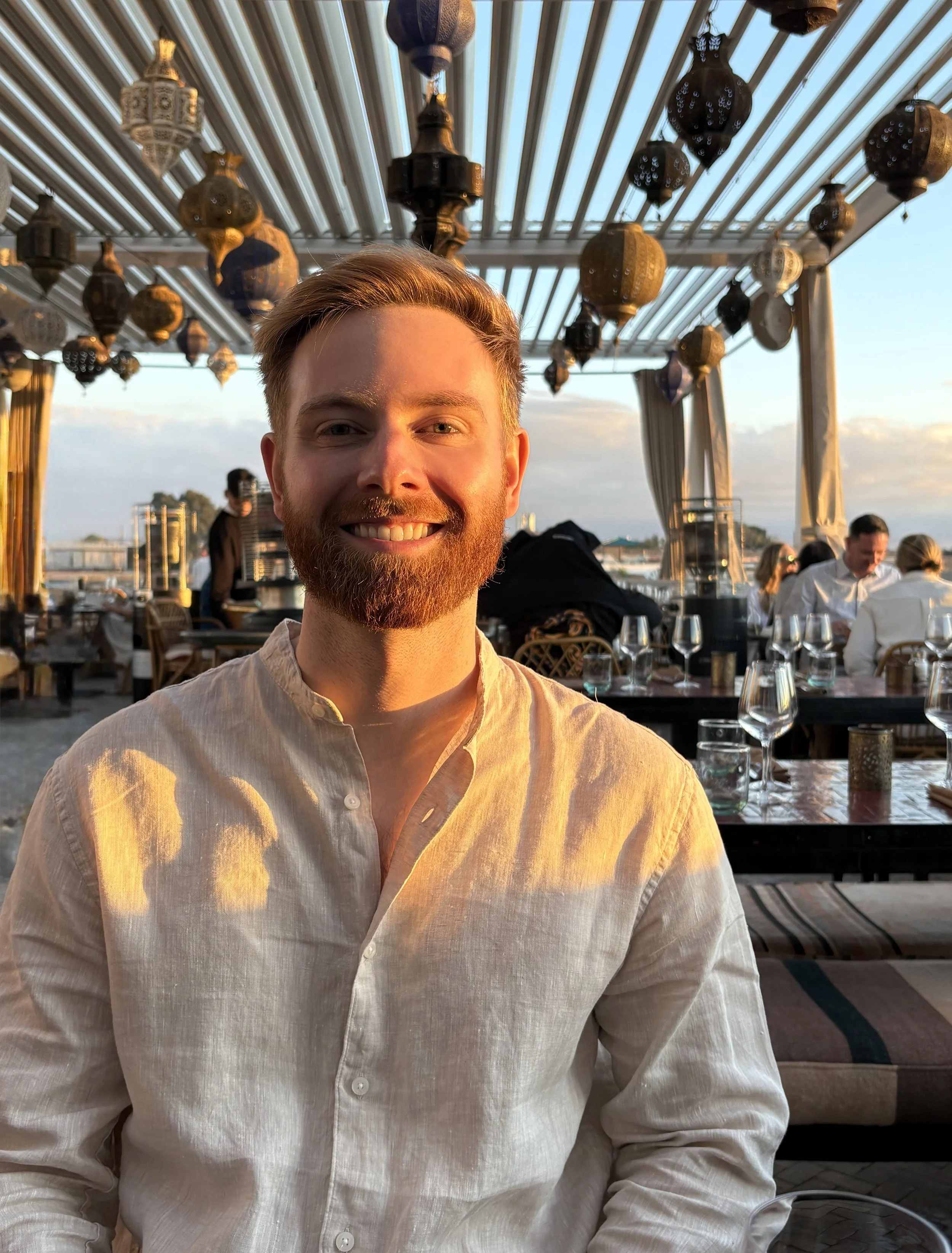
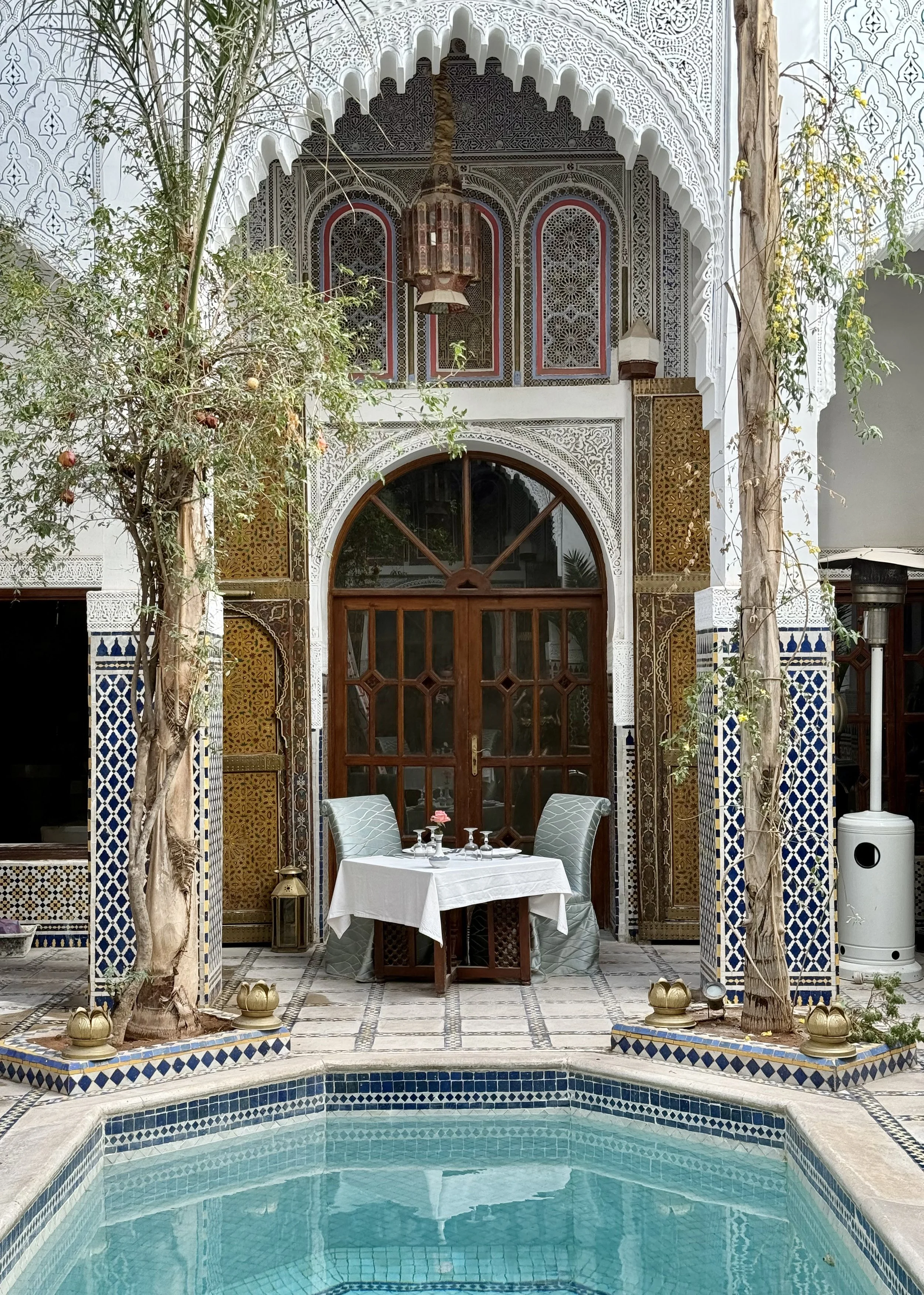
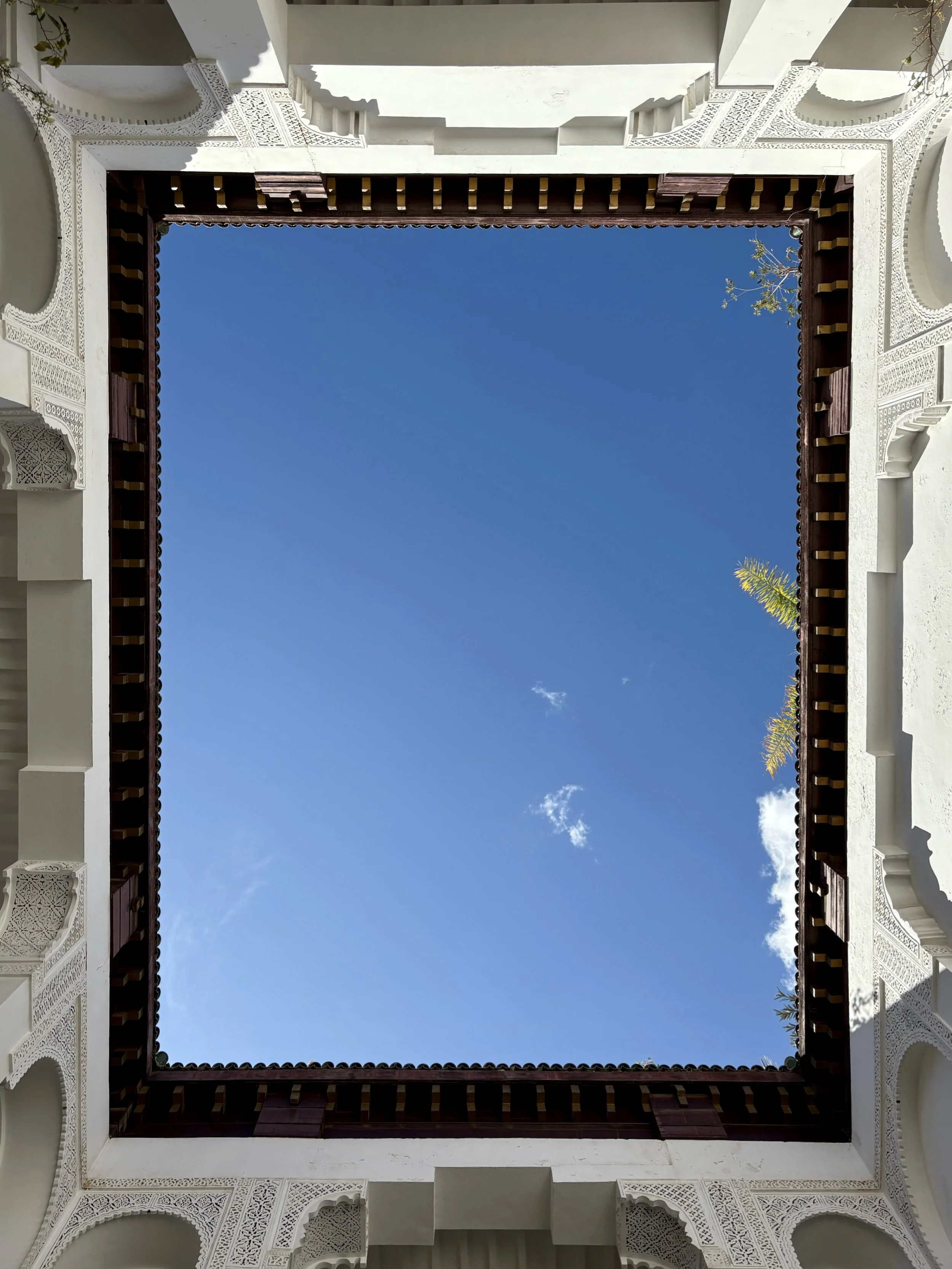
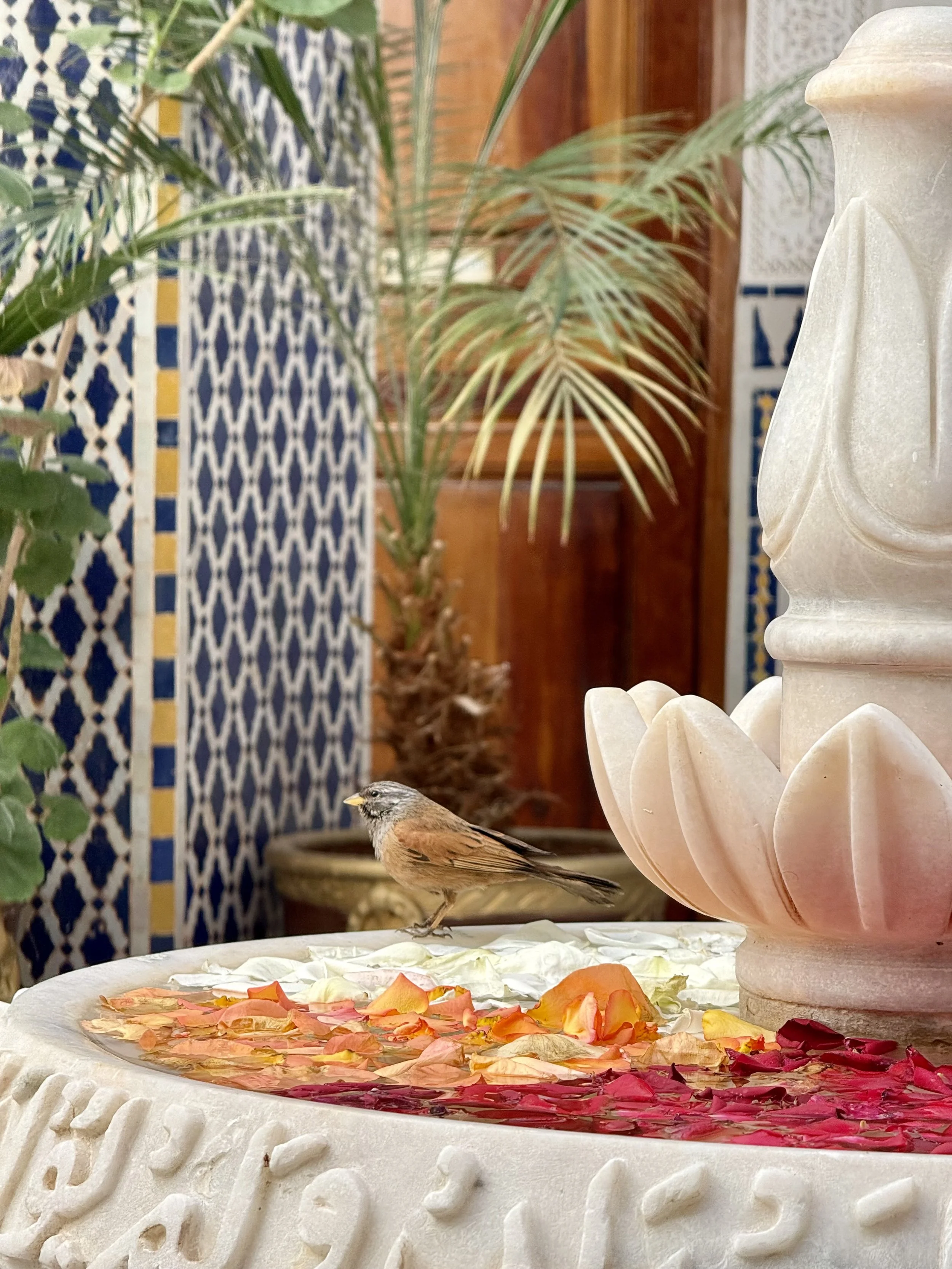
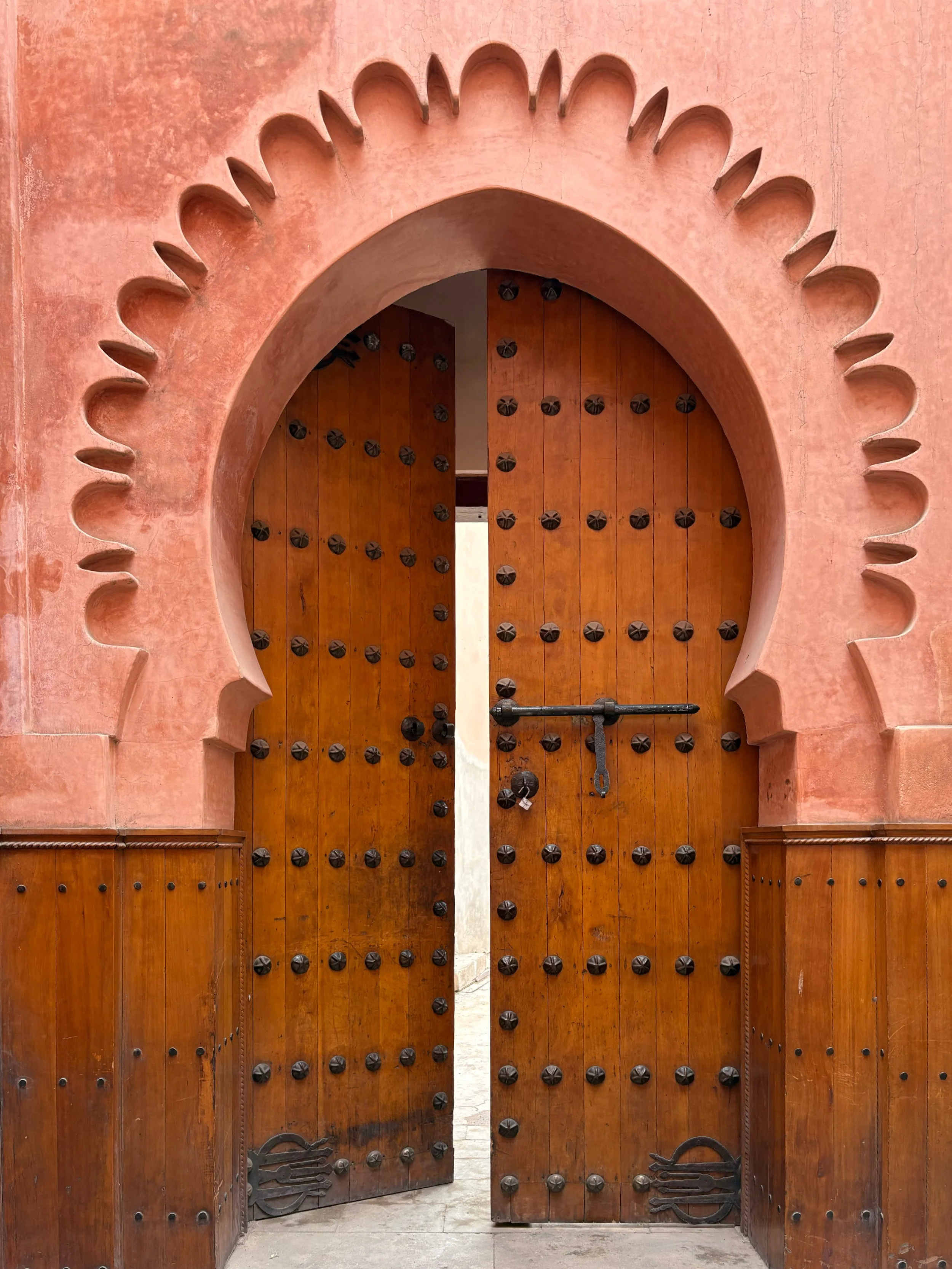
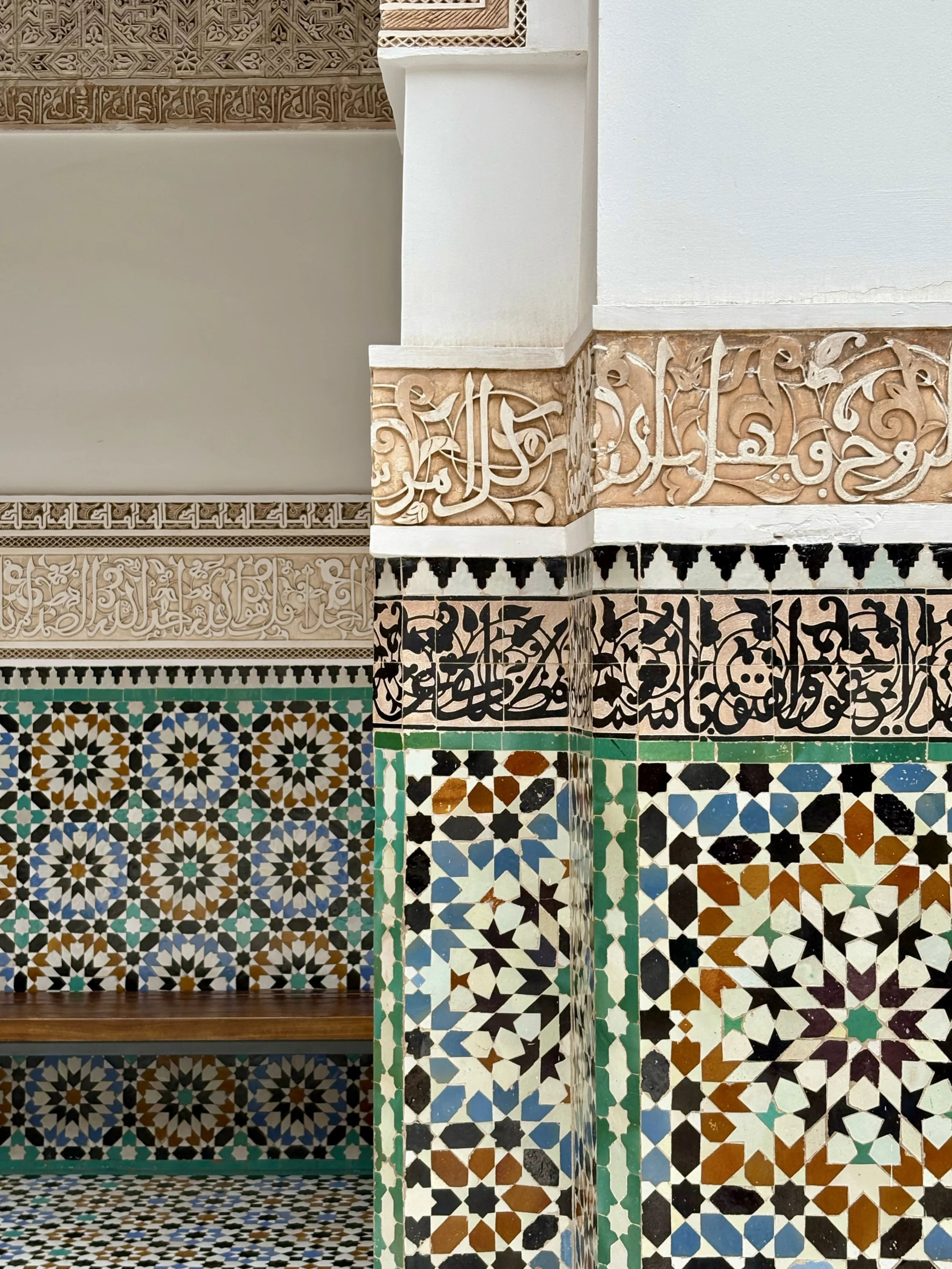
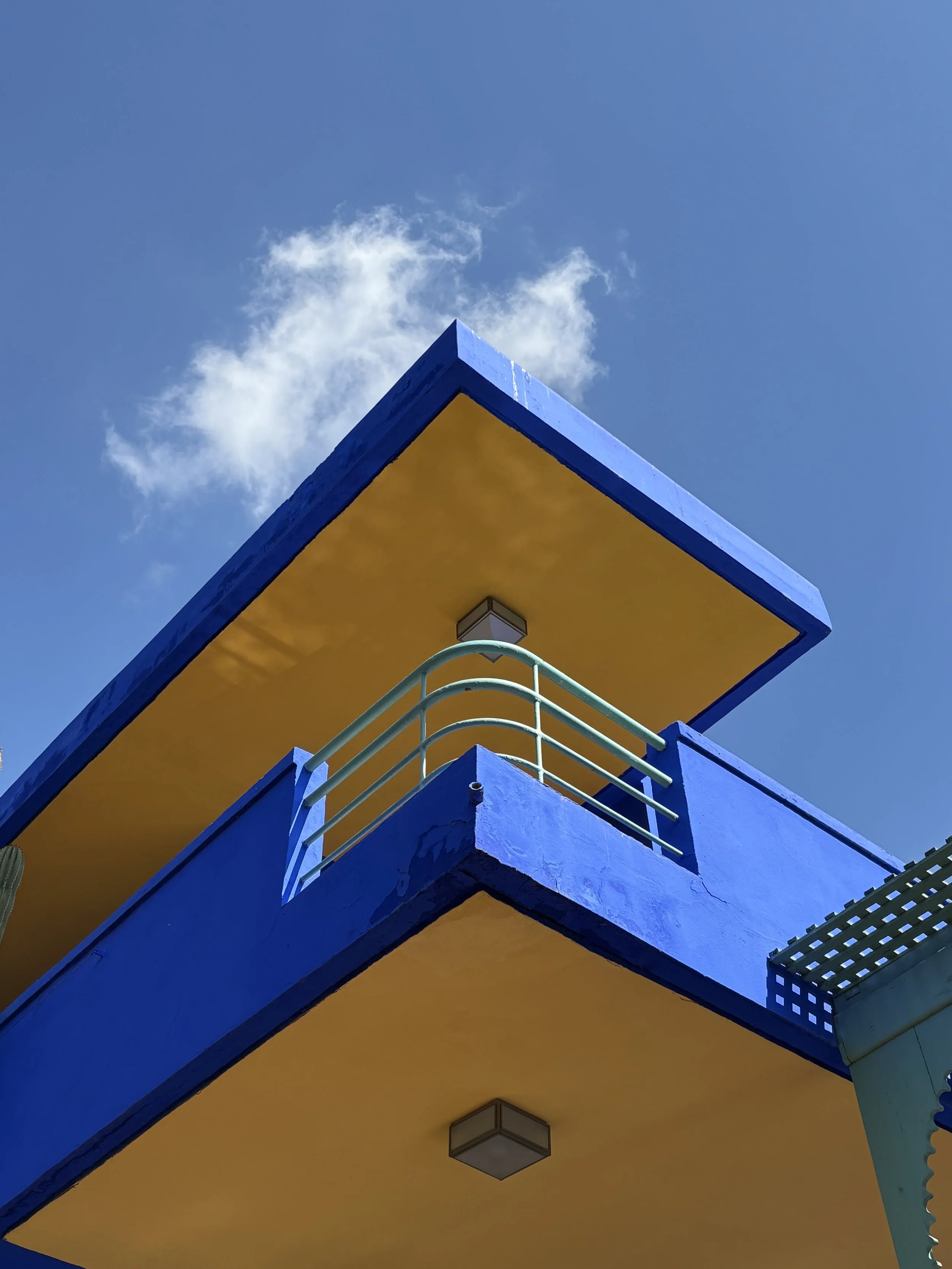
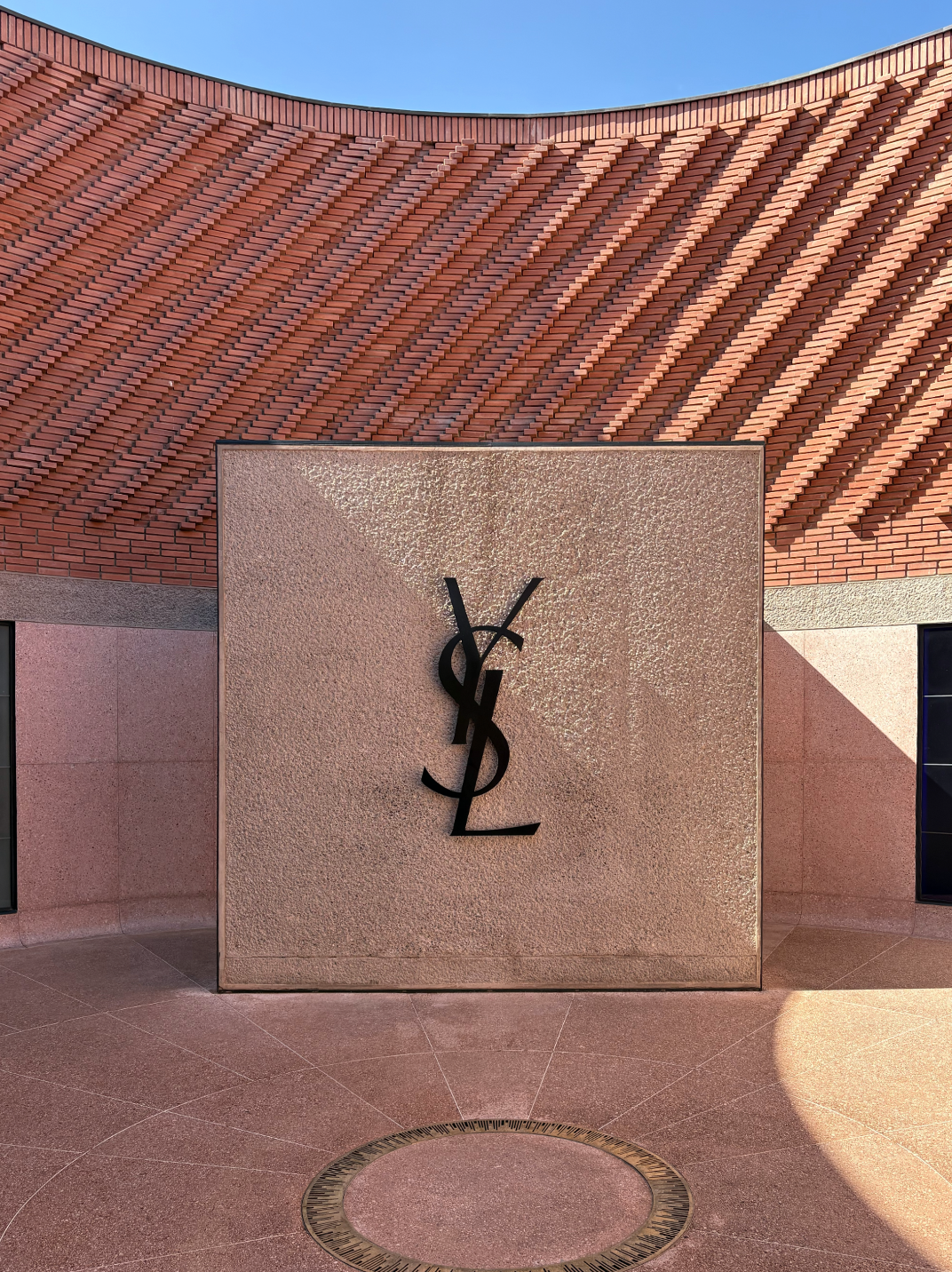
Some key moments from our time in Marrakech
BEFORE YOU GO..
Check the weather. We went in February/March and found it warm enough for t-shirts during the day, but surprisingly very cold at night. I could have done with a thicker jacket.
Set up an eSIM for Morocco. My provider of choice is Airalo.
Download offline maps before you arrive. The medina is one of those places where getting a little bit lost is part of the experience, but there is a difference between pleasantly wandering and fully losing your bearings. We generally found mobile reception to be quite bad when in the depths of the medina due to the very thick walls of the surrounding buildings.
Check whether you will be there during the month of Ramadan, as this can impact opening hours of the key attractions.
Note opening times and days of attractions in advance, as some are closed mid week - on Mondays, Wednesdays etc. I record key details in this blog.
Buy tickets for the most popular sights in advance (Jardin Majorelle, Musée Yves Saint Laurent, and Bahia Palace) as their ticket queues were generally much longer than the others. From our experience, with most other attractions you can fairly rapidly get tickets on the door.
Take cash. Cards are accepted in plenty of places, but cash is still useful in the souks and for smaller purchases.
Where we stayed
We stayed at the stunning 5* Esprit du Maroc Riad & Spa, and it made the trip feel very authentic. A riad is a traditional Moroccan house built around a central courtyard, often with intricate tiles, plants and a small pool or fountain. From the outside, they look very plain — then you step inside and it’s calm, private and beautifully designed. That contrast is a huge part of the Marrakech experience.
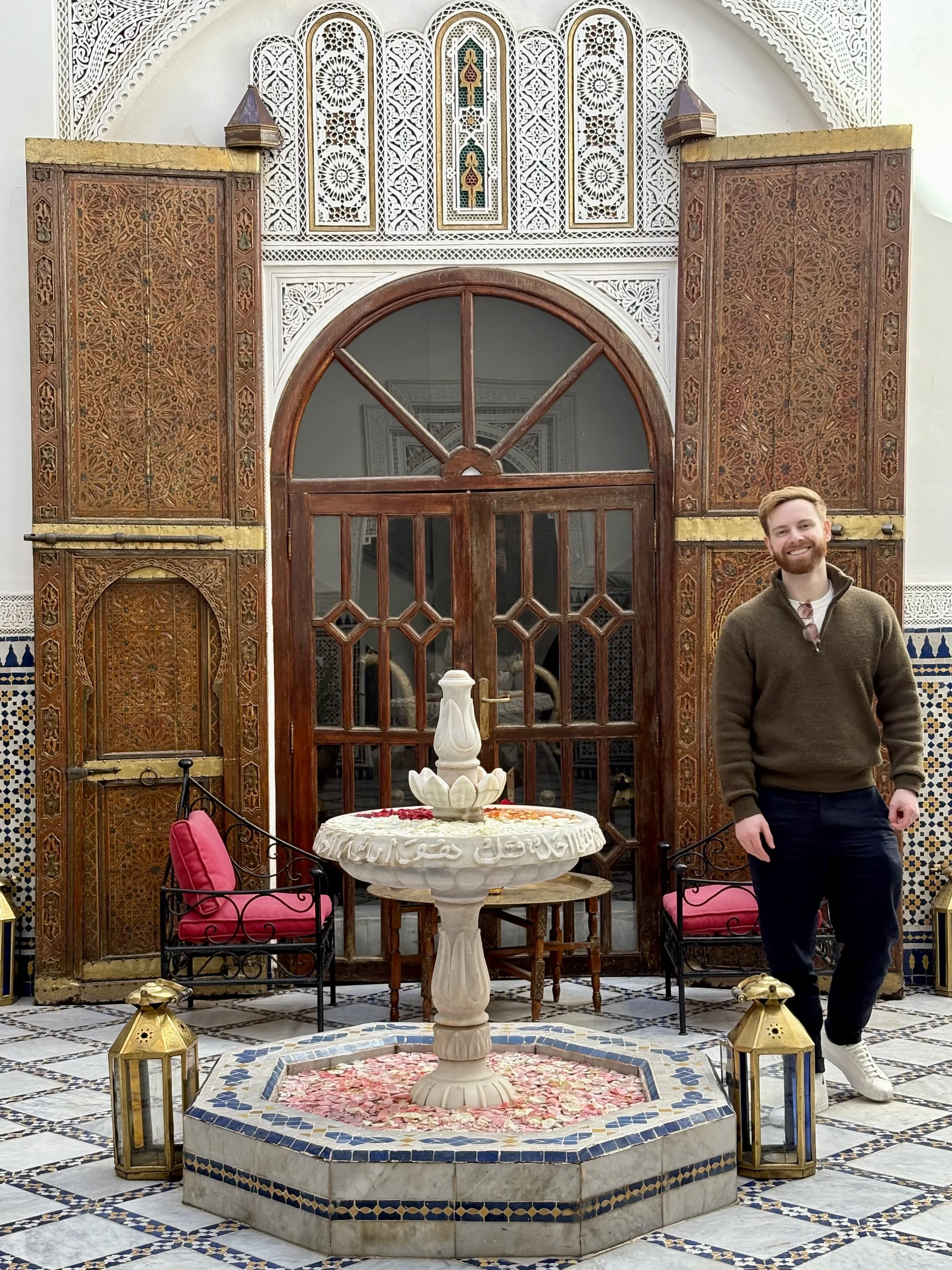
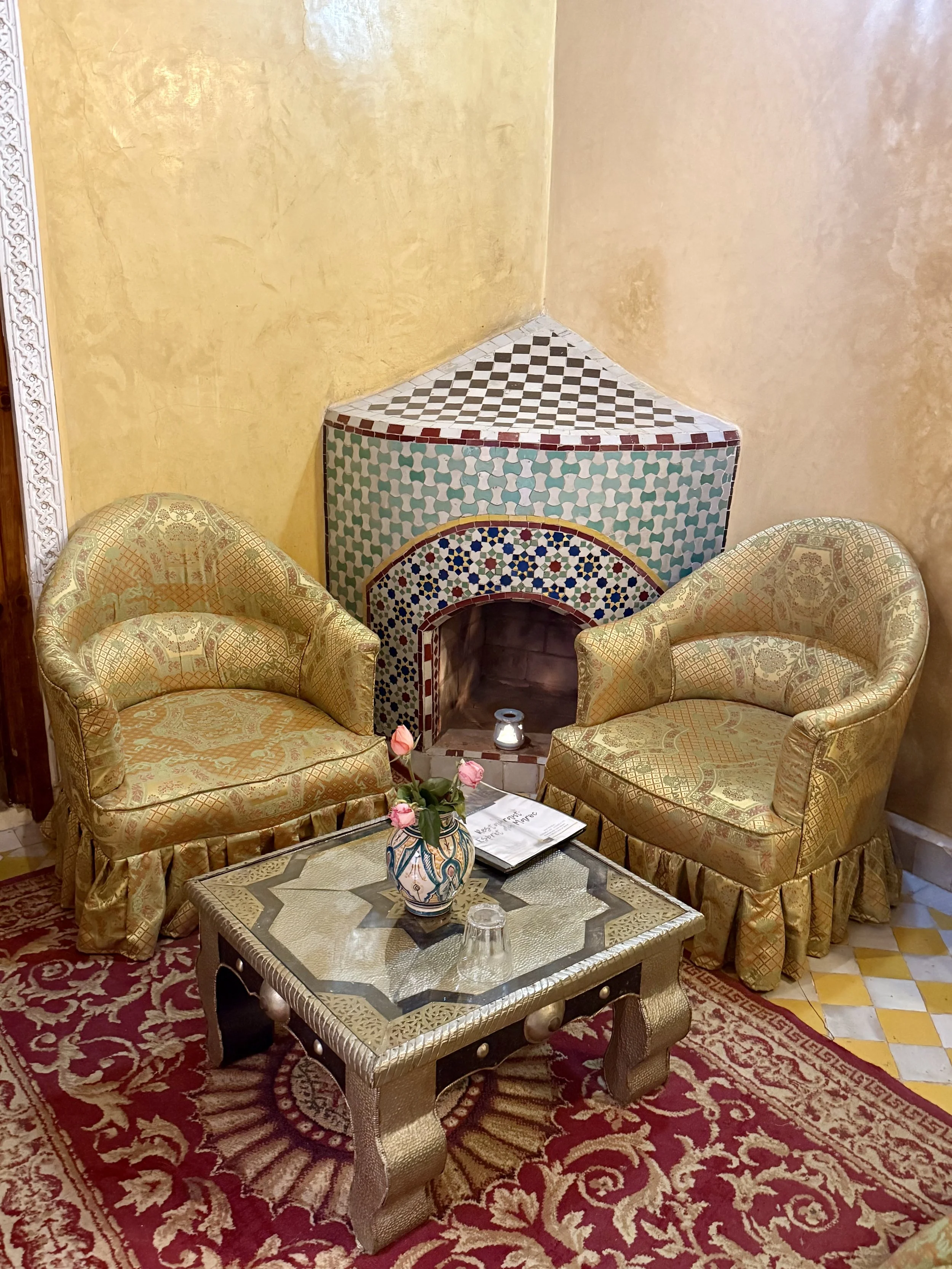
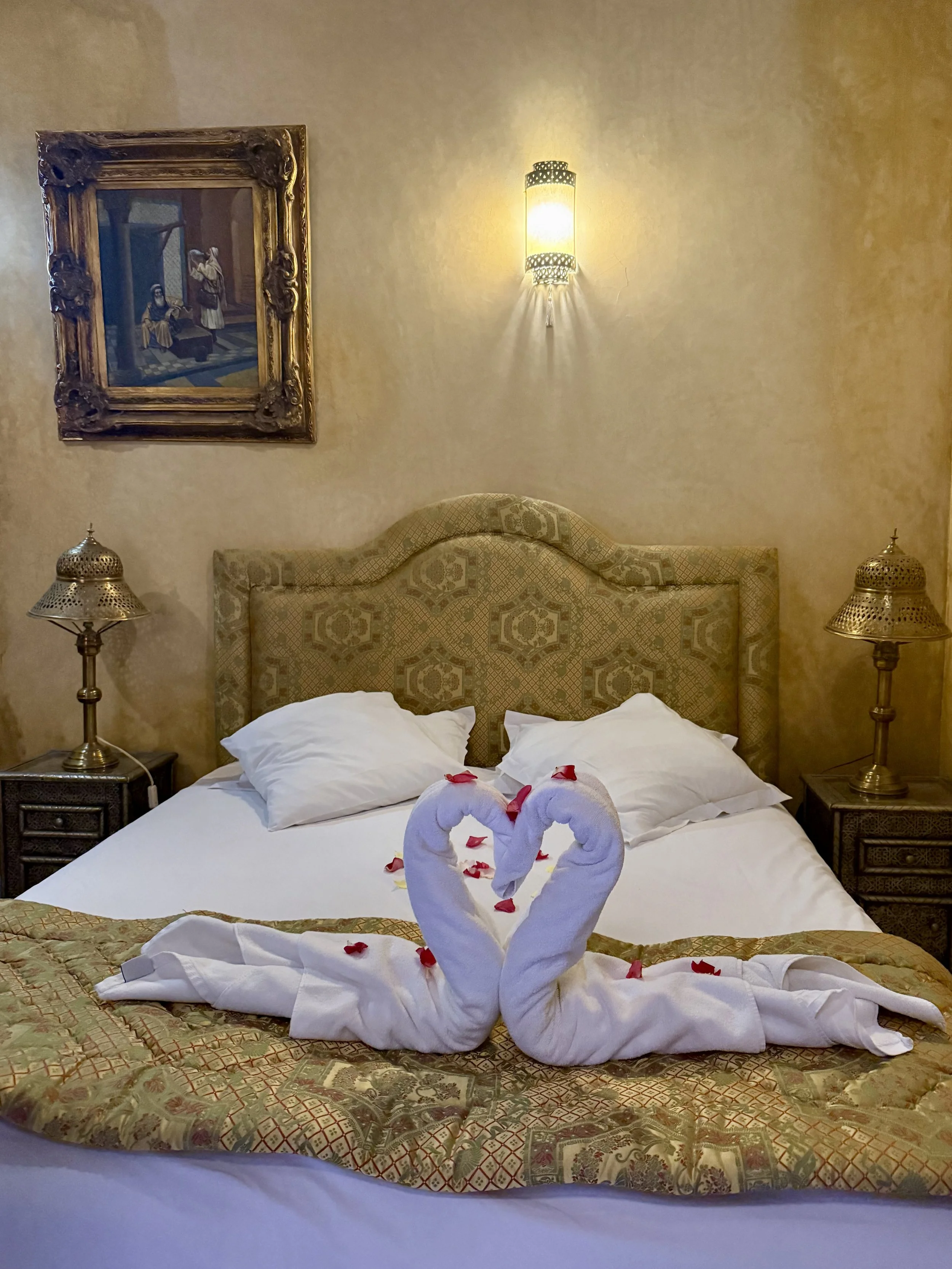
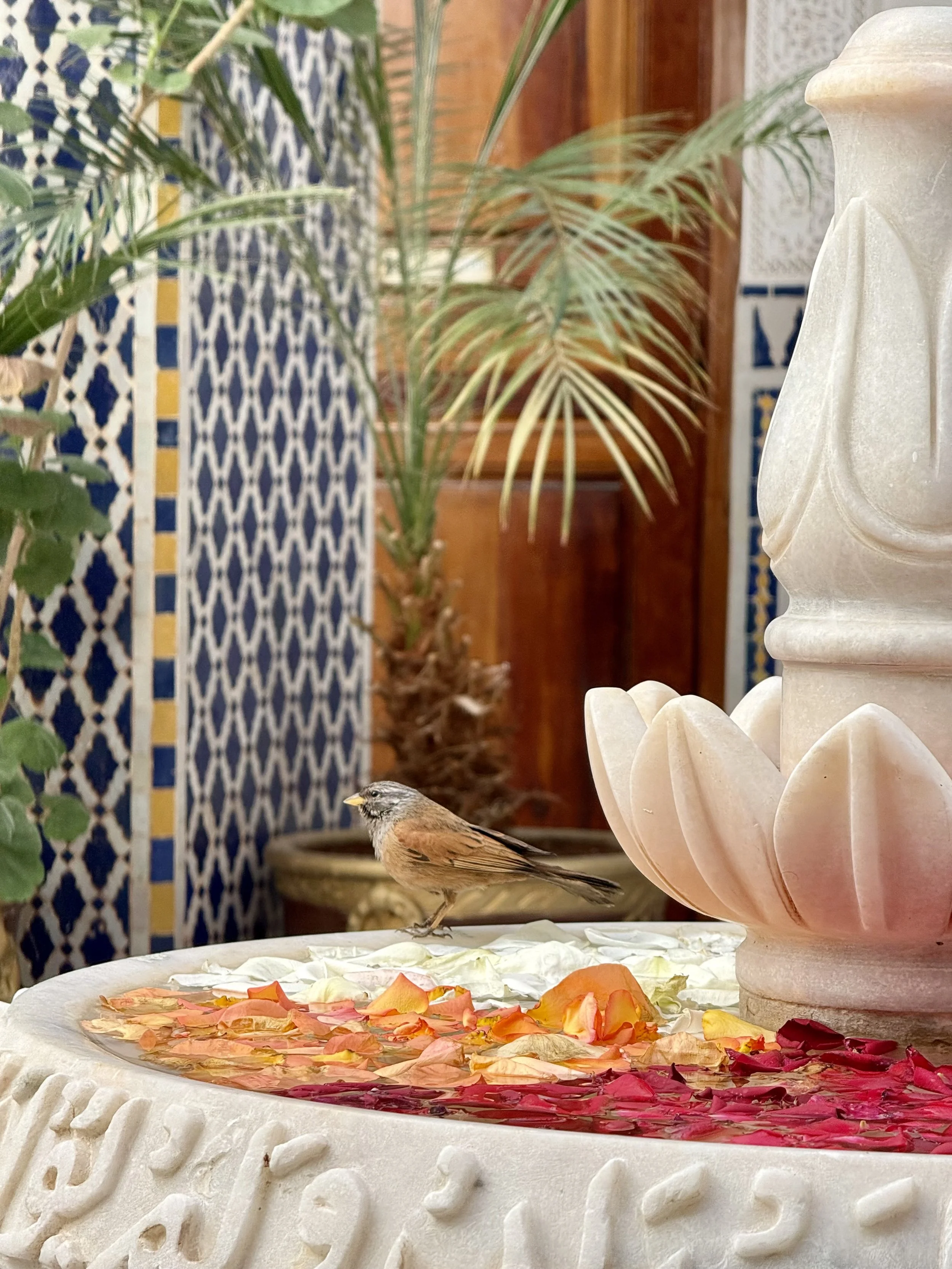
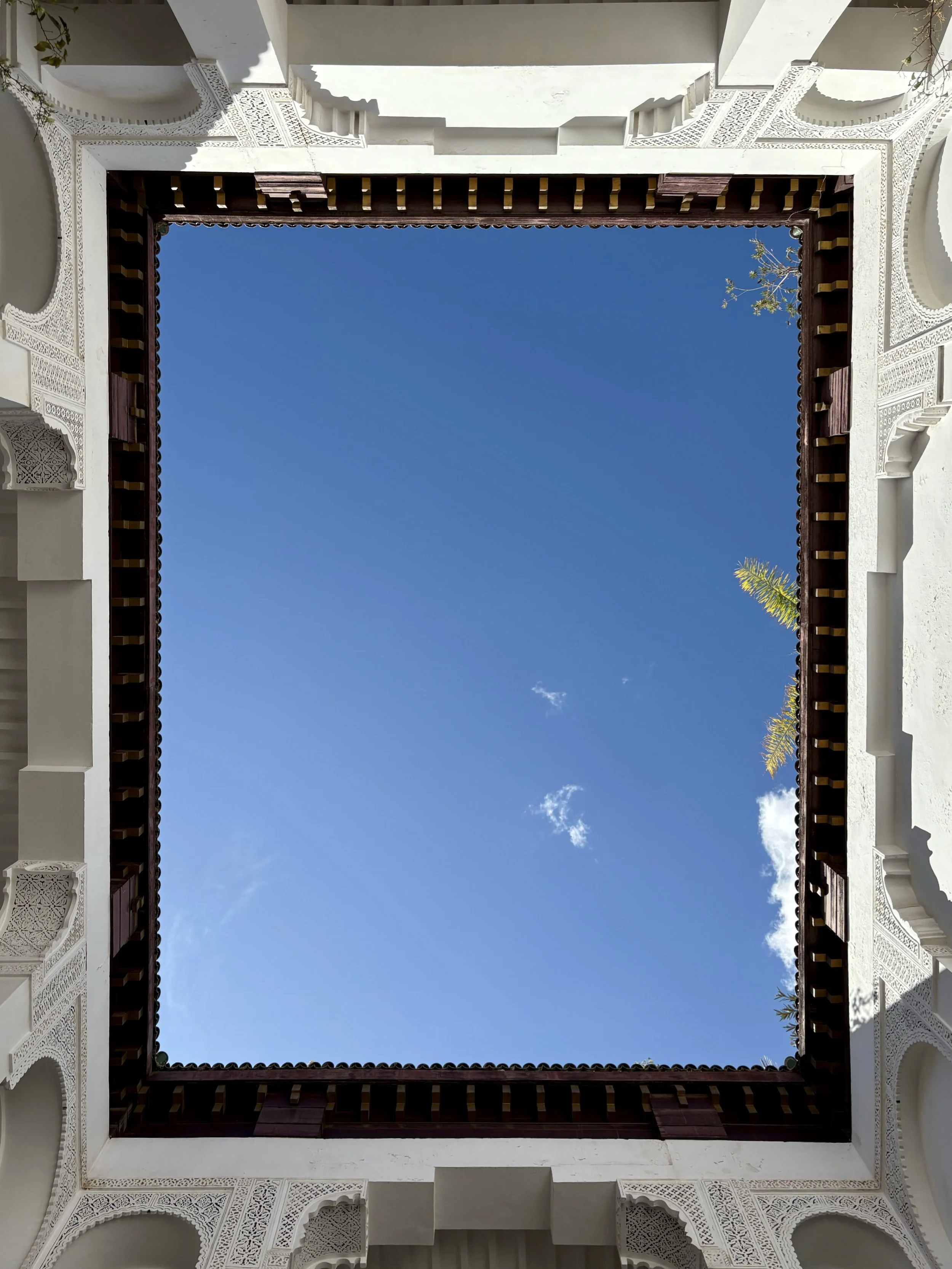
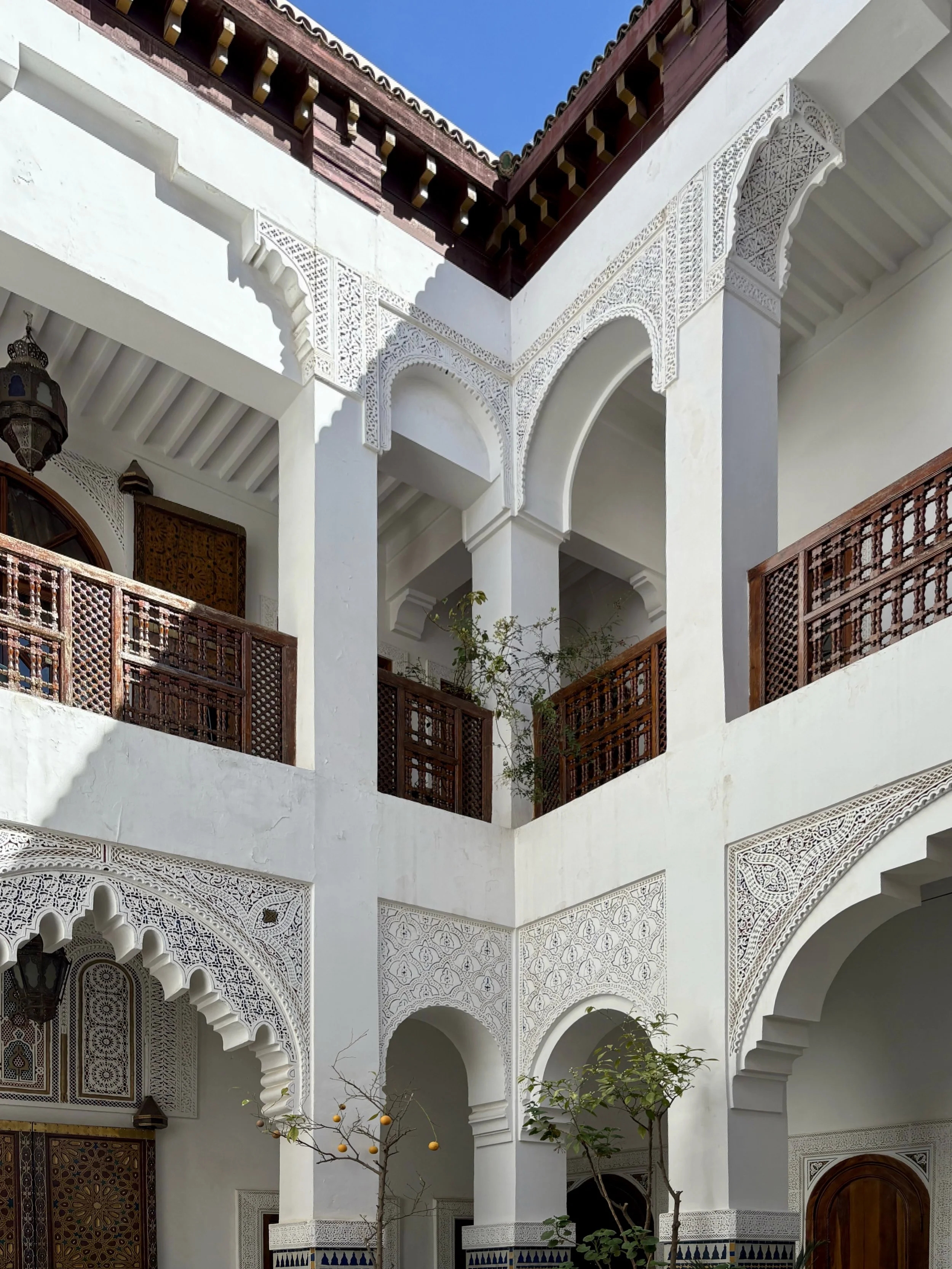
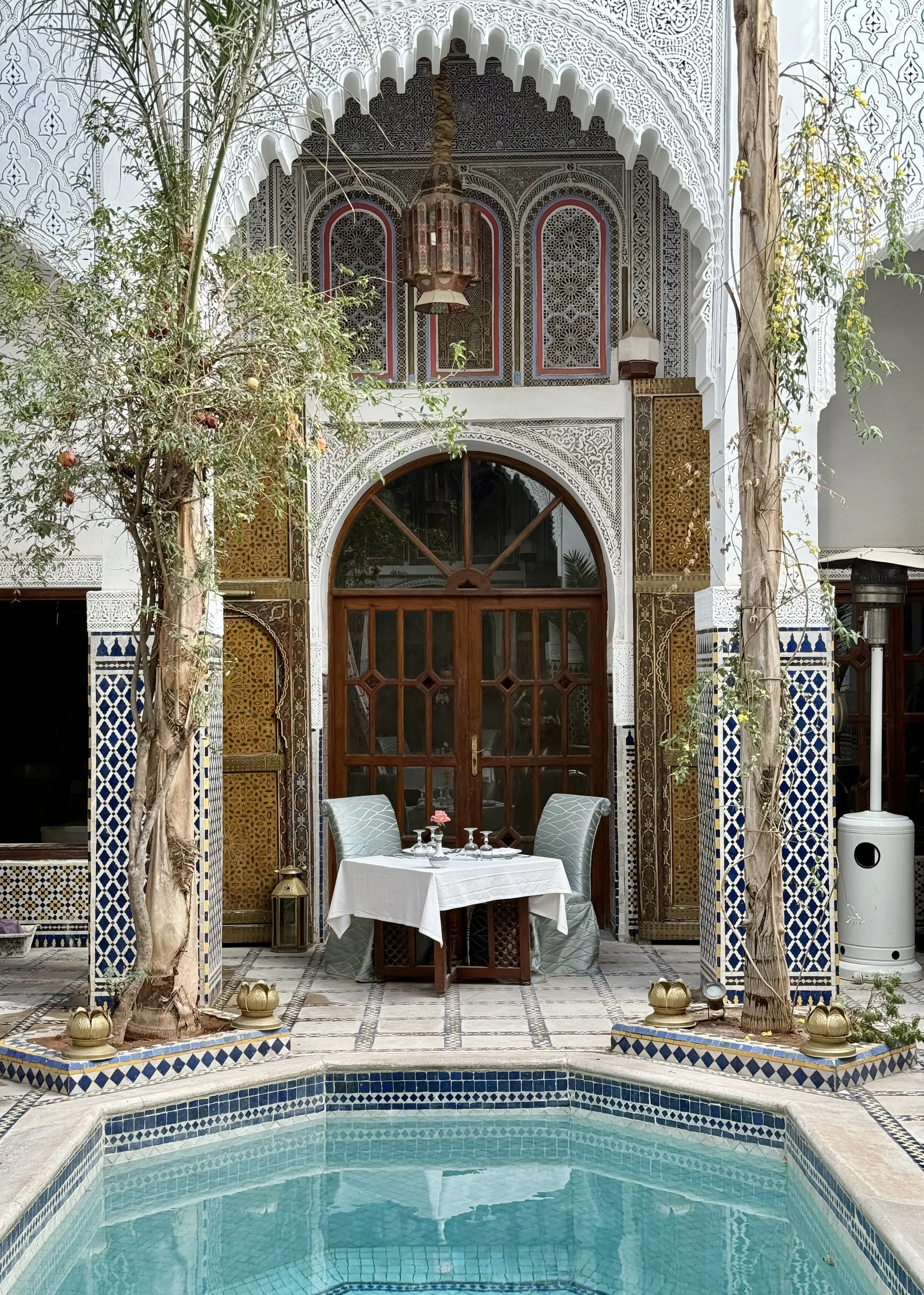
The stunning Esprit du Maroc Riad & Spa,
The riad is located in the medina, which is the old town of Marrakech. Think a maze of narrow alleyways, souks, small cafés and homes all packed tightly together. It’s not structured or easy to navigate — and we did get lost — but accepted it as part of the experience.
Staying in a riad made Marrakech feel much more layered and intimate than if we had stayed in a standard hotel. Yes, the surrounding medina is crazy busy, chaotic and very sensory — but whole ritual of returning to a quiet courtyard after the chaos outside was central to our experience of Marrakech. Each time we stepped back into the riad, it felt like a precious oasis of quiet, stillness and cool.
OUR MARRAKECH ITINERARY
DAY 1: ARRIVAL, ATAY CAFE, BEN YOUSSEF, THE MEDINA, Jemaa El-fnaa and Kabana
We arrived in Marrakech late morning and checked into our riad, taking a bit of time to settle in after the journey.
Once we were ready, we headed to Atay Cafe for lunch which was a perfect first stop. Set on a relaxed rooftop, it eased us gently into the rhythm of the city. We’d deliberately planned something low-key before diving into the intensity of the medina, and it worked exactly as intended. Being on the rooftop and admiring the city from above helped us to get our bearings.
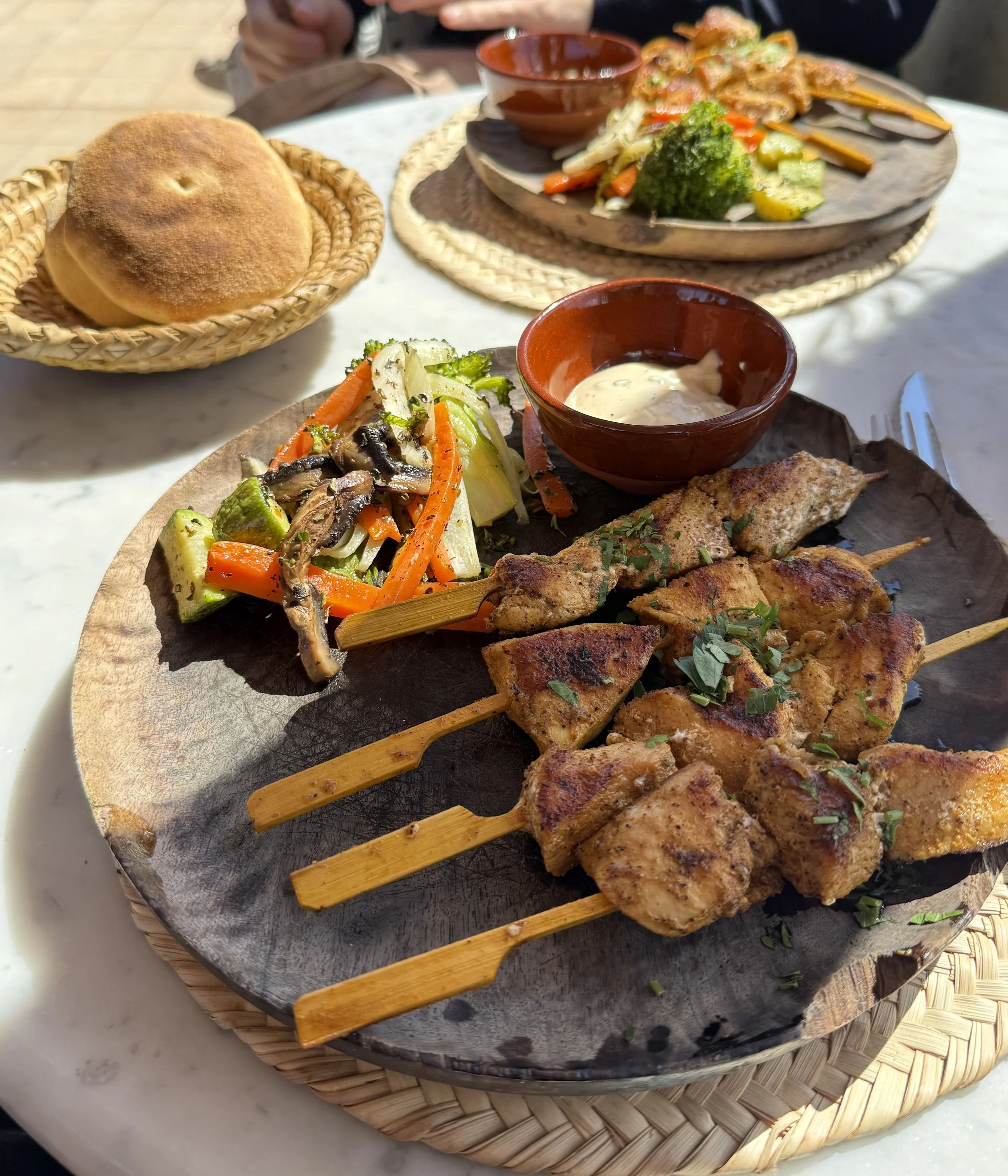
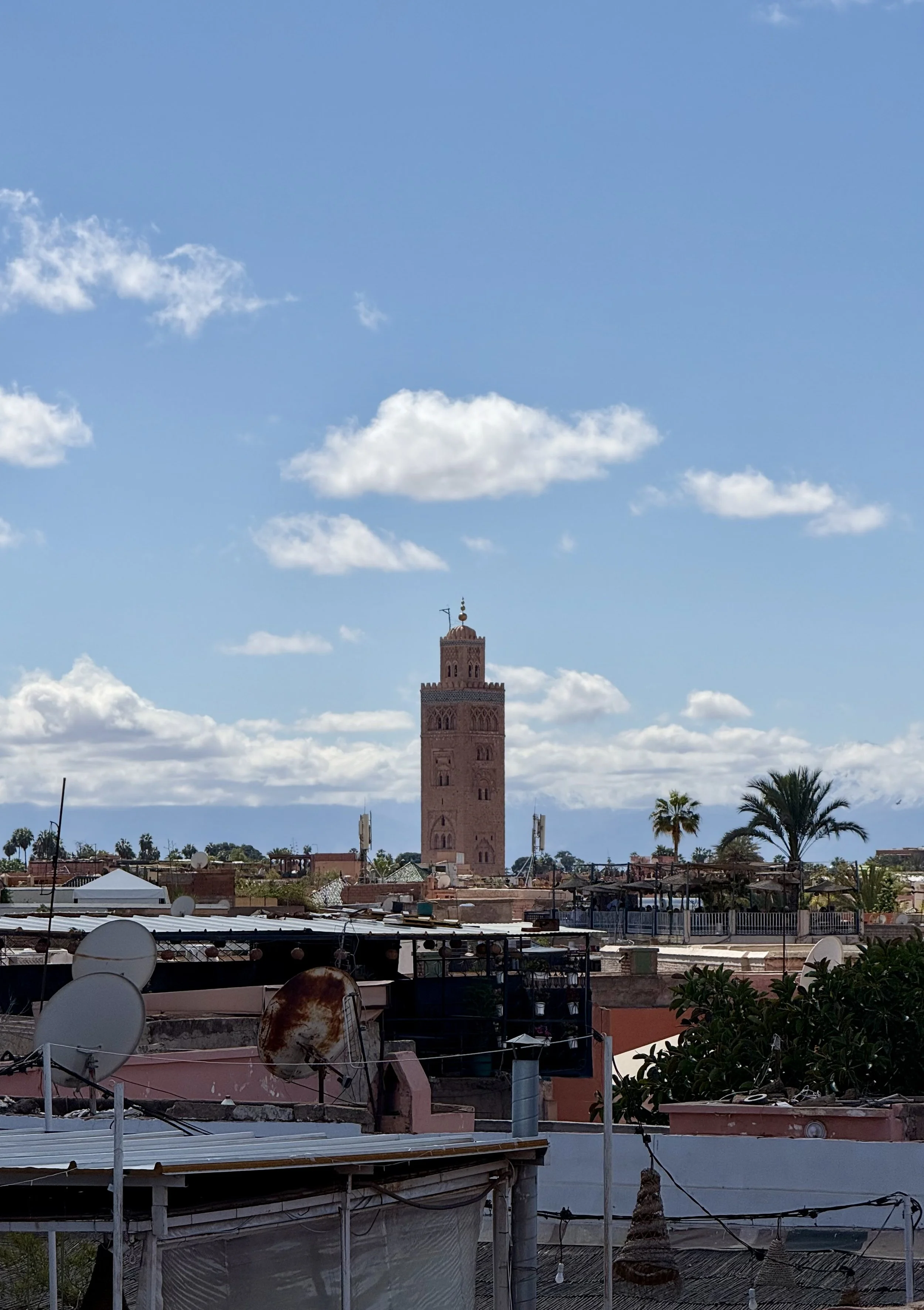
Atay Cafe and the view over to the Koutoubia mosque
From there, we walked over to Ben Youssef Madrasa, which was one of the most visually impressive places we saw throughout the trip. It is a former Islamic college and one of the best places in Marrakech to appreciate the city’s immense craftsmanship properly. The courtyard is the obvious centrepiece, with its geometric tilework, carved cedar and perfect symmetry, but it is worth going upstairs too to look into the small student rooms around the edges. It gives the place more context and makes it feel like more than just a photo stop.
Tickets are 50MAD and can be bought on their website upfront however we bought them fairly quickly on the door. It was quite busy when we visited at circa 3pm. Opening hours are 9:00am–7:00pm.
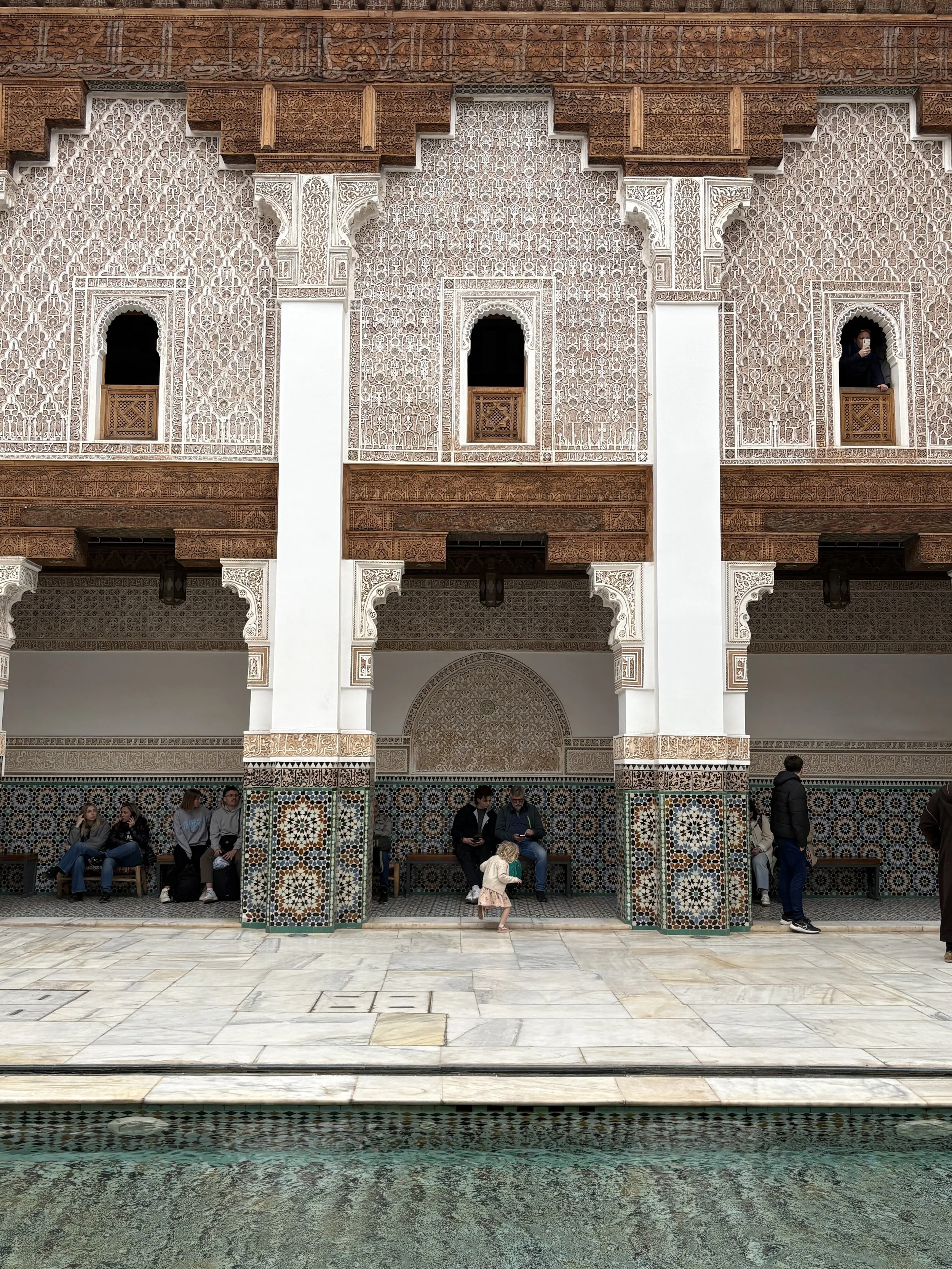
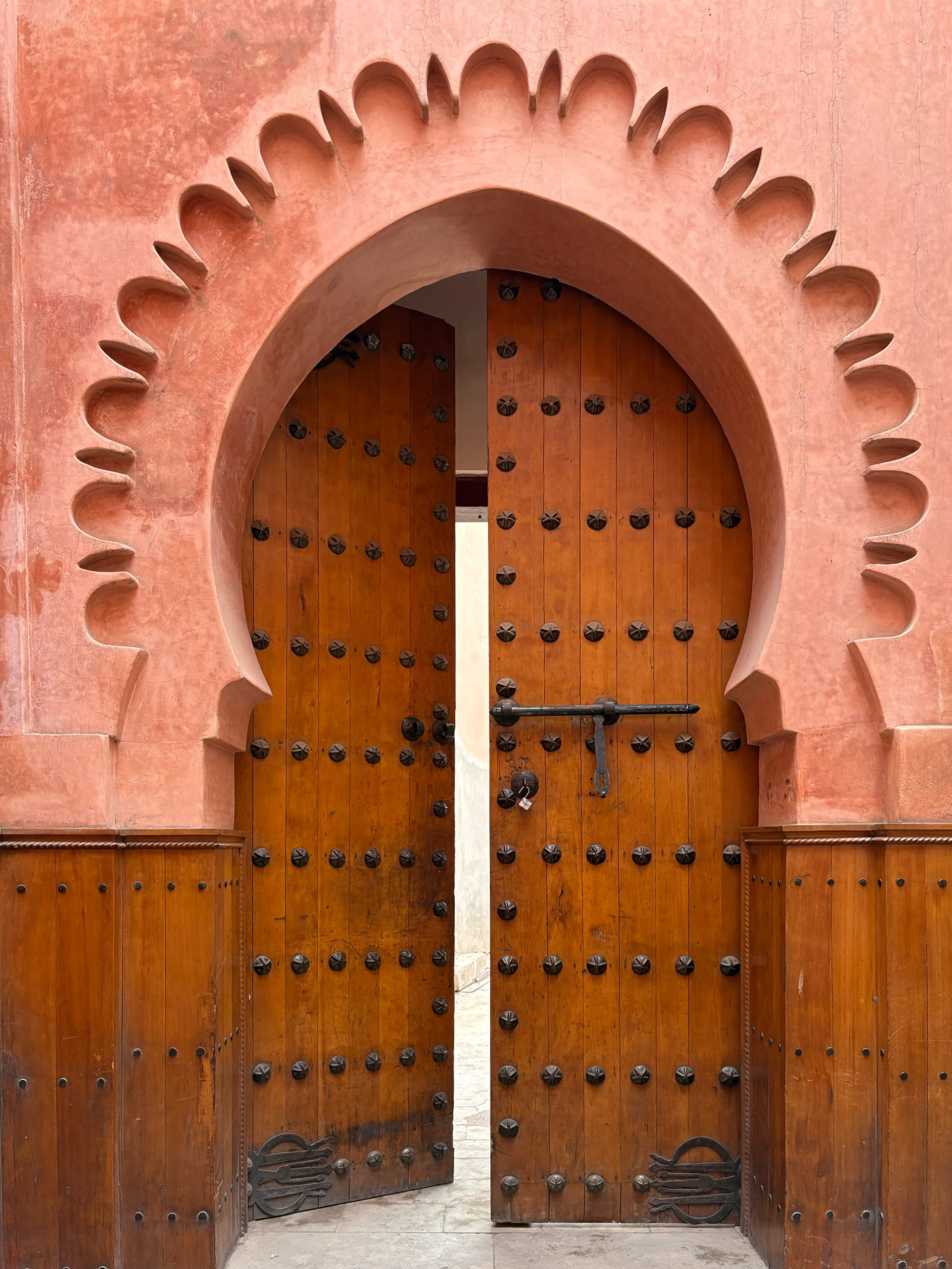
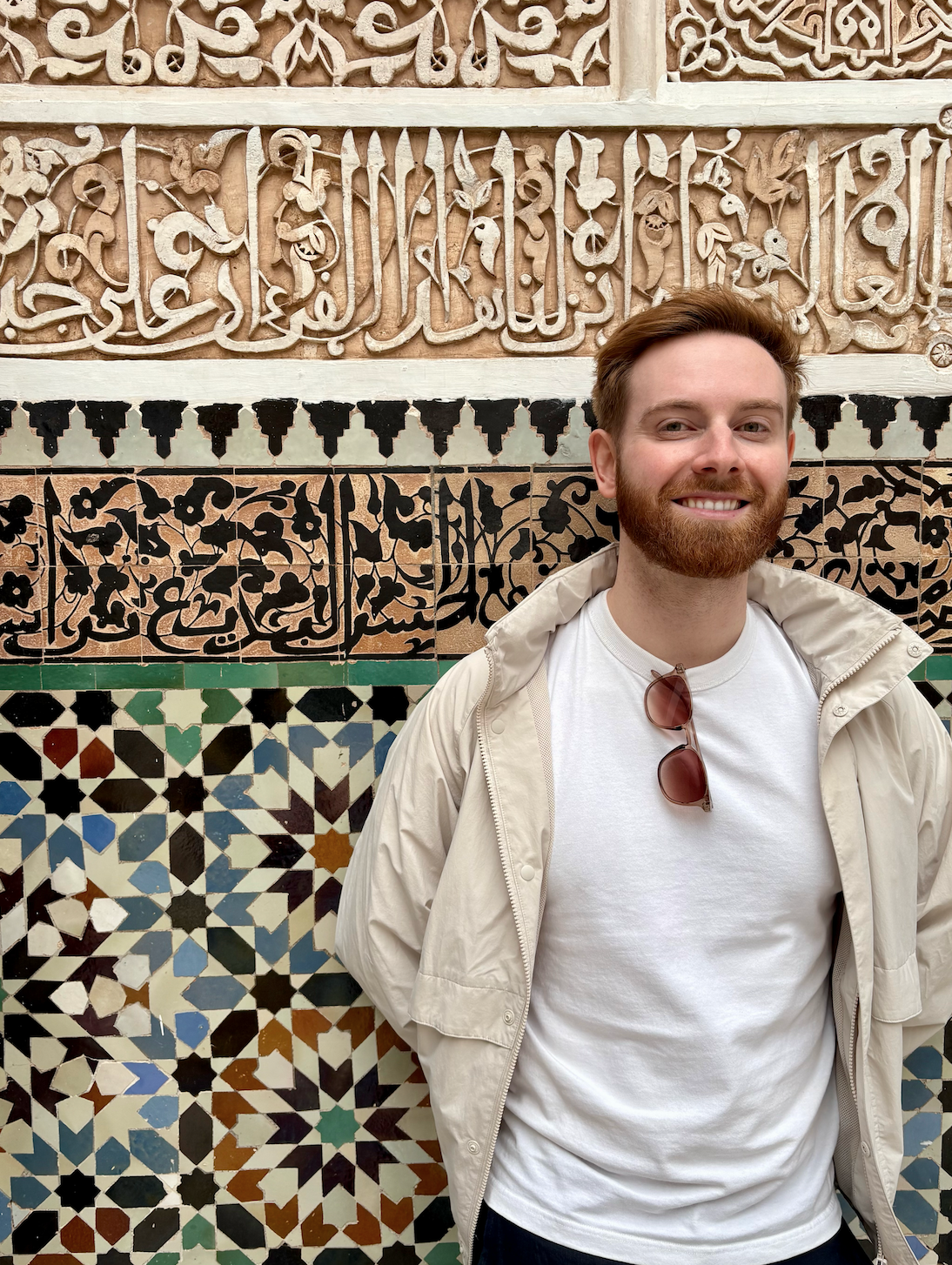
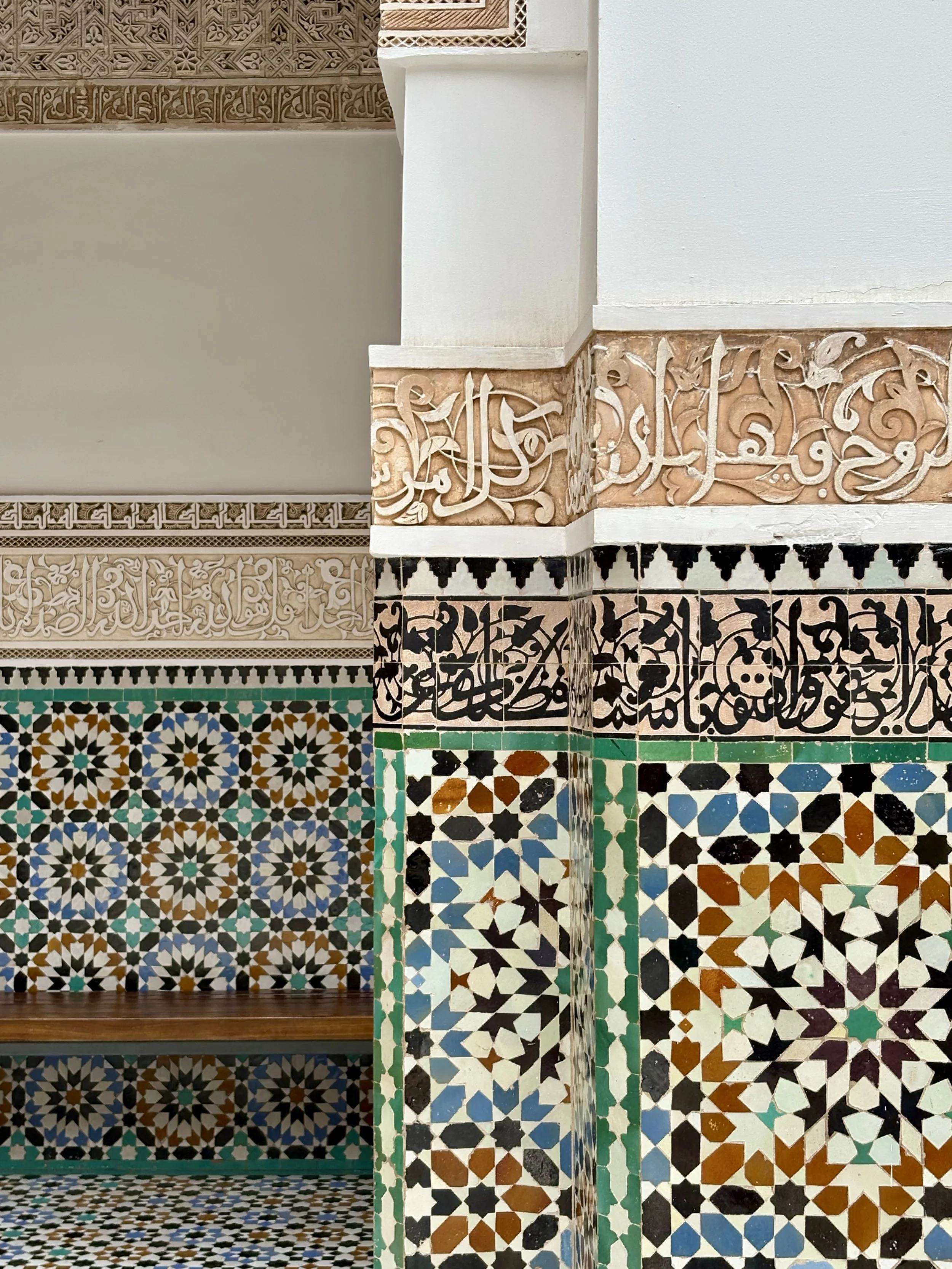
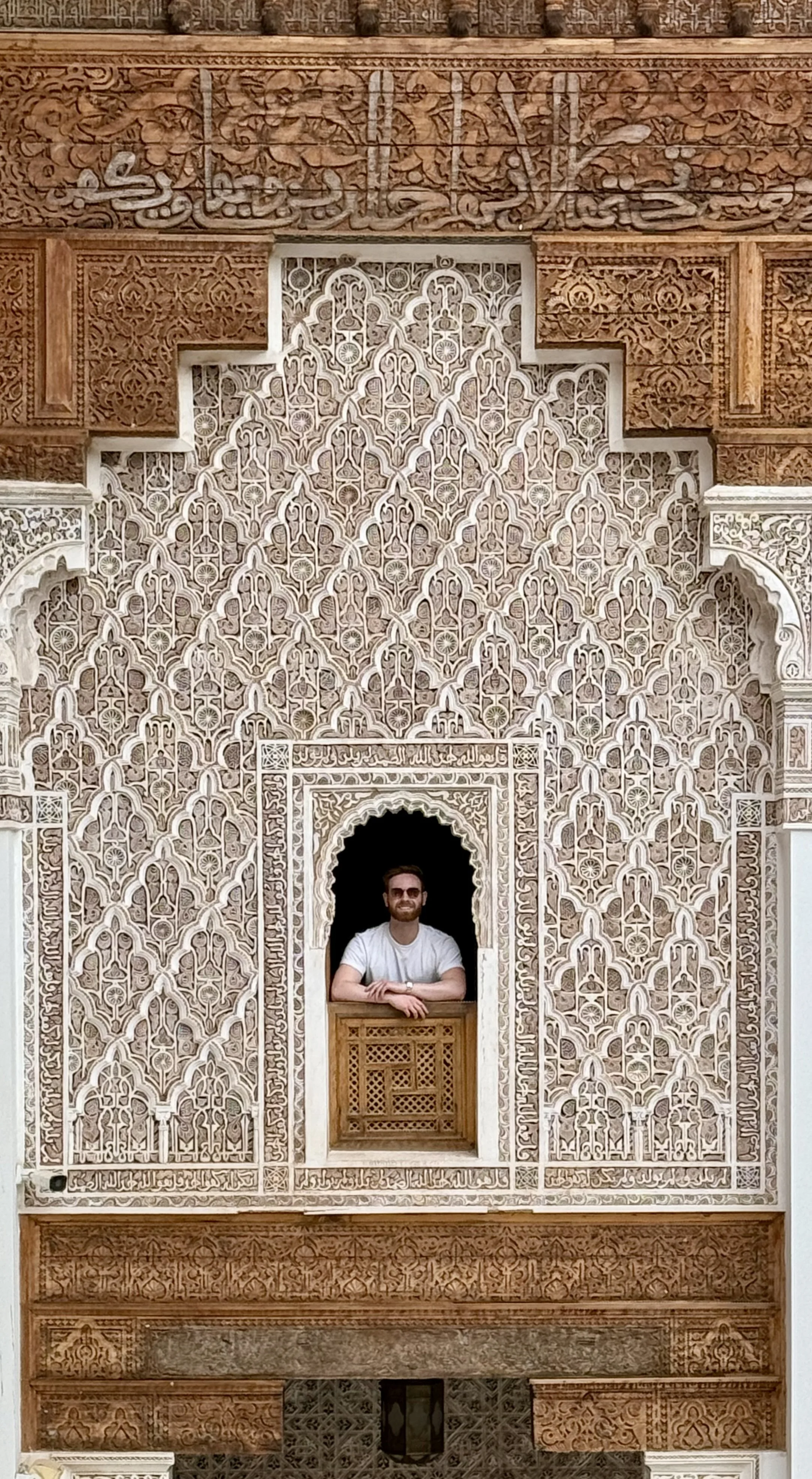
Ben Youssef Madrasa
After that we spent the rest of the afternoon simply being in the medina and exploring the various stalls.
You do not really “tick off” the medina. You absorb it. Leather, spices, textiles, lamps, movement, scooters, shouting, warmth, dust, music. It is chaotic in a way that feels exhilarating at first and slightly exhausting by the end. I am glad I experienced it properly, but I also came away understanding why some people prefer to stay outside it. It really is so much bigger and expansive than I expected it would be.
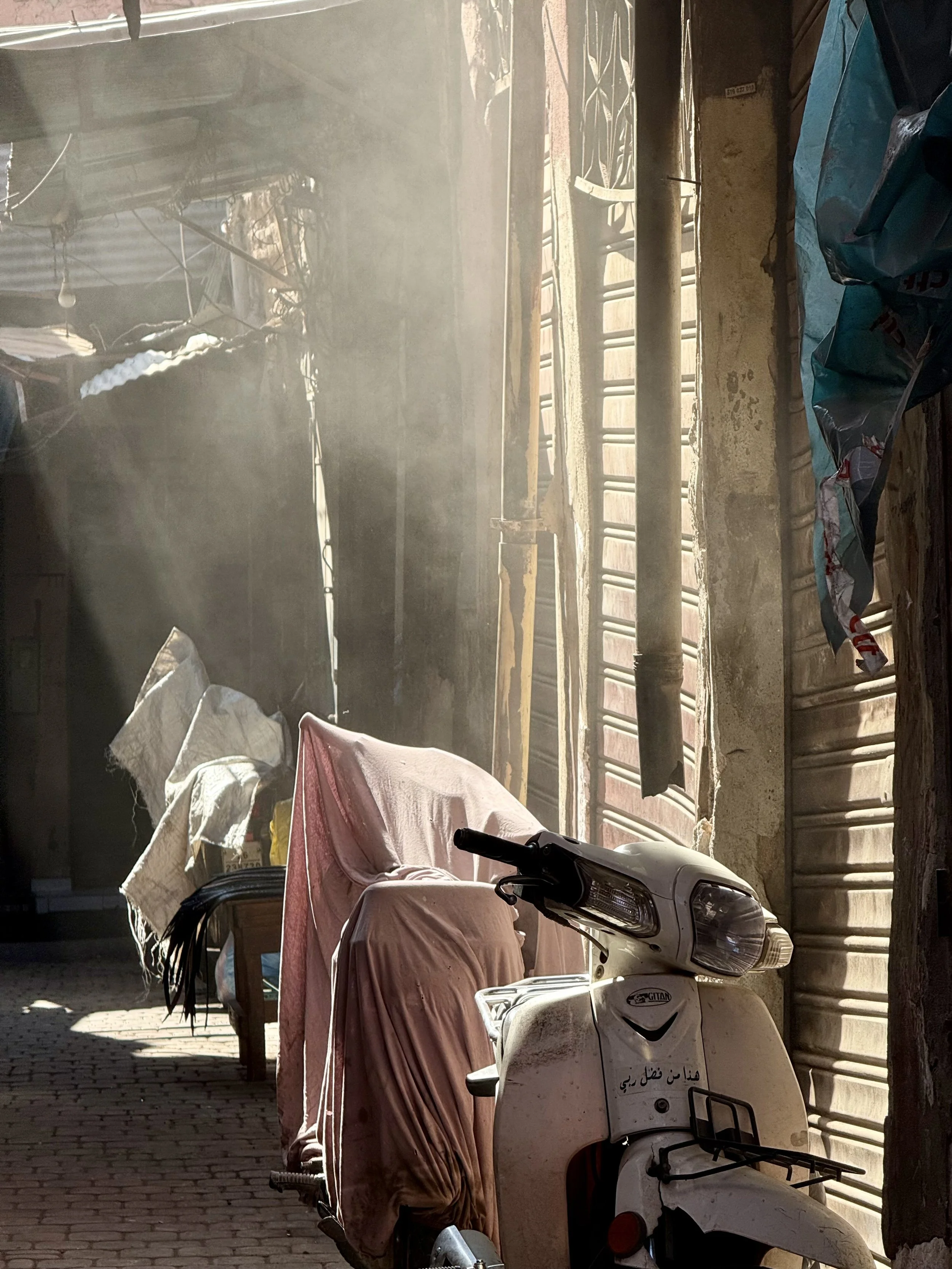
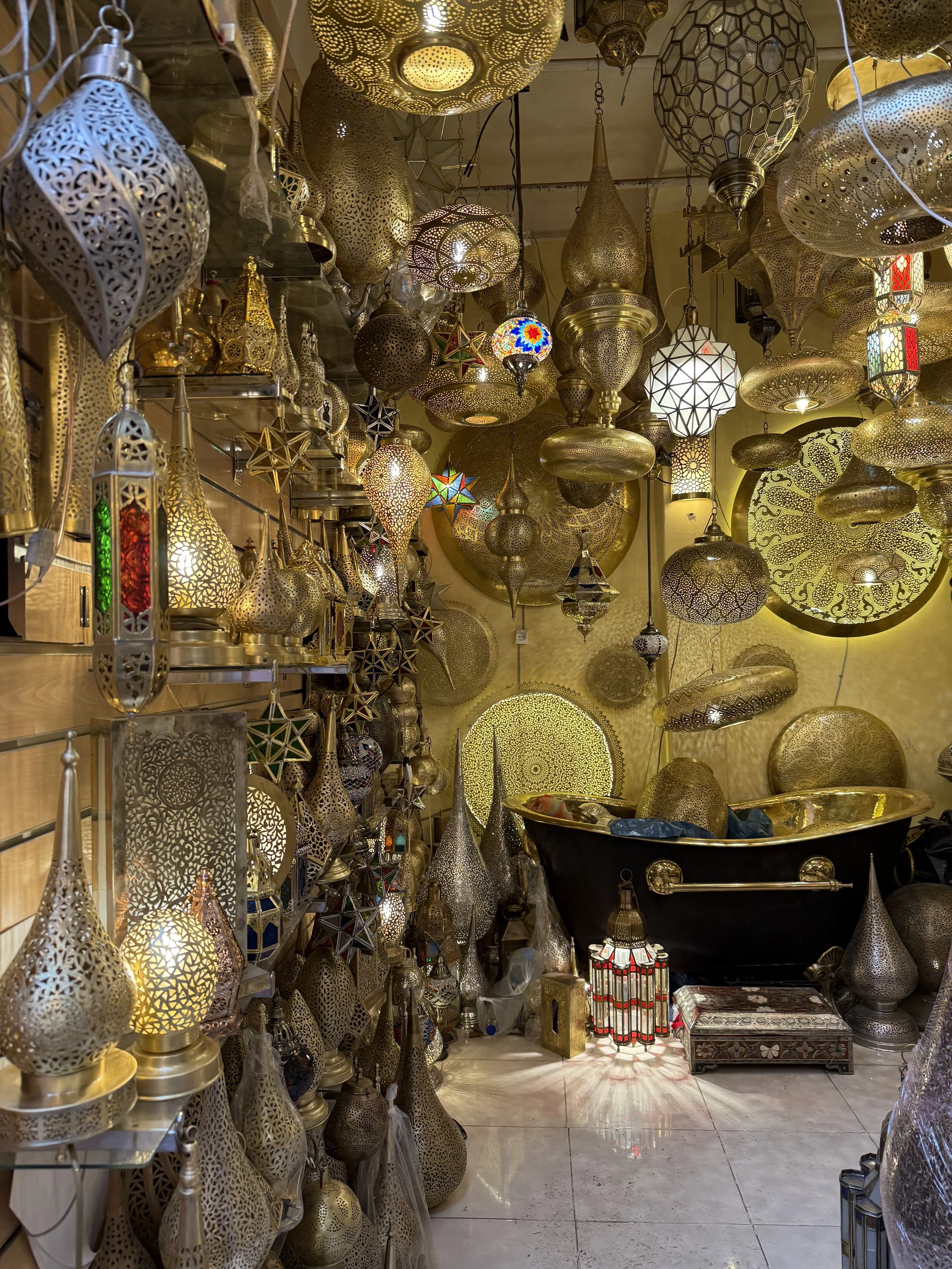
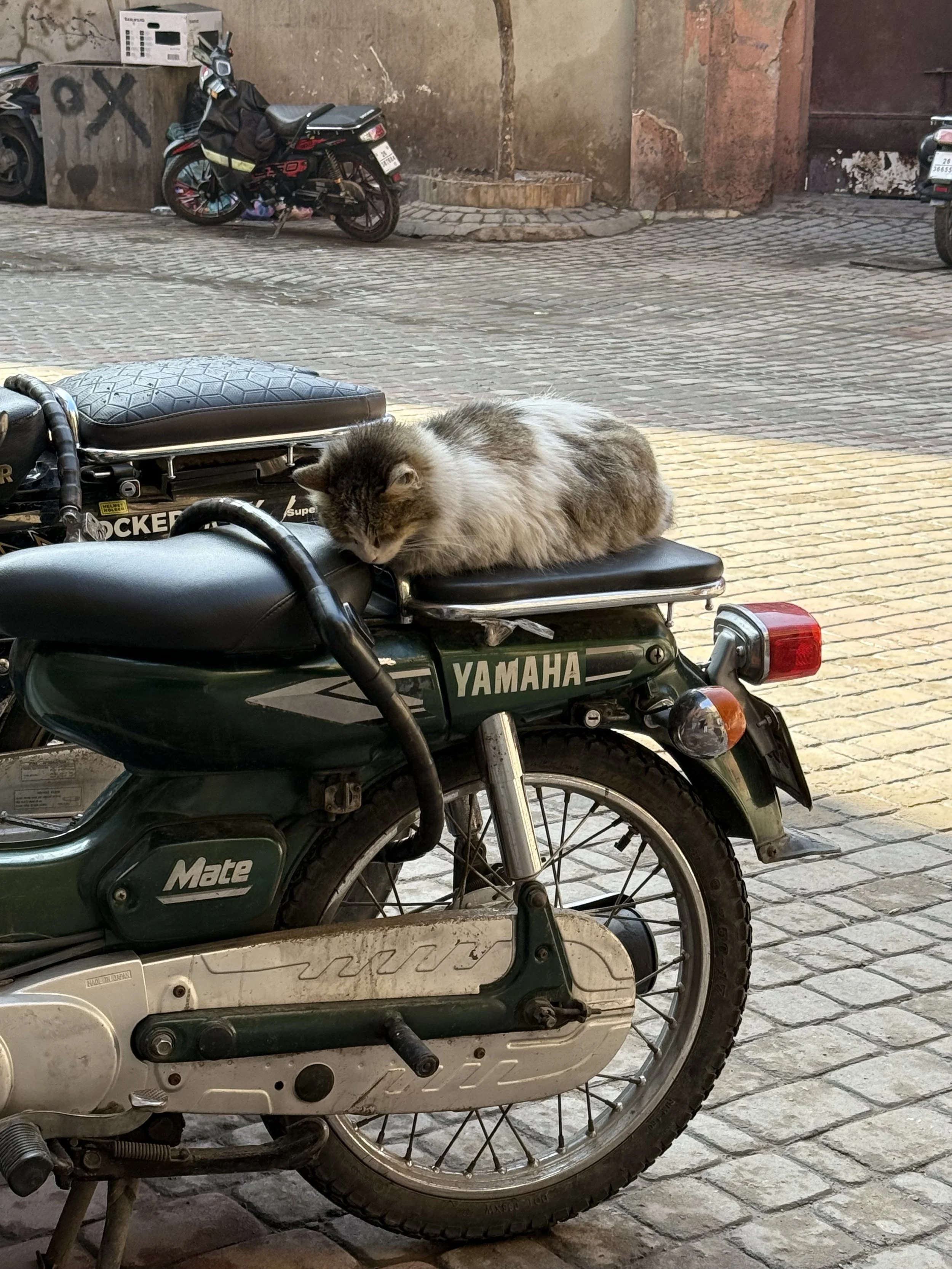
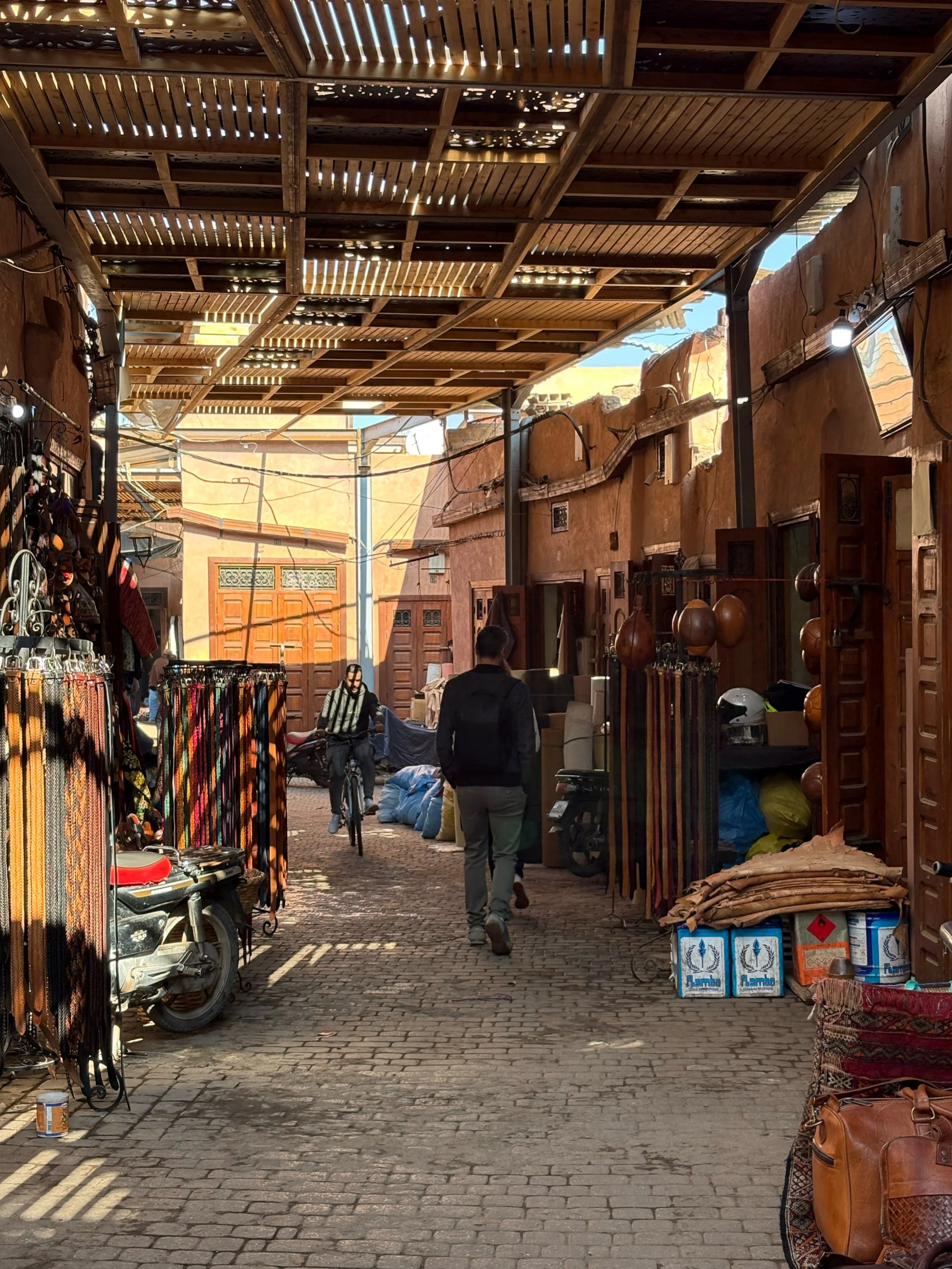
The medina of Marrakech
As evening approached, we made our way towards Jemaa el-Fnaa.
This central market square is where Marrakech’s energy shifts most noticeably. By day, it feels broad, slightly sparse and easier to take in. By night, it transforms — louder, fuller and far more atmospheric. Food stalls appear, smoke rises, music carries, and everything begins to intensify. Given its central location, we found ourselves passing through it multiple times over the course of the trip.
Our visit coincided with the start of Ramadan, and we noticed the atmosphere build even more as iftar approached — a subtle shift that made the transition into evening feel more charged and communal.
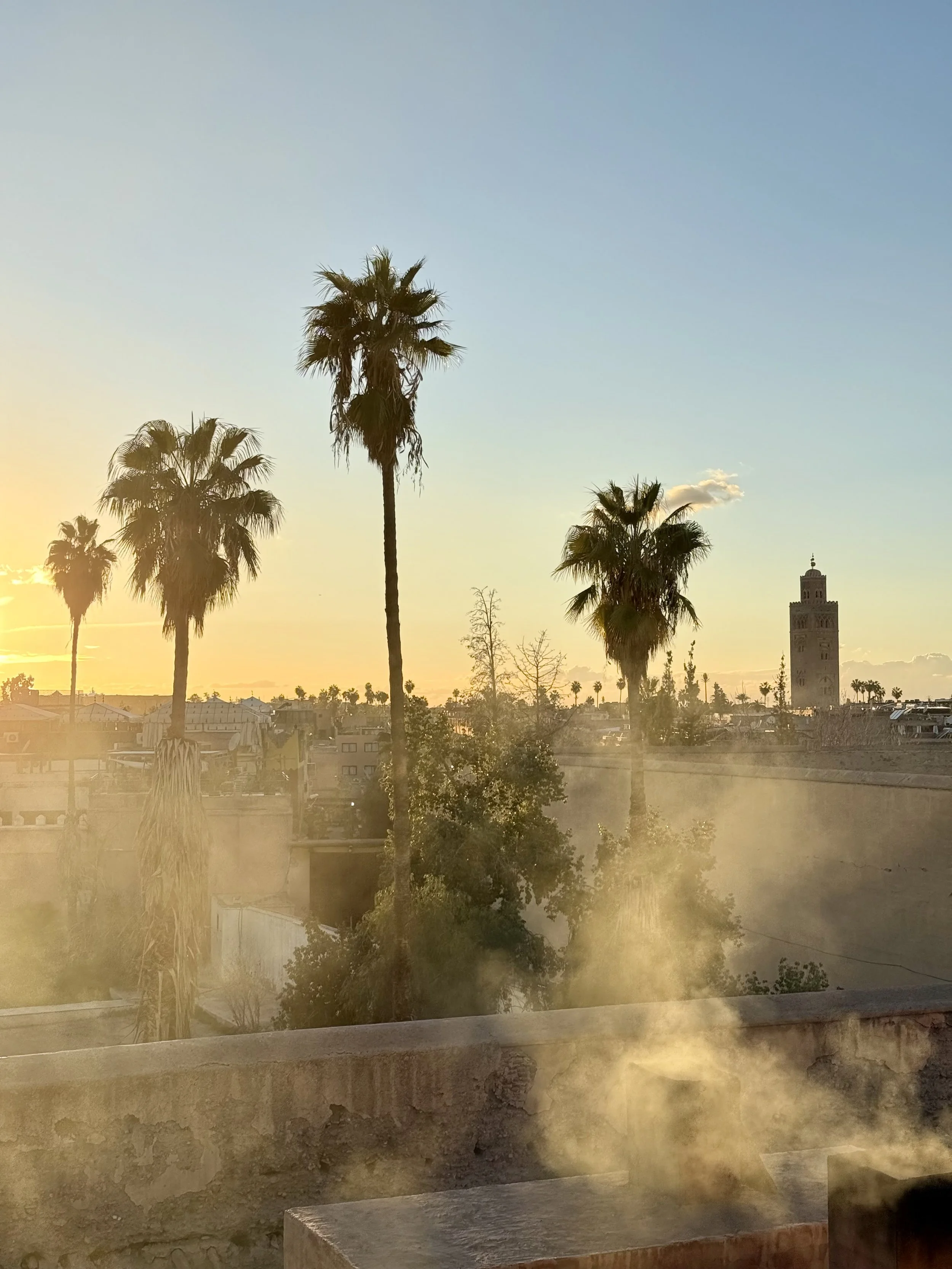
From there, we caught Koutoubia Mosque at sunset, which was one of the loveliest moments of the trip. The call to prayer echoed across the city as the light softened, and for a brief moment, everything seemed to slow.
Koutoubia itself is best experienced from the outside — an architectural landmark rather than an interior visit — so there’s no entry to factor in.
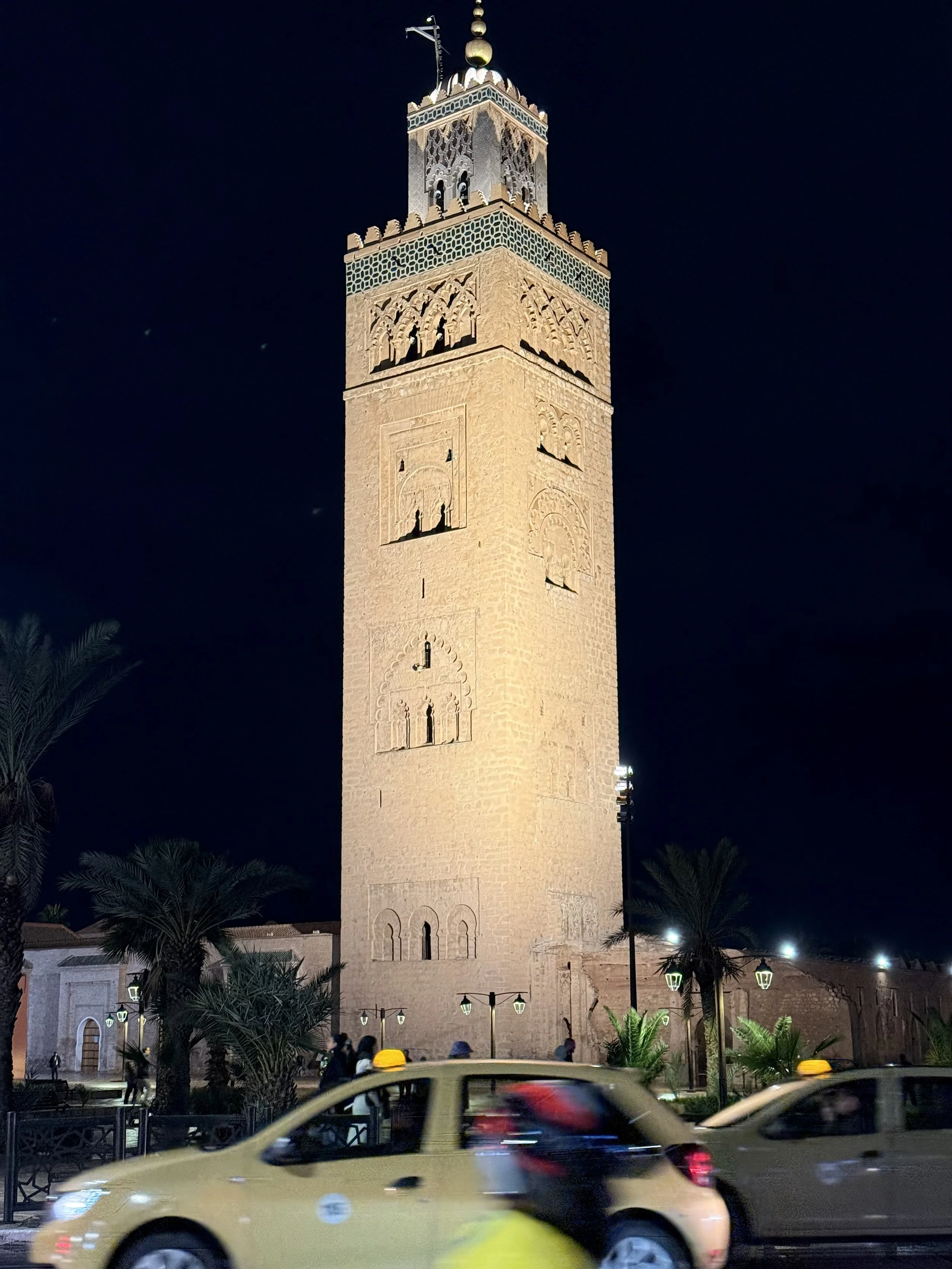
Koutoubia Mosque - the centre point of the city
We then walked over to Kabana for dinner. To be honest, I found Kabana a bit overrated. It was stylish and the food was good - maybe a bit on the expensive side, and it lacked the sense of place I wanted for our first dinner in the city.
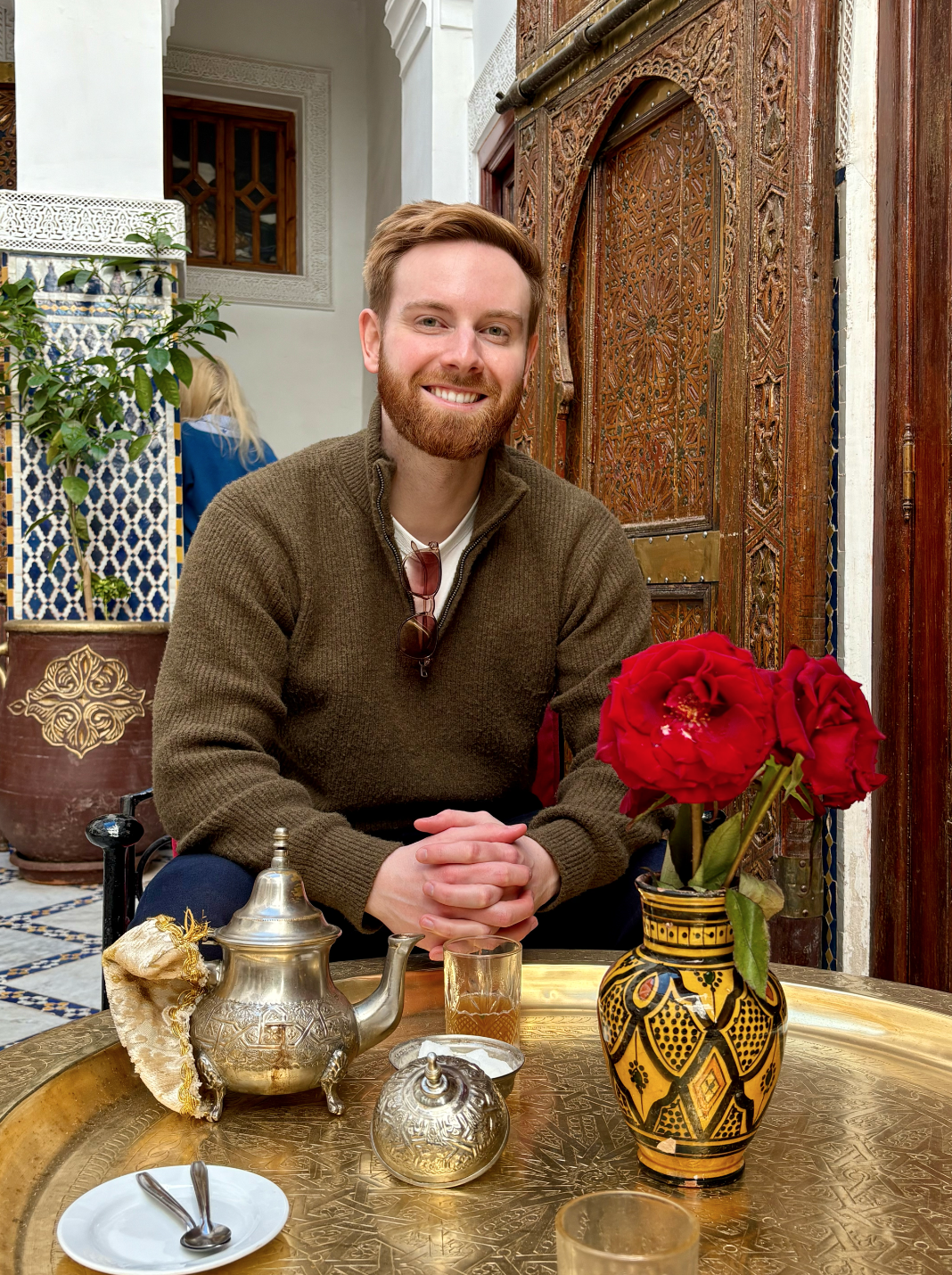
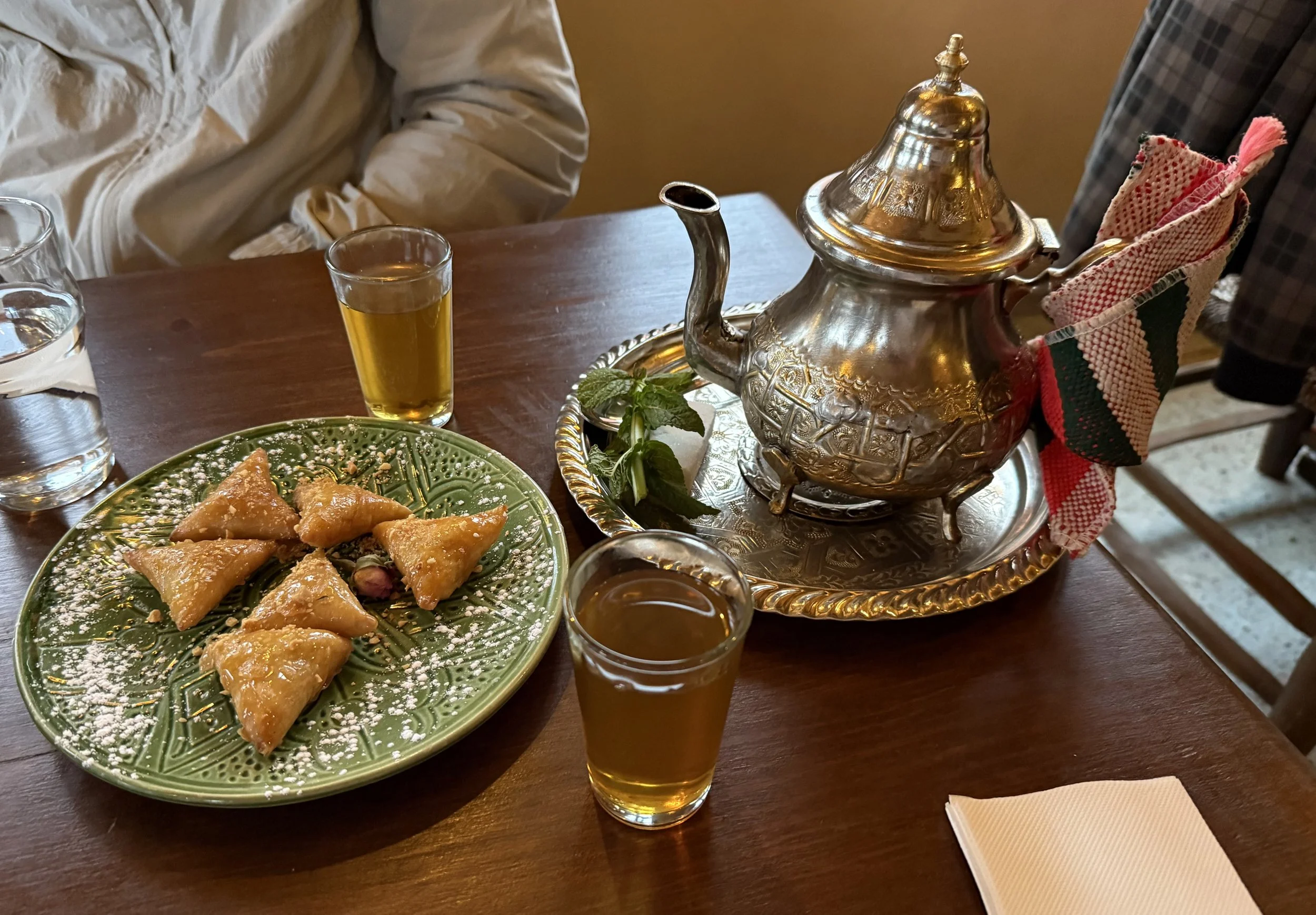
From there, we walked over to Le Salama on the way back to the hotel. Here, we had our first Moroccan mint tea - which quickly became one of my favourite things about the trip.
I drank an absurd amount of it while we were there. There’s something about the whole ritual — the theatrical pouring, the small glasses, the sweetness balanced with fresh mint — that slows everything down. Paired with a plate of Arabic pastries, it became one of those simple moments that felt quietly perfect.
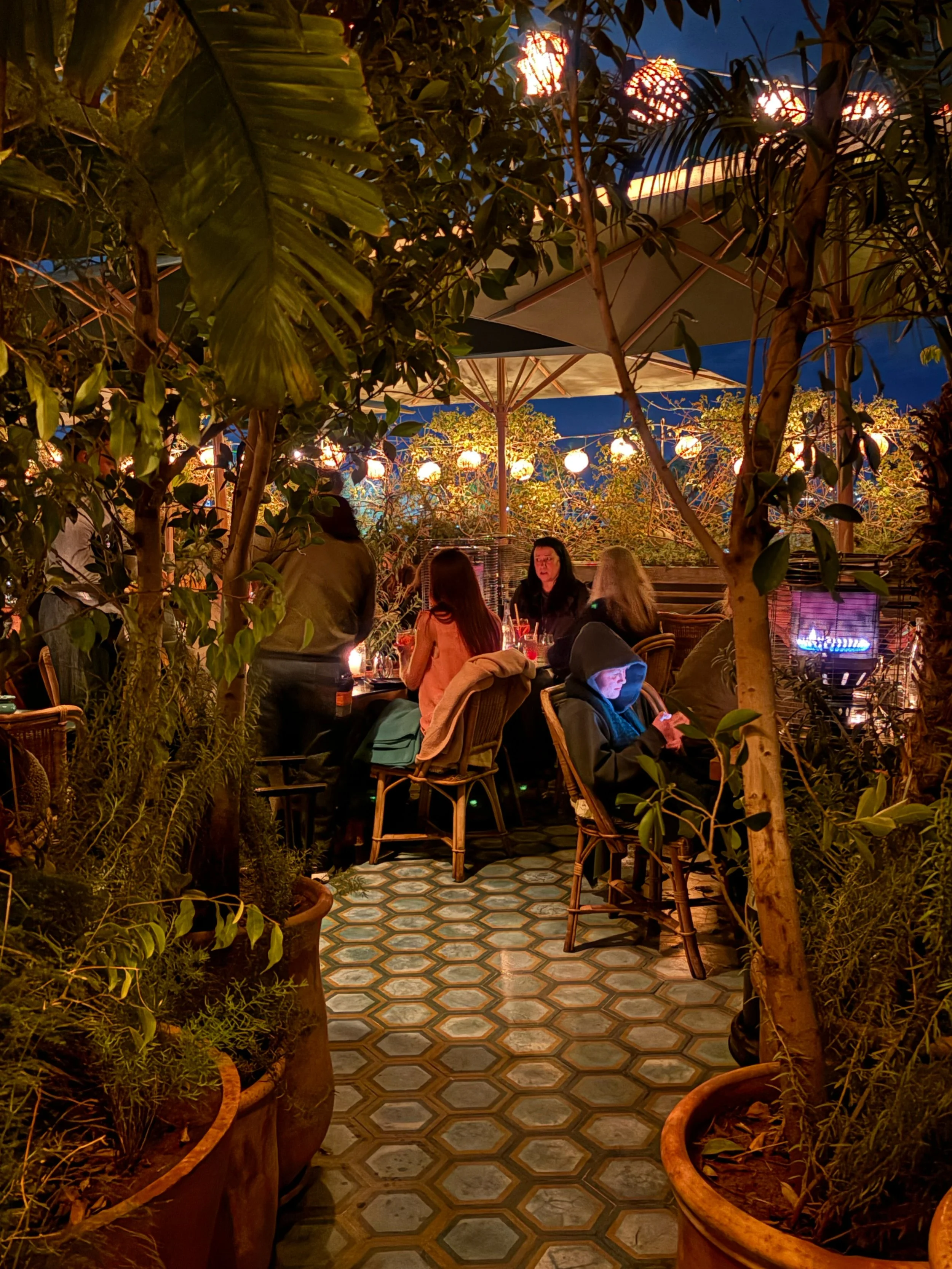
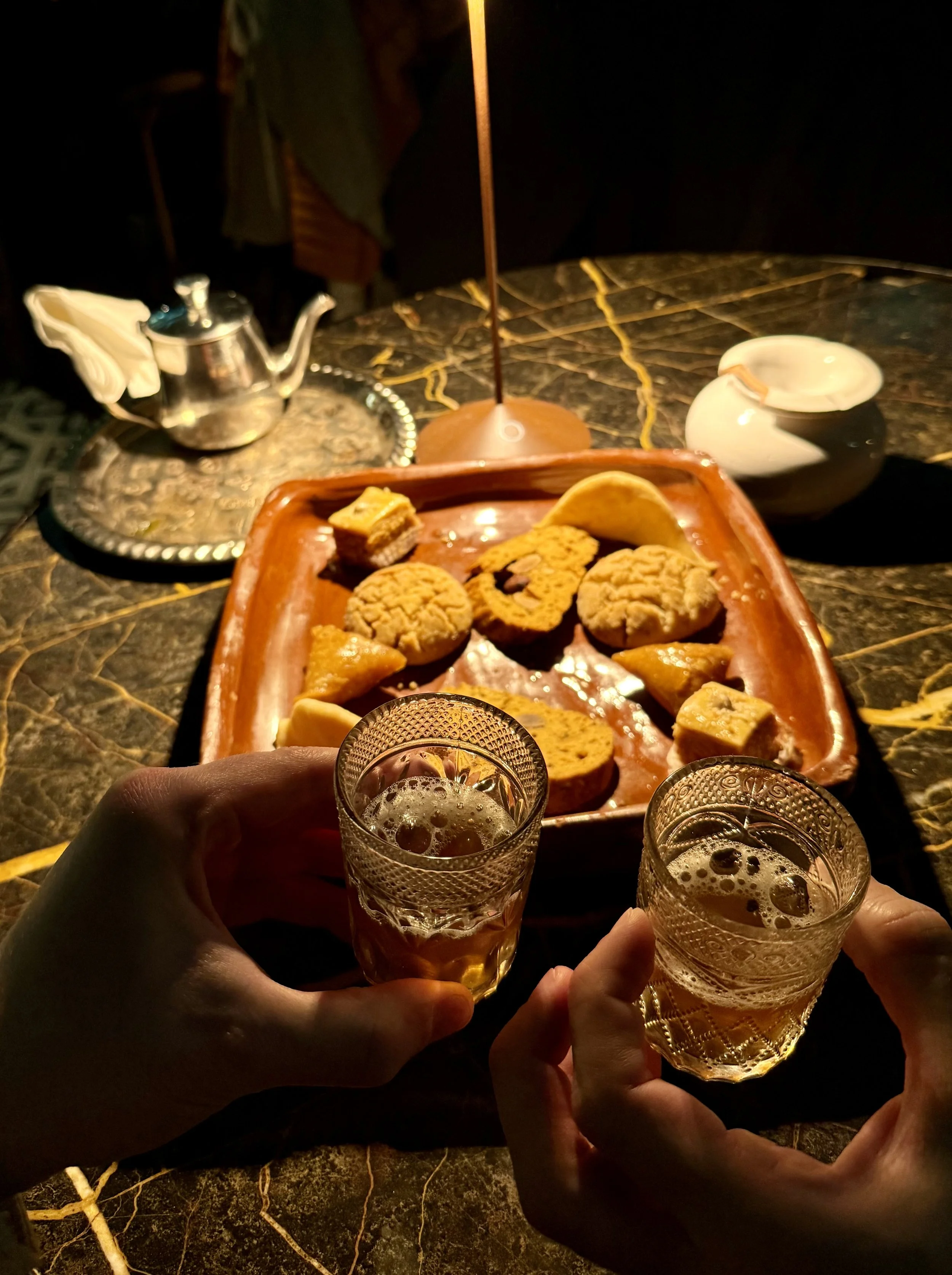
Kabana Restaurant (left), Le Salama mint tea and pastries (right)
DAY 2: JARDIN MAJORELLE, YSL, CAFE MEDINA ROUGE, BAHIA, EL BADI, KASBAH, MACAAL, AND DAR DAR AT SUNSET
We started with the complementary breakfast at the hotel and then went straight to Jardin Majorelle by taxi as it is outside of the medina. This cost 30MAD and took 10 minutes (expect to do some negotiation on price!)
This is one place where I really would recommend going as early as possible. We went for 7.30am ahead of doors opening at 8am. It is one of Marrakech’s most famous sights, and for good reason, but it gets busy. The garden opens daily from 8:00am to 6:30pm, last entry 6:00pm. Going early gives you a much calmer experience and lets you appreciate the planting, colour and layout before it gets too crowded. As we left at about 9am there were huge queues outside.
Jardin Majorelle is very polished and very composed. The famous blue is obviously striking, but what I liked most was how curated the whole place feels. After the visual noise of the medina, it is like stepping into a controlled composition. It is much more ordered, much more serene, and definitely one of the most photogenic places in Marrakech. However, beware of the influencers! You may be fighting for photo spots.
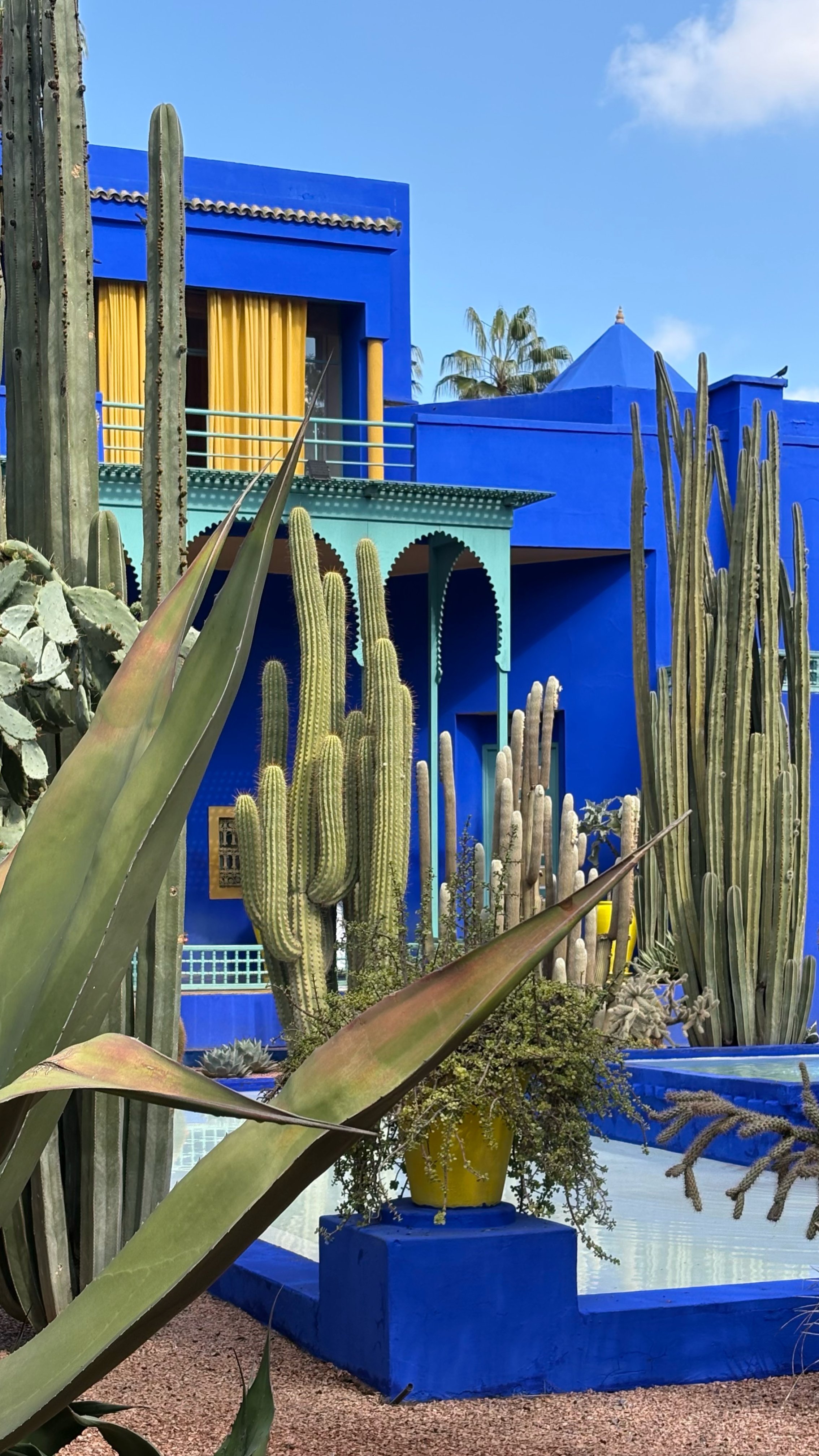
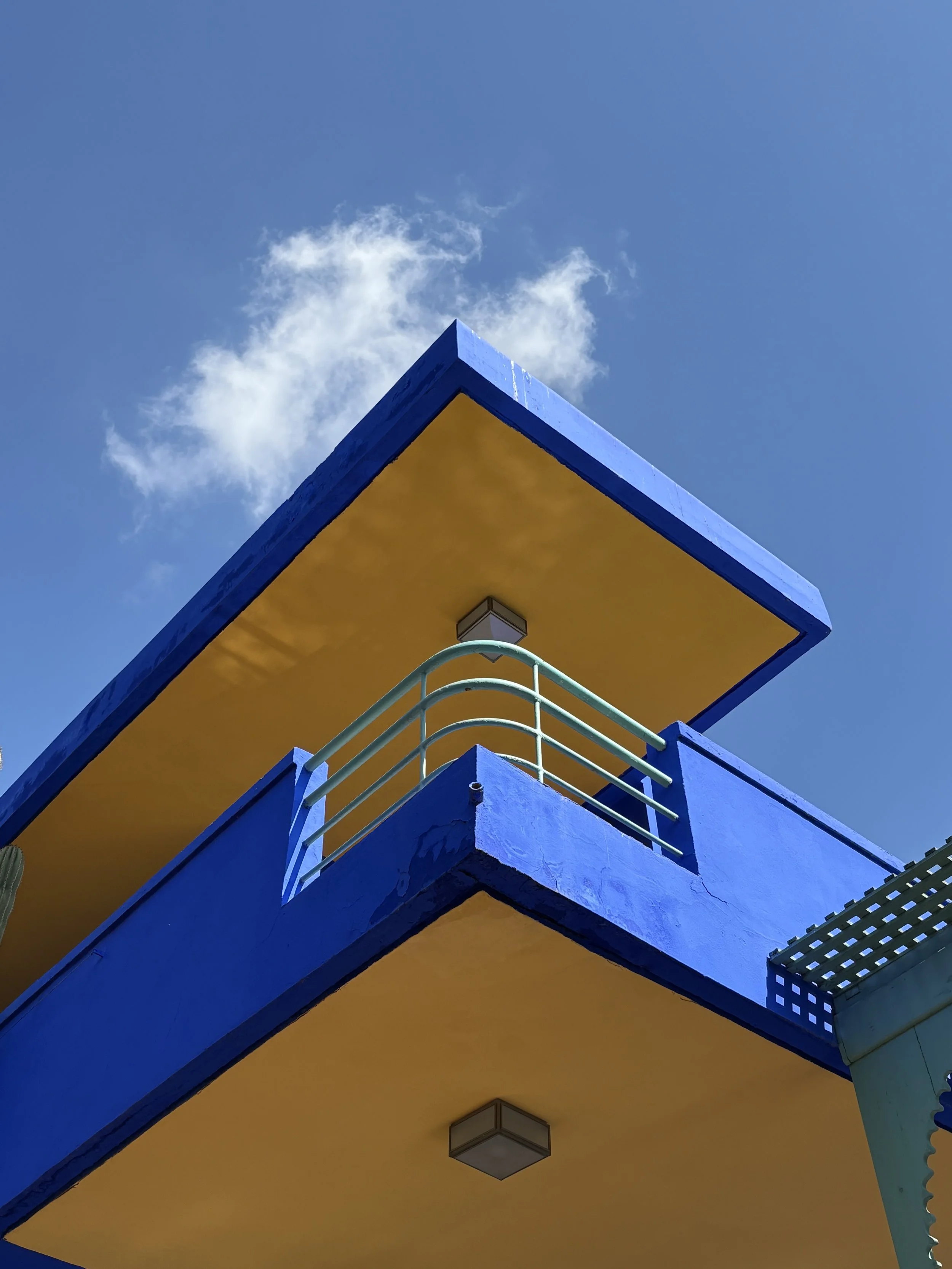
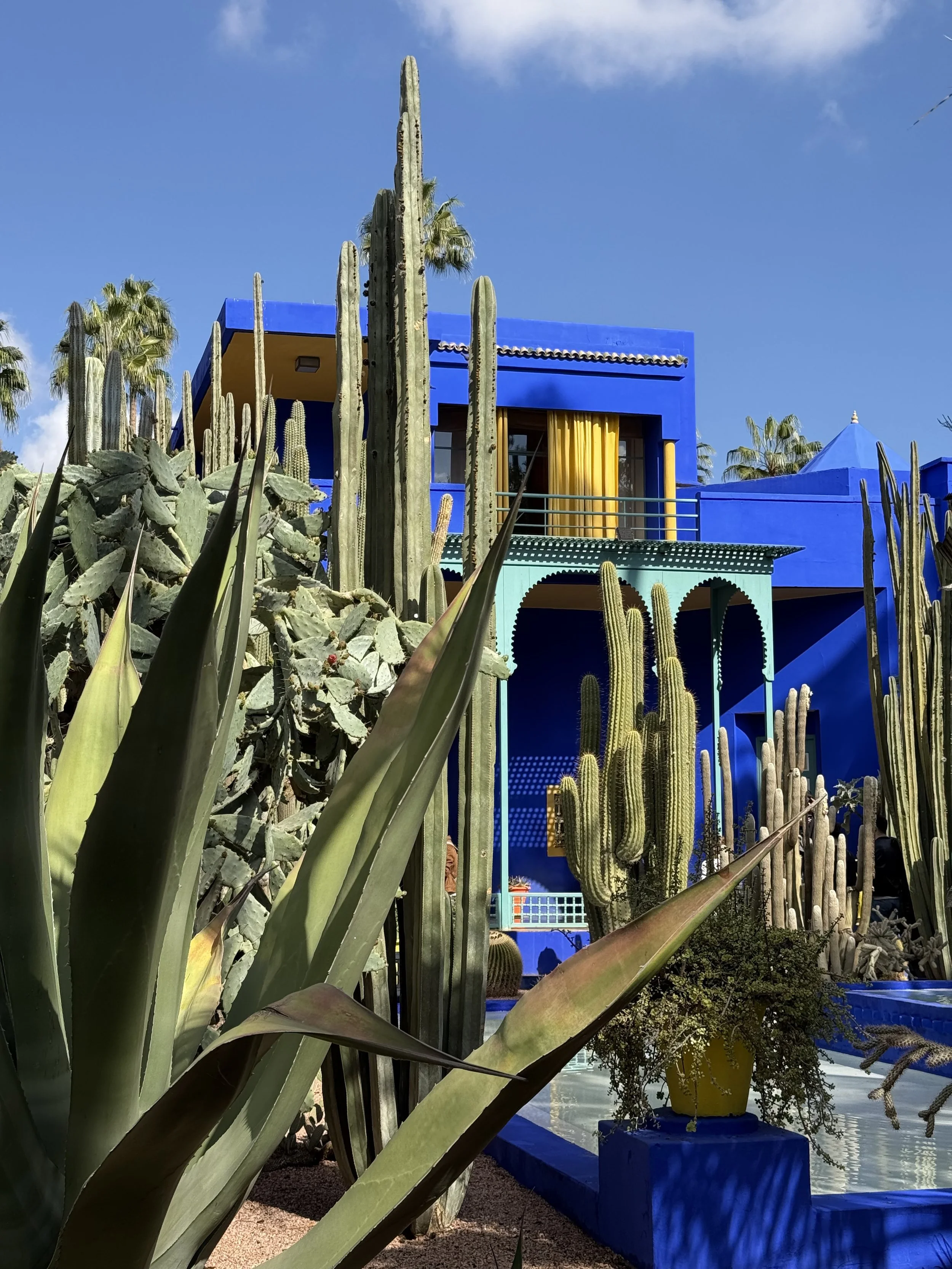
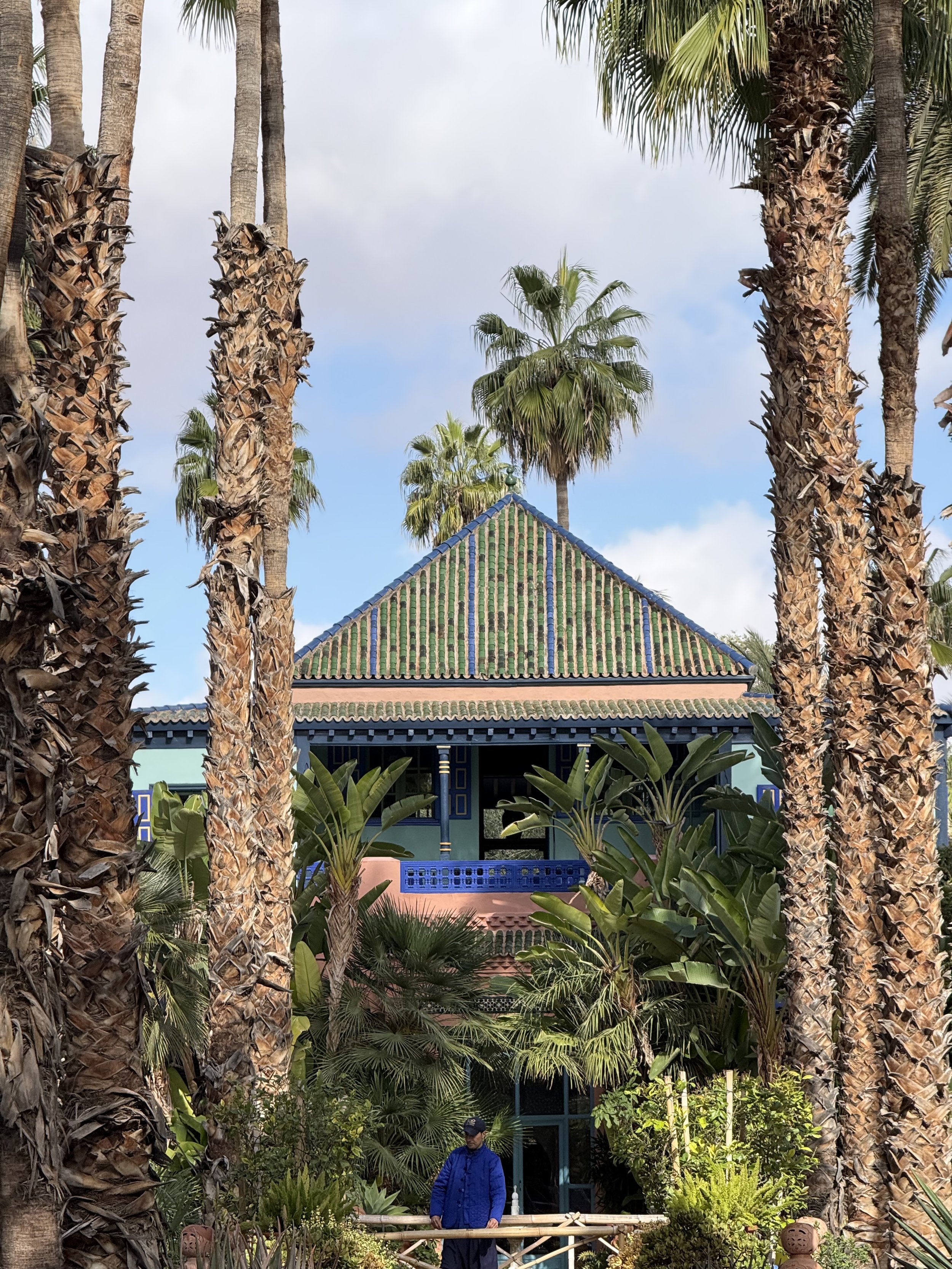
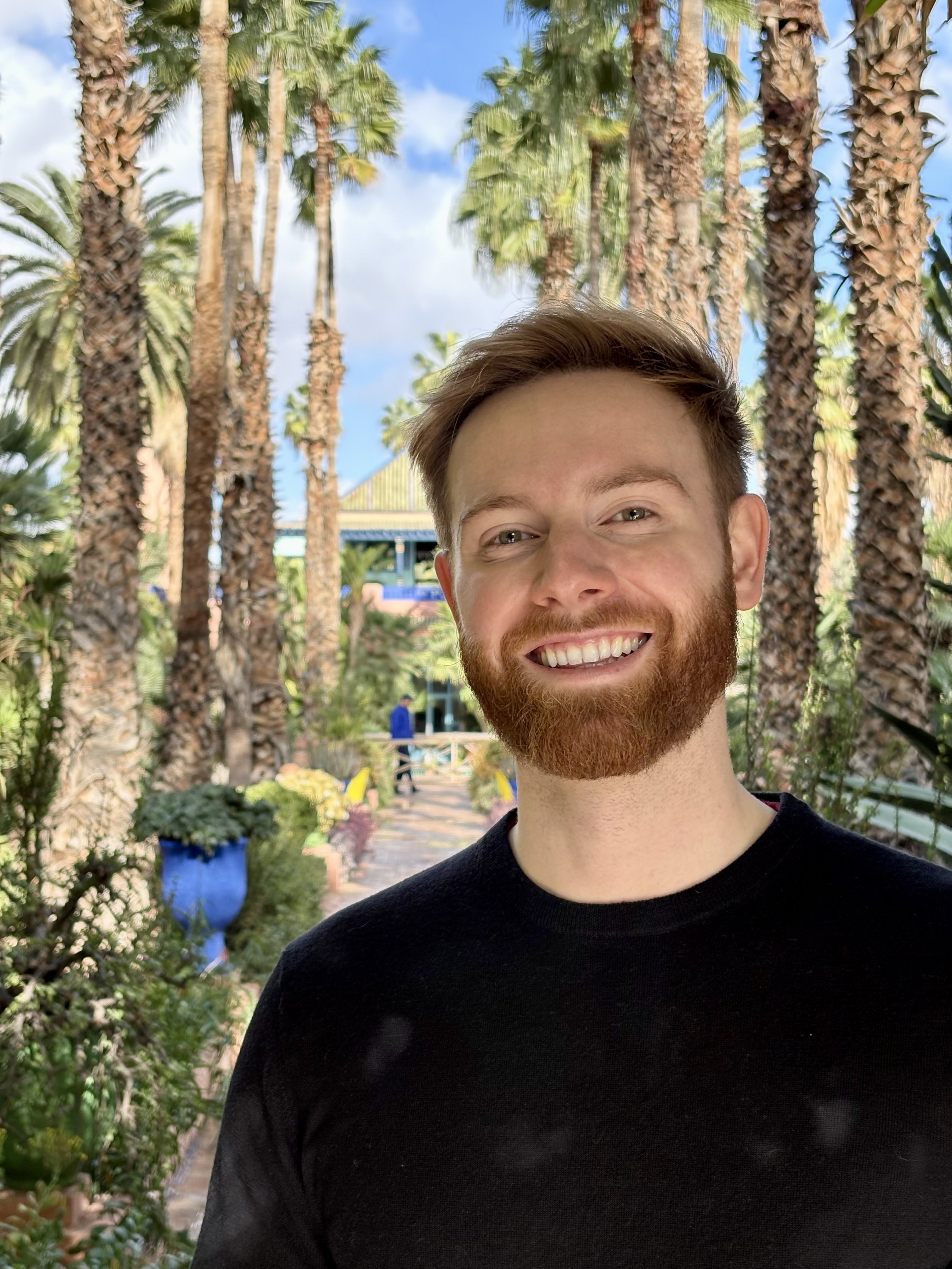
Jardin Majorelle
Right after, that we did the Musée Yves Saint Laurent, which makes sense logistically because it is right next door. The museum is open between 10:00am–5:00pm, with last entry at 4:30pm. Note that it appears to be closed on Wednesdays,
Even if you are not hugely into fashion, this is worth doing if you appreciate design. It adds context to why Marrakech mattered so much to Yves Saint Laurent, and it also continues that polished, aesthetic side of the city. If you are trying to structure your day well, doing Majorelle first, then YSL immediately after, is definitely the right order. You can get a combined ticket up front through Get Your Guide for £34. We spent the whole morning here.
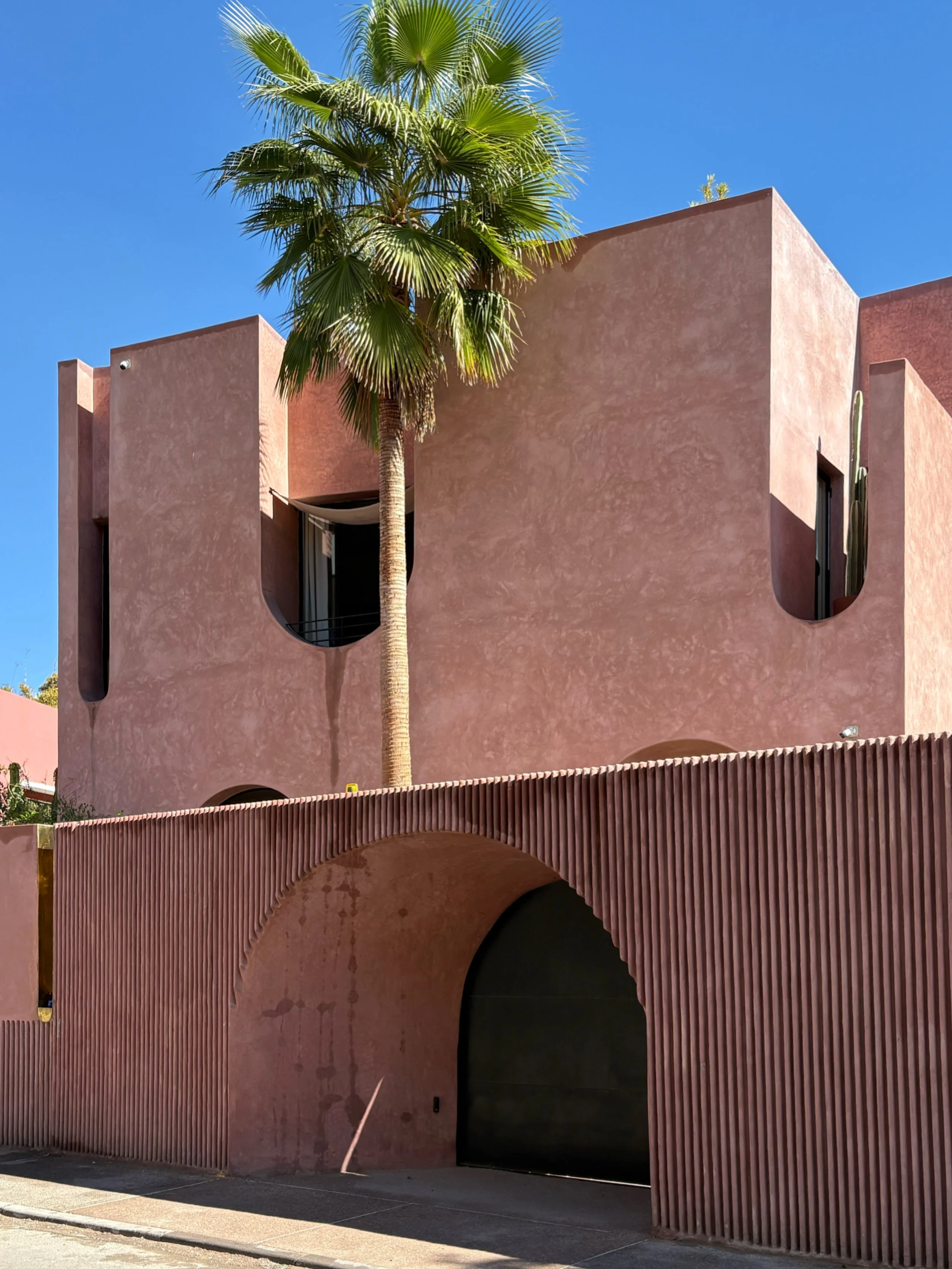
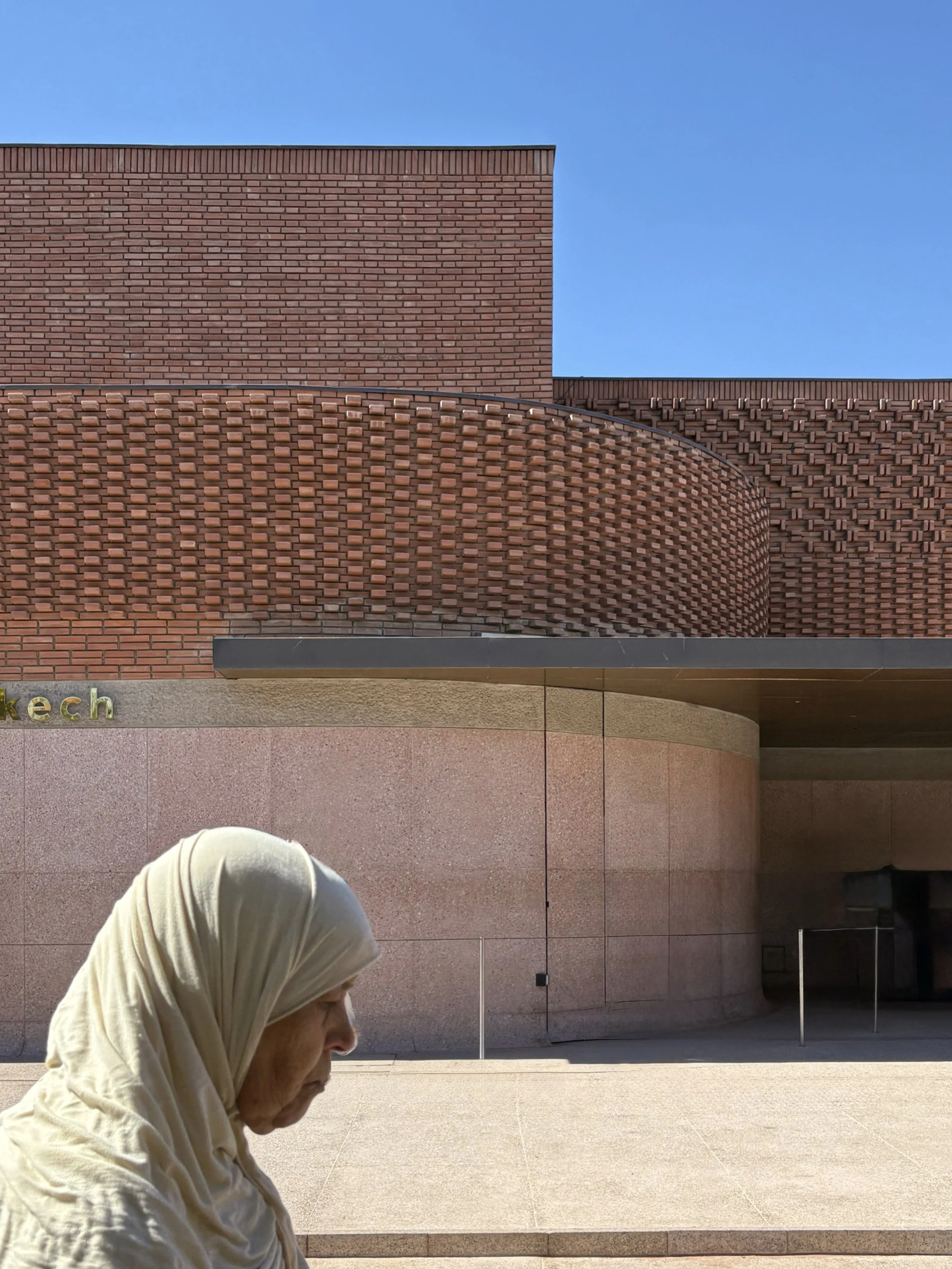
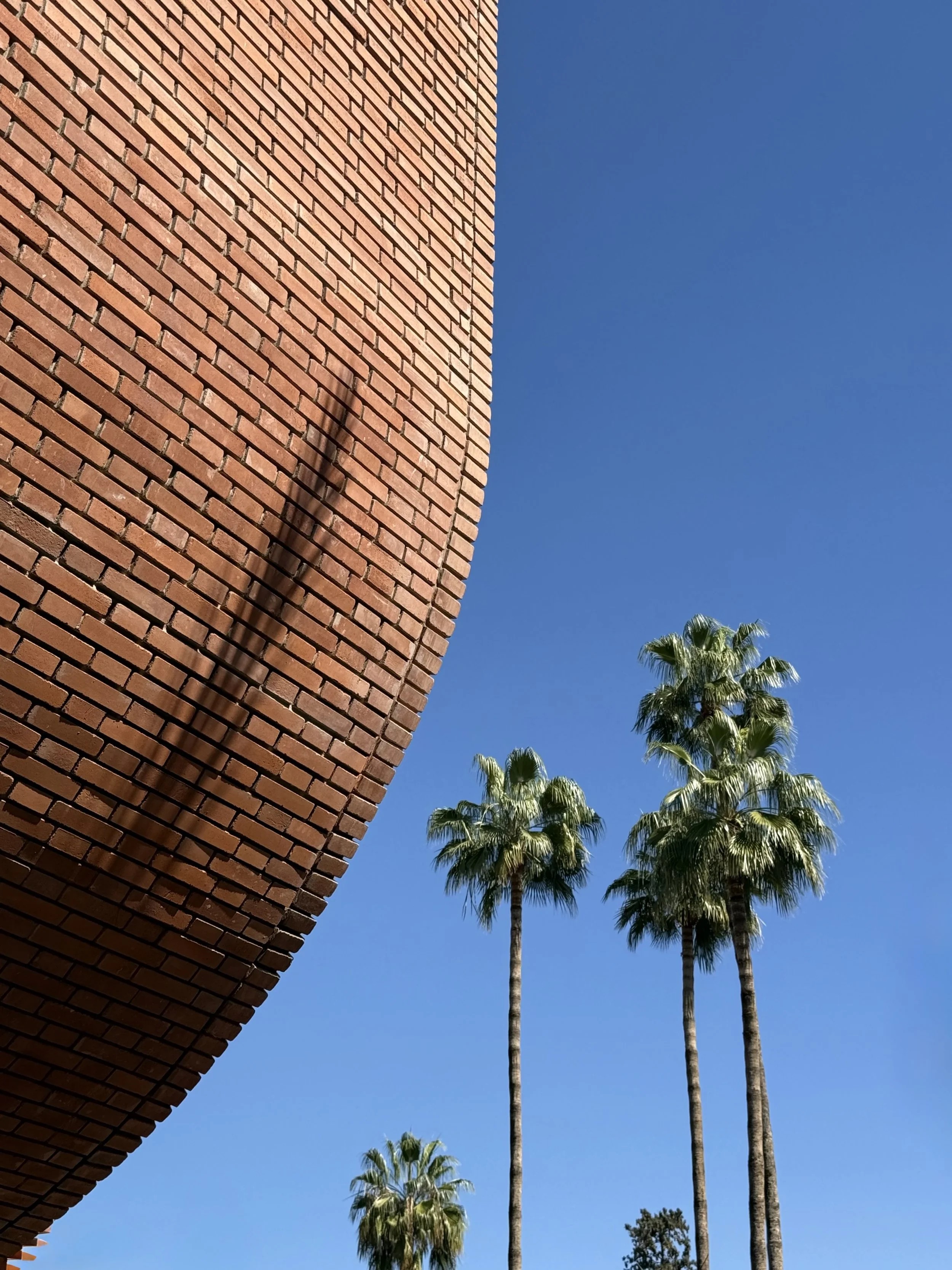
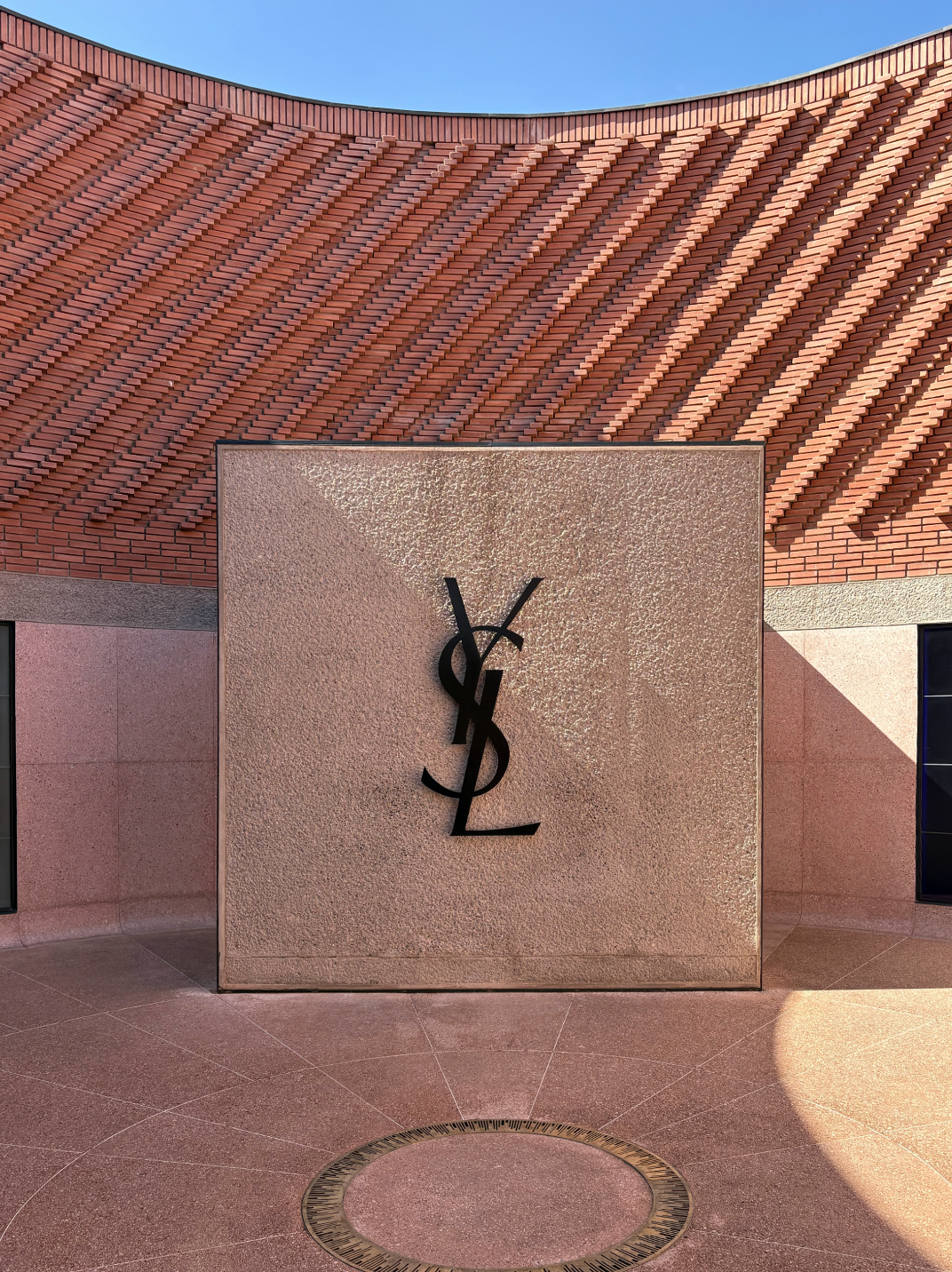
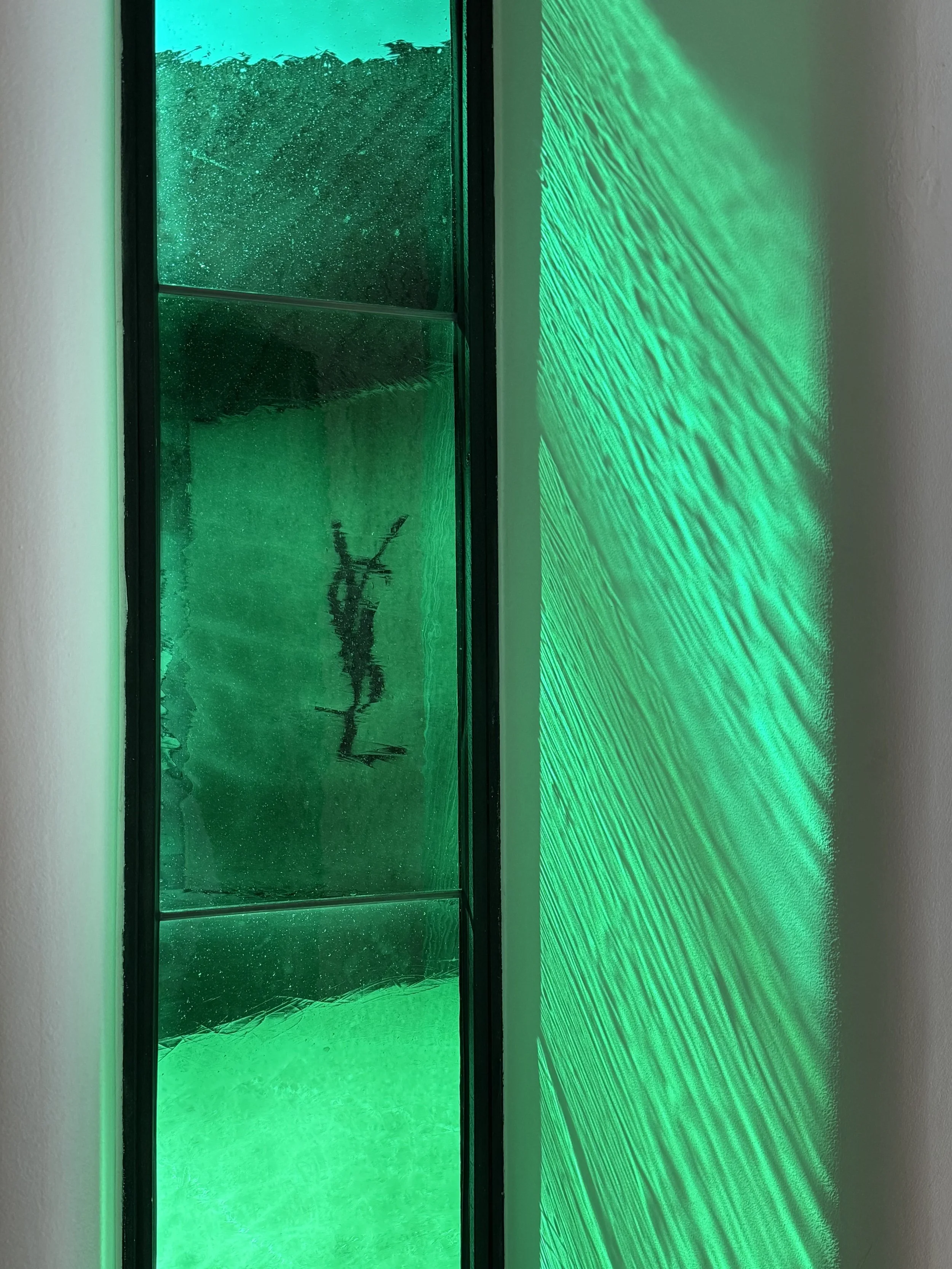
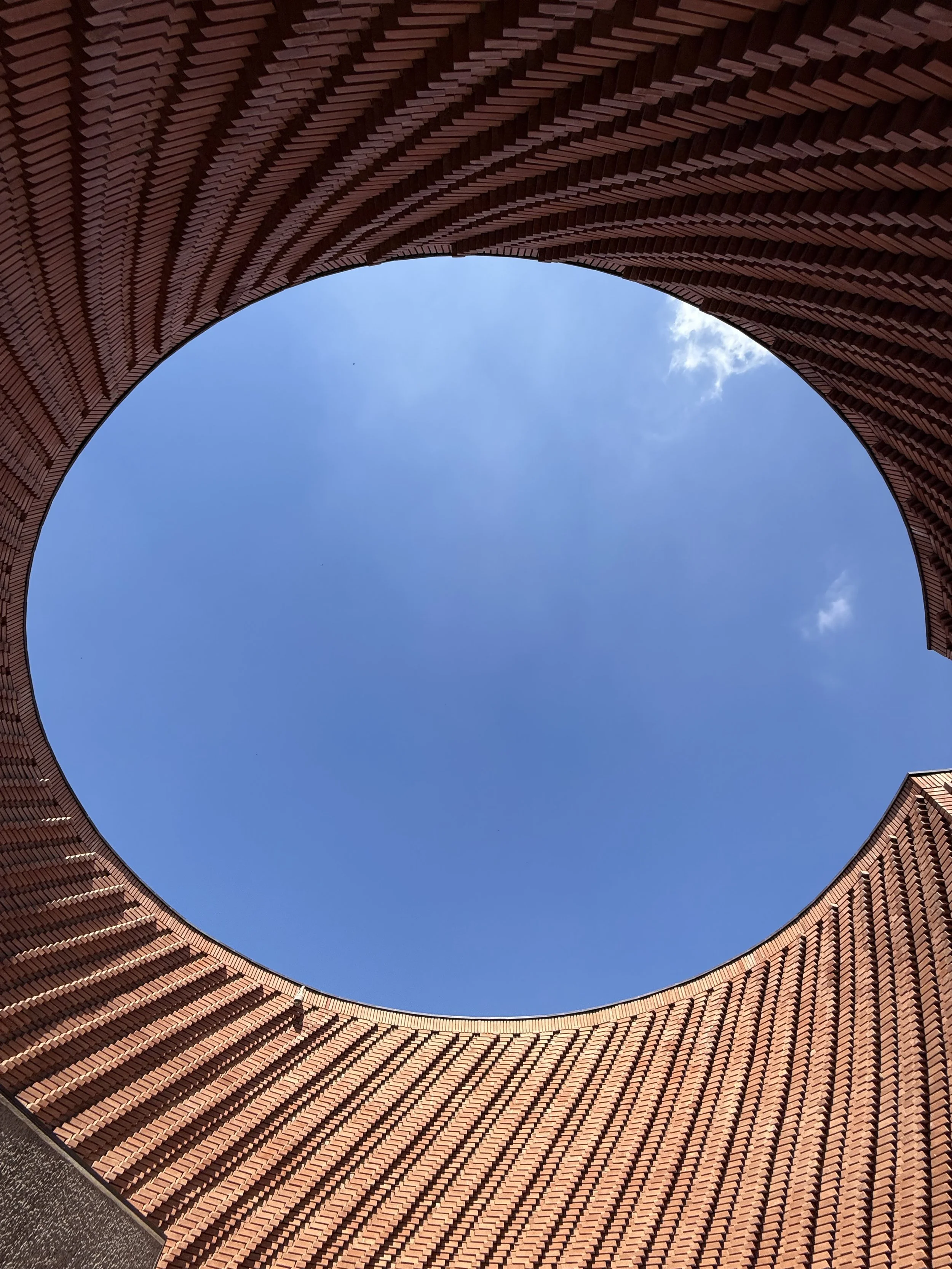
Musée Yves Saint Laurent
After visiting the museum, we spent some time wandering around the fancy local neighbourhood of Guéliz. There are plenty of nice boulevards, shops and cafes to experience here. We stumbled across a small local restaurant and had an excellent lamb tagine. Unfortunately I didn’t record the name of it, sorry! From there we took a taxi back to the medina and stopped at Café Medina Rouge for another beautiful mint tea.
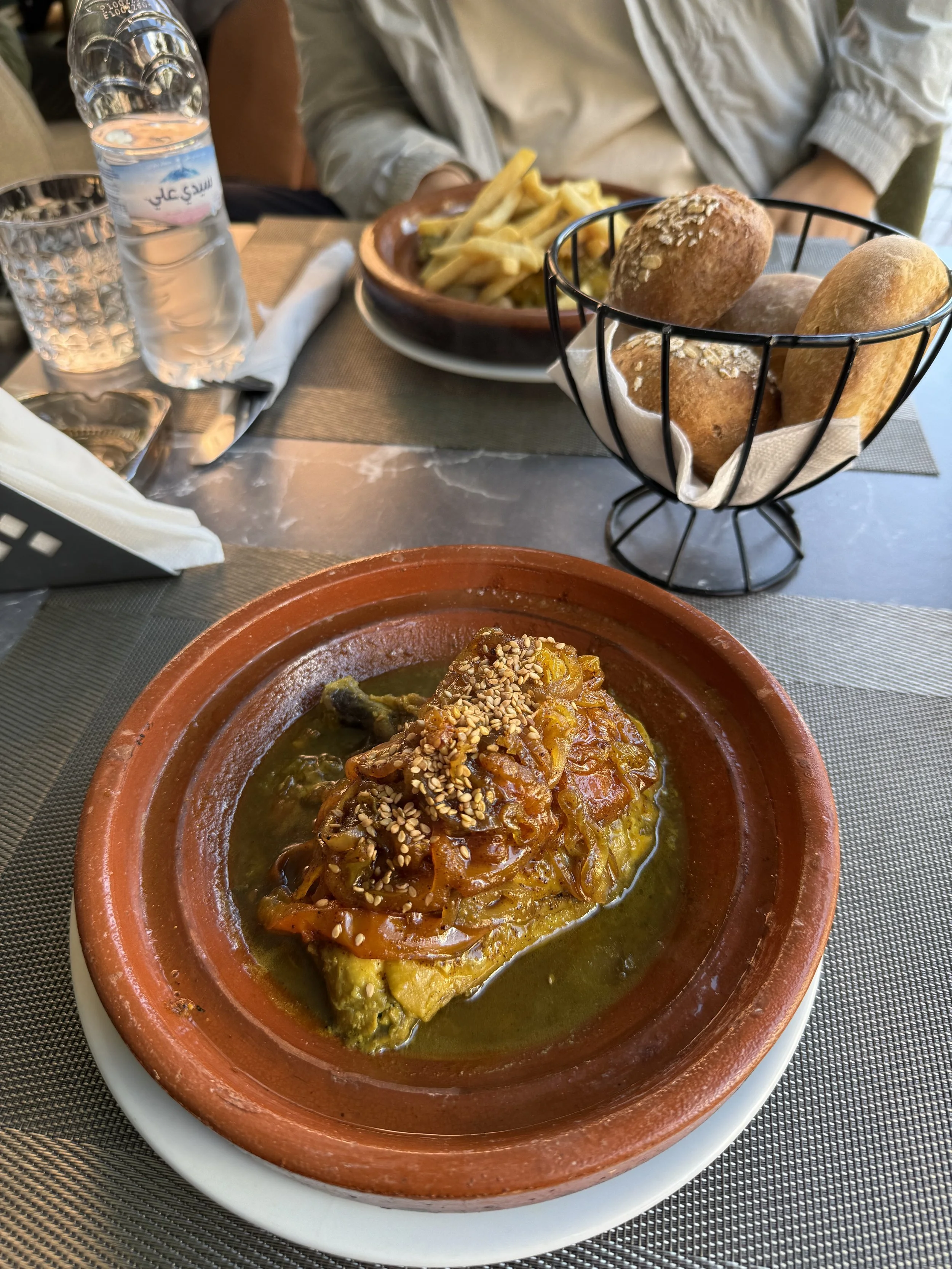
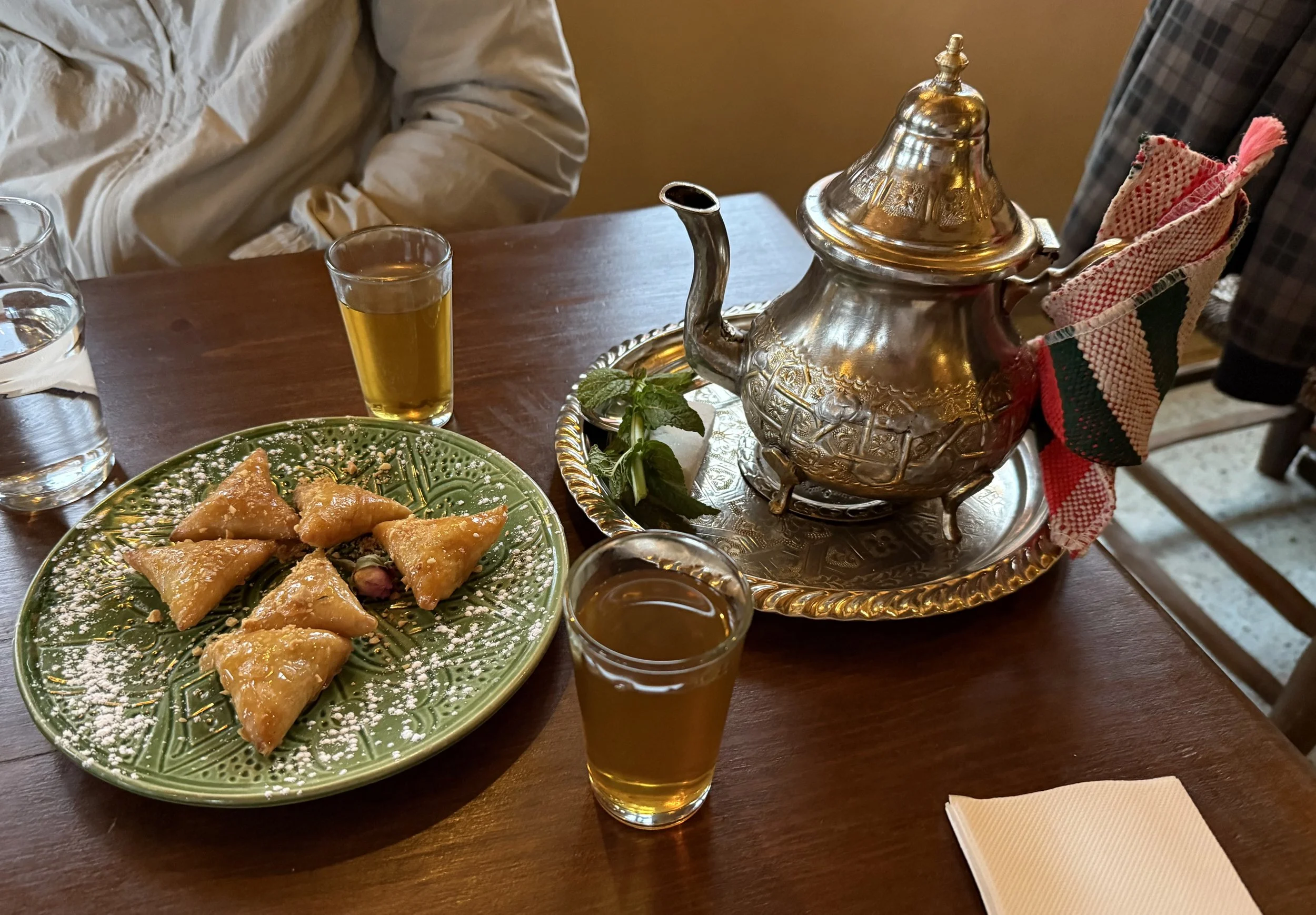
Staples of the Marrakech experience: Lamb tagine and mint tea
In the afternoon we visited Bahia Palace.
Bahia Palace is one of those places that rewards slowing down. It is not just one headline courtyard and then out. It is arguably not as ‘photogenic’ as the other sites, but the appeal is in the detail: painted ceilings, tiled floors, carved wood, proportions, light and shadow. It gives you a strong sense of the decorative richness of old Marrakech.
The queue was relatively long here and so I would recommend to buy tickets up front through Get Your Guide (£10). Entry is between 8:00am–5:00pm.
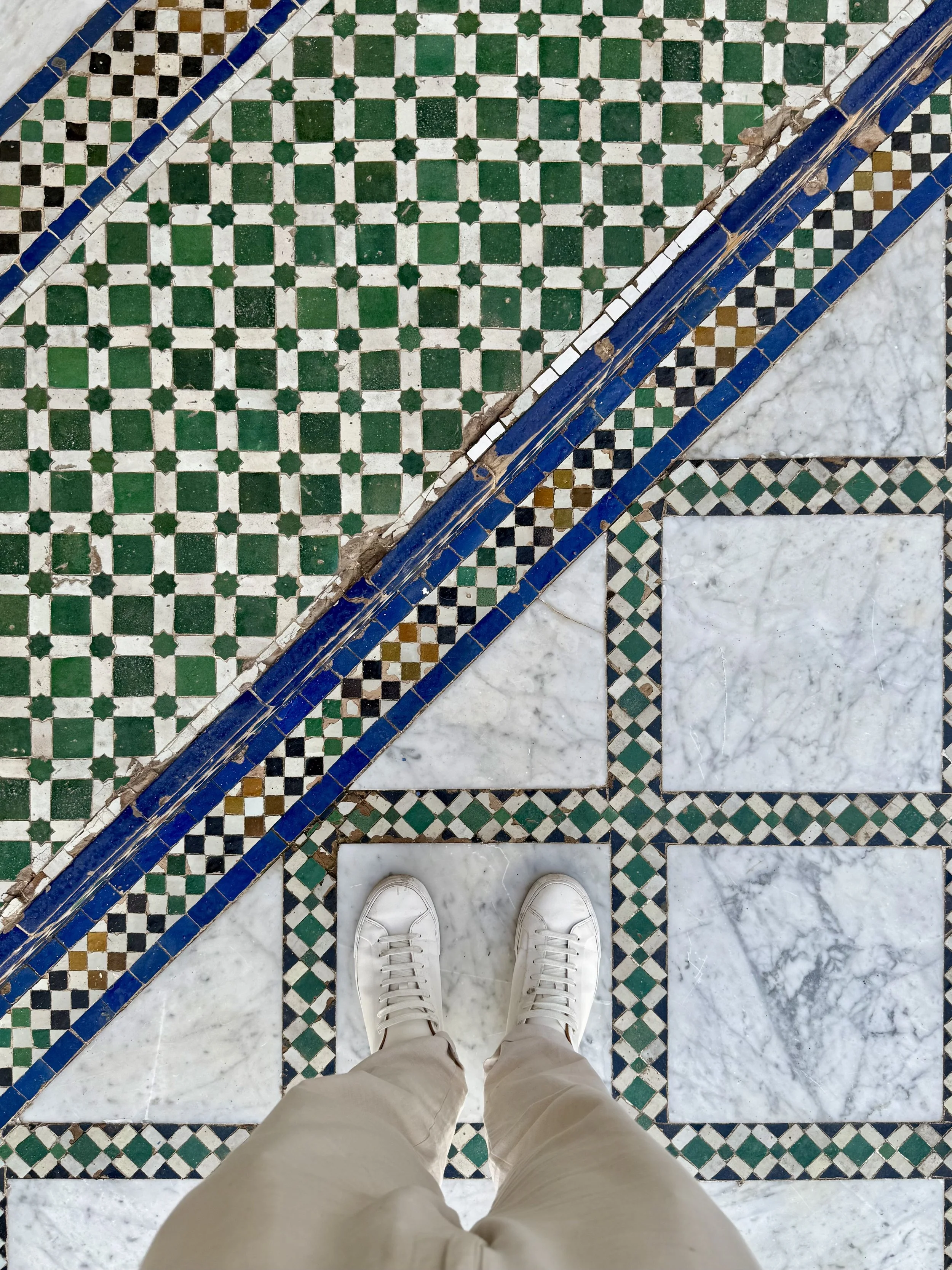
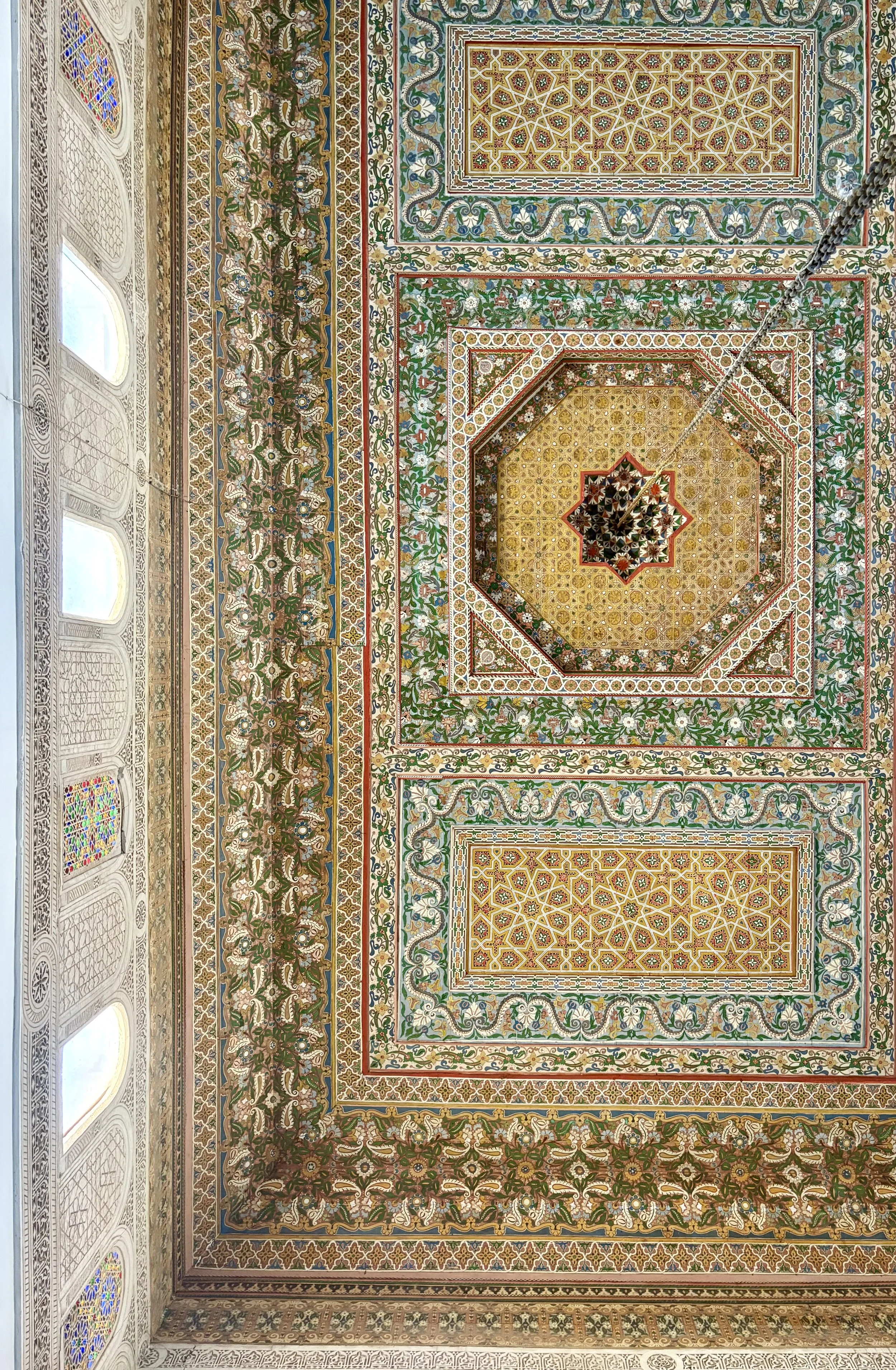
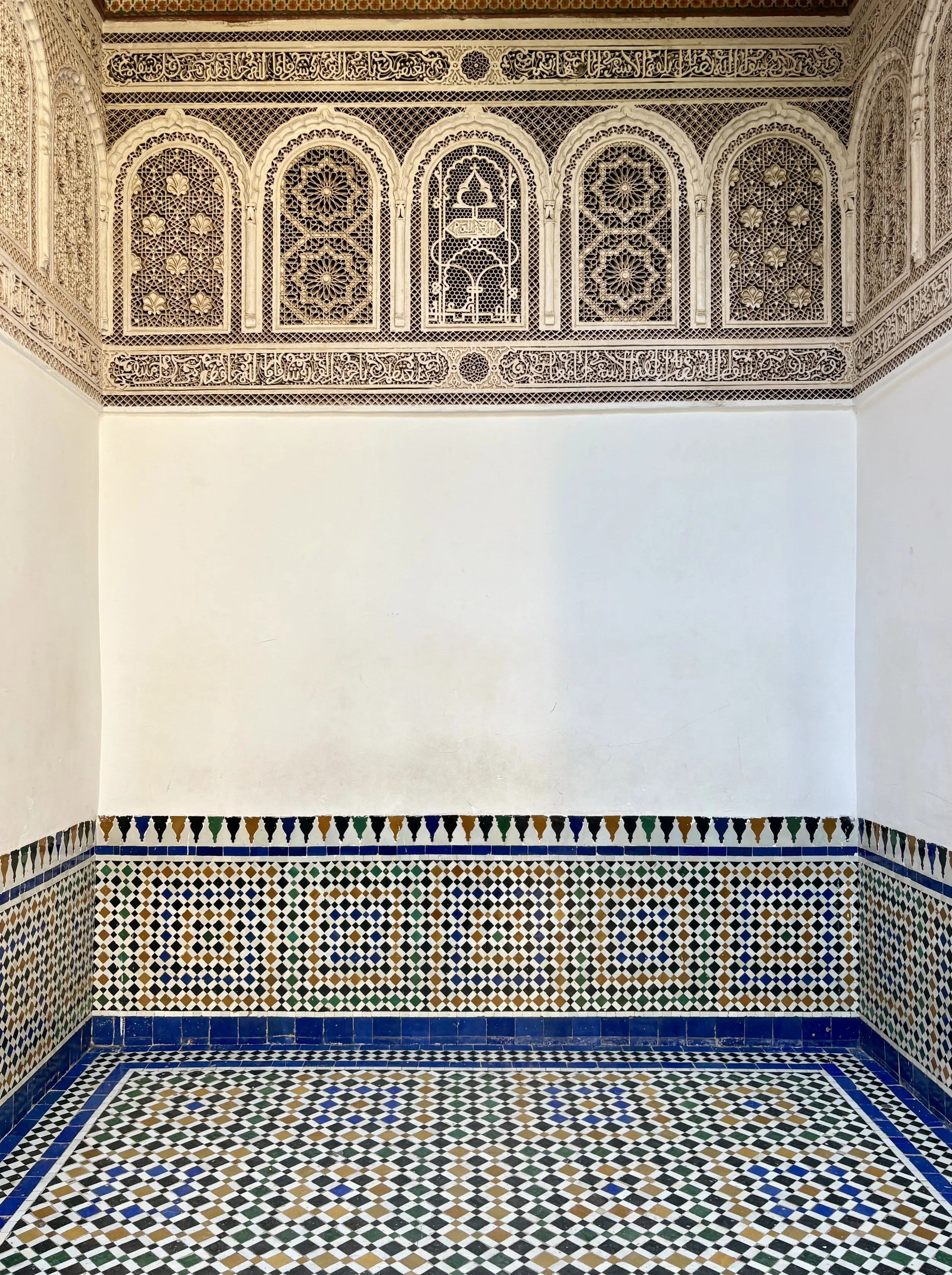
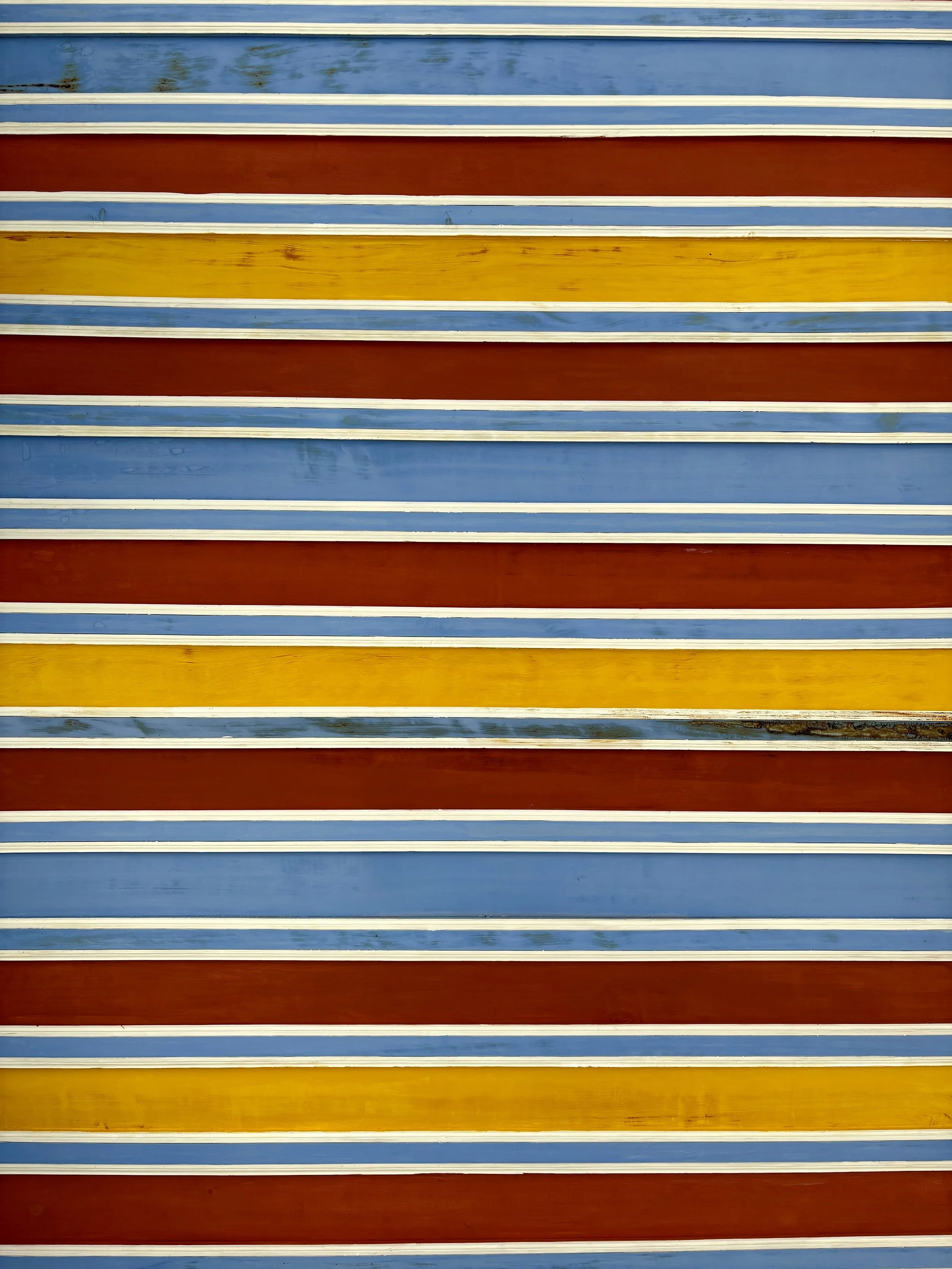
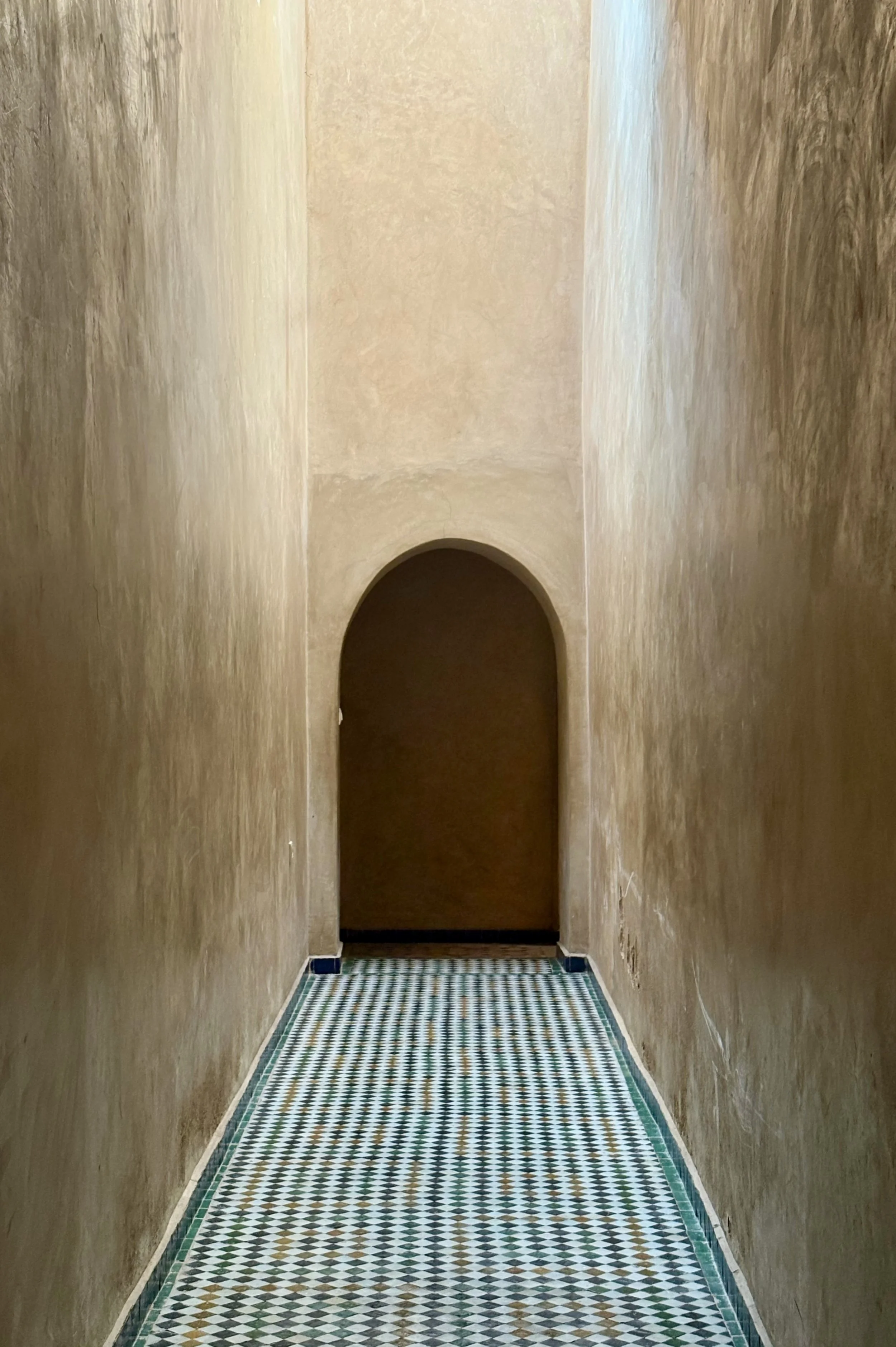
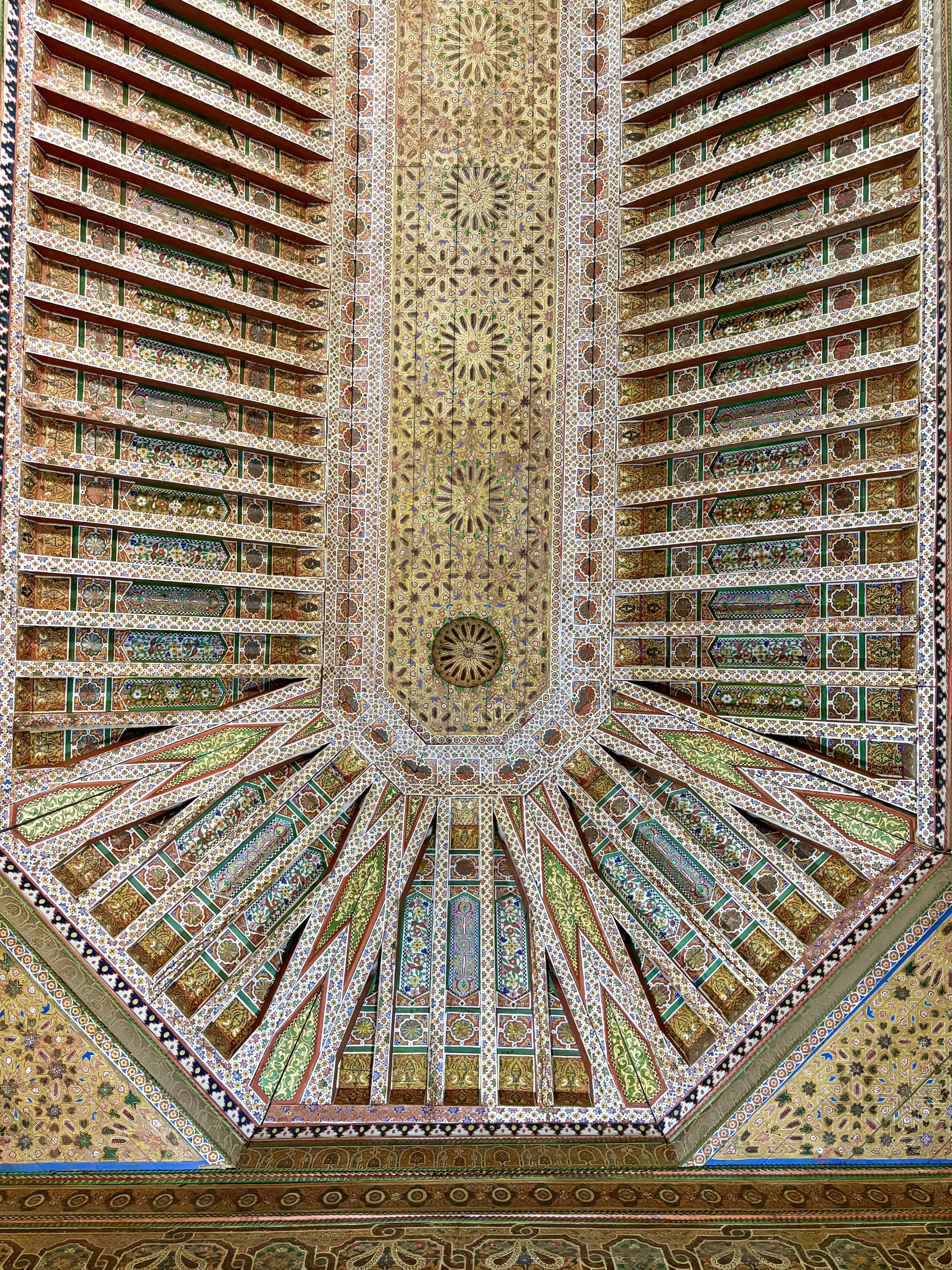
Bahia Palace
From there, we made our way to El Badi Palace, which feels like the complete opposite of Bahia.
Where Bahia is intricate and ornamental, El Badi is stripped back and atmospheric — defined by scale, emptiness and ruins. It feels broader, harsher and more exposed, and I really appreciated that contrast.
One of the most memorable details was the storks. There were so many of them, nesting along the walls and towers, and it genuinely felt like they had made the palace their home.
Tickets are available online, but we bought ours on the door for 100 MAD without any issues. Given the size of the site, it feels much less crowded than other attractions. Opening hours are typically 9:00am to 5:00pm, with last entry around 4:30pm.
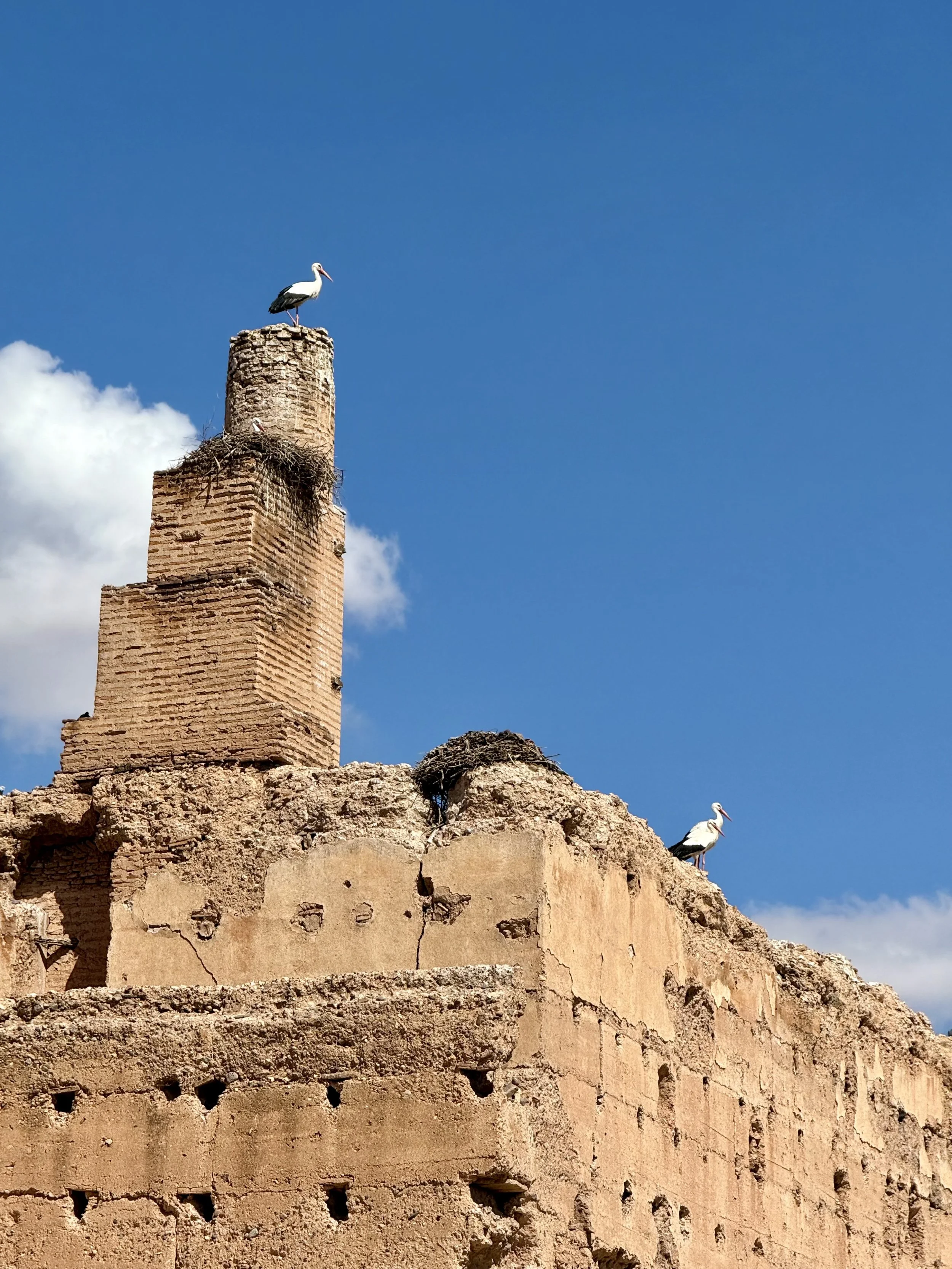
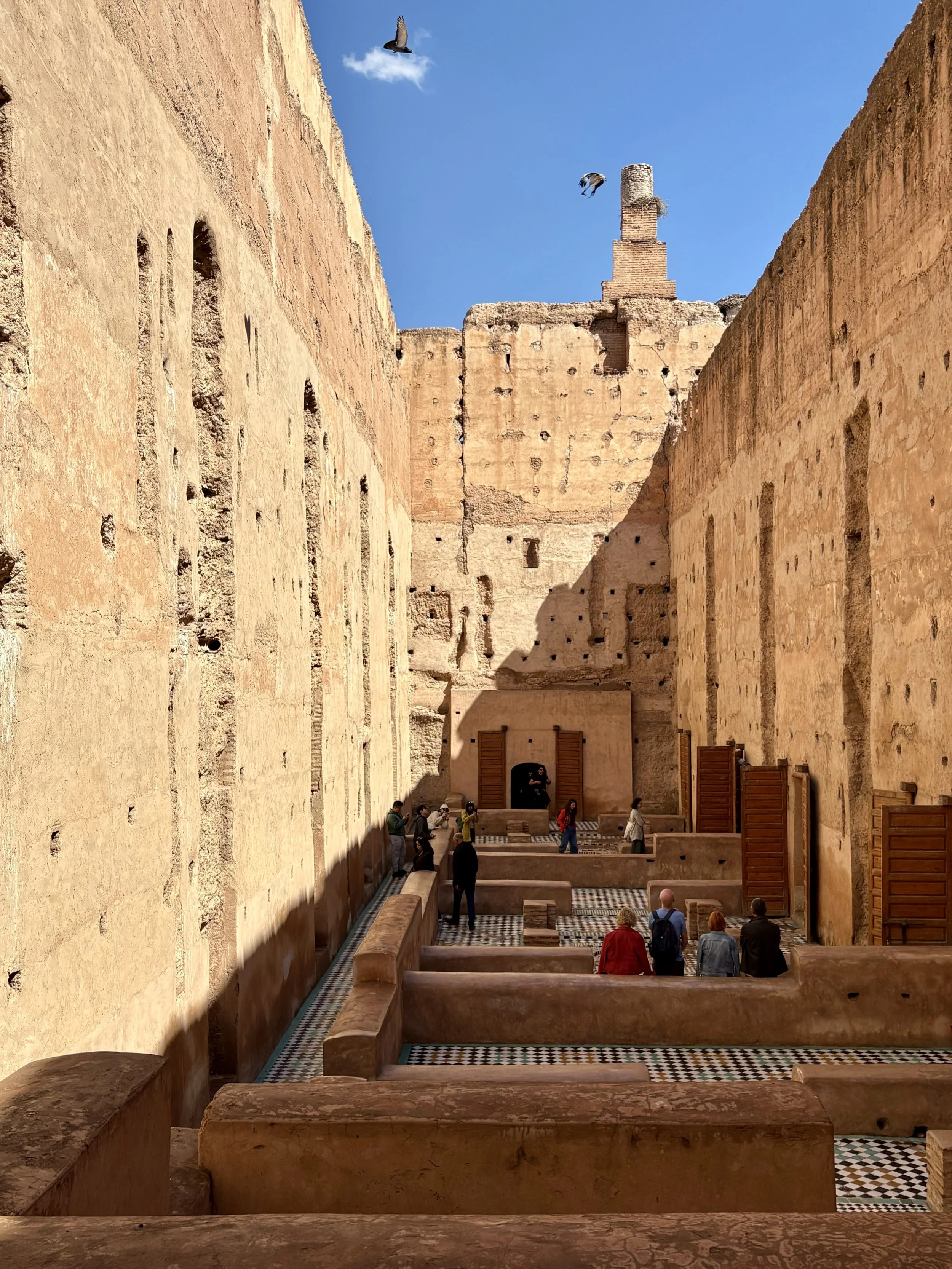
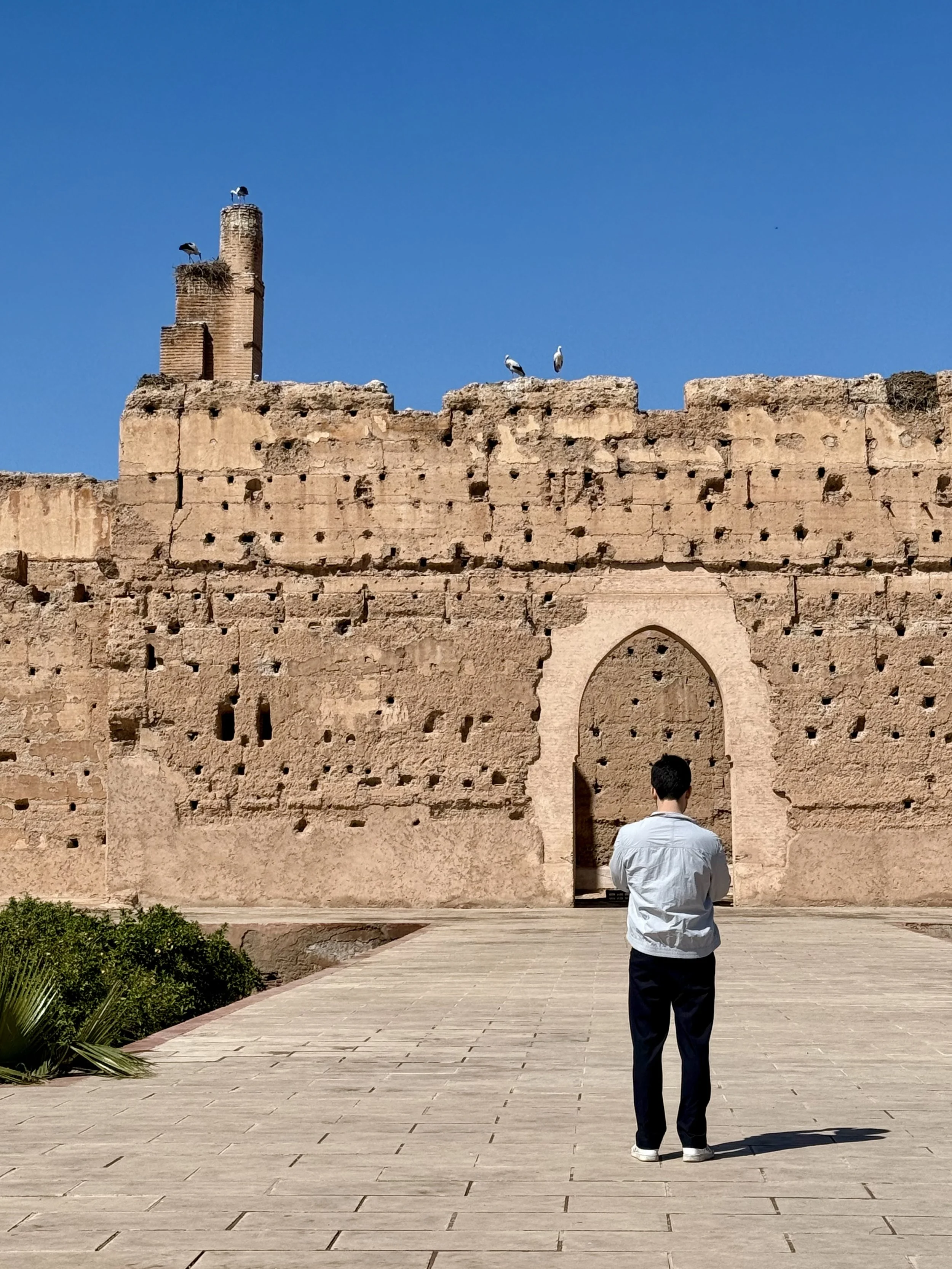
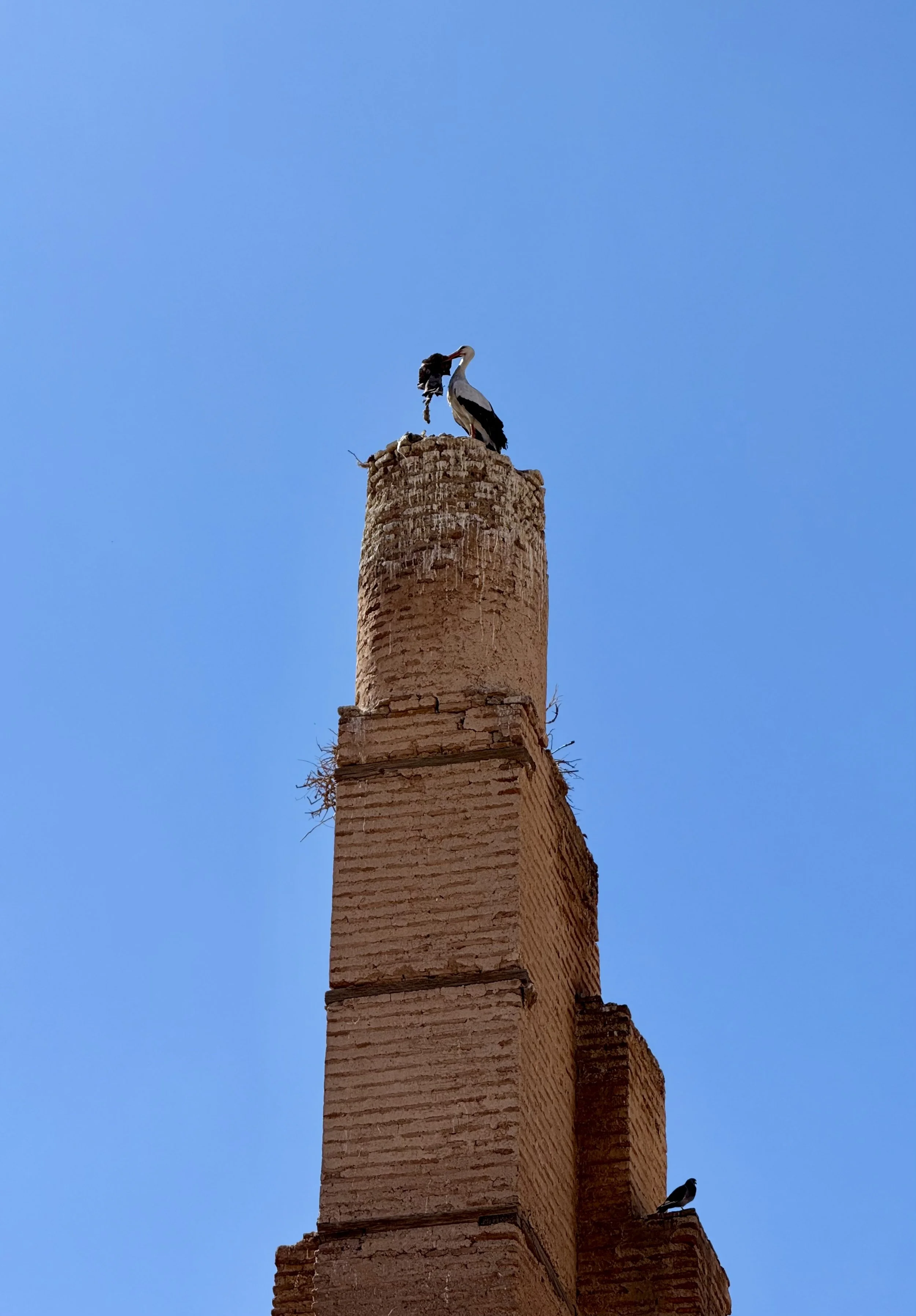
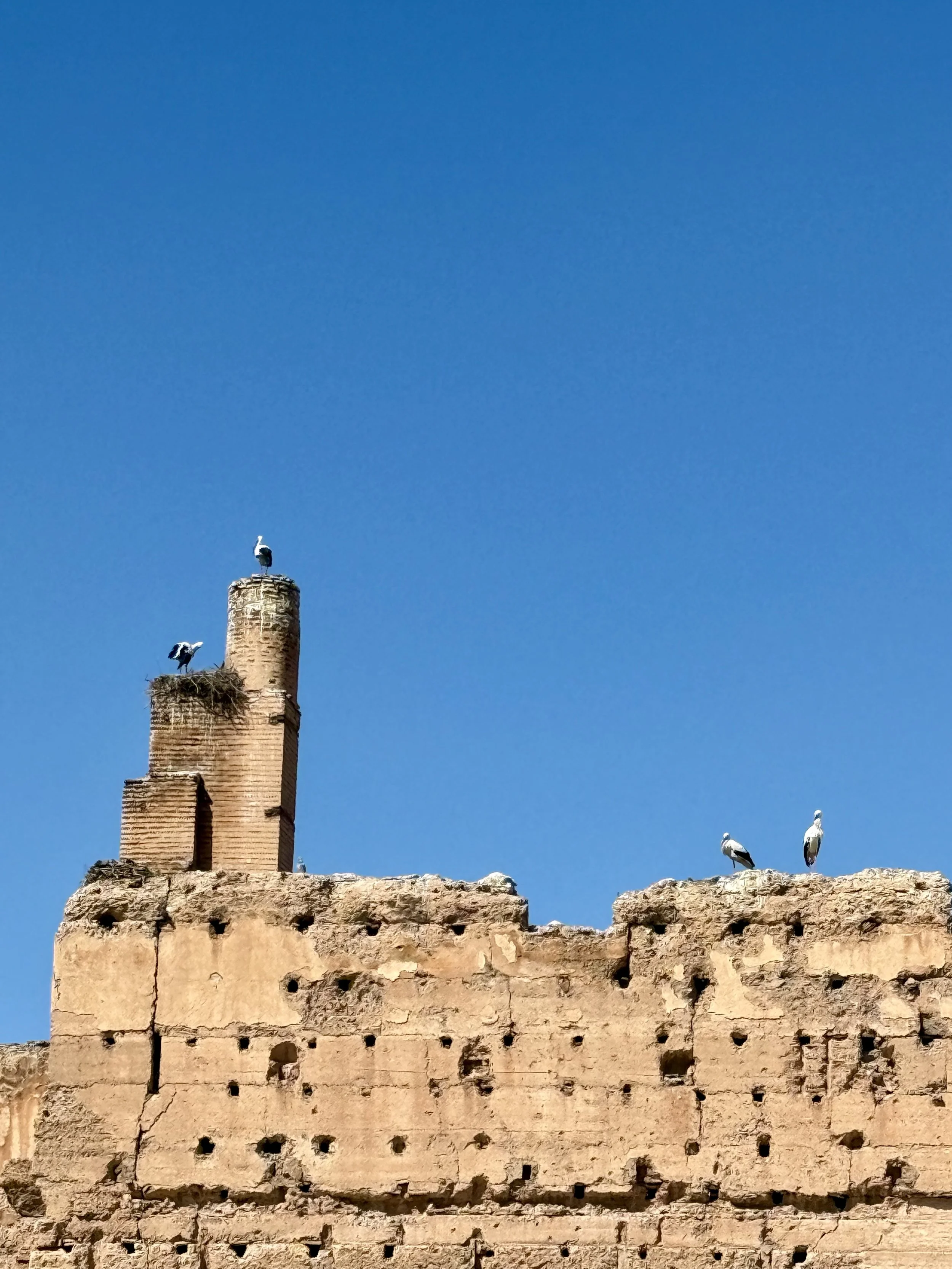
El Badi Palace
After that we wandered the surrounding Kasbah area, which worked well as a late-afternoon transition before dinner.
After exploring the Kasbah, we took a taxi over to MACAAL art gallery, which is on the same side of the city and works well as a natural next stop. It is outside the medina and it felt like a breath of fresh air. It was great to see a more spacious side of Marrakech.
This was another contrasting element of the trip. After the density and energy of the medina, MACAAL feels calm, minimal and intentionally curated. The space itself is very clean and modern, and the exhibitions focus on contemporary African art — giving a completely different perspective to the more traditional architecture and history you see elsewhere in Marrakech. There is also a lovely rooftop coffee shop, with great cookies!
It’s not a must-do if you’re tight on time, but I liked having that shift in pace. It made the rest of the city feel even more layered.
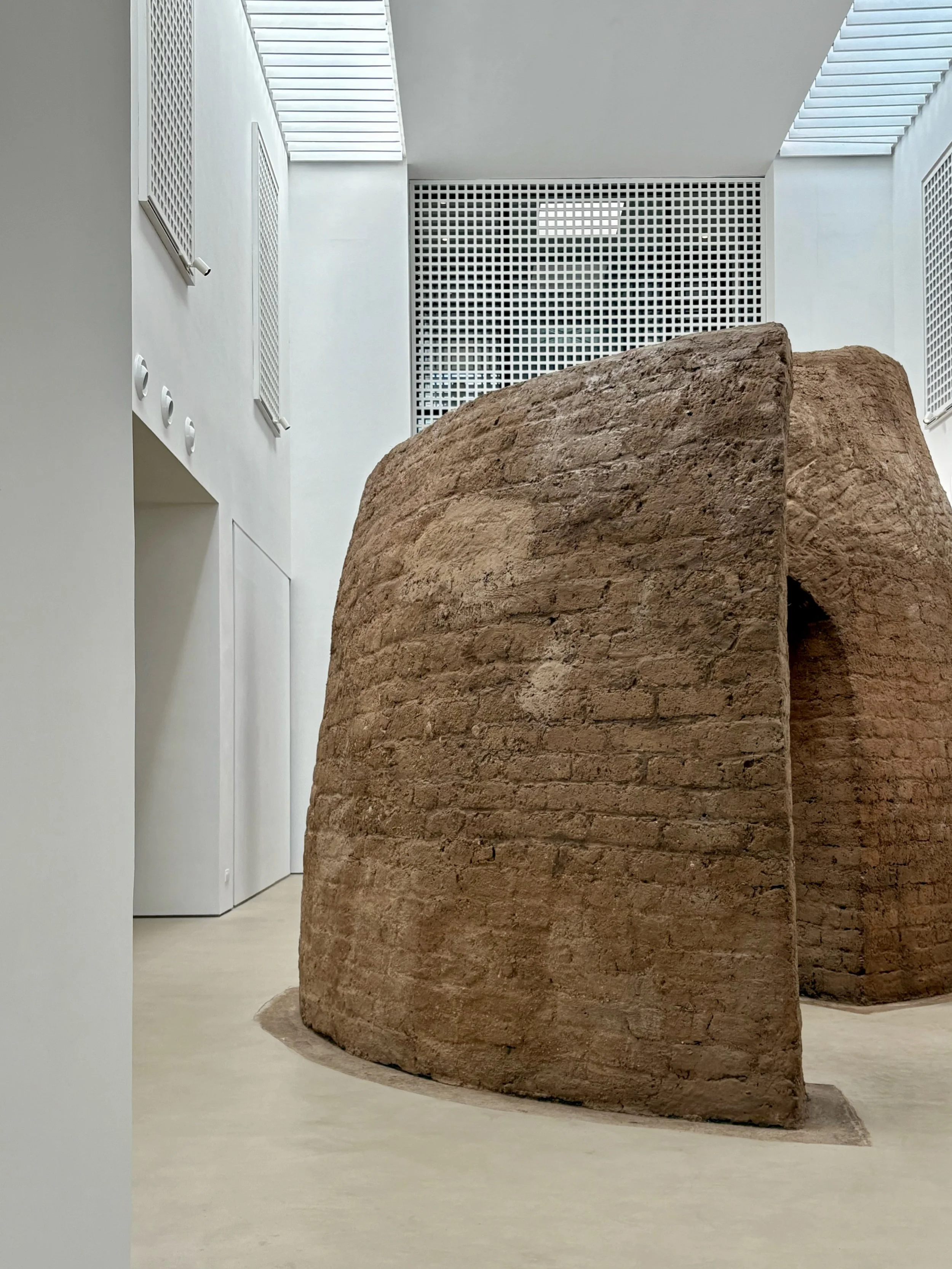
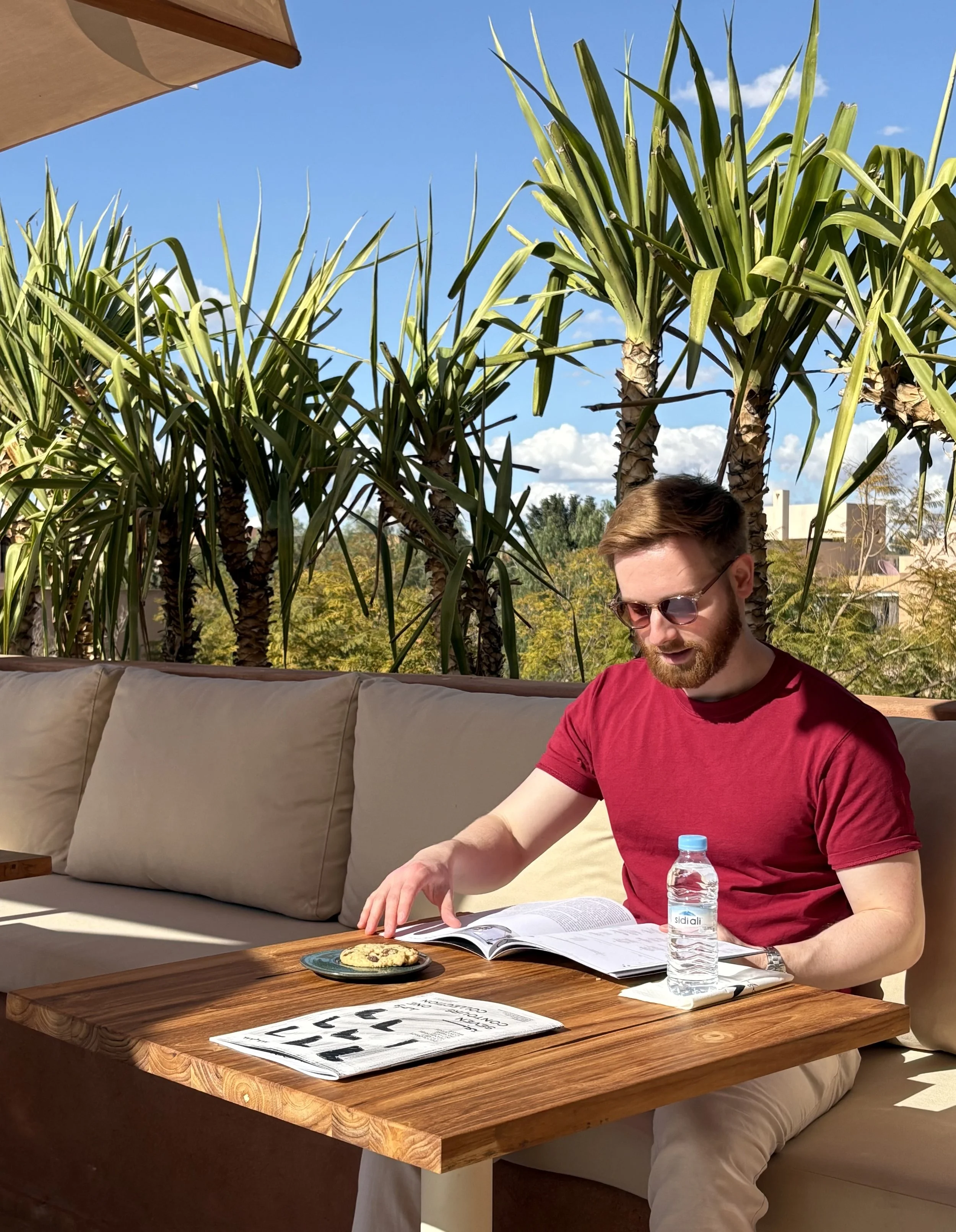
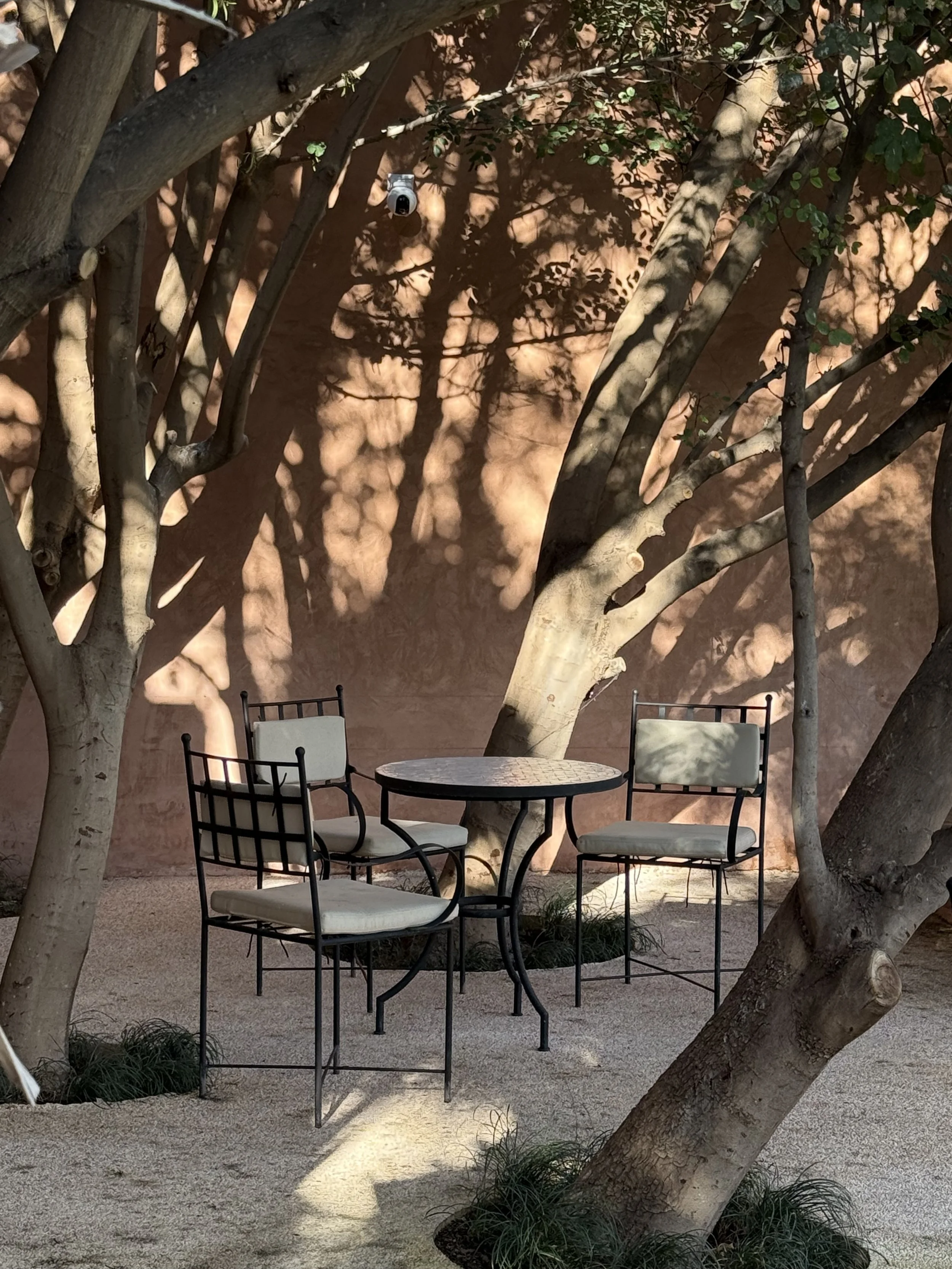
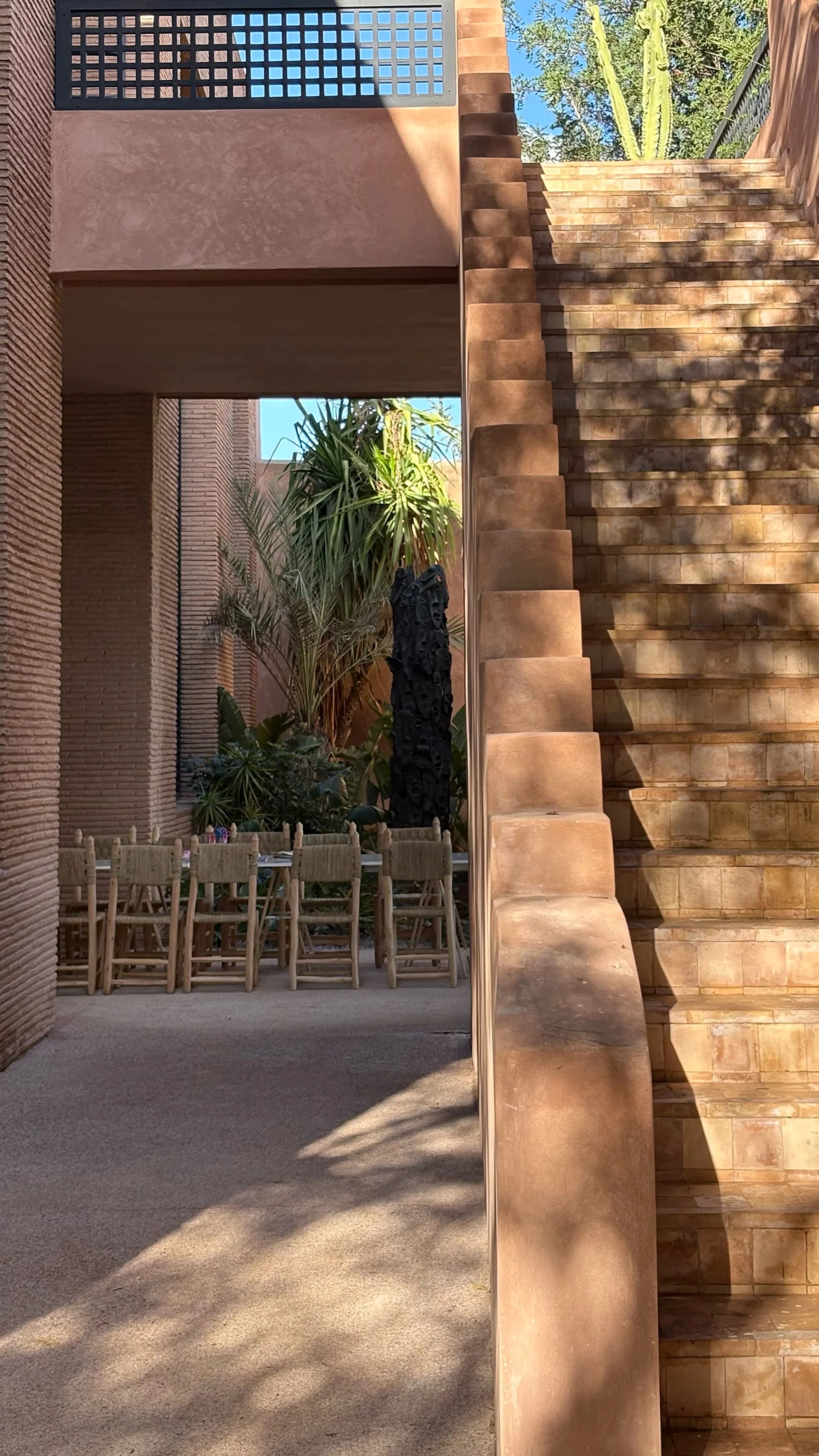
MACAAL Art Gallery
That evening, the absolute highlight of the trip was sunset at Dar Dar rooftop. Yes, it was very Instagrammer-heavy, but honestly, it was spectacular. The light over the city, the atmosphere around iftar, the rooftop setting, the sense of occasion — it all came together beautifully. This was the rooftop experience we had wanted.
We had tagine there, and I should properly say this: the lamb tagines in Marrakech were delicious. Rich, soft, deeply savoury, gently sweet in places, full of warmth and spice without being aggressive. Tagine is one of those dishes that feels simple until you have a really good one. Then you understand why people keep ordering it. We had several over the trip and never got bored. Dar Dar at sunset was the standout meal experience. I highly recommend you book a table for sunset, in advance!
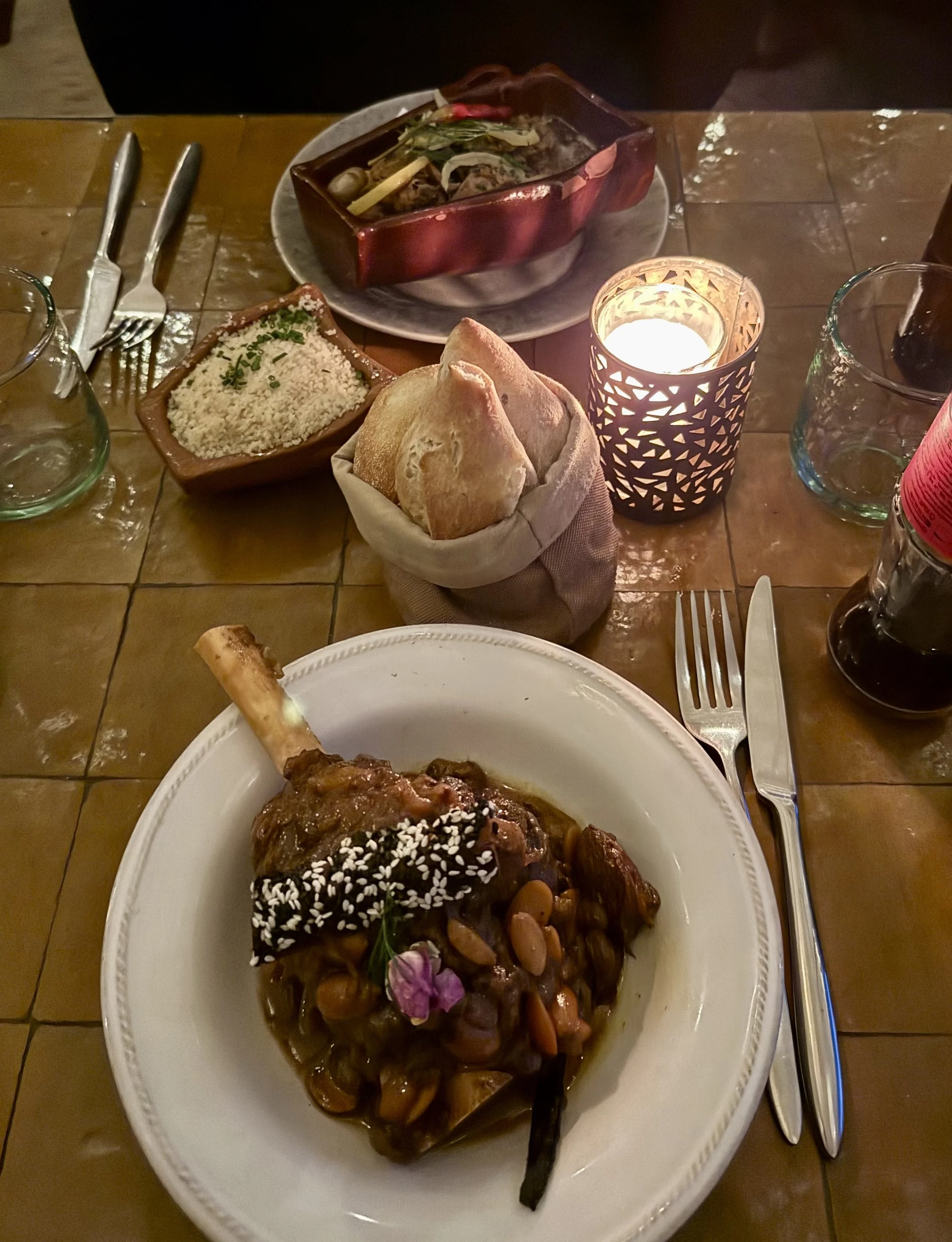
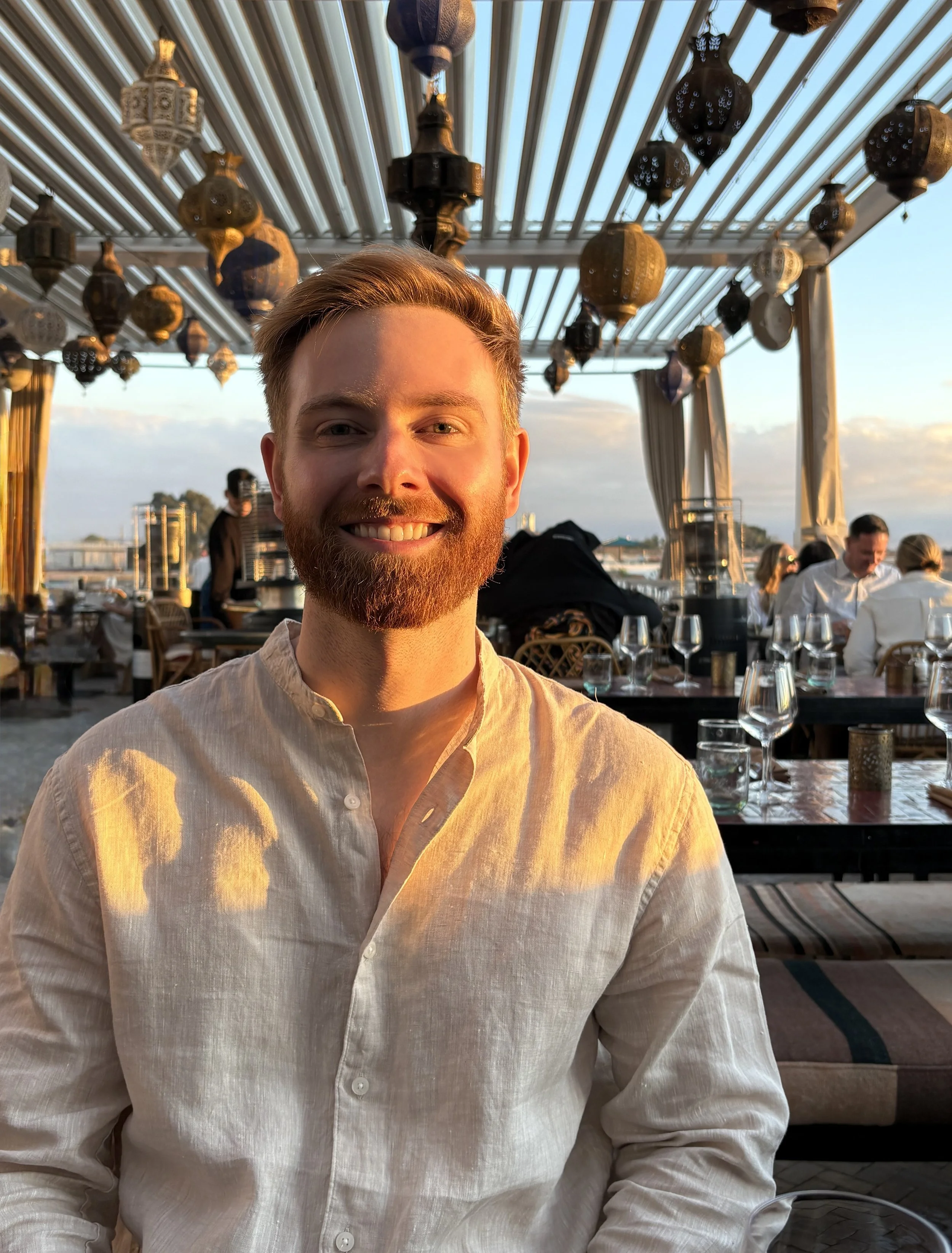
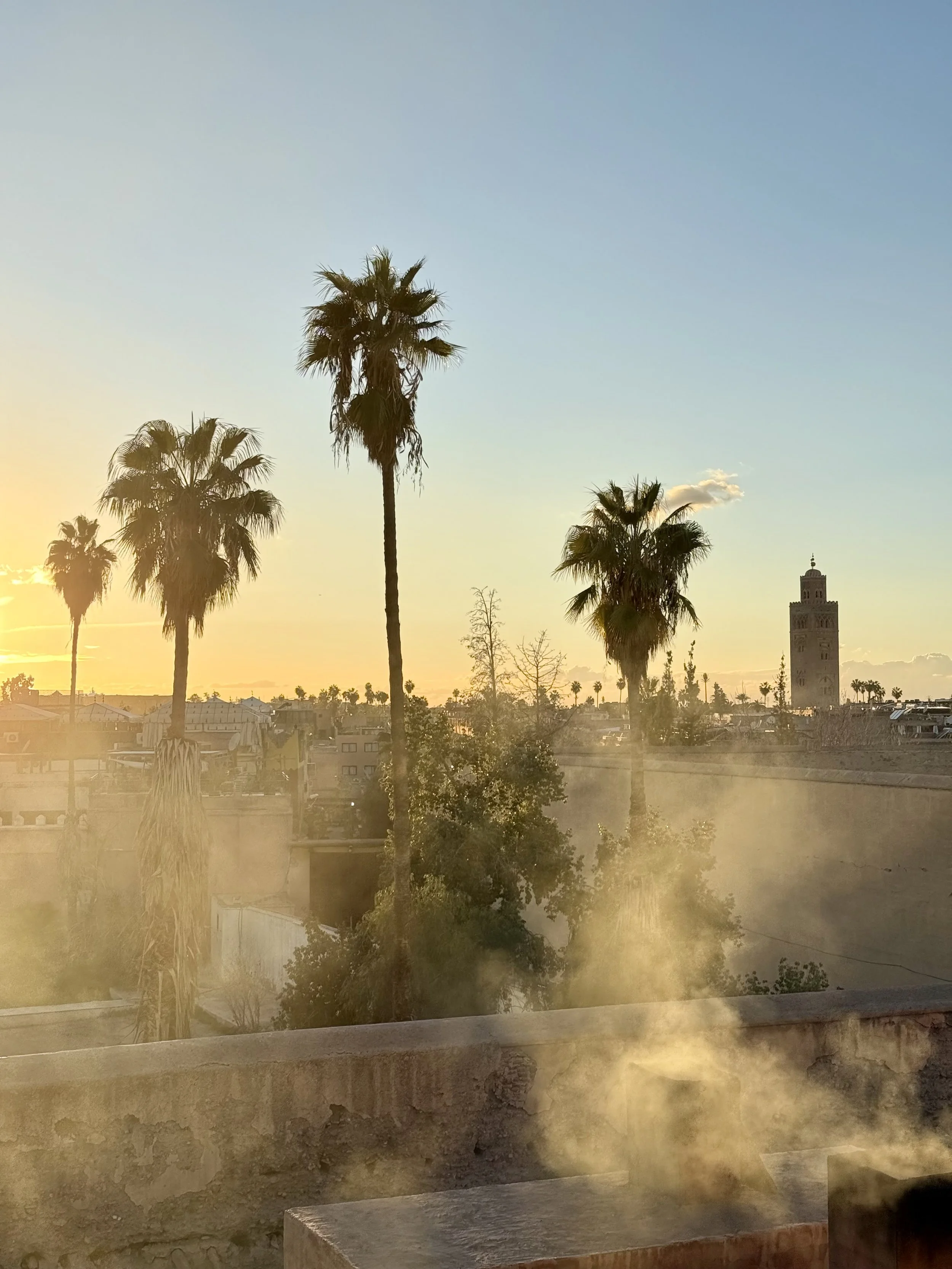
Sunset at Dar Dar rooftop
DAY 3: Maison de la Photographie, Dar El Bacha, Musée des Confluences, MASSAGE, and LE JARDIN Restaurant
Sunday started with breakfast, checkout and a final morning in the medina.
Our first stop was Maison de la Photographie. Adult admission is 50 MAD, and tickets are bought on site rather than online. It opens at 9:00am.
I know this place gets recommended a lot, but for me it was a bit overrated. The concept is interesting and the historical photography is worthwhile, but compared with some of the stronger visual and architectural experiences in Marrakech, it did not hit anywhere near as hard. The rooftop view is nice, though, and probably the best reason to go if it is already on your route.
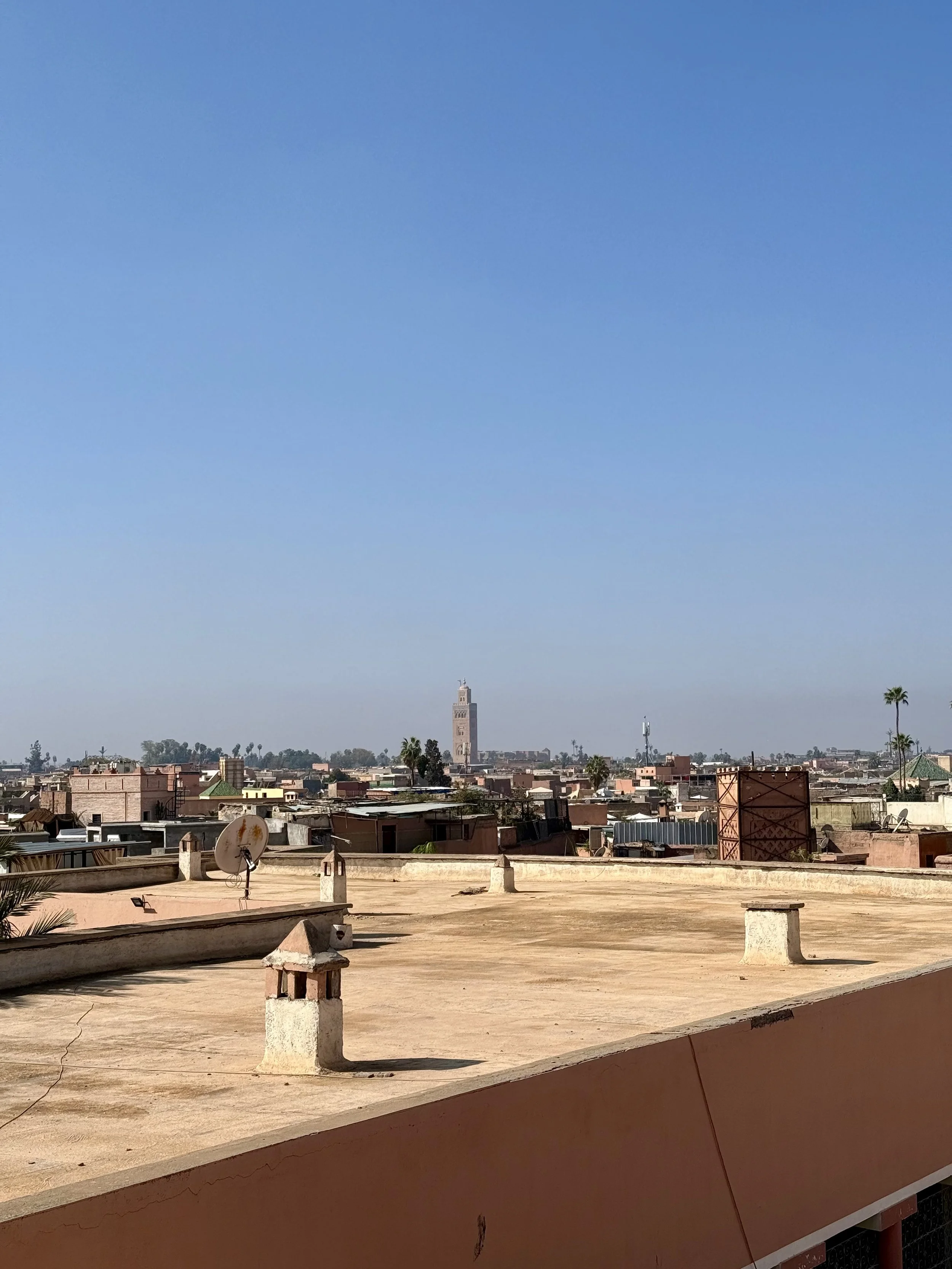
View from the rooftop of the Maison de la Photographie
From there we visited Dar El Bacha, a beautifully restored former palace that now houses the Musée des Confluences.
It’s one of the most refined spaces we visited in Marrakech. The architecture is the main highlight — elegant courtyards, symmetrical layouts and carefully restored rooms that give you a sense of how the elite once lived. The detailing is more understated than somewhere like Bahia Palace, but in a way that feels very intentional and considered. Moving through the space — the light, the proportions, the calm — is what makes it memorable.
It’s also one of the quieter spots in the city, which makes it a good place to slow down after the intensity of the medina. Inside, you’ll also find Bacha Coffee, which is another great spot for coffee and tea.
Entry on the door is 60 MAD and it is open between 10:00am–6:00pm. Note that it is closed Mondays.
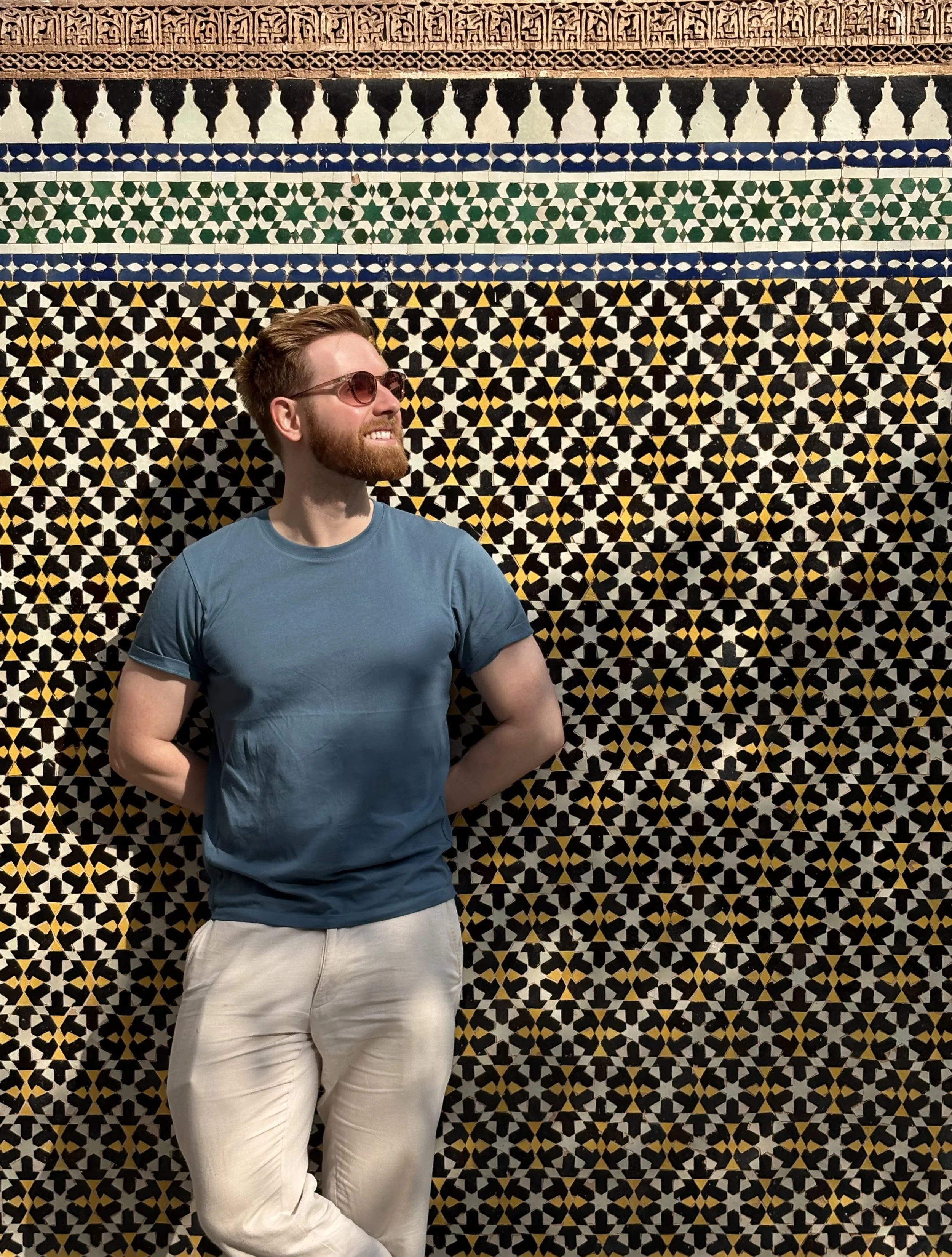
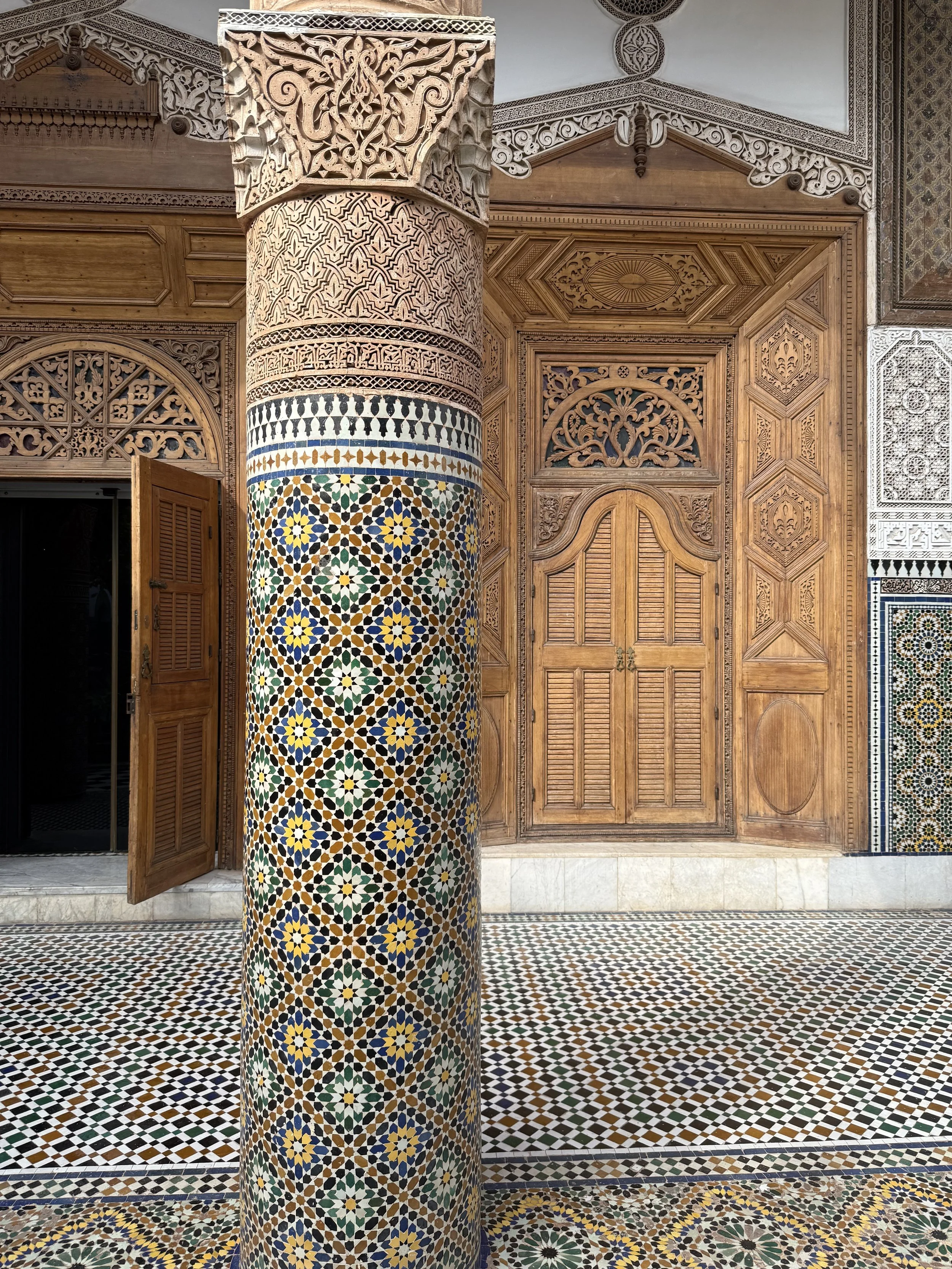
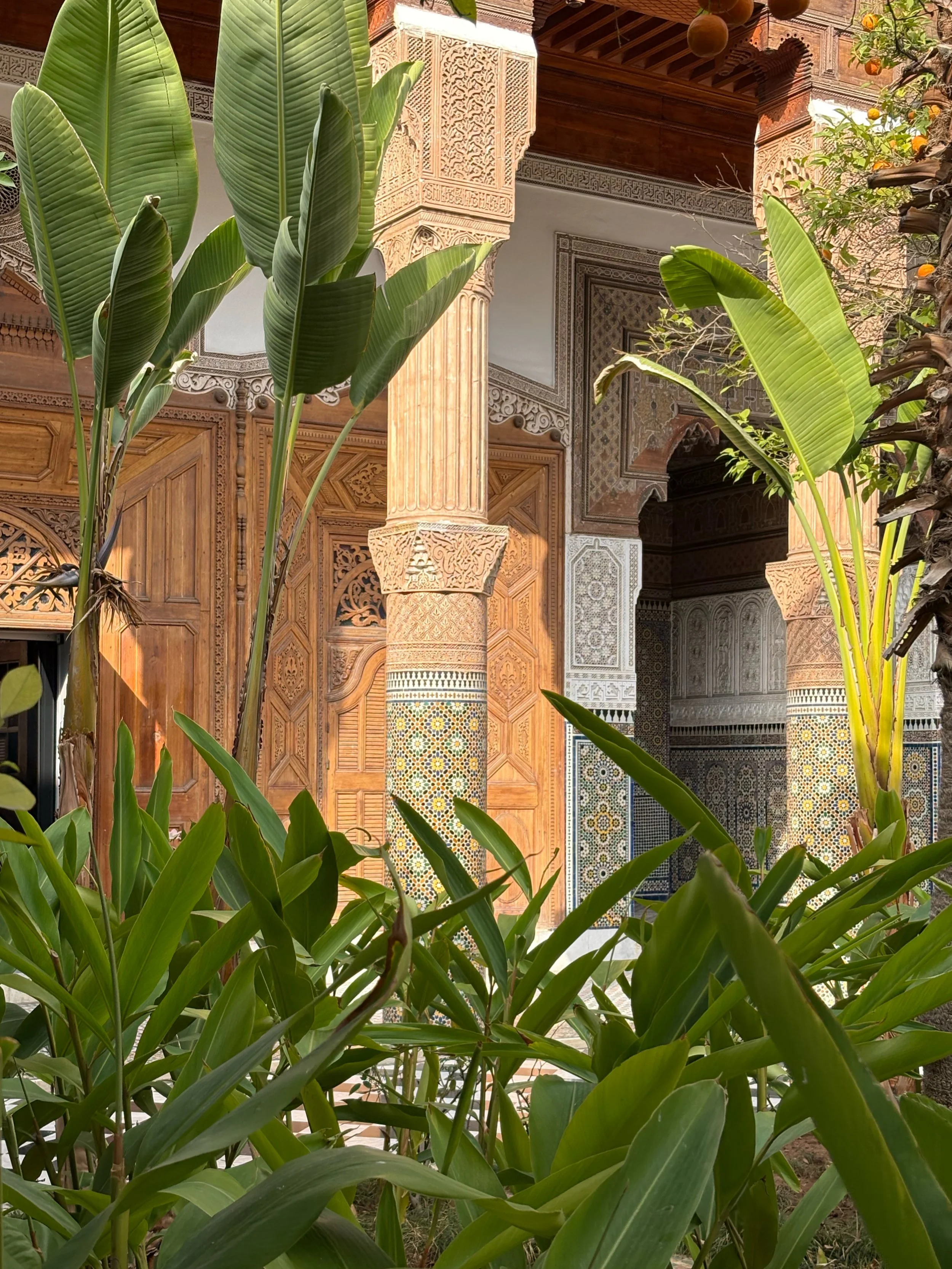
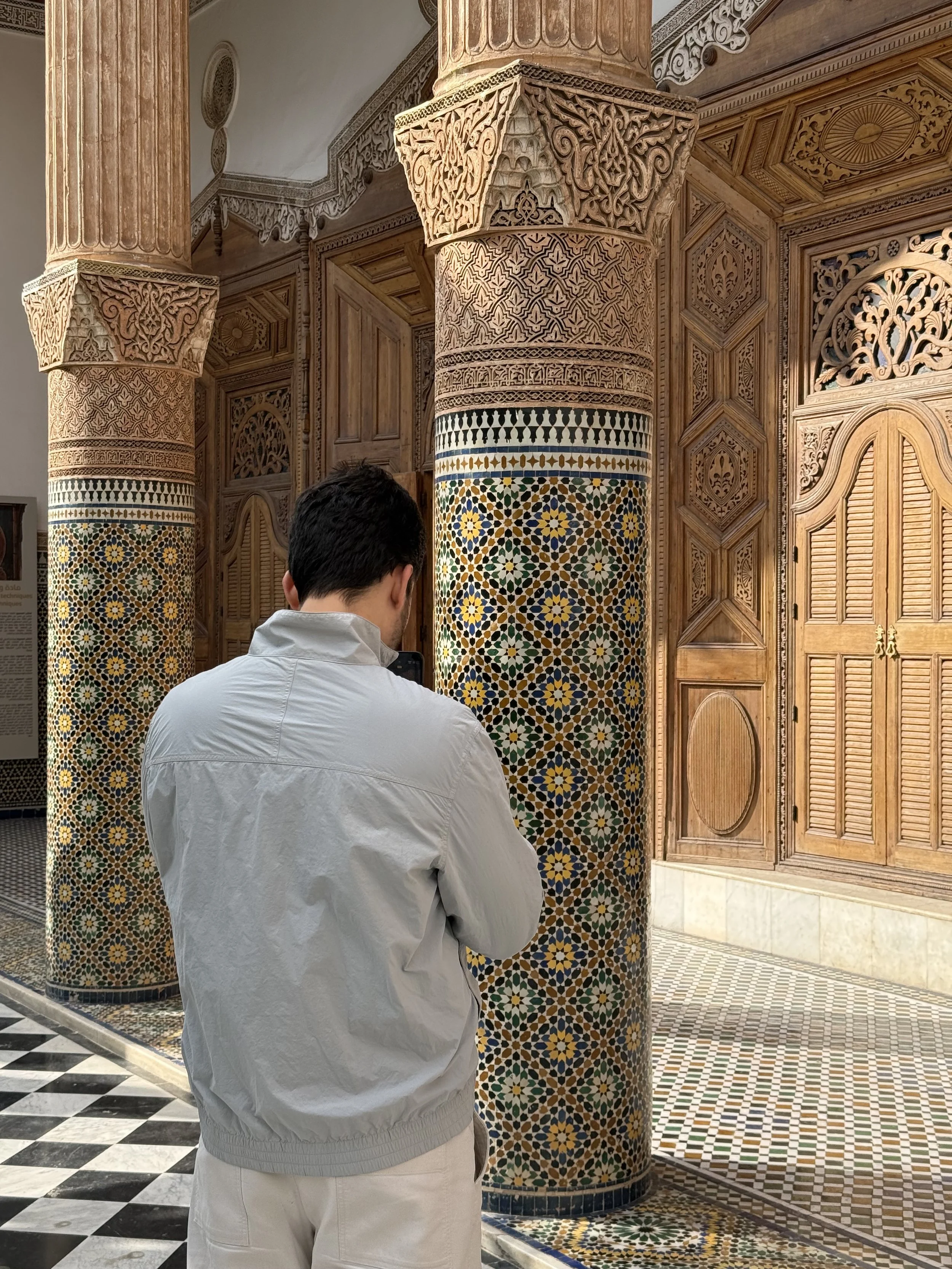
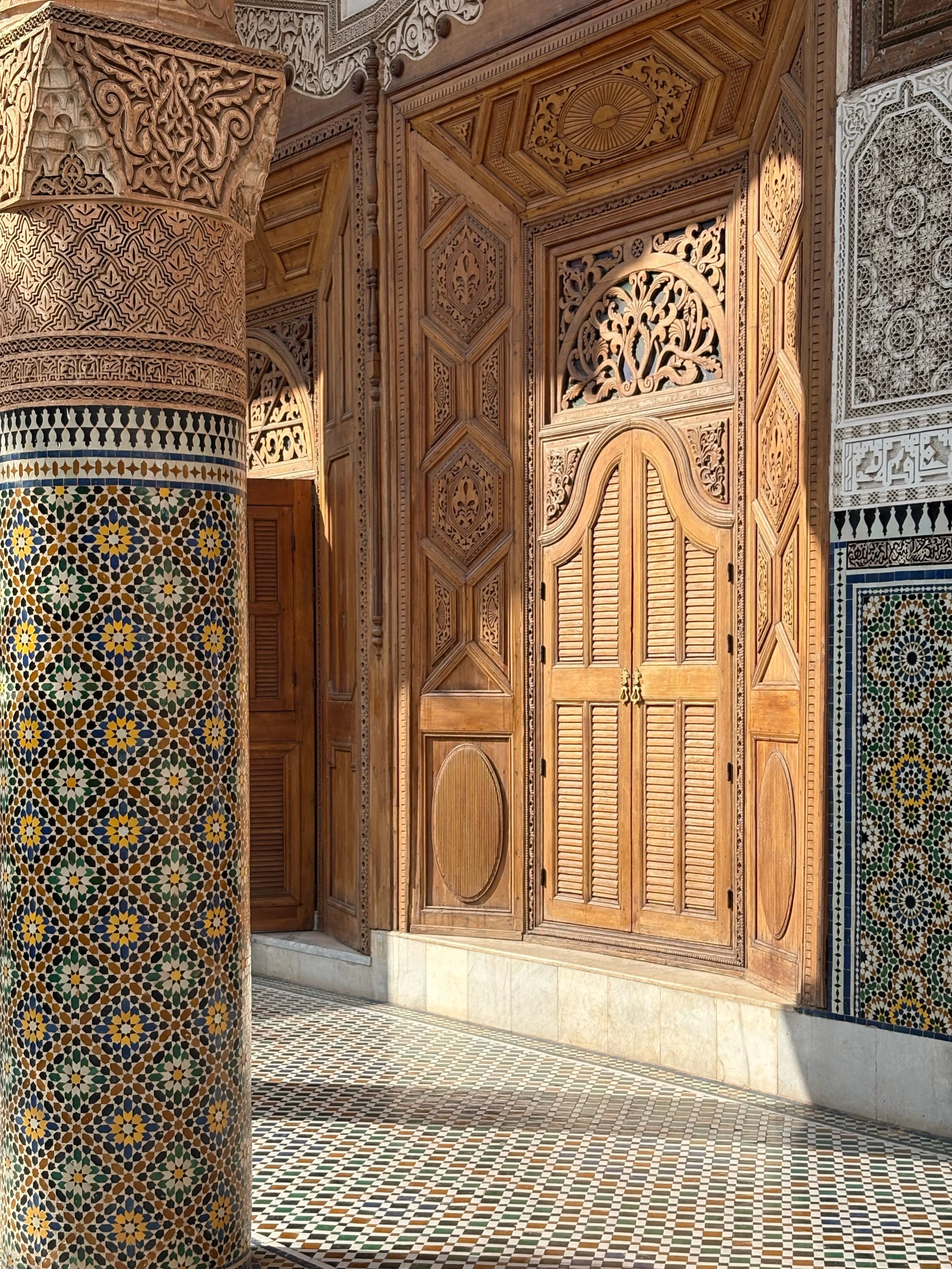
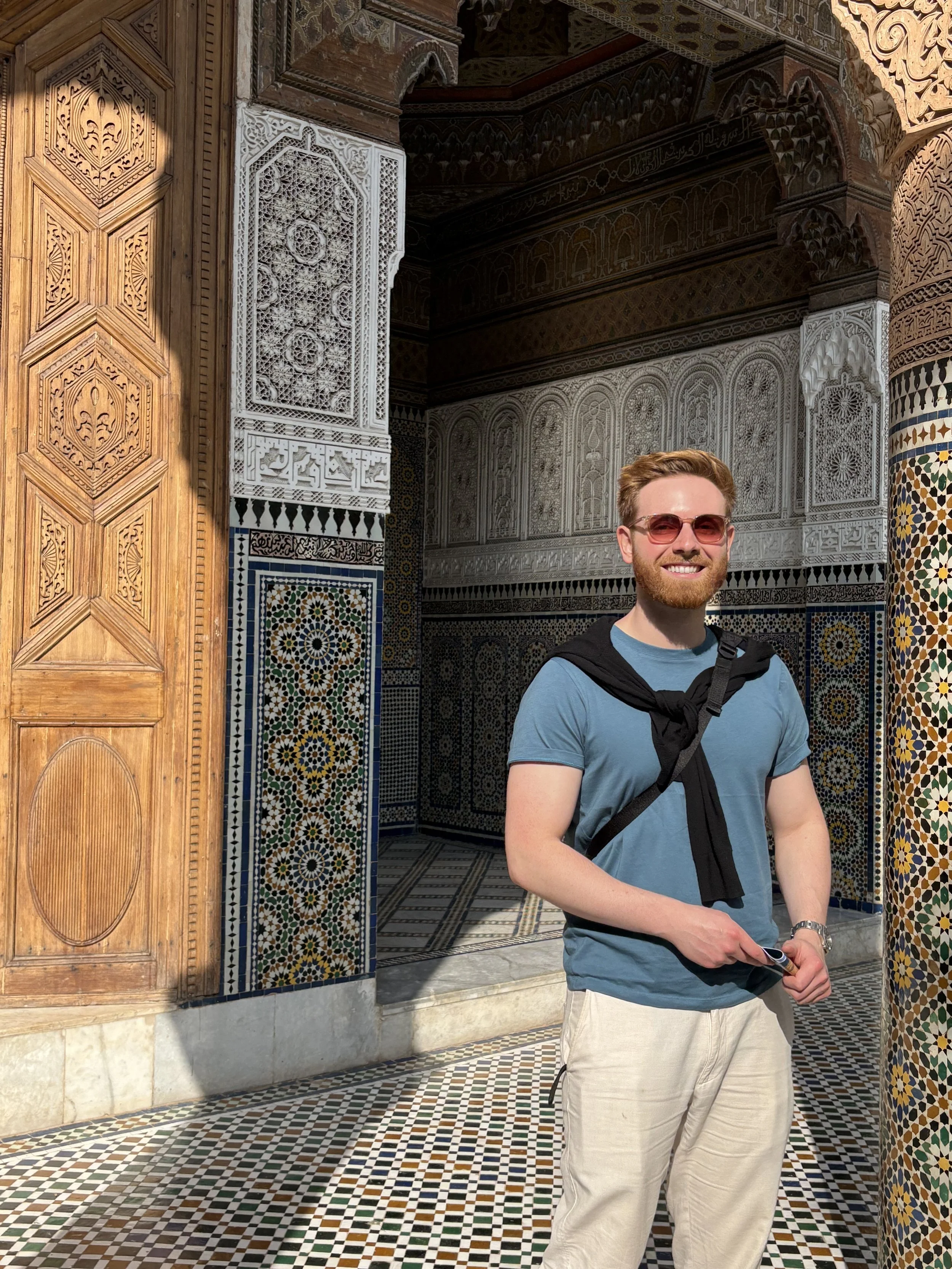
Dar El Bacha and the Musée des Confluences
We then had a massage at Les Bains de Marrakech, which was a very good decision. By that point, we were ready to step out of the bustle for a while. The space itself is calm, dimly lit and traditional — exactly what you want after a day in the medina.
We did a couple’s massage and felt completely comfortable throughout. As gay travellers, the experience felt smooth and respectful, with no awkwardness or moments that made us feel self-conscious.
If we had more time, we would have also done a traditional hammam, which is a big part of Moroccan culture. It’s a cleansing ritual rather than just a spa treatment — involving steam, black soap, and a full body exfoliation in a heated marble room. It’s something we heard great things about and would definitely prioritise next time.
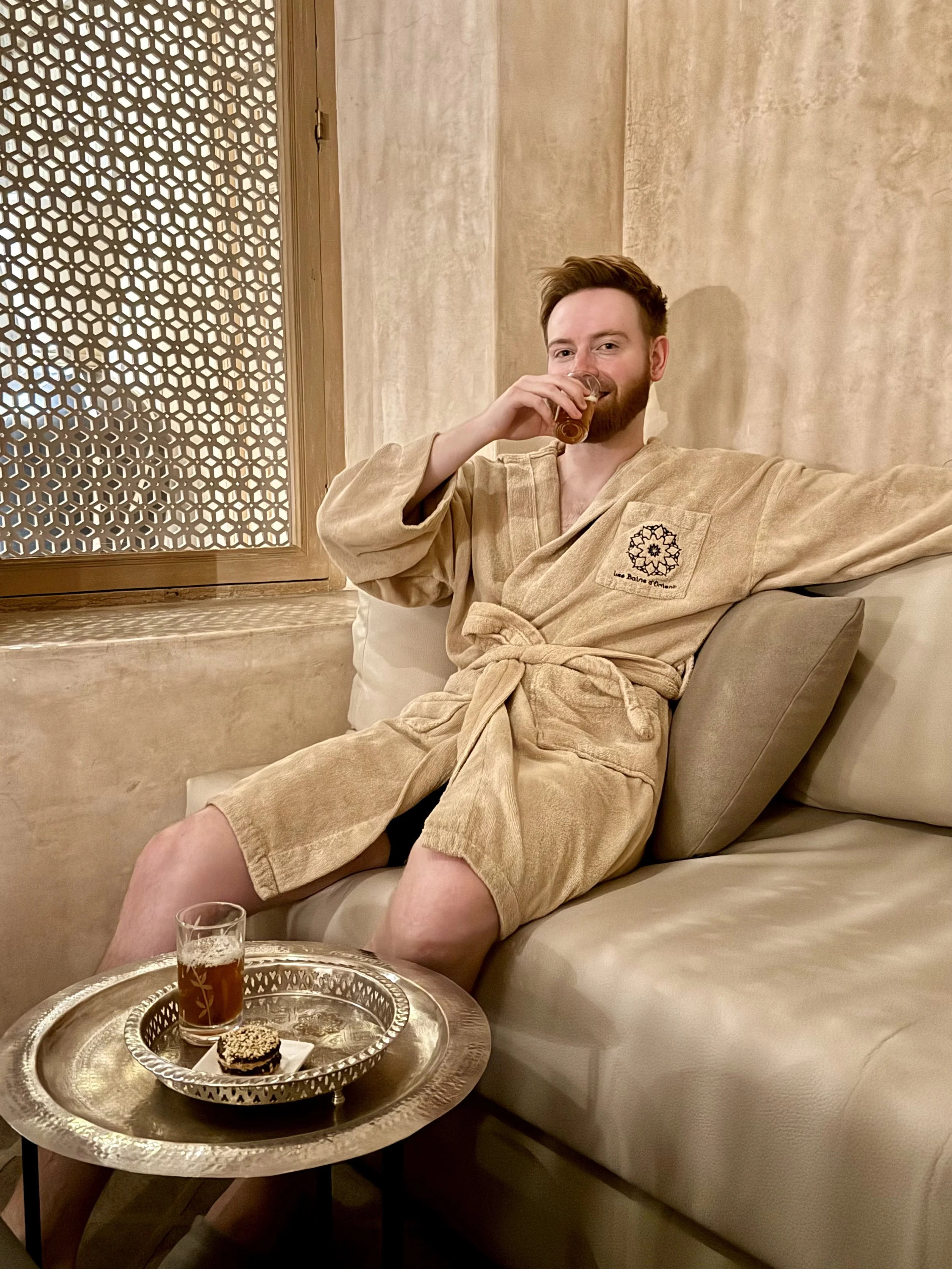
Another cheeky mint tea in the waiting area at Les Bains de Marrakech
For lunch we went to Le Jardin for a final tagine, This is a beautifully green, layered courtyard, with multiple levels of seating. It had a slow atmosphere, and was bursting with character. It was great, but truthfully, my favourite tagine was at Dar Dar rooftop.
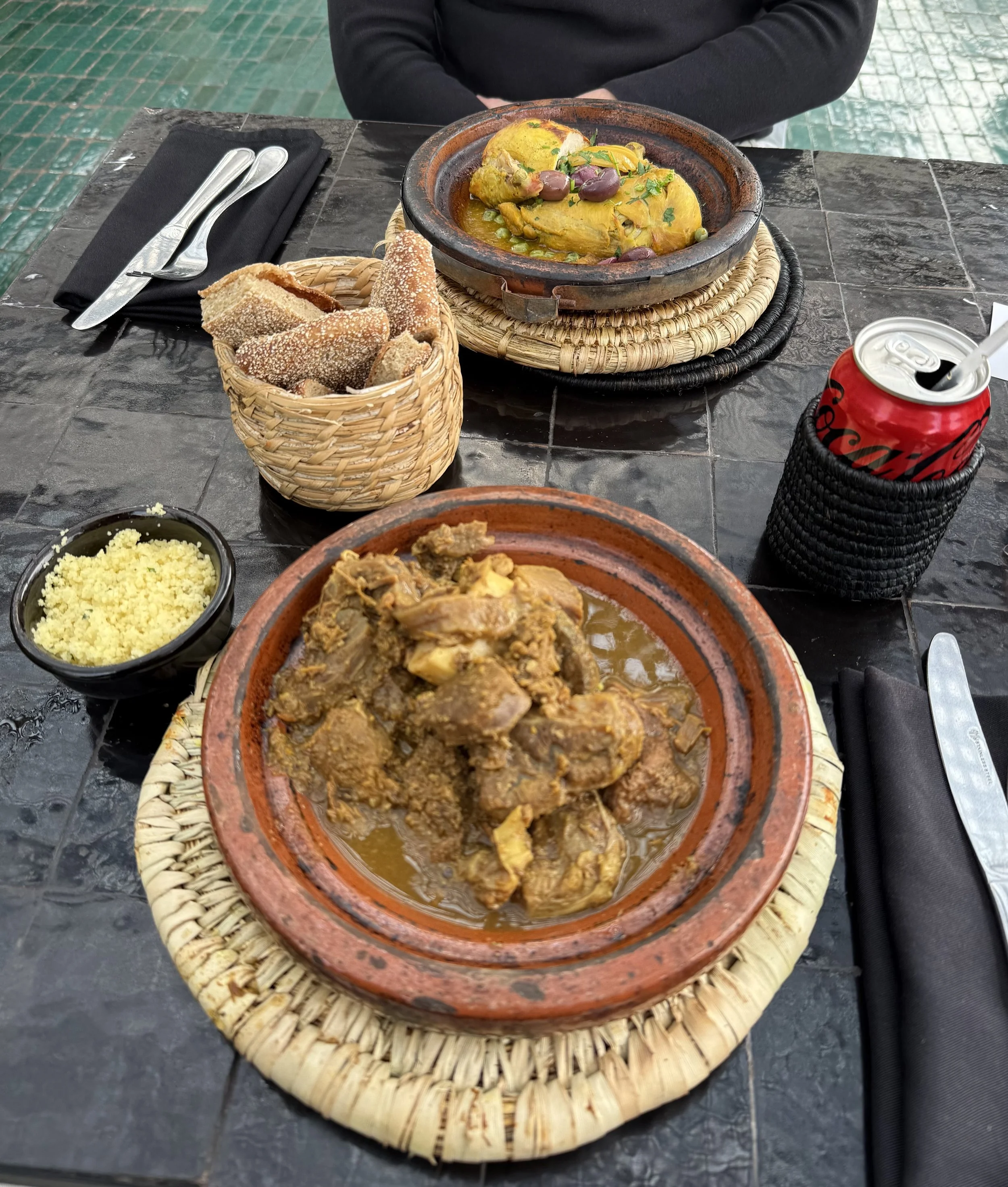
Our final tagine - at Le Jardin restaurant
FOOD AND DRINK HIGHLIGHTS
A real highlight of Marrakech for me was just how much pleasure there was in the smaller rituals around food and drink.
The mint tea deserves a special mention. I loved it. We drank so much of it over the weekend. It felt ceremonial in the best way: poured carefully, served in small glasses, intensely sweet, intensely fresh, and somehow always exactly what I wanted. Mid-morning, with pastries, after lunch, before dinner, after wandering the souks — it just worked at every point in the day.
And the Arabic pastries. Also wonderful. Sweet, sticky, rich, often with nuts and honey, and ideal with tea.
Then there were the tagines. The lamb tagines in particular were so good throughout the trip: tender, slow-cooked, comforting and full of flavour. It is exactly the kind of dish you want in the evenings when the temperature drops. Every meal we had was served with a basket of fresh bread, which was also extremely good and always paired well with the tagine.
My personal food and drink notes from the trip:
Atay Cafe: This was a very good first lunch spot with a great view over the city to get your bearings.
Le Salama: Lovely for mint tea, with a very theatrical pouring ritual.
Cafe Medina Rouge: Basic, but another very good stop for tea and a pause.
Dar Dar rooftop: The sunset highlight and rooftop experience of the trip. Also the best tagine of the three that we tried.
Kabana: Stylish, but lacking the sense of character of Marrakech and more on the expensive side.
Le Jardin: Beautifully green and open with excellent food.
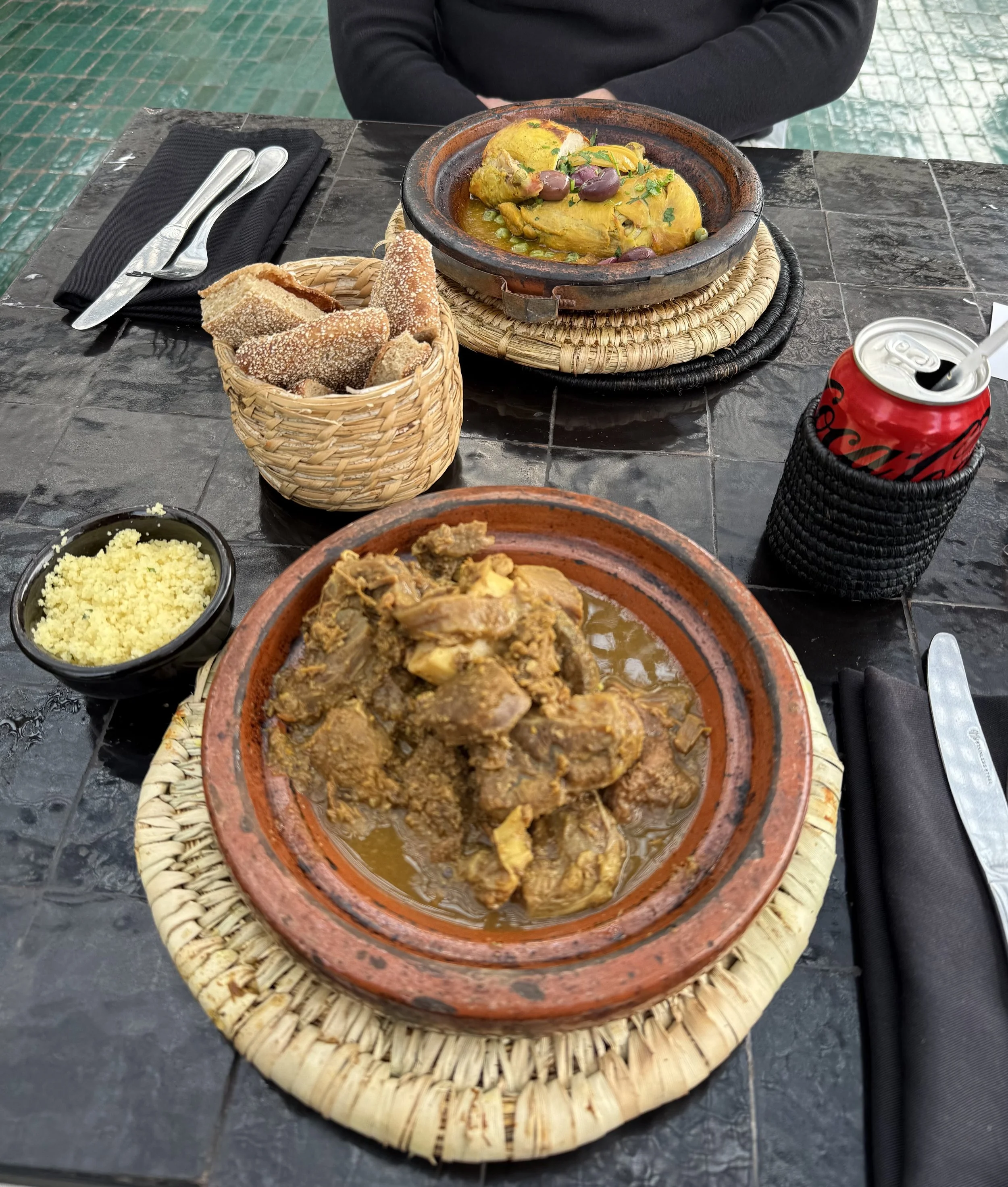
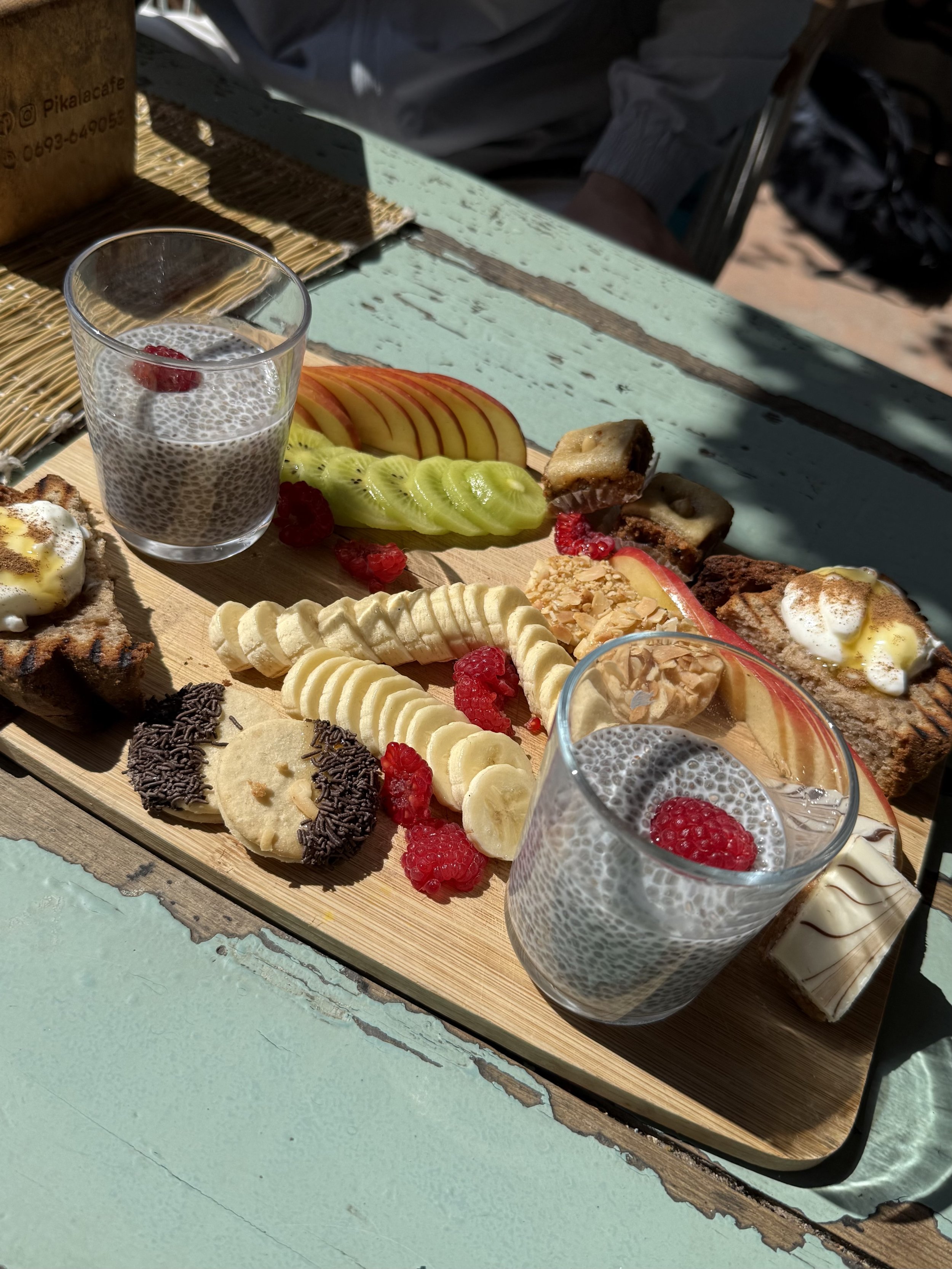
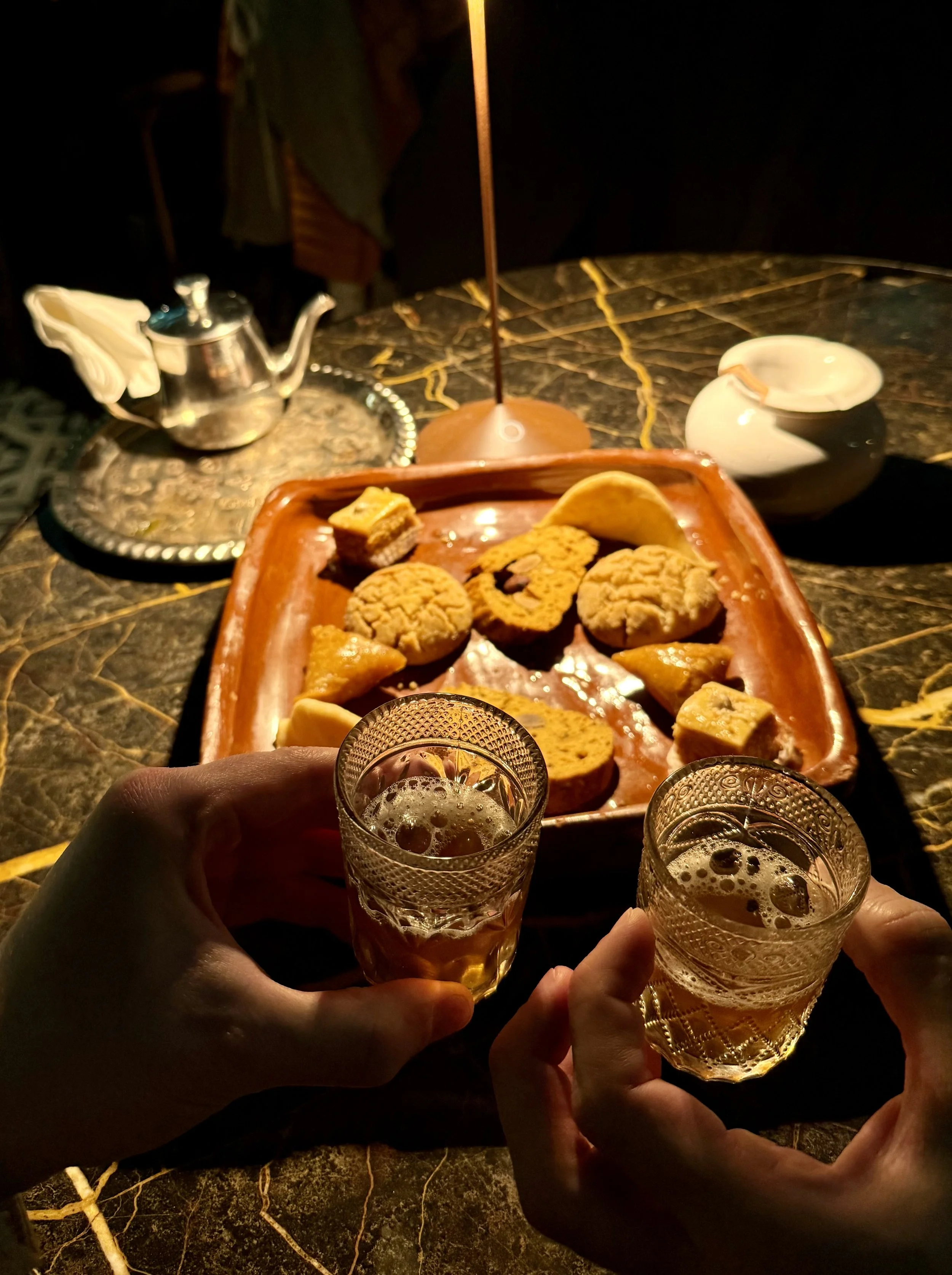
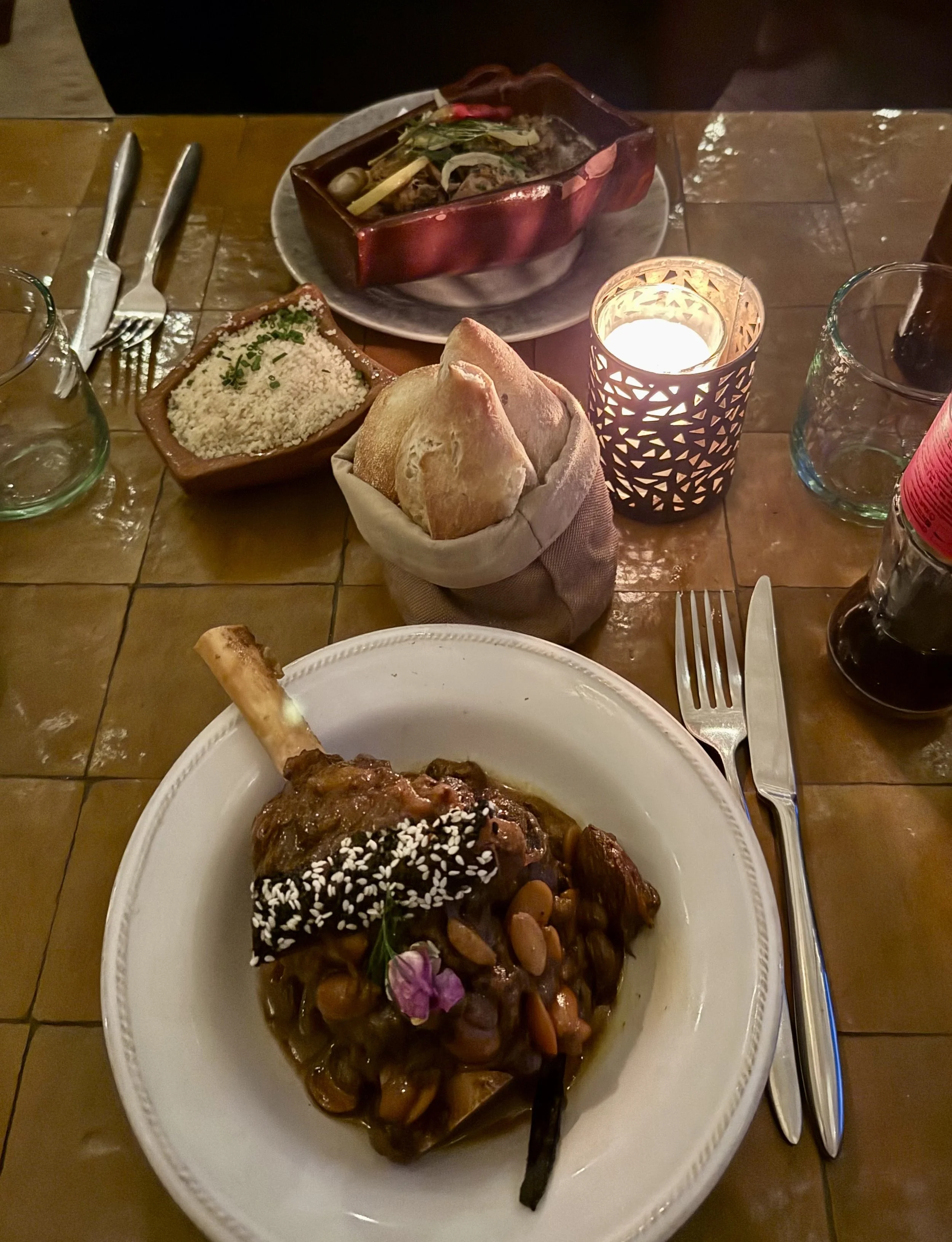
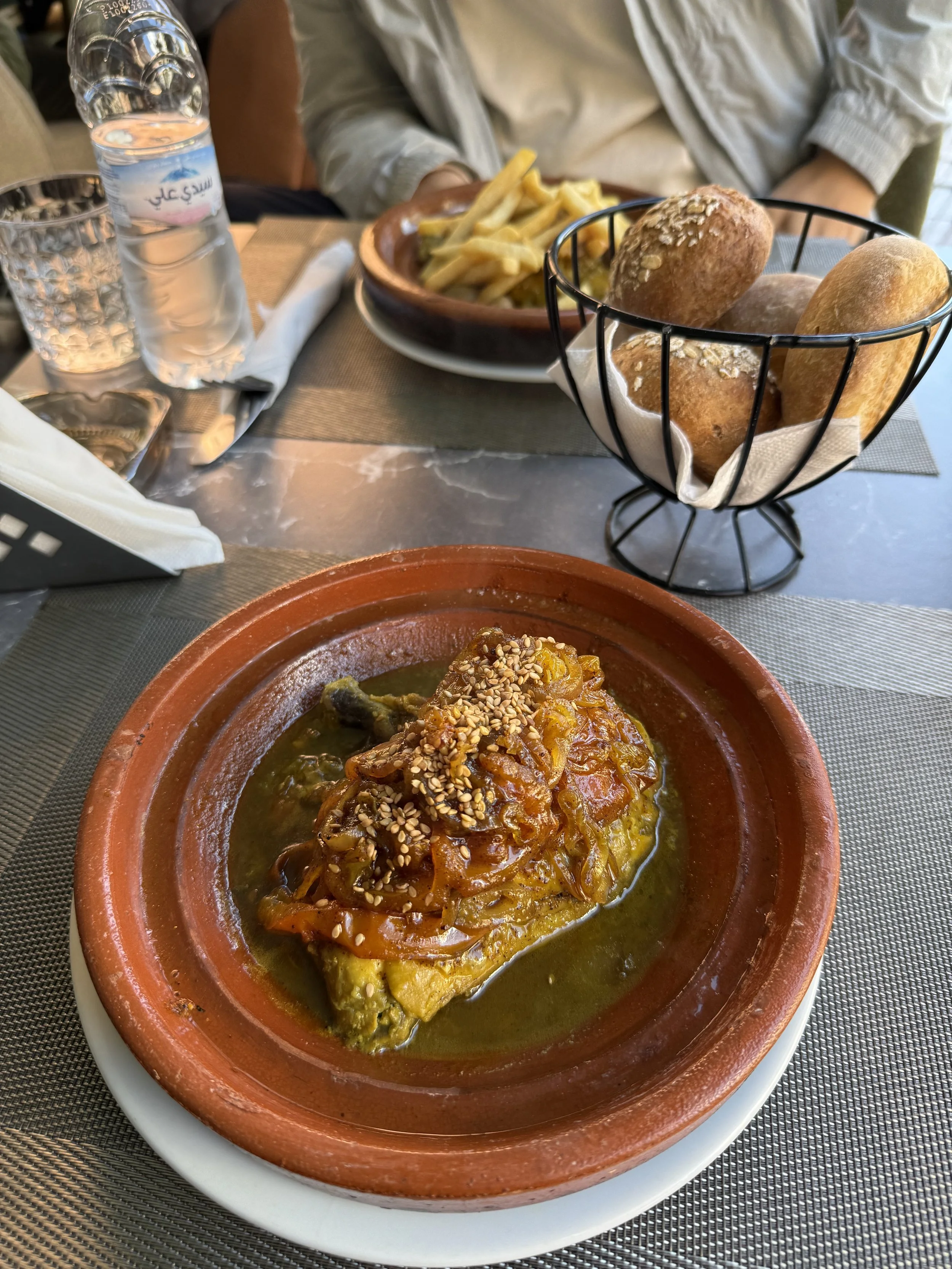
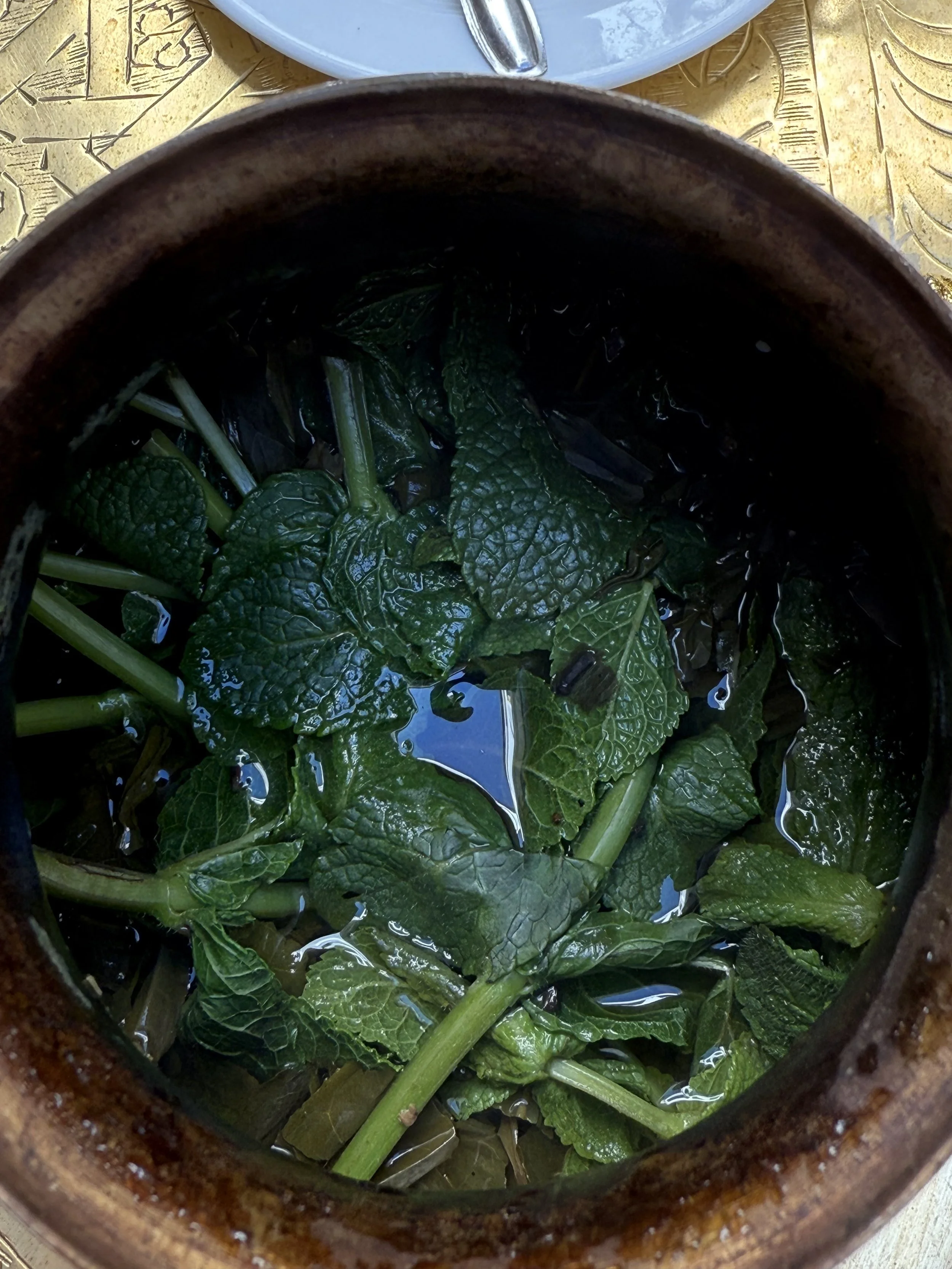
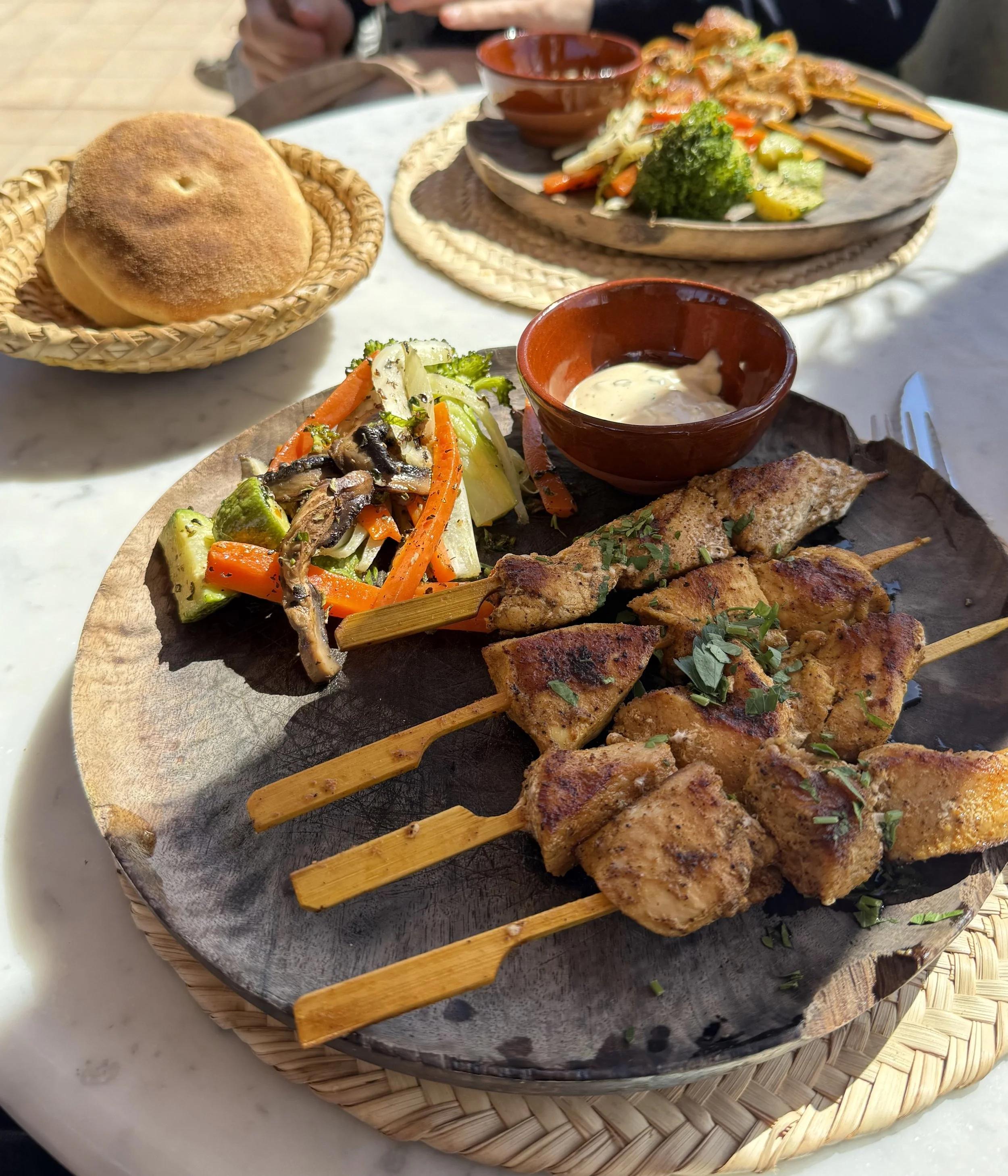
Food experiences in Marrakech
VISITING MARRAKECH DURING RAMADAN
Our second day in Marrakech coincided with the start of Ramadan, and so it was very interesting to observe how the city changed.
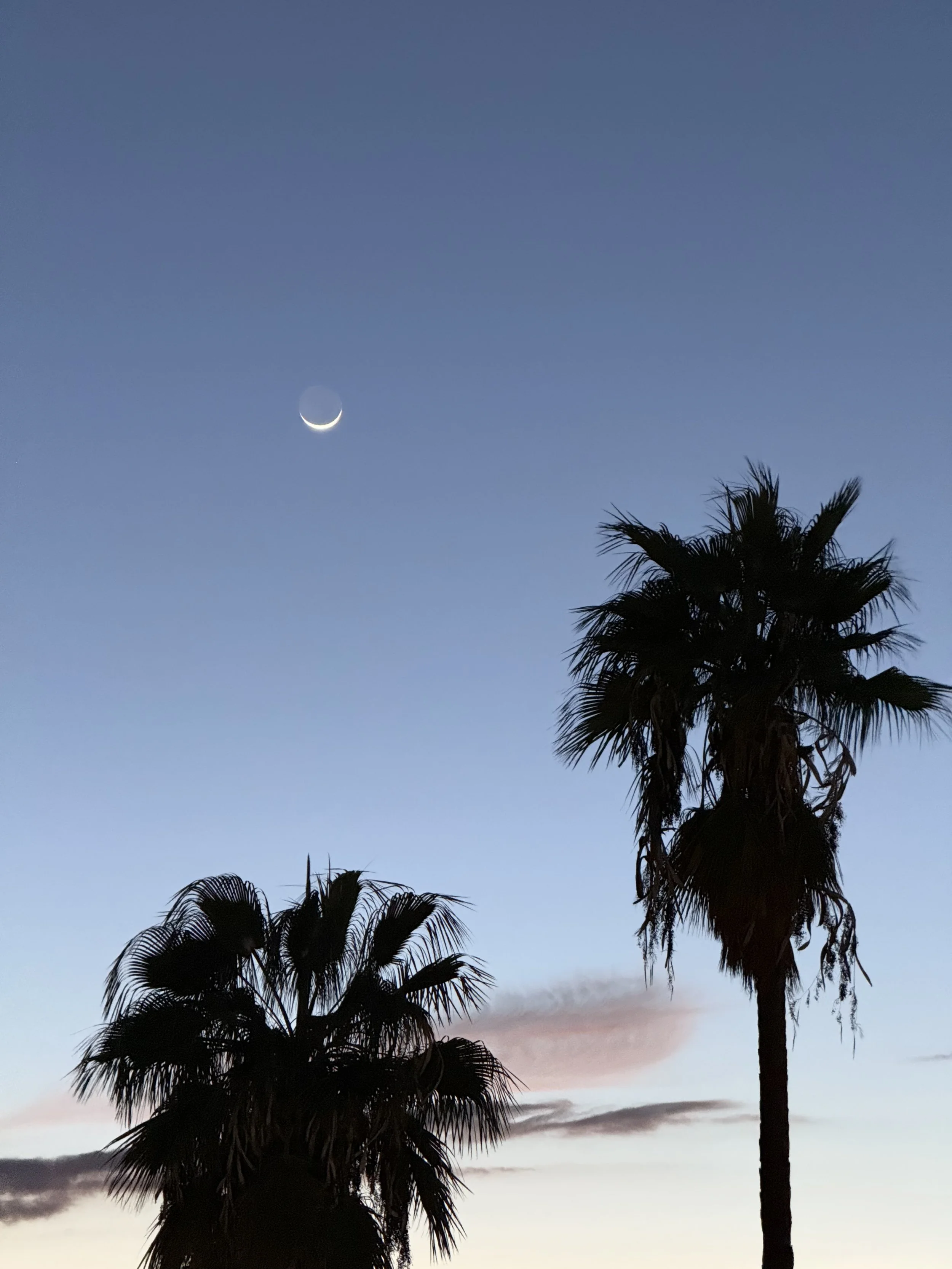
The rhythm of the city felt slightly different as Ramadan kicked in — it was quieter and more subdued during the day, then gradually building towards sunset and iftar, when everything came back to life. That contrast gave the evenings a real sense of occasion and atmosphere.
From a practical point of view, we didn’t find that service or our plans were impacted in any way. Restaurants were still open, we were able to eat during the day, and everything we wanted to do was accessible. If anything, it felt slightly calmer and potentially a bit more affordable than usual, although that may vary depending on when you go.
As always, it’s important to be respectful — but I wouldn’t hesitate to visit during Ramadan again. In fact, it gave us the confidence to plan future trips during this period, and ended up shaping how we approached our more recent trip to Jordan.
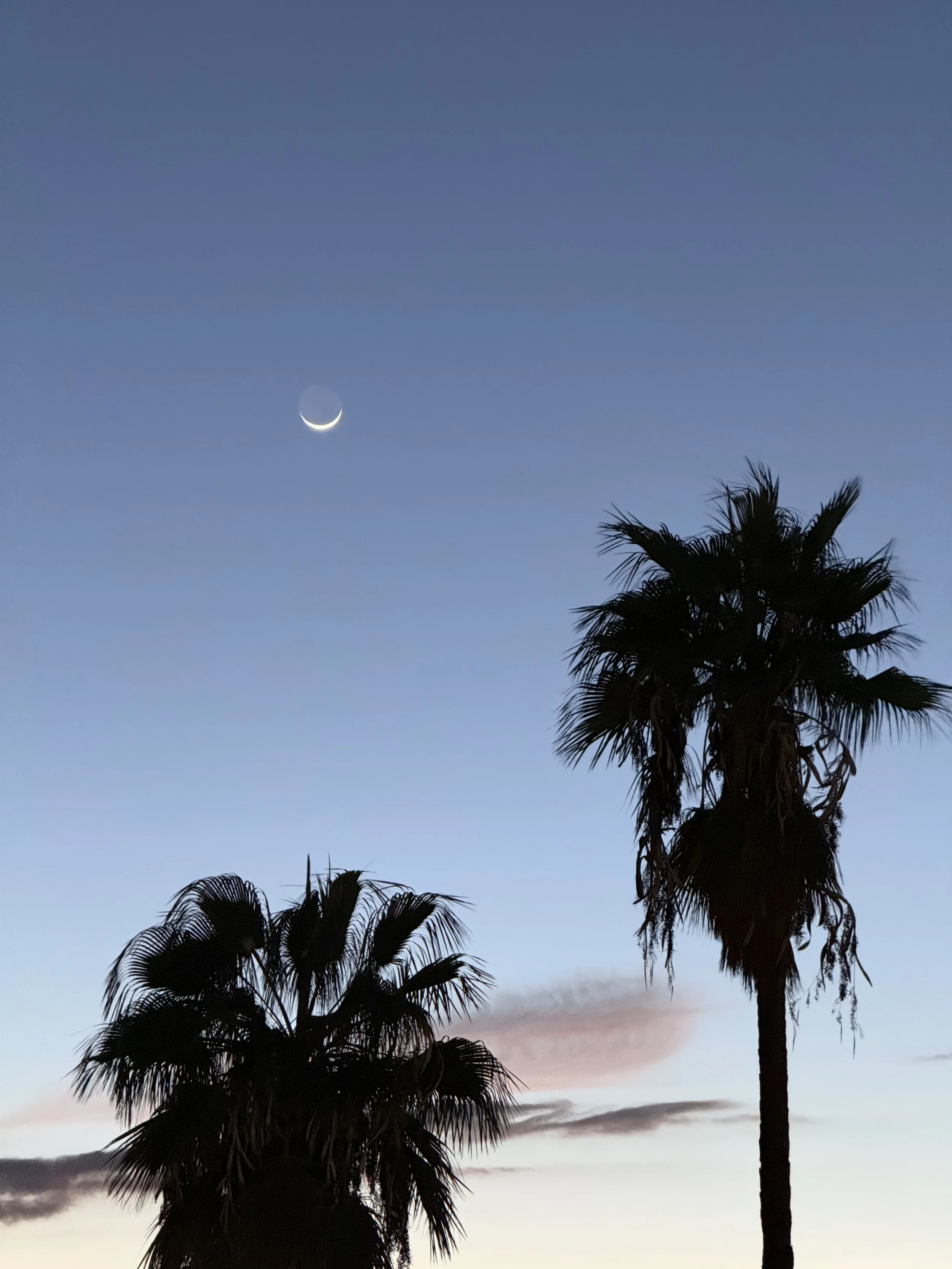
The Ramadan moon as seen from Dar Dar Rooftop
MARRAKECH AS GAY TRAVELLERS
As gay travellers, we had no issues at all in Marrakech.
No awkward questions. No weirdness. No issues doing a couple’s massage. We also got the sense that there were plenty of other gay travellers in Marrakech too. That may not be everyone’s experience in every context, but ours was completely smooth.
WHAT I WOULD CHANGE NEXT TIME
I loved the trip, but I also came away knowing exactly what I would change next time.
I am very glad we stayed in a riad in the medina once, because it gave the trip atmosphere and authenticity. But personally, if I returned to Marrakech for a second occasion, I would probably stay outside the medina in a more spacious hotel with a large pool.
The reason is simple: the chaos, noise and motorbikes were enough for one trip. The Nommos Beach Resort and the Palais Ronsard Relais & Chateaux look beautiful.
That said, if it is your first time visiting Marrakech, I would recommend staying in a riad, at least for a couple of nights. You will only find these in the medina. The Esprit du Maroc Riad & Spa really was top notch.
I would also consider the following additions to the itinerary:
A day trip to Ouzoud Falls. This looks so beautiful
An Agafay desert tour which could be done on the same day as the falls
A hot air balloon experience. I have seen various photos from friends who have done this and it looks amazing
The Saadian Tombs. This is another one of the key sights of Marrakech but our tight intinerary didn’t allow for us to visit unfortunately
A proper Moroccan hammam experience
Daytrips to Rabat or Agadir with Get Transfer
That feels like the next version of Marrakech for me: slightly slower, slightly more spacious, and with one or two bigger day experiences added in.
FINAL THOUGHTS
Marrakech isn’t a calm city break — and that’s exactly the point.
It’s intense, sensory, and at times overwhelming, but what makes it memorable is the way it moves you through it. From the chaos of the medina into moments of complete stillness. From noise, heat and movement into quiet courtyards, soft light and slow rituals.
In just a few days, you experience both ends of that spectrum — and everything in between. Architecture, atmosphere, rooftop dining, tea rituals, gardens, and interiors that feel worlds away from the streets outside.
What stays with me are those transitions. Stepping back into a riad after the noise. Mint tea poured slowly, almost ceremonially. That first proper wander through the souks. Sunset at Dar Dar as the city softened into evening. The lamb tagines — rich, comforting, full of depth. Arabic pastries with tea. The square, constantly shifting from day to night.
Marrakech is a city of movement — from chaos to calm — and it’s in that rhythm that it becomes unforgettable.
Marrakech is a VIBE
I hope that you have found this blog post interesting and useful. I would love to hear your comments below.